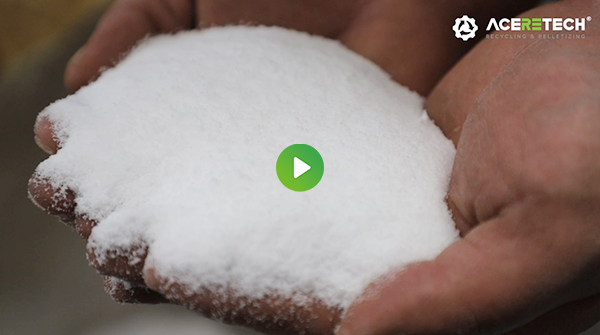
Abstract: Crushing is only the first step in the plastics recycling industry. When recycled plastics need to enter higher-end, more sophisticated applications, pulverization becomes an indispensable, critical process. This article will delve into the core value of plastic pulverization, revealing how it transforms ordinary recycled plastics into high-value industrial raw materials, and introduce how the Aceretech PM series pulverizer plays a central role in this process.
I. From Fragments to Powder: What is the Core Value of Plastic Pulverization?
Many recycling companies stop at crushing waste plastic into fragments, but this is only the initial stage. Plastic pulverization, further processing shredded plastic pellets into a uniform, fine powder, unlocks applications beyond the reach of pulverized materials.
II. Why Pulverize Plastic? Four Core Drivers
Plastic pulverization is not a redundant process; it is driven by the stringent quality requirements of downstream markets. The following are four core reasons driving the plastics grinding process:
1. Achieving High-Precision Remanufacturing: Meeting the Stringent Standards of Injection Molding and Extrusion
Problem: When producing precision plastic parts or films, using unevenly sized crushed material can lead to unstable feeding, uneven melting, and defects, reduced strength, or a rough surface in the final product.
Solution: Plastic powder has a large surface area and excellent flowability. During the compounding process, the powder form ensures that additives (such as color masterbatches, impact modifiers, flame retardants, etc.) achieve molecular-level dispersion within the polymer matrix, fundamentally eliminating color discrepancies or performance defects caused by uneven distribution. In injection molding or extrusion, it mixes more quickly and evenly with virgin material or other additives, achieving stable melting. This ensures the dimensional accuracy, mechanical properties, and surface finish of the final product. This is especially true when producing thin-walled products, pipes, profiles, and wire and cable, where grinding is essential for ensuring quality.
2. As a Functional Filler: Creating New Economic Value
Problem: How can we cost-effectively enhance the properties of new materials while reducing costs?
Solution: Plastic powder (particularly PVC, PE, PP, etc.) is an excellent functional filler. It can be added to new materials in appropriate proportions to reduce raw material costs. More importantly, specific types of plastic powder (such as ground PVC) can be added to products such as carpets, floor tiles, waterproofing membranes, and rubber products to improve their wear resistance, flexibility, and water resistance, or to reduce production costs. Here, recycled plastics are no longer simply "downcycled" but instead serve as "functional enhancers," creating a new value chain.

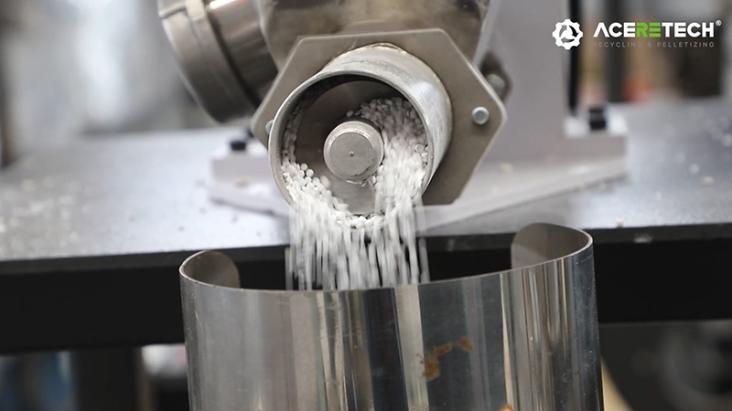
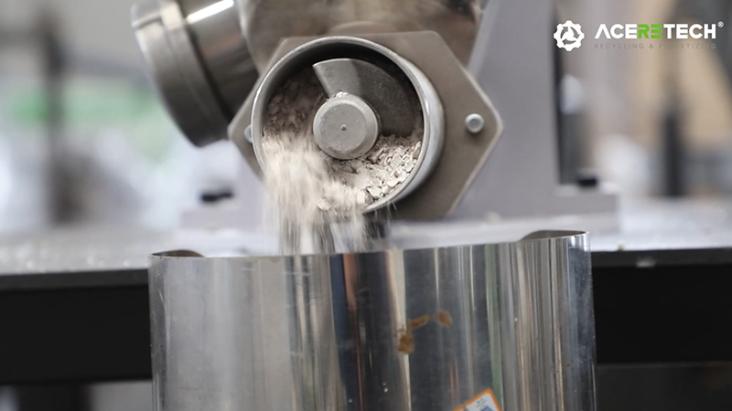
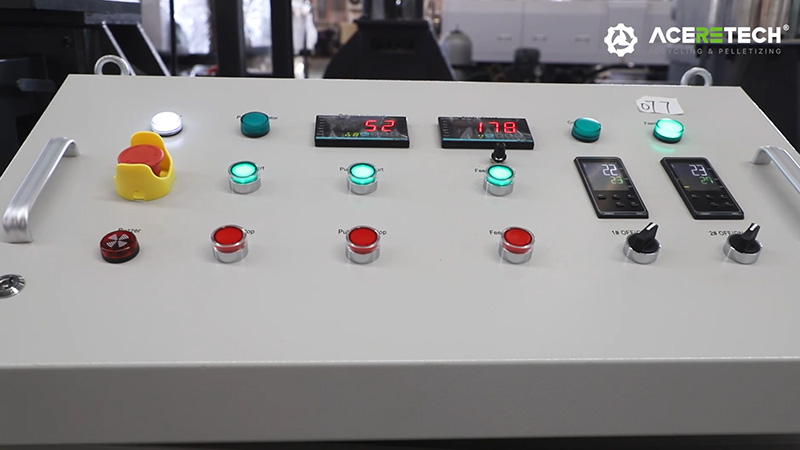
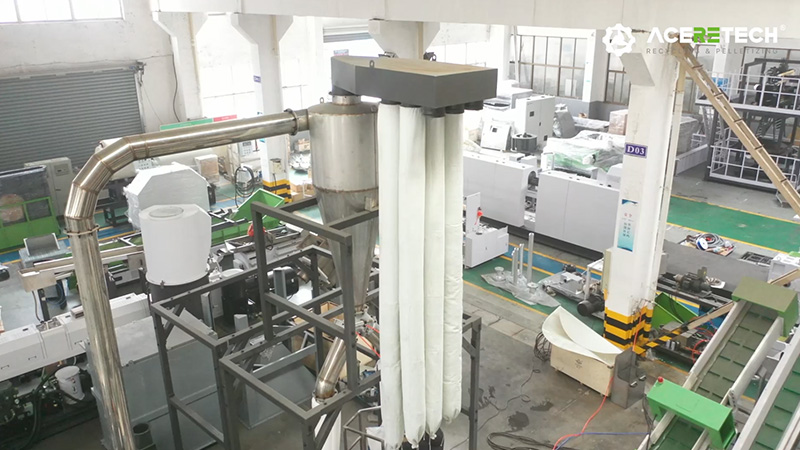
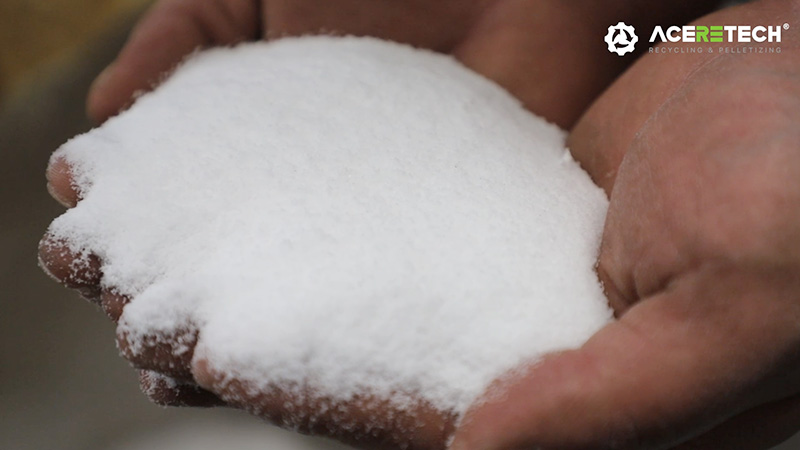
To achieve all of the aforementioned value, a high-performance, highly stable pulverizer is key. The Aceretech PM Series pulverizer is designed for this purpose, ensuring the perfect conversion of plastic flakes into high-quality powder.
* Focus on Fine Grinding: The PM Series is optimized for grinding plastic granules into a fine, uniform powder. Its precise grinding disc design and efficient grinding system ensure a highly concentrated particle size distribution in the output powder, meeting the stringent raw material requirements of downstream high-end applications.
* Optimization for Materials Like PVC: Taking the PM500 as an example, it excels at processing heat-sensitive plastics like PVC. Its optimized air separation system and cooling design effectively control the heat generated during the grinding process, preventing material degradation due to overheating and ensuring the purity and physical properties of the PVC powder.
* Stability and Efficiency: The mill shown in the video operates smoothly, feeding evenly, and the finished powder is efficiently collected by the air separation system. This represents the core advantage of the PM series: continuous and stable production capacity. For industrial production, this means lower failure rates, less downtime, and more predictable output, a reliable foundation for ensuring customer production plans.
IV. Conclusion: Pulverization is a leap forward in plastics recycling, from "quantity" to "quality."
In short, plastic pulverization is not simply a secondary process; it serves as a bridge connecting primary recycling with high-value applications. By improving raw material quality, expanding application areas, and optimizing logistics costs, it provides recycling companies with tangible profit growth.
Choosing the Aceretech PM series pulverizer is more than just purchasing a piece of equipment; it's investing in a path to higher value-added markets. It helps your recycling business transcend simple crushing and sales, achieving a strategic leap from "quantity" to "quality," and building a solid technological barrier in the fiercely competitive market.
Click the link below to watch a video of the pulverizer in action: