Why In-House Film Recycling Is Becoming Essential
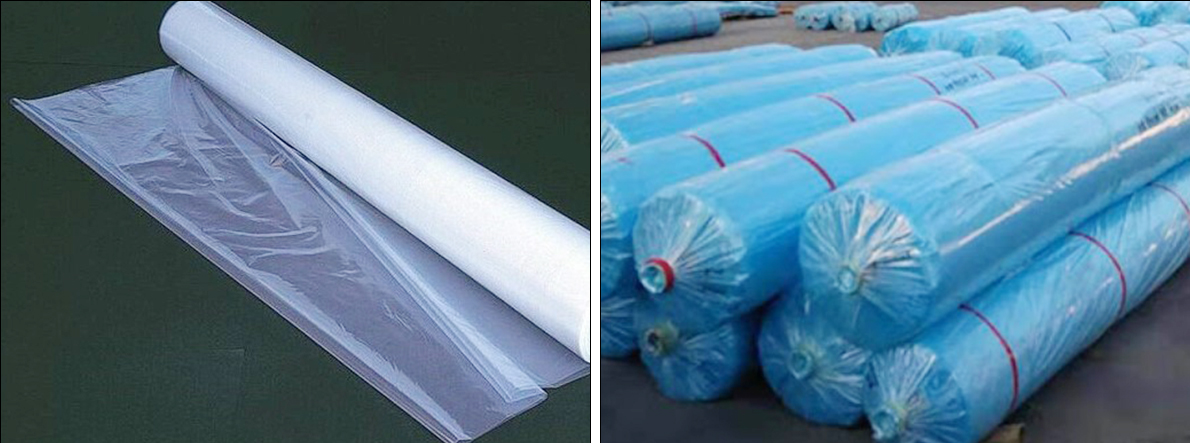
HDPE and LDPE films are widely used across packaging, logistics, and protective applications. However, post-industrial film scrap—such as edge trims, startup waste, and printed film—often leads to rising material costs and inefficient waste handling.
An in-house closed-loop recycling system enables manufacturers to directly convert production waste into high-quality recycled pellets, allowing immediate reuse in production. This approach not only reduces dependency on virgin materials but also improves cost control and operational sustainability.
Typical Applications in Manufacturing
This system is widely adopted in:
- Blown film production plants
- Flexible packaging converters
- Logistics and stretch film users
- Printed film and post-industrial recycling operations
Compatible materials include:
- HDPE / LDPE film
- LLDPE stretch film
- Printed and washed film flakes
ACS-H Series: Core Technology for Film Recycling
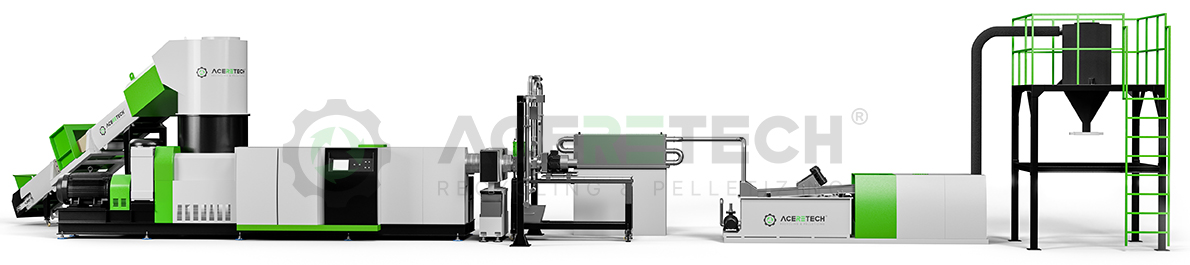
The ACS-H cutting & compacting pelletizing system is specifically engineered to address the challenges of soft plastic film recycling, including low bulk density, high moisture content, and contamination from inks or residues.
1. Integrated Cutting & Compacting Technology
The front-end compacting unit performs cutting, mixing, drying, and densification in a single step.
- Stabilizes feeding for low-density film
- Uses controlled frictional heat for pre-heating
- Protects polymer molecular structure during processing
This results in improved extrusion efficiency and consistent pellet quality.
2. Advanced Degassing and Filtration System
To ensure high-quality recycled output, the system incorporates:
- Double Vacuum Degassing
Removes moisture, volatile substances, and ink residues—critical for preventing bubbles and defects in pellets - Piston-Type Continuous Filtration
Eliminates fine contaminants without interrupting production, ensuring stable and clean melt flow
These features directly address common film recycling issues such as:
- Residual moisture after washing
- Ink contamination in printed films
- Inconsistent pellet quality
System Process Flow
A typical in-house recycling line includes:
- Belt Conveyor
Ensures stable and continuous feeding of film waste - Compactor Unit
Performs cutting, mixing, drying, and densification - Single Screw Extruder
Provides uniform plasticization and controlled melt flow - Water Ring Pelletizing System
Produces consistent, round-shaped pellets with precise cutting - Drying & Collection System
Completes cooling, dewatering, and final pellet collection
Business Value of In-House Recycling
Implementing a closed-loop pelletizing system delivers measurable operational benefits:
- Reduce Raw Material Costs
Reuse internal scrap to offset virgin resin consumption - Lower Waste Handling Expenses
Minimize outsourcing, transportation, and disposal costs - Improve Production Stability
Ensure consistent material supply and pellet quality - Support ESG & Sustainability Goals
Achieve higher resource utilization and reduced environmental impact
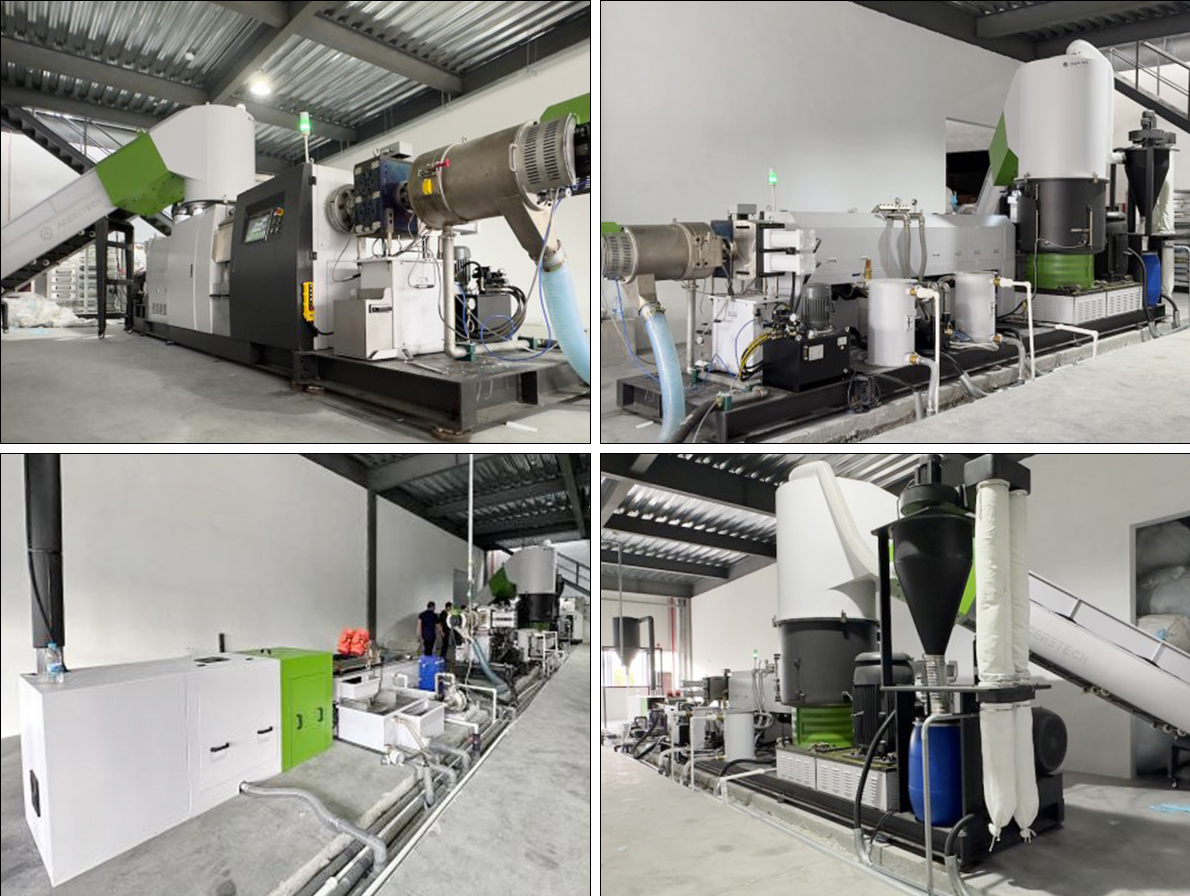
When Should You Consider an In-House Recycling System?
This solution is particularly valuable when:
- Internal film scrap volume is consistently high
- Outsourced recycling leads to high costs or long lead times
- Recycled material needs to be directly reused in production
- Quality control over recycled pellets is critical
Evaluate Your Recycling Setup with Our Experts
Every production line has unique material characteristics and capacity requirements. Aceretech provides customized system configurations based on your specific recycling goals.
👉 Speak with our engineers to evaluate your film recycling process
See Real-World Results
Want to understand how this system performs in actual manufacturing environments?
👉 See how manufacturers reduce material costs with in-house recycling