I. Introduction: HDPE Film Recycling in the Plastics Industry
Plastic recycling is a vital component of plastic waste management, facilitating the recovery of usable materials so they can be reintroduced into the manufacturing cycle. As a professional manufacturer of plastic recycling equipment, ACERETECH provides recycling and pelletizing solutions for a wide range of plastic materials, including production scrap and various types of flexible or rigid plastic waste.
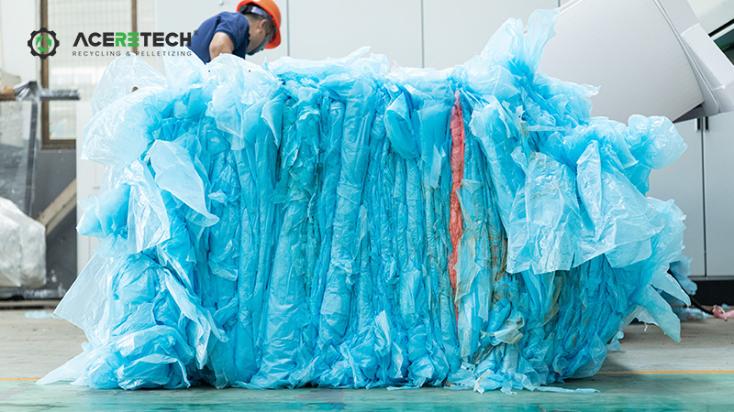
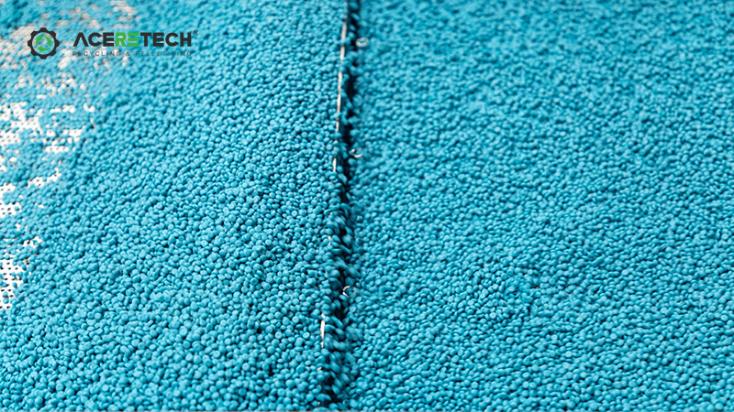
High-Density Polyethylene (HDPE) film is extensively used in packaging and industrial applications. During the production and processing of such films, manufacturers often generate production scrap, off-spec film, and other recyclable HDPE film waste. Through an appropriate recycling process, these materials can be converted into recycled plastic pellets, which can then be utilized in subsequent manufacturing operations.
However, the recycling of HDPE film presents several challenges. Lightweight films are difficult to feed consistently; furthermore, residual moisture, volatile substances, and solid impurities can compromise the stability of the extrusion process and the quality of the resulting recycled pellets.
Consequently, an efficient HDPE film recycling and pelletizing line must seamlessly integrate several key processes: material feeding, cutting and compacting, extrusion, vacuum degassing, melt filtration, pelletizing, and dewatering.
In this case study, ACERETECH demonstrates the performance of its ACS-H series plastic compacting, recycling, and pelletizing line in processing HDPE film. The system integrates all the aforementioned processing stages, enabling the efficient conversion of various types of HDPE film waste into high-quality recycled pellets.
II. Key Challenges in HDPE Film Recycling
Selecting the right plastic recycling equipment requires a thorough understanding of the characteristics and condition of the material to be processed, as well as the specific requirements for the final recycled product.
2.1 Feeding Challenges with Lightweight and Bulky Plastic Films
Compared to shredded rigid plastics, HDPE film has a significantly lower bulk density. Because these loose films occupy a large volume, achieving a uniform and stable feed into conventional extrusion equipment is often difficult. In an integrated plastic recycling and pelletizing line, a cutter compactor is responsible for cutting, mixing, preheating, and compacting the material prior to extrusion. By increasing the bulk density of the material, the feeding process is improved, ensuring a more continuous and stable operation.
2.2 Handling of Moisture and Volatile Substances
Residual moisture and volatile substances can lead to the formation of bubbles, surface defects, or other processing issues during extrusion and pelletizing. The severity of these effects depends on the source of the material, storage conditions, and specific process parameters.
A vacuum degassing system helps remove moisture and volatile components from the molten polymer. For efficient HDPE film recycling, proper material pretreatment and precisely adjusted processing conditions are essential.
2.3 Removing Contaminants from the Melt
Contaminant particles can negatively affect the appearance and uniformity of recycled HDPE pellets. An appropriate melt filtration system helps remove solid contaminants from the molten polymer before the pelletizing stage.
Selecting the right filtration configuration requires considering the type and concentration of contaminants, the viscosity of the melt, the required filtration precision, and the processing capacity. Since melt filtration cannot eliminate every type of contaminant, source-based sorting and material pretreatment remain indispensable.
2.4 Ensuring Consistent Pellet Quality
The final stage of plastic pelletizing involves forming the molten polymer into pellets and removing any residual moisture. Factors such as pelletizing conditions, melt characteristics, die configuration, and dewatering efficiency all influence the final product.
Manufacturers evaluating plastic pelletizing equipment should carefully consider the performance requirements for the target pellets, as well as the specific needs of any downstream processing.
III. ACS-H Series Plastic Pelletizing Lines for HDPE Film Recycling
The ACERETECH ACS-H series is designed for the recycling and pelletizing of plastic films. This series integrates a cutter compactor with a single-screw extrusion system, combining multiple processing steps into a single production line. In this HDPE film recycling and pelletizing case study, the equipment configuration includes:
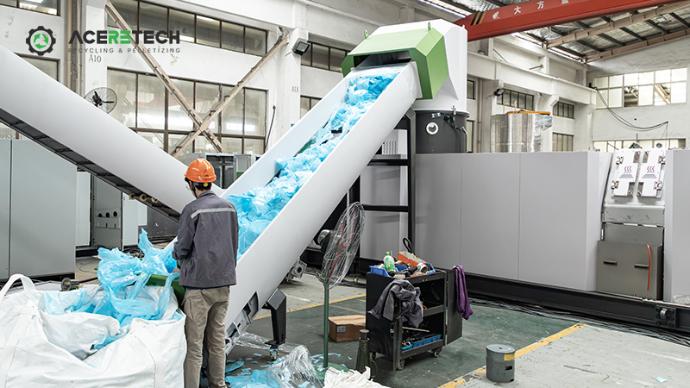
A belt conveyor equipped with a metal detector.
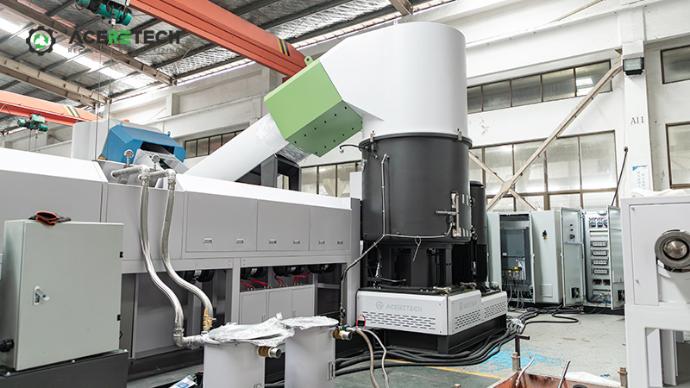
A 2000L cutting-compactor featuring a variable-frequency drive (VFD) and a servo-driven sliding gate.
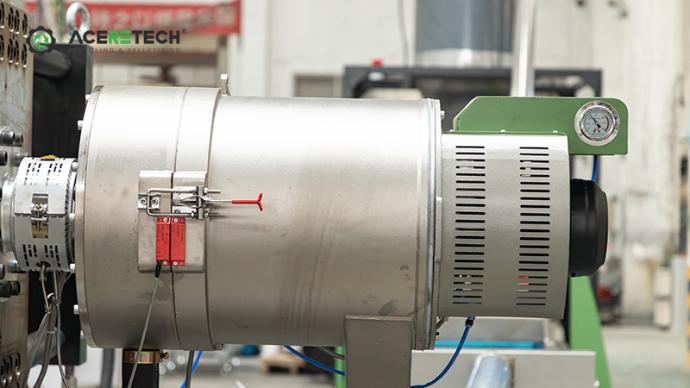
A single-screw extruder with a 160mm diameter, an L/D ratio of 42, and an infrared heating system.
A vacuum degassing system.
A 500-series plate-type melt filter.
A water-ring pelletizing system.
A vibrating screen and a centrifugal dewatering machine.
A centralized electrical control system utilizing a Siemens PLC and Schneider Electric components.
The following sections detail the function of each stage in the HDPE film recycling process.

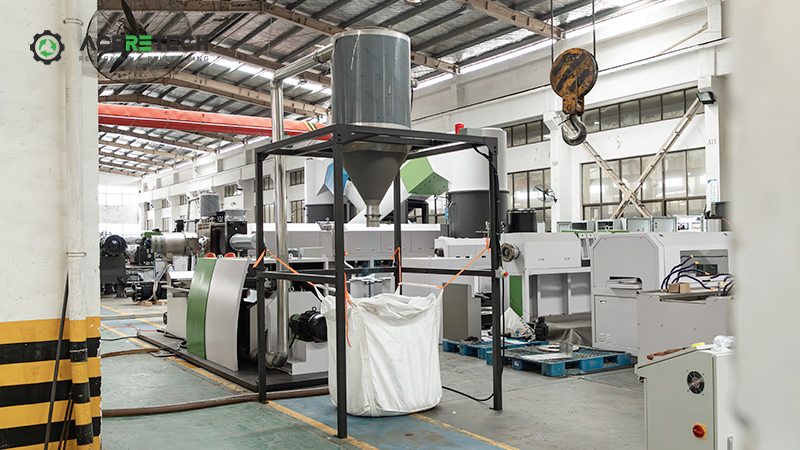
3.1 Metal Detection and Controlled Feeding
The plastic recycling line employs a belt conveyor equipped with a metal detector to transport HDPE film into the cutting-compactor.
The metal detection function identifies metallic contaminants before they enter the processing equipment. Depending on the system's control configuration, the detection of metal can trigger an alarm or halt the operation of the equipment.
This setup not only protects the machinery but also ensures more controlled material feeding. Nevertheless, the HDPE film entering the system should still undergo preliminary inspection and sorting to minimize the risk of contamination.
3.2 2000L Cutting-Compactor: Cutting and Compacting
The 2000L cutting-compactor is designed to cut and compact lightweight film before it enters the extruder. The unit is equipped with a variable-frequency drive (VFD) to adjust operating speeds, while a servo-driven sliding gate regulates the material feed rate.
During operation, rotating blades cut the film into smaller fragments. The heat generated by friction assists in preheating and partially drying the material, while the compaction process increases its bulk density.
For low-density plastic films, these functions help overcome feeding challenges and prepare the material for the subsequent extrusion process. Actual operating parameters should be adjusted based on factors such as film thickness, bulk density, moisture content, and the desired processing rate.
3.3 Single-Screw Extrusion and Plasticization
Following the compaction process, the material enters a single-screw extruder for melting and plasticization.
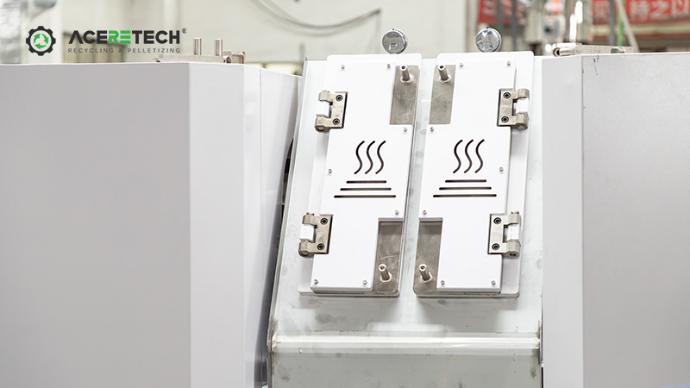
This custom-configured plastic film recycling and pelletizing machine features a screw with a diameter of 160 mm and a length-to-diameter (L/D) ratio of 42, equipped with an infrared heating system. The screw advances the compacted material into the heated barrel, where the polymer melts to form a continuous flow of molten material.
The stability of the extrusion process depends on feed consistency, temperature settings, screw speed, melt pressure, and material characteristics. These parameters should be optimized specifically for the HDPE film being processed.
3.4 Vacuum Degassing System
The vacuum degassing system facilitates the removal of moisture and volatile substances from the molten plastic during the extrusion process.
This stage is particularly important when processing materials that contain residual moisture or volatile components. Effective degassing helps minimize defects caused by these substances and enhances the stability of the melt processing.
The actual performance depends on the material's pre-treatment status, vacuum conditions, throughput, and various operating parameters. If the material is excessively damp or contaminated, additional pre-treatment may be required.
3.5 Plate-Type Melt Filtration
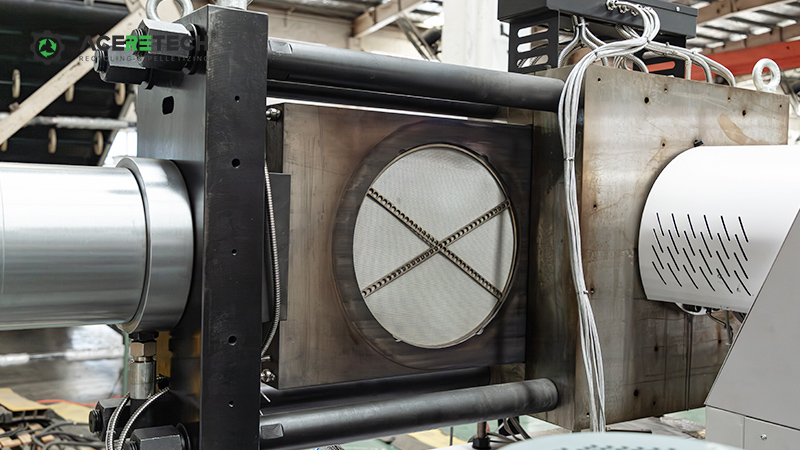
The ACS-H configuration incorporates a 500-series plate-type melt filter, which offers a large filtration area. This system supports continuous melt filtration, designed to minimize production interruptions caused by filter changes.
In the recycling of HDPE film, melt filtration helps remove solid contaminants prior to pelletization. When processing polymers with a low melt flow index (MFI), the selection of a filter must account for melt viscosity, pressure characteristics, throughput, and the required filtration precision.
The appropriate filter specification depends on the specific material and application. Filtration performance and operational cycles will vary based on the level of contamination and operating conditions.
3.6 Water-Ring Pelletizing
After filtration, the molten HDPE passes through a die head and is cut by a water-ring pelletizing system.
The system automatically adjusts the cutting speed to ensure uniform pellet formation. Precision sensors help maintain consistent cutter pressure during operation.
Pellet size and shape depend on the state of the melt, die configuration, cutting speed, the condition of the cutters, and other process parameters. This integrated pelletizing stage converts the extruded melt into recycled plastic pellets, ready for subsequent transport and processing.
3.7 Pellet Dewatering
Once pelletized, the material passes through a vibrating screen followed by a centrifugal dewatering unit.
The vibrating screen separates the process water from the pellets, while the centrifugal dewatering unit removes any remaining moisture from the pellet surfaces. Through this combined process, the recovered HDPE pellets are prepared for collection, storage, and use in subsequent manufacturing.
Final moisture content should be verified against the requirements of the intended application.
3.8 Intelligent Control of the Plastic Recycling Process
The ACS-H shredder-compactor-pelletizing line features an intelligent electrical control cabinet equipped with a Siemens PLC and components from Schneider Electric.
This control system enables centralized operation, monitoring of process parameters, and equipment protection. By coordinating the conveyor, shredder-compactor, extruder, melt filter, pelletizer, and dewatering equipment, operators can effectively manage the entire plastic recycling process.
During the commissioning phase, several key parameters must be evaluated, including feed rate, shredder-compactor rotor speed, extrusion temperature, screw speed, melt pressure, vacuum status, and pelletizing speed.
Standardized, coordinated operating procedures help establish repeatable processing conditions. Actual throughput, energy consumption, and pellet quality should be verified through trials using the specific material, rather than inferred solely from equipment specifications.
Related Articles
Plastic Film Washing Solutions
Plastic Film Shredding Solutions
IV. Potential Applications for Recycled HDPE Pellets
Recycled HDPE pellets, produced from suitable waste film, can be utilized in various plastic manufacturing processes, depending on their specific characteristics and the requirements of the final product. Potential applications include:
Film extrusion: Suitable for recycled HDPE grades that meet the specific requirements for the target film.
Pipe extrusion: Suitable for applications where the recycled material meets the necessary performance standards and regulatory requirements.
Injection molding: Suitable for products compatible with the characteristics of the recycled resin.
The suitability of recycled HDPE pellets depends on their polymer composition, impurity content, melt flow characteristics, mechanical properties, and batch-to-batch consistency. Before using these pellets for specific products, material testing and downstream validation are recommended.
V. Conclusion
Recycling HDPE film requires coordinated control across several stages: feeding, compaction, extrusion, vacuum degassing, melt filtration, pelletizing, and dewatering. Utilizing an integrated plastic recycling and pelletizing line ensures stable processing conditions for various types of HDPE film waste.
ACERETECH’s ACS-H customized pelletizing system features a typical configuration, including a 2000-liter cutter-compactor, a 160mm-diameter single-screw extruder, a vacuum degassing system, a plate-type melt filtration system, and a water-ring pelletizing system.
For recycling facilities seeking an HDPE film recycling and pelletizing line, the optimal equipment configuration depends on the characteristics of the input material, target production capacity, filtration requirements, and the desired performance specifications for the recycled pellets.
Please contact ACERETECH to discuss your plastic recycling equipment needs or to schedule an online test for your specific materials.
FAQ
Q1. What types of materials can be processed by HDPE film recycling and pelletizing equipment?
A: Depending on the machine configuration and the condition of the material, HDPE film recycling equipment can process various types of HDPE film production scrap, off-spec film, and other recyclable HDPE film waste. Before selecting a recycling process, it is necessary to evaluate factors such as film thickness, moisture content, the presence of printing, contamination levels, and whether other polymer components are present.
Q2. How does a cutter-compactor optimize the plastic recycling process?
A: A shredder-compactor can shred lightweight plastic film while simultaneously preheating and partially drying the material through frictional heat. The compaction process increases the material's bulk density, thereby improving the feeding conditions for the extruder—a factor of particular importance when dealing with bulky, low-density plastic film waste.
Q3. Why is vacuum degassing crucial during the granulation of HDPE film?
A: Vacuum degassing helps remove moisture and volatile substances from the molten plastic. Depending on the material characteristics and operating conditions, this process can reduce processing defects caused by residual moisture or volatile components. Naturally, thorough material pre-treatment and the selection of appropriate process parameters remain vital.
Q4. What is the role of melt filtration in a plastic granulation production line?
A: Melt filtration removes solid impurities from the molten plastic prior to granulation. Factors such as filtration area, filtration precision, and system configuration influence the effectiveness of impurity removal, pressure fluctuations, and the operational cycle of the equipment. The choice of filter should be based on the characteristics of the input material and the quality requirements for the recycled pellets.
Q5. Can recycled HDPE pellets be used directly to manufacture new plastic products?
A: When the properties of recycled HDPE pellets meet the requirements of a specific application, they can be used directly in processes such as film extrusion, pipe extrusion, injection molding, or other manufacturing methods. It is advisable to conduct testing to verify melt flow properties, impurity levels, mechanical performance, and batch-to-batch consistency. Not all grades of recycled HDPE are suitable for every type of end-use application.