I. Overview: An Efficient Volume-Reduction Solution for PP Jumbo Bag Recycling
PP jumbo bags—also known as Flexible Intermediate Bulk Containers (FIBCs), bulk bags, or big bags—are widely used for the transport and storage of industrial raw materials, powders, and granular products. Once used, these large polypropylene (PP) woven bags become bulky waste, requiring effective size reduction before they can undergo further recycling processes.
However, processing PP jumbo bags presents several challenges. Their woven structure, reinforced seams, lifting loops, and flexible material composition can complicate both the feeding and cutting stages. If not handled correctly—depending on the condition of the material and the specific configuration of the shredder—issues such as inconsistent feeding, material wrapping, or accelerated wear on cutting components may arise.
The ACERETECH HS series single-shaft shredder offers an ideal volume-reduction solution for PP jumbo bags and similar plastic waste. Equipped with a conveyor belt feed system, a hydraulic pusher, and a single-shaft cutting rotor, the machine is designed to break down bulky plastic waste into smaller fragments, facilitating subsequent recycling operations.
In internal testing specifically focused on PP jumbo bags, this HS shredder configuration achieved a throughput of 300–500 kg/h. This provides a practical benchmark for clients currently evaluating shredding equipment for their own PP jumbo bag recycling projects.
II. Challenges in Shredding PP Jumbo Bags
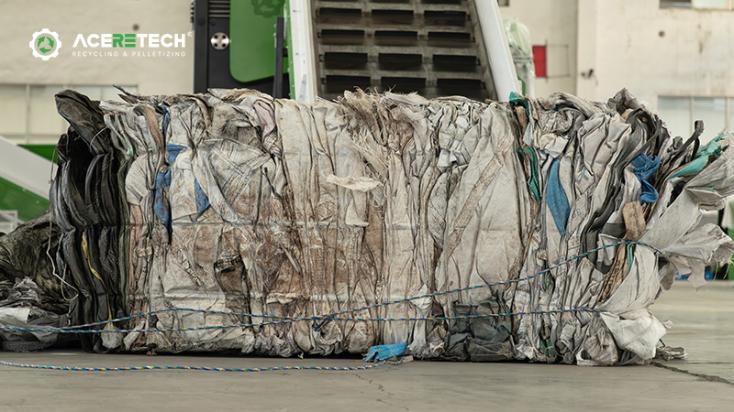
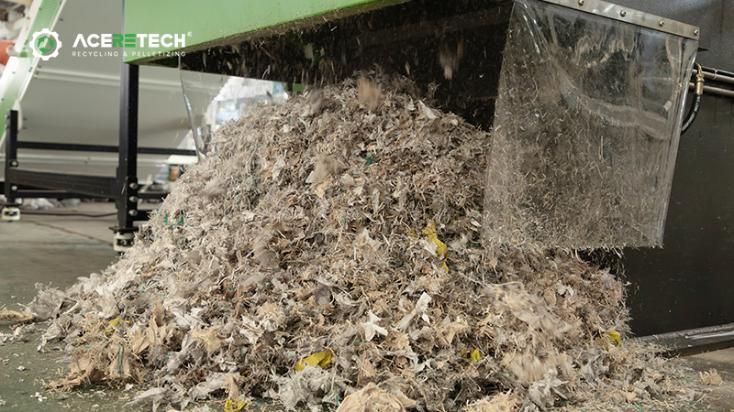
Selecting the appropriate shredder for jumbo bags requires careful consideration of the material’s structure, its feeding characteristics, and the requirements of the downstream processing workflow.
2.1 Flexible Woven Structure
PP jumbo bags are typically constructed from woven polypropylene flat tapes. During the shredding process, their flexible material composition and reinforced sections behave quite differently compared to rigid plastic components. An ideal shredder should possess excellent material-grabbing capabilities and controllable cutting performance, ensuring a stable and efficient volume-reduction process.
2.2 Feeding Challenges for Bulky Materials
Large-scale bulk bags (FIBCs/tote bags) occupy significant space and have a relatively low bulk density. Manual feeding often makes it difficult to maintain a consistent and stable material flow.
Equipping the system with a belt conveyor allows for the smooth transport of material into the shredding chamber, while a hydraulic pusher ensures that the material is fed in a controlled manner toward the cutting rotor, facilitating efficient shredding.
2.3 Wear on Cutting Components
The abrasive nature of certain contaminants, combined with the mechanical stress generated during the processing of woven bags, contributes to the wear of cutting components.
Therefore, when evaluating long-term operational performance, factors such as rotor design, blade material, maintenance procedures, and operating parameters must be carefully considered.
2.4 Downstream Sizing Requirements
The required output size depends on the subsequent stages of the recycling process. If the material is destined for washing, secondary shredding, or pelletizing, different shredding size configurations may be necessary.
The appropriate screen aperture size should be selected based on the material's characteristics and the requirements of the downstream equipment.
III. ACERETECH HS Series Single-Shaft Shredder (for PP Bulk Bags)
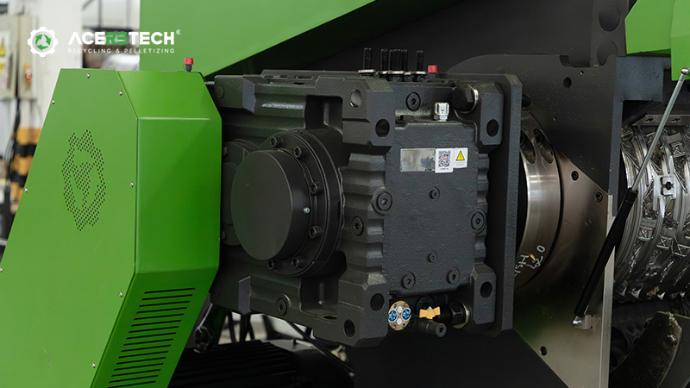
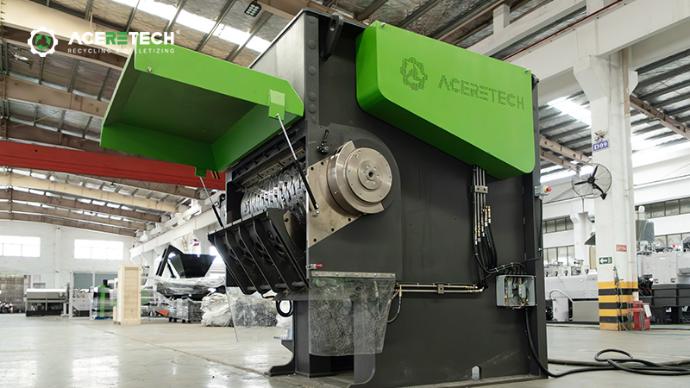
The ACERETECH HS series single-shaft shredder is specifically designed for the size reduction (shredding) of industrial plastics. For the recycling of PP bulk bags (FIBCs), this equipment integrates several functions: belt conveyor feeding, hydraulic pushing, rotor-based cutting, and discharge control via a screen.
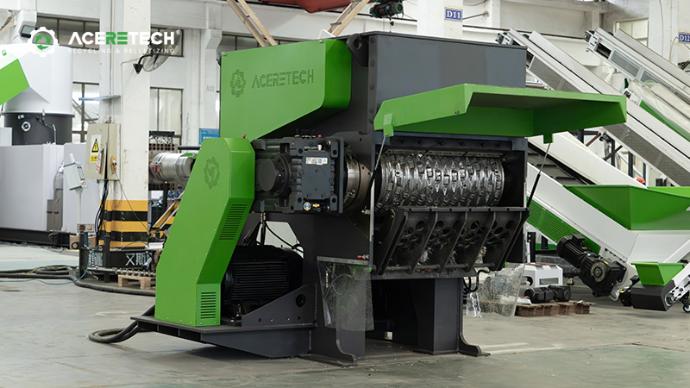
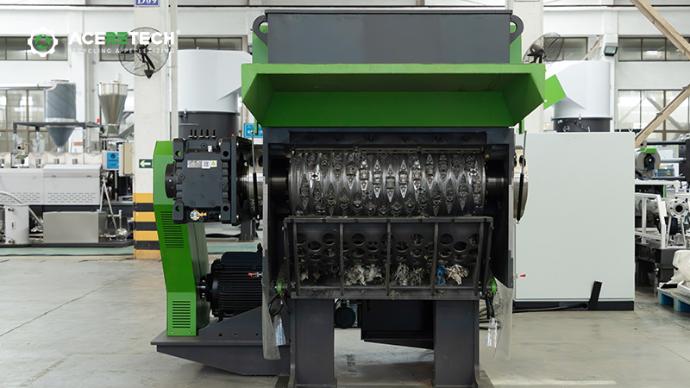
3.1 Belt Conveyor Feeding System
A belt conveyor transports PP bulk bags into the shredder, helping to ensure a more stable material supply.
The feeding speed and volume should be matched to the shredder’s processing capacity to prevent overloading or uneven feeding.
3.2 Hydraulic Pusher System
The hydraulic pusher system advances material toward the rotating cutting rotor, ensuring continuous contact between the material and the cutting system—a feature particularly critical when processing bulky or flexible waste.
Actual feeding performance depends on factors such as the structure of the bags, loading conditions, and equipment parameter settings.
3.3 V-Shaped Rotor Design
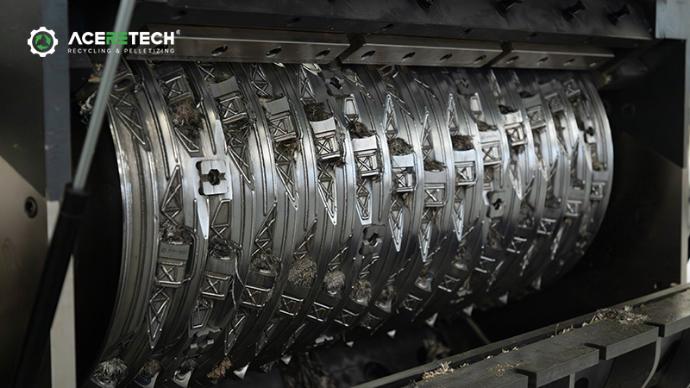
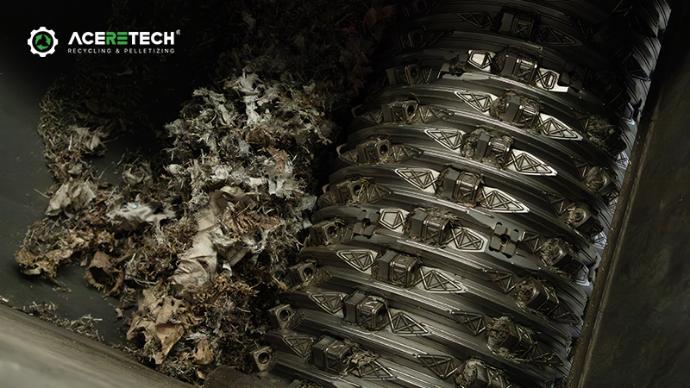
The HS series utilizes a V-shaped rotor design, engineered for highly efficient material cutting.
When processing PP bulk bags (FIBCs), the rotor geometry and the condition of the cutting knives are key factors in ensuring consistent shredding results. Regular inspection and timely maintenance of the knives are essential for maintaining optimal cutting performance during operation.
3.4 Laser Cladding Technology for Rotors
ACERETECH employs laser cladding technology on its rotors to enhance surface wear resistance.
Under appropriate operating conditions, the rotor can achieve a service life of over 10 years. The actual lifespan depends on the material being processed, the level of contamination, operational intensity, maintenance practices, and the wear status of specific components. This technology is a significant consideration for customers evaluating the durability and long-term maintenance requirements of industrial plastic shredding equipment.
3.5 Screen-Controlled Discharge
In this test involving PP bulk bags (FIBCs), the HS series shredder was equipped with an 80 mm screen.
The screen aperture determines the size of the material discharged from the shredding chamber. The actual output size may vary based on the flexibility of the material, specific shredding conditions, and equipment configuration.
The screen size should be selected according to the requirements of downstream processes, such as washing, further size reduction, pelletizing, or other recycling operations.
IV. PP Bulk Bag Shredding Test and Technical Specifications
ACERETECH conducted internal shredding tests on PP bulk bags (FIBCs) to evaluate the equipment's processing performance under specific test conditions. Test Configuration Parameters
Project Specifications
| Equipment |
ACERETECH HS Series Single-Shaft Shredder |
| Test Material |
PP FIBCs (Flexible Intermediate Bulk Containers / "Big Bags") |
| Feeding System | Belt Conveyor |
| Pushing System | Hydraulic Pusher |
| Rotor Length | 1,200 mm |
| Rotor Diameter | 560 mm |
| Feed Opening Dimensions | 1,200 × 1,850 mm |
| Screen Aperture | 80 mm |
| Drive System | Branded motor and electrical components |
| Throughput Capacity | PP FIBCs: 300–500 kg/h; PE Film: Approx. 500 kg/h |
The data above is for reference only and does not constitute a guaranteed throughput for all installation sites. Actual processing capacity may vary based on factors such as material thickness, bag construction, contamination levels, feeding stability, screen configuration, and operating parameters.
For more precise equipment selection, please provide photos or samples of the material, your target throughput, and the required output particle size.
V. PP FIBC Recycling Process: From Shredding to Reprocessing
The HS Series single-shaft shredder serves the "volume reduction/size reduction" stage in the PP FIBC recycling process. A complete recycling system should be configured based on the condition of the FIBCs to be processed and the quality requirements for the recycled material.
A typical recycling workflow may include the following stages:
Stage 1: Material Inspection and Sorting
Incoming FIBCs are inspected; materials that do not meet requirements, excessive contaminants, or foreign objects are removed. The original contents of the bags should also be considered when determining the necessary processing and cleaning requirements.
Stage 2: Shredding
PP FIBCs are fed into the HS Series single-shaft shredder via a belt conveyor. A hydraulic pusher assists in feeding the material, while the rotor shreds the bags into smaller fragments.
Stage 3: Secondary Size Reduction (Optional)
Depending on the required fragment size and the specifications of downstream equipment, a secondary crusher (granulator) can be installed after the shredder to further reduce the material size.
Stage 4: Washing and Drying (Optional)
Used bulk bags (FIBCs) may contain dust, soil, residual powders, or other contaminants. Appropriate washing and drying processes can be selected based on the level of contamination and specific recycling requirements.
Stage 5: Pelletizing or Further Reprocessing
Following proper pre-treatment, the recovered PP material can be processed via a dedicated pelletizing line or utilized through other suitable recycling pathways. The quality of the final pellets depends on the condition of the raw material, contamination control, filtration efficiency, extrusion process parameters, and the intended end-use.
Not every project requires all of the stages mentioned above. The optimal process flow should be determined based on the condition of the material, the desired output quality, and the client’s specific production goals.
Related Articles
PP Woven Bag Washing Solutions
PP Woven Bag Granulation Solutions
VI. Applications of the ACERETECH HS Series Single-Shaft Shredder
In addition to PP bulk bags, the ACERETECH HS series can be used for various other plastic shredding applications, subject to material assessment and equipment configuration.
The ACERETECH HS series single-shaft shredder is suitable for processing a wide range of waste materials, including rigid plastic lumps, injection and blow-molding scrap, plastic pipes, profiles, sheets, pallets, drums, IBC containers, PE film, woven bags, flexible intermediate bulk containers (FIBCs/bulk bags), waste cables, and other industrial waste suitable for shredding.
For materials with varying mechanical properties or contamination levels, a comprehensive evaluation of the rotor configuration, cutting components, screen, and feeding conditions should be conducted before finalizing the equipment selection.
VII. Why Choose ACERETECH for Shredding PP Bulk Bags (FIBCs)?
When selecting a shredder for PP bulk bags, buyers should consider more than just initial processing capacity; they should also evaluate material compatibility, feeding stability, wear resistance, maintenance requirements, and the ease of integration with downstream equipment. The ACERETECH HS series equipment offers the following features, designed to address the considerations mentioned above:
Industrial-grade volume reduction: Specifically engineered for large-volume plastic waste and various types of flexible materials.
Hydraulic-assisted feeding: A hydraulic pusher system advances material toward the rotor during the processing operation.
V-rotor design: Facilitates highly efficient material cutting.
Laser-clad rotor: Significantly enhances the wear resistance of the rotor surface; under appropriate operating conditions, it can achieve a service life exceeding 10 years.
Configurable discharge: Screen sizes can be selected to meet specific output dimension requirements.
Application-specific selection: Equipment configurations can be flexibly assessed and determined based on material characteristics and production needs.
ACERETECH recommends an individual assessment for every recycling project to ensure that the selected shredder and downstream equipment are precisely matched to the client’s specific operational requirements.
VIII. Conclusion
The recycling of PP bulk bags (FIBCs) begins with effective material pre-treatment and volume reduction (shredding). A suitable PP bulk bag shredder reduces large-volume woven bags into smaller fragments, preparing them for subsequent washing, granulating, and pelletizing processes.
The ACERETECH HS series single-shaft shredder integrates a conveyor belt feeding system, a hydraulic pusher, a V-rotor design, and laser-clad rotor technology. In the aforementioned testing with flexible PP bulk bags (FIBCs)—using an 80 mm screen—the equipment achieved a throughput of 300–500 kg/h.
For clients currently evaluating shredders for flexible bulk bags (FIBCs), PP bulk bag recycling systems, or industrial plastic shredders, ACERETECH can assist in determining the optimal equipment configuration by analyzing your material characteristics, capacity requirements, and downstream process workflows. You can visit the product page for the ACERETECH HS series single-shaft shredder for more details, or contact ACERETECH directly to discuss your plastic waste recycling requirements.
FAQ
Q1. What is the processing capacity of the ACERETECH HS series shredder for PP bulk bags (FIBCs)?
A: Based on specific configuration requirements, internal testing indicates a reference throughput of 300–500 kg/h for PP bulk bags. Actual capacity depends on material characteristics, feeding conditions, screen configuration, operating parameters, and specific customer requirements.
Q2. What screen size was used during the PP bulk bag shredding test?
A: The equipment used in this test was fitted with a screen featuring 80 mm apertures. While the screen aperture influences the output size, it does not guarantee that all shredded fragments will be of uniform dimensions.
Q3. What are the benefits of laser cladding the shredder rotor?
A: Laser cladding enhances the wear resistance of the rotor surface. Under optimal operating conditions, the rotor can have a service life exceeding 10 years; however, the actual lifespan will vary based on the type of material processed, the level of contamination, operating conditions, and maintenance practices.
Q4. Can shredded PP bulk bags be washed and pelletized?
A: Yes. Provided the material condition and the requirements for the final product are met, shredded PP bulk bags can be processed through subsequent washing, drying, and pelletizing equipment. The specific process flow depends on the degree of material contamination and the quality requirements for the recycled material.
Q5. What factors affect the processing capacity of a PP bulk bag shredder?
A: The processing capacity of a PP bulk bag shredder is influenced by several factors, including the thickness of the bag material, the weave structure, reinforced stitching, the level of contamination, feeding consistency, screen aperture size, and the specific operating conditions of the equipment.