I. Overview of ACERETECH Plastic Pelletizing Systems
Main System Categories:
* Compaction Pelletizing Systems (ACS Series) – Ideal for recycling soft materials such as films and woven bags.
* Single-Screw Extrusion Pelletizing Systems (ASE / ADS Series) – Suitable for hard materials and in-house factory recycling; the ADS series features a two-stage configuration.
* Single-Screw In-line Recycling Systems (ASP Series) – Designed for the direct recycling of in-house production scraps and edge trims.
* Twin-Screw Compounding Systems (ATE Series) – Specifically engineered for high-end material compounding and modification applications.
Key Differentiating Factors:
Compaction Requirement: Soft Films vs. Hard Materials
System Structure: Single-Stage vs. Two-Stage
Screw Type: Single-Screw vs. Twin-Screw
In-line Recycling Capability: ASP Series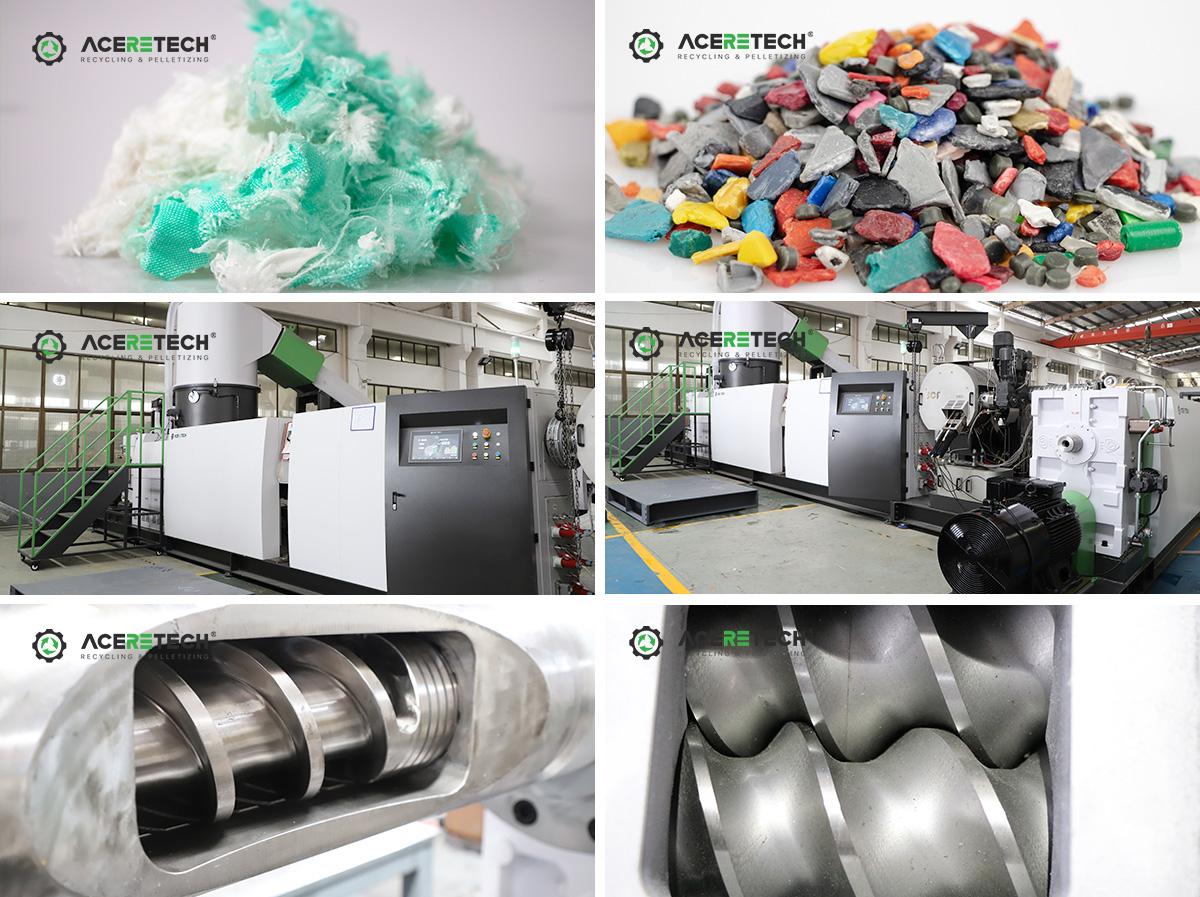
Key Considerations for System Selection:
Material Type (Soft / Hard)
Degree of Contamination
Requirement for In-line Recycling
Requirement for Material Compounding/Modification
Pellet Quality Requirements
II. Why Choosing the Right Pelletizing Machine is Crucial
The type of pelletizing machine directly determines the quality and application value of the recycled pellets:
Bubble Control: Ensures the absence of internal bubbles within the pellets, thereby enhancing density and stability.
Impurity Removal: Efficiently eliminates residual impurities to guarantee material purity.
Feasibility for High-End Applications: Meets the stringent quality standards required for industrial, packaging, and functional plastics.
Different Material Characteristics Dictate Specific Pelletizing Requirements:
Soft Materials (Films, woven bags, etc.): Require compaction, low-shear plasticization, and enhanced degassing capabilities.
Hard Materials (PP / HDPE / PET sheets, etc.): Require high-temperature plasticization and screw extrusion.
Selecting a pelletizing system that is appropriately matched to your specific material type is the critical first step toward producing high-quality recycled pellets.
1️⃣ Compacting Pelletizing Systems (ACS Series)
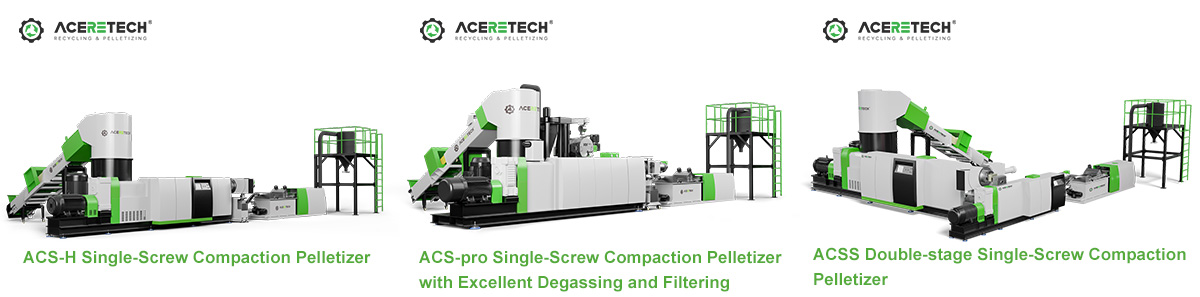
Models: ACS-H (Single-stage), ACS-PRO (Enhanced Degassing & Filtration), ACSS (Double-stage)
Applicable Materials: Films, woven bags, non-woven fabrics, and other soft plastics
Key Features:
Compacting feeding mechanism reduces voids and increases pellet density
High-efficiency degassing ensures uniform and smooth pellets
Specifically designed for the recycling of soft plastic materials
2️⃣ Single-Screw Extrusion Pelletizing System (ASE / ADS Series)
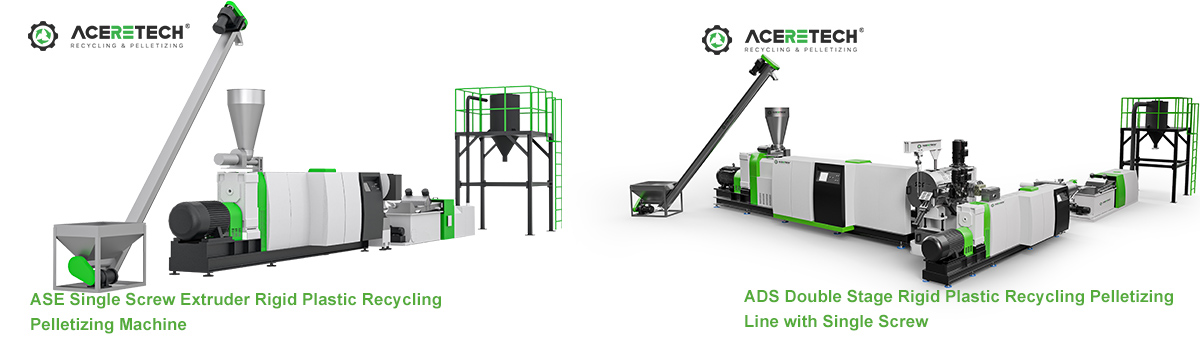
Models: ASE (Single-stage Standard Type), ADS (Double-stage Enhanced Type)
Key Applications:
Standard Extrusion (ASE / ADS): Suitable for the recycling of rigid plastics; the ADS model is capable of processing complex or highly contaminated materials
3️⃣ Single-Screw In-line Crushing & Recycling Pelletizing System (ASP Series)
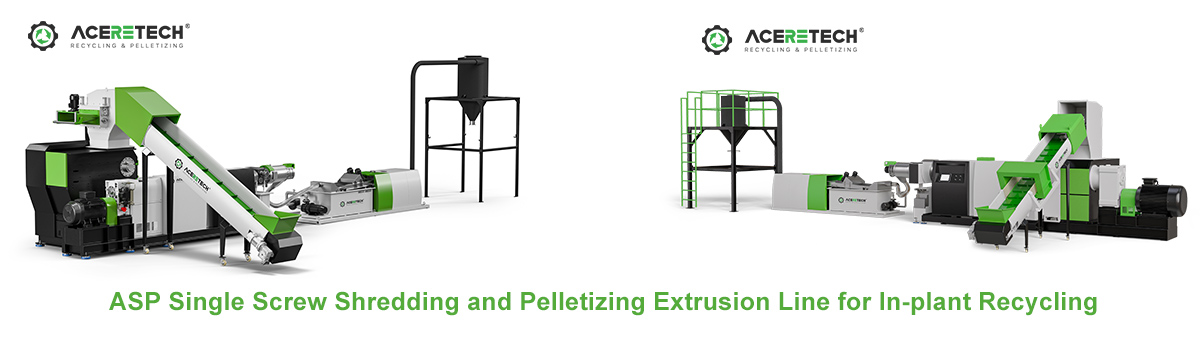
Features:
Connects directly to production lines (e.g., film blowing, extrusion)
Enables immediate recycling of edge trims and scrap, eliminating the need for separate crushing or conveying
Facilitates closed-loop production (Closed-loop recycling)
Minimizes raw material waste and boosts production efficiency
4️⃣ Twin-Screw Modification & Pelletizing System (ATE Series)
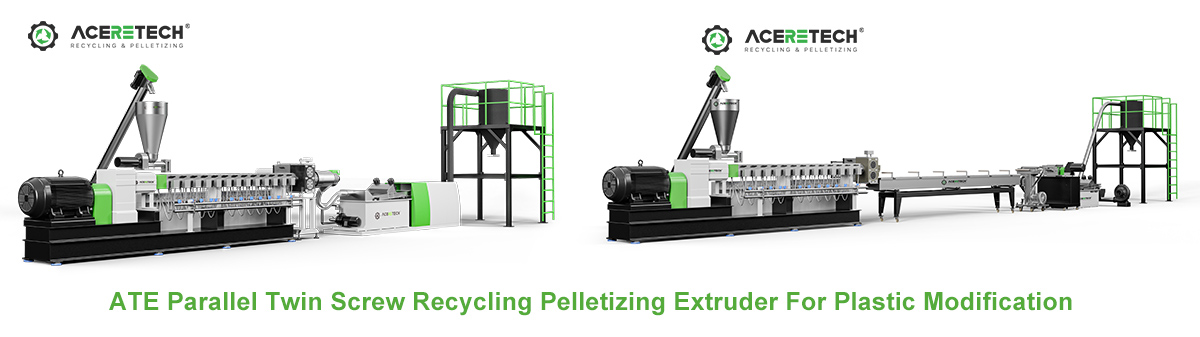
Features:
Powerful kneading and homogenization capabilities
Suitable for the modification, filling, reinforcement, and blending of materials
Supports the production of high-value-added plastic products
IV. ACERETECH Pelletizer Core Comparison Chart
| Comparison Dimension |
ACS Series |
ASE | ADS | ASP | ATE |
| System Type |
Single-screw Compacting |
Single-screw | Single-screw Double-stage | Inline Recycling | Twin-screw |
| Compacting Function Included | ✅ | ❌ | ❌ | ❌ | ❌ |
| Structure | Single/Double-stage | Single-stage | Double-stage | Single-stage | Twin-screw |
| Feeding Method | Compacting Feed | Direct Feed | Direct Feed | In-line Crushing Feed | Forced Feed |
| Applicable Materials | Films / Soft Materials | Rigid Materials | Rigid Materials (Complex) | Edge Trims / Scrap | Compounded Materials |
V. Click the link below to watch videos of the pelletizers in action
VI. Pelletizer Selection Logic
ACERETECH We offer a concise, four-step selection guide to help you quickly identify the right pelletizer for your needs:
1️⃣ Based on Material Type
Films / Soft Materials → ACS Series
Rigid Materials → ASE / ADS Series
In-house Scrap Recycling → ASP Series
2️⃣ Based on Contamination Level
Clean Materials → Single-Stage System
Highly Contaminated / Dirty Materials → Two-Stage System
3️⃣ Based on Pellet Quality Requirements
High-Quality Pellets → Two-Stage System or ACS-PRO
4️⃣ Based on Modification Needs (Optional)
Requires Modification / Compounding / High-Value Applications → ATE Twin-Screw System
VII. Summary
Selecting the right plastic pelletizer is the key to achieving high-quality recycled pellets, boosting production efficiency, and reducing costs.
ACERETECH’s comprehensive range of pelletizers covers everything from soft material compaction and rigid material extrusion to in-line recycling and high-end modification applications, catering to diverse material types, contamination levels, and pellet quality requirements. By applying a systematic selection logic, customers can quickly identify the system best suited to their needs, thereby enabling closed-loop recycling and the production of high-value plastics.
Whether dealing with films, woven bags, industrial scrap, or high-end modified materials, ACERETECH delivers professional, reliable, and intelligent solutions that empower enterprises to advance steadily along the path of the circular economy and sustainable development.
FAQ
Q1. How do I choose between ACERETECH’s different pelletizing systems?
A: The choice of pelletizer primarily depends on the material type, contamination level, whether in-line recycling is required, and the specific pellet quality standards:
Soft Materials (Films, Woven Bags) → ACS Series
Rigid Materials → ASE / ADS Series
In-house Scrap Recycling → ASP Series
Requires Modification or High-Value Products → ATE Twin-Screw System
Q2. Which materials are suitable for the ACS Series Compaction Pelletizers?
A: The ACS Series is specifically designed for soft materials, including films, woven bags, and non-woven fabrics. Its compaction feeding mechanism and highly efficient degassing capabilities ensure high pellet density and a uniform, smooth finish, making it ideal for the production of high-quality recycled pellets.
Q3. What are the advantages of the ASP Series In-line Recycling Systems?
A: The ASP series connects directly to the production line, enabling the immediate recycling of edge trim and scrap without the need for separate crushing or conveying equipment; this minimizes raw material waste while facilitating closed-loop production and boosting overall manufacturing efficiency.
Q4. For which applications is the Twin-Screw Modification System (ATE) suitable?
A: The ATE series is designed for high-value-added plastic products requiring modification, blending, or reinforcement. Featuring powerful kneading and homogenization capabilities, it meets the specific demands of functional plastics, modified filled materials, and high-end industrial applications.
Q5. How is the high quality of recycled pellets ensured?
A: The quality of recycled pellets is influenced by the type of granulator, the screw configuration, and the degassing design:
For soft materials, a compaction-based granulation system is selected to minimize air bubbles.
For heavily contaminated rigid materials, a two-stage system is chosen to ensure thorough removal of impurities.
For demanding modified materials, a twin-screw system is employed to guarantee uniform blending.
By appropriately matching the equipment to the specific material, it is possible to produce pellets that meet the rigorous standards required for industrial and high-end applications.