Abstract
During the recycling and pelletizing process, the appearance of bubbles within plastic pellets is a common issue. The primary causes include residual moisture, raw material contamination, insufficient venting, improper temperature control, and suboptimal screw design. Among these factors, excessive moisture content in the raw materials and inadequate vacuum venting are the two most critical contributors.
To eliminate bubbles in recycled plastic pellets, the entire plastic recycling and pelletizing production line must undergo comprehensive optimization. Specific measures include the implementation of high-efficiency drying systems, advanced plastic washing lines, and extruders equipped with high-performance vacuum venting devices. A well-designed plastic pelletizing machine can significantly enhance the quality and stability of the pellets, thereby substantially increasing the added value of the final product.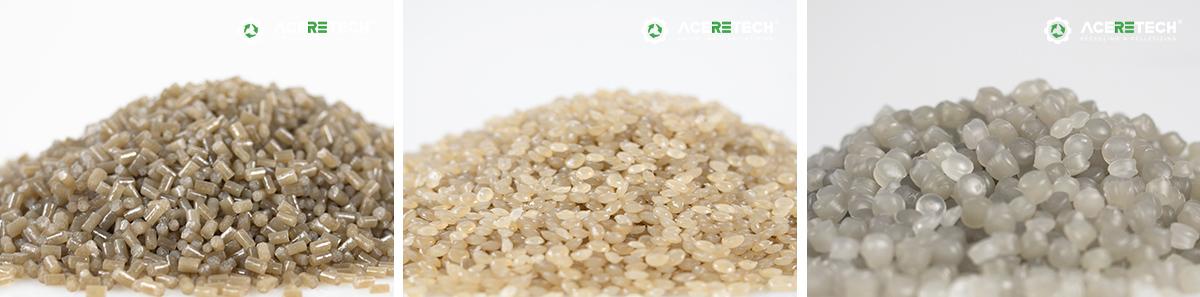
I. What Are "Bubble Pellets"?
👉 Definition
During the plastic pelletizing process, pores, bubbles, or void structures appear either within the interior or on the surface of the resulting recycled pellets.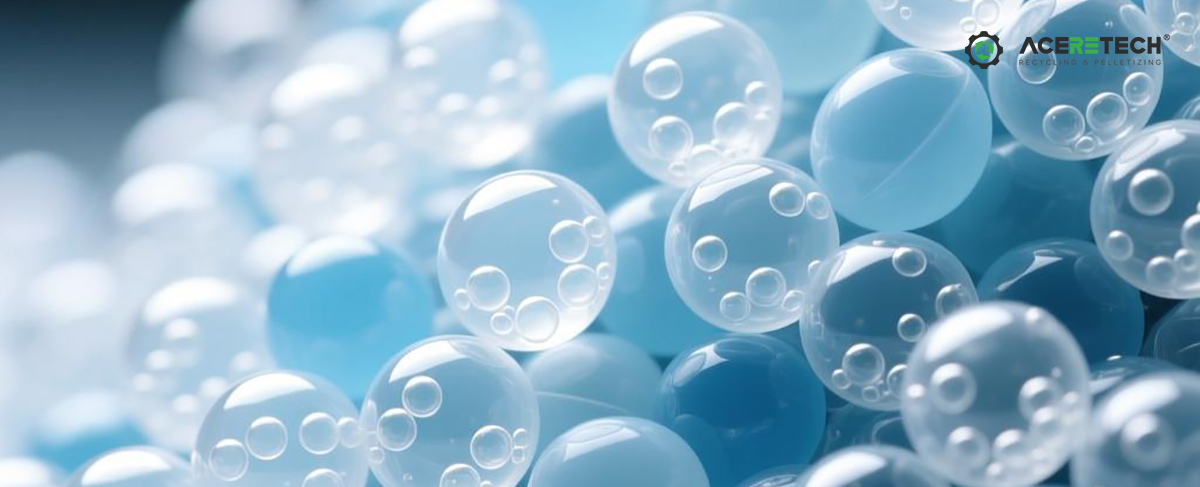
👉 Manifestations
Hollow voids inside the granules (visible upon cross-sectioning)
Pores or whitish discoloration on the surface
Bubbles or bulges in the extruded strands
Reduced granule density (lightweight/buoyant)
👉 Root Cause
Gases were not effectively expelled; they remained trapped within the molten plastic, forming voids.
II. The 5 Core Reasons for Bubble Formation
1️⃣ Excessive Moisture Content in Raw Materials (Most Common Cause)
👉 Sources:
Incomplete drying after washing
Hygroscopic materials (e.g., PET, PA)
High environmental humidity (secondary moisture absorption)
👉 Mechanism:
Moisture turns into steam at high temperatures → Cannot be completely expelled → Forms bubbles
👉 Typical Manifestations:
Continuous stream of fine bubbles
Unstable extrusion, accompanied by a distinct "puffing" sound
👉 Solutions:
Intensify drying (<1–3% moisture content)
Utilize pre-crystallization (for PET)
Install a dehumidifying drying system
2️⃣ Impurities and Volatiles (Contamination Issues)
👉 Sources:
Oil stains, adhesives, label residues
Organic matter (food residues)
Printing inks, additives
👉 Mechanism:
Volatilization at high temperatures → Release of gases → Formation of bubbles
👉 Typical Manifestations:
Large bubbles or irregular pores
Accompanied by black spots or foul odors
👉 Solutions:
Upgrade the washing line (especially hot washing)
Increase filtration precision (via screen changers)
Utilize a two-stage granulation system
3️⃣ Inadequate Venting System (Core Equipment Issue)
👉 Sources:
Single-vent or non-vented design
Inefficient vacuum venting
Clogged vent ports
👉 Mechanism:
Gases cannot be expelled from the melt in a timely manner → Become "sealed" inside the plastic
👉 Typical Manifestations:
Persistent bubble issues that are difficult to resolve through process adjustments alone
👉 Solutions:
Install a vacuum venting system (vacuum degassing)
Utilize a dual-vent or multi-vent configuration
Regularly clean the vent ports
4️⃣ Improper Temperature Control (Process Issues)
👉 Scenario 1: Temperature is Too High
Material degradation occurs → Generates gases
👉 Scenario 2: Temperature is Too Low
Insufficient plasticization → Gases cannot be released
👉 Typical Manifestations:
Bubbles + Color changes (yellowing, blackening)
👉 Solutions:
Optimize temperature zone settings
Maintain a stable plasticization state
5️⃣ Issues with Screw-Process Compatibility
👉 Causes:
Screw design is unsuitable for the specific material (e.g., film vs. rigid material)
Unsuitable compression ratio
Unstable filling (feed fluctuations)
👉 Mechanism:
Uneven plasticization + Low degassing efficiency → Residual gas
👉 Solutions:
Use a specialized screw (e.g., dedicated film screw)
Improve feeding stability (Compaction chamber + Belt conveyor)
III. The Impact of Bubbles on Products
❌ Reduces pellet strength
❌ Compromises the quality of downstream products (voids, cracking)
❌ Unsuitable for high-end applications (e.g., blown film extrusion)
❌ Lowers selling price (directly impacting profit margins)
IV. Systemic Solutions (ACERETECH Bubble-Free Pelletizing Solution)
When addressing the issue of bubbles during plastic pelletizing, optimizing a single process step often yields limited results. A truly effective solution requires a holistic, systemic approach that optimizes the entire workflow: "Drying + Washing + Degassing + Plasticization."
Through its comprehensive plastic recycling and pelletizing system design, ACERETECH achieves bubble control from the source all the way through to the final pelletizing stage, ensuring that the resulting pellets are high-density, void-free, and of consistent quality.
✅ 1. High-Efficiency Drying System (Moisture Control at the Source)
👉 Core Function: Reduces moisture content, thereby preventing bubble formation at the source.
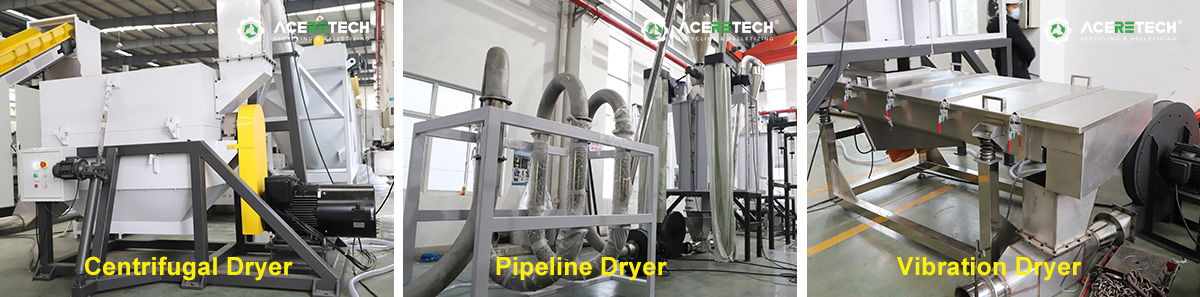
ACERETECH washing lines employ multi-stage combined drying technology, utilizing the synergistic effects of mechanical dewatering and hot-air drying to achieve highly efficient control over material moisture:
Centrifugal Dewatering
Rapidly removes surface free water, significantly reducing initial moisture levels.
Pipeline Thermal Drying
Utilizes a stable stream of hot air to evaporate residual moisture, enabling continuous drying.
Vibration Drying
Further ensures uniform moisture removal during material conveyance, preventing residual moisture pockets.
Through this dual mechanism—combining "mechanical dewatering + hot-air evaporation"—the material's moisture content can be consistently maintained within the ideal range, providing stable feeding conditions for the subsequent pelletizing stage.
👉 System Extension Advantages (Pelletizing Section):
The Compactor features pre-heating and pre-drying capabilities.
It further removes residual moisture and dust.
It effectively reduces the degassing load during the extrusion process.
It minimizes pellet defects such as bubbles and "silver streaks."
👉 Comprehensive Advantages:
Reduces gas generation at the source.
Enhances melt stability.
Improves pellet appearance and quality consistency.
Provides a stable guarantee for high-quality recycled materials.
👉 Core Function: Reduces contaminant levels to prevent gas generation caused by volatilization during the melting process.
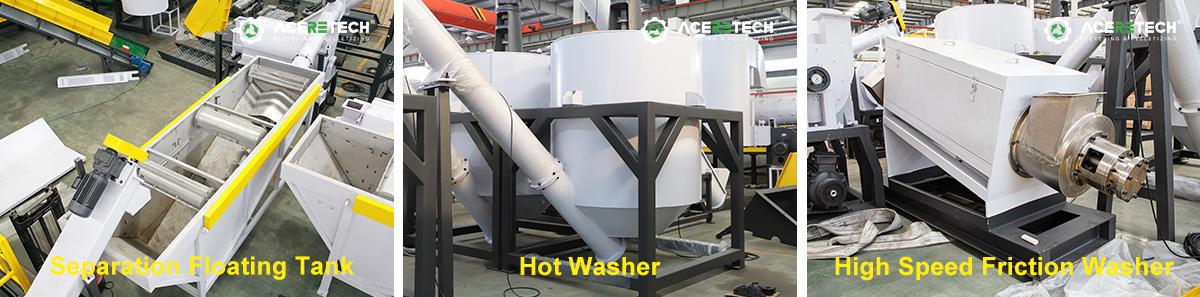
ACERETECH offers complete plastic washing line solutions. Through a multi-stage deep-cleaning process, these systems effectively enhance raw material cleanliness and reduce gas generation at the source:
Friction Washing:
High-speed friction removes adhering contaminants—such as mud, labels, and dust—from the material surface.
Hot Washing System:
Utilizes heat and chemical additives to effectively remove oil stains, adhesives, and organic residues.
Sink-Float Separation (Density Sorting):
Leverages density differences between various materials to separate impurities and improve raw material purity.
👉 System Advantages:
Significantly reduces the content of volatile substances, such as oil stains and adhesives.
Prevents the generation of gases and odors during the melting phase.
Minimizes defects such as bubbles, black spots, and impurities.
Enhances the purity and stability of recycled pellets.
👉 Results-Oriented:
High-Cleanliness Raw Materials = Fewer Volatile Gases = More Stable Pelletizing Process = Higher Quality Recycled Pellets
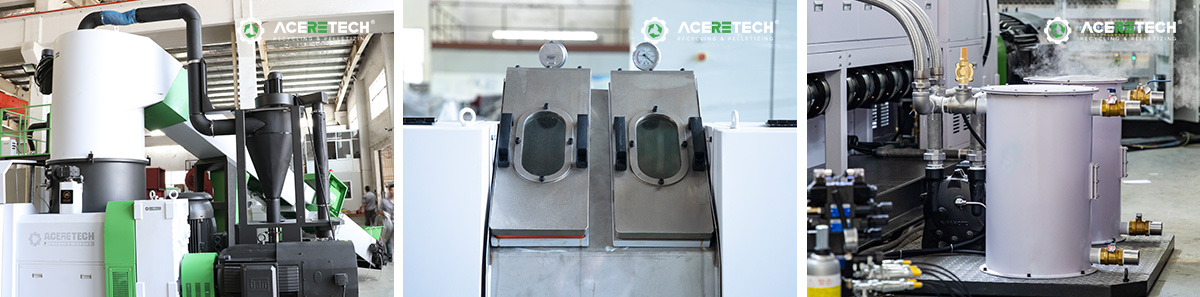
👉 Core Principle: Thoroughly expelling gases (the decisive factor in preventing bubbles).
ACERETECH granulation systems (e.g., the ACS-PRO series) feature:
🔹 Double Vacuum Degassing System:
A dual-degassing zone design that significantly boosts devolatilization capacity.
Effectively removes moisture, low-molecular-weight substances, and volatile gases.
🔹 Powerful Degassing Capability:
Significantly reduces bubbles within the granules, thereby improving material density and mechanical properties.
👉 Officially Verified Results:
Effectively reduces—or even completely eliminates—bubbles within the granules, thereby enhancing product appearance and quality.
✅ 4. High-Precision Filtration System (Eliminating Hidden Gas Sources)
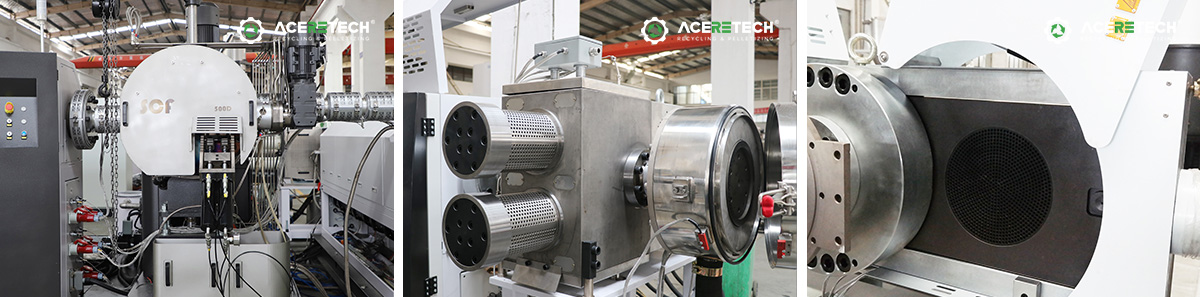
👉 Core Function: Efficiently remove impurities and prevent secondary gas generation
To ensure the high purity and stability of the recycled pellets, the system is equipped with a variety of high-precision filtration solutions that can be flexibly configured based on the contamination level of different materials:
SCF Self-Cleaning Filtration System
Enables continuous operation and effectively removes up to 5% contaminants (such as paper scraps, wood chips, metals, etc.), eliminating the need for frequent shutdowns to change screens and significantly boosting production efficiency.
Non-stop Piston-Type Filter
Allows for screen changes without halting operations, ensuring production continuity; suitable for high-output recycling lines.
Plate-Type Filtration System
Features a stable structure and high filtration precision; suitable for applications with stringent requirements regarding pellet quality.
👉 System Advantages:
Prevents impurities from decomposing and generating gas during the high-temperature melting process.
Reduces pellet defects such as bubbles and black spots.
Significantly improves the purity and consistency of recycled pellets.
Enhances processing stability for downstream finished products.
✅ 5. Stable Plasticization System (Prevents Gas Residue)
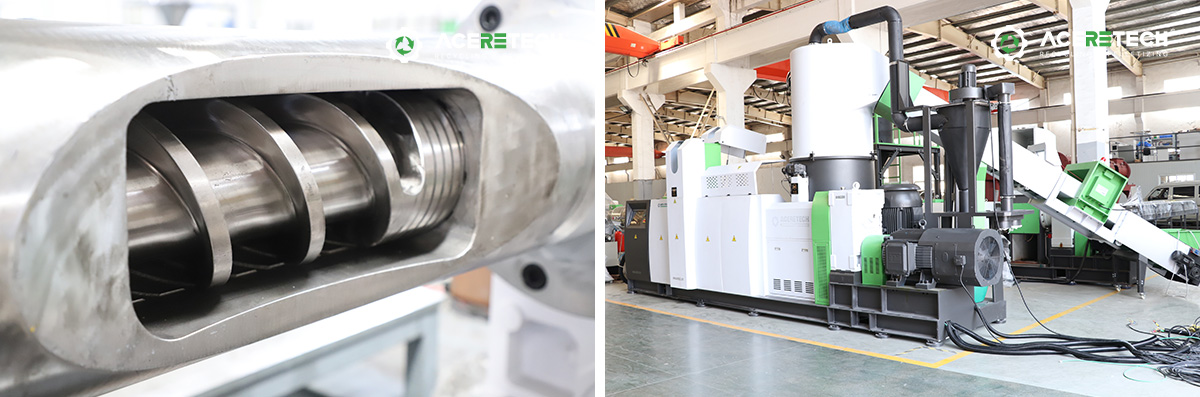
👉 Core Function: Achieves uniform plasticization and stable extrusion while preventing gas entrapment.
ACERETECH optimizes the extrusion system design to ensure that plastics undergo thorough plasticization and stable degassing during the melting phase, thereby effectively preventing issues related to residual gas:
Optimized Screw Design (High L/D Ratio)
Extends the plasticization path and improves melt uniformity, ensuring the material is fully plasticized.
Two-Stage Extrusion System (Optional)
Provides a secondary plasticization and degassing process, significantly enhancing gas release capabilities.
Compactor Feeding
Particularly suitable for lightweight materials such as films and woven bags; improves feeding stability and facilitates pre-compaction and pre-plasticization.
👉 System Advantages:
Improves the uniformity and flow stability of the plastic melt.
Promotes thorough gas release and minimizes residual gas.
Prevents "air entrapment" phenomena.
Enhances the continuity and stability of the granulation process.
👉 Final Results:
Pellets are free of bubbles and voids.
Smoother appearance and higher density.
Recycled material exhibits greater performance stability and can be used directly in downstream production.
✅ Key Summary
👉 Whether plastic granules contain bubbles fundamentally depends on three factors:
Whether moisture has been completely removed
Whether gases have been effectively vented
Whether impurities have been eliminated
Through a system design incorporating drying, washing, dual-vacuum degassing, and precision filtration, ACERETECH achieves the following:
👉 Comprehensive control over bubble formation throughout the entire process—from material source to granulation
👉 Stable production of high-density, void-free, and high-quality recycled granules
ACERETECH Recycling Machinery boasts over a decade of manufacturing experience in plastic granulation machinery, serving more than 1,350 long-term clients across over 100 countries worldwide. For years, our clients have utilized our granulators for continuous production; annual output remains stable with no signs of decline, while granule quality consistently maintains high density and remains bubble-free, thereby meeting the demands of high-end applications.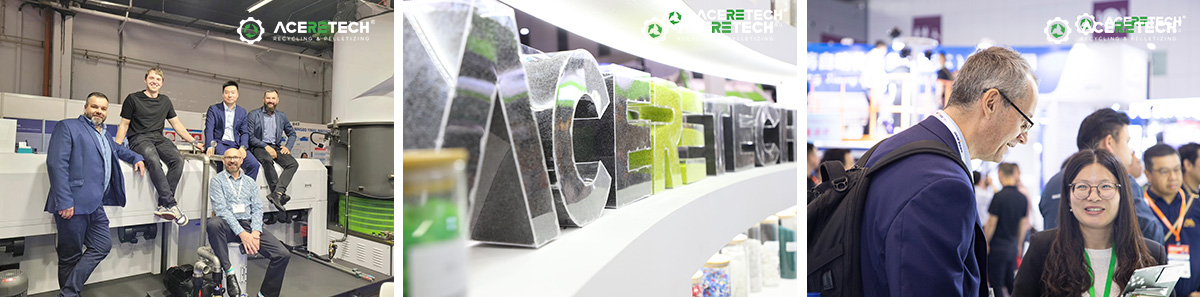
Client Case Studies & Shared Insights
In numerous PET bottle recycling projects, our ACS and AWS series granulators have operated continuously for over ten years, consistently producing uniform, stable, and bubble-free granules.
In film recycling projects, the combination of a compaction chamber and a dual-vacuum degassing system has enabled clients to produce granules with exceptional purity and high production efficiency.
Across diverse global environments, our centrifugal dewatering, pipeline drying, and vibrating drying systems consistently ensure that material moisture content remains within a range of 1–3%.
Conclusion:
ACERETECH’s extensive experience and mature processes provide new clients with a verifiable and reliable solution for producing bubble-free plastic granules. Clients can directly reference our existing case studies to effectively mitigate production risks.