I. What Are the Different Types of Plastic Recycling Machines?
Plastic recycling is not a process accomplished by a single piece of equipment; rather, it is a system involving multiple machines working in tandem. Common plastic recycling machines primarily include: shredders (for primary size reduction), crushers (for further size reduction), washing lines (for removing contaminants), and pelletizers (for producing recycled granules). When used in combination, these machines transform waste plastics into reusable industrial raw materials.
👉 Simply put:
A complete plastic recycling production line = Shredding & Crushing + Washing + Pelletizing & Regeneration
Click the link below to watch a video of plastic recycling machines in action.
II. Core Equipment Types in Plastic Recycling Systems
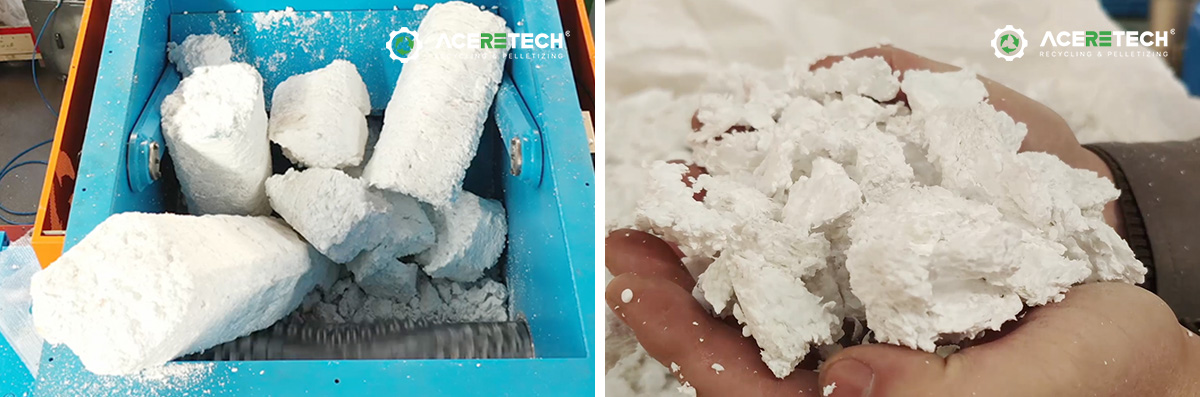
👉 Core Function: Pre-processing of large-volume plastics (Primary Size Reduction)
Shredders are used to perform the initial size reduction of bulky or irregularly shaped waste plastics. Utilizing a low-speed, high-torque shearing mechanism, they break down materials into uniform chunks, thereby meeting the specific input requirements for subsequent crushing, washing, or pelletizing processes.
👉 Applicable Materials:
Film rolls, woven bags / jumbo bags, plastic pipes, plastic pallets, lumps / purge, mixed rigid & flexible waste plastics.
👉 Working Principle:
Utilizes rotating single or dual-shaft blade assemblies working in conjunction with stationary blades to generate shearing forces, achieving continuous tearing and cutting;
Simultaneously employs a screen (sieve) to control the output size, ensuring the resulting material particles are uniform and consistent.
👉 Customer Benefits:
✅ Prevents Clogging: Effectively processes large-volume materials, preventing jams and blockages in downstream equipment.
✅ Enhances Line Stability: Ensures a continuous and uniform material feed throughout the system.
✅ Reduces Labor Costs: Minimizes the need for manual pre-cutting and intervention.
✅ Boosts Processing Efficiency: Lays a solid foundation for high-capacity recycling systems.
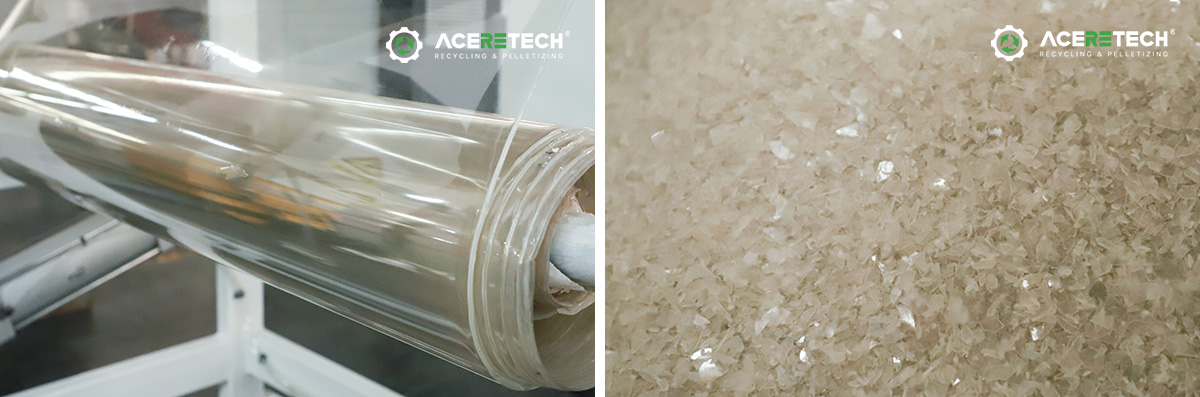
👉 Core Function: Secondary Size Reduction
The plastic crusher is utilized to perform secondary crushing on materials that have already undergone shredding, or on small-to-medium-sized plastic waste. By employing high-speed rotating blades to cut the material into uniform, fine fragments, it significantly enhances the processing efficiency and stability of subsequent washing and granulation stages.
👉 Applicable Materials:
PET Bottles, Plastic Films, Rigid Plastics (PP, HDPE, ABS, etc.), Injection Molding Waste, Medium-sized Plastic Lumps (Pre-shredded Plastics).
👉 Working Principle:
Generates a powerful shearing force through the interaction of high-speed rotating blades and stationary blades to rapidly pulverize the material;
Simultaneously, a screen is used to control the final output size (typically 10–20 mm), ensuring uniform and consistent particle size.
👉 Customer Benefits:
✅ Increased Throughput: High-efficiency crushing capability to meet large-scale recycling demands.
✅ Enhanced Washing Efficiency: Smaller particle sizes facilitate easier removal of contaminants.
✅ Ensures Uniform Feeding: Stabilizes the operation of downstream equipment.
✅ Reduced Energy Consumption & Wear: Optimized particle size minimizes the load on subsequent processing stages.
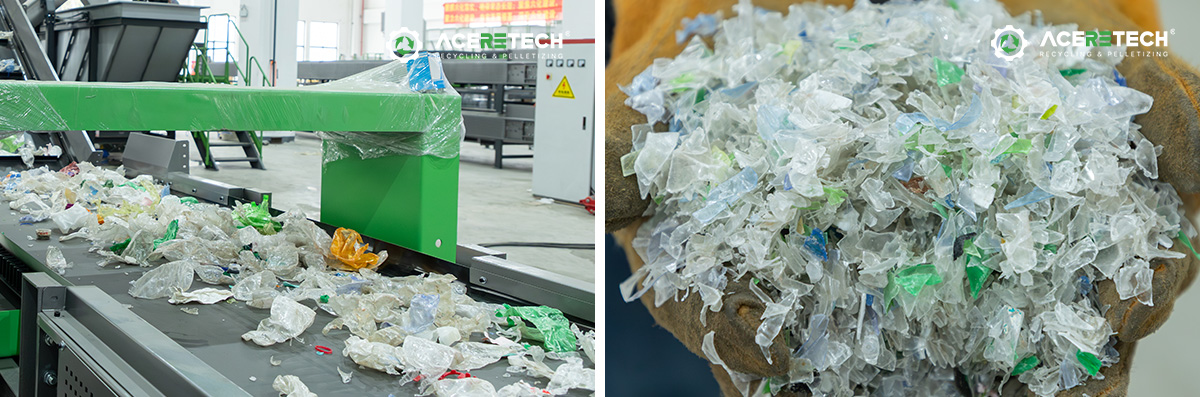
👉 Core Function: Contaminant Removal & Quality Enhancement of Recycled Materials (Washing & Purification)
The plastic washing line (also known as a plastic recycling washing system) employs a multi-stage washing and sorting process to effectively remove dirt, oil stains, labels, and other impurities from waste plastics. This significantly improves material purity, providing a stable, high-quality feedstock for subsequent granulation processes. This system is widely utilized across various recycling scenarios, such as PET washing lines and plastic film washing lines.
👉 Typical Configuration:
Friction Washer — Powerfully removes surface contaminants.
Rinsing Tank — Provides basic rinsing and separates light impurities.
Sink-Float Separation — Separates materials based on density (e.g., PP/PE from PET); a critical stage in the plastic recycling washing system.
Hot Washing System — Suitable for heavily contaminated materials (e.g., oil-stained films, bottle flakes); commonly found in high-end PET washing lines.
Dewatering & Drying System — Reduces moisture content, ensuring the stable operation of the entire plastic washing line.
👉 Working Principle:
The complete plastic washing line progressively removes contaminants through a combined process involving "rinsing + friction + density separation + thermal treatment."
Simultaneously, by integrating centrifugal dewatering and hot-air drying systems, the material's moisture content is controlled within a range of 1–3%, ensuring it reaches an optimal state before entering the granulation system.
👉 Customer Benefits:
✅ Determines Recycled Material Quality: An efficient plastic recycling washing system directly influences the grade of the final granules.
✅ Increases Granule Selling Price: High-purity output facilitates entry into high-end application markets (e.g., products from high-quality PET washing lines).
✅ Meets High-End Application Demands: Suitable for high-standard applications such as food-grade and fiber-grade materials.
✅ Enhances Overall Line Efficiency: An optimized combination of plastic cleaning machinery reduces energy consumption and wear on downstream equipment.
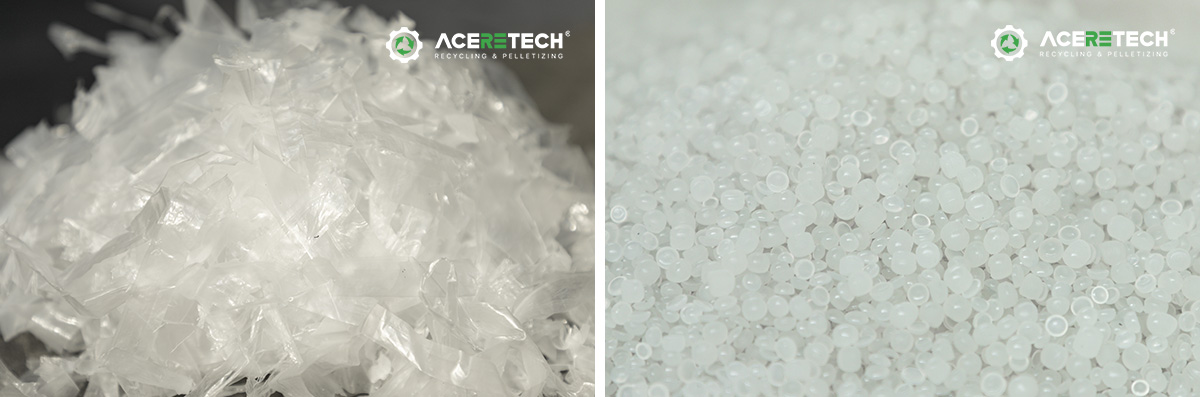
👉 Core Function: Enabling Recycling & Value Creation
The plastic pelletizing machine (or plastic recycling pelletizing line) is the most critical piece of equipment in the entire recycling system. Through processes involving melting, extrusion, filtration, and pelletizing, it transforms washed waste plastics into uniform, stable recycled pellets, thereby achieving true resource reuse and value enhancement.
👉 Output Products:
Recycled Plastic Pellets
Directly applicable to:
Blown Film Production
Injection Molding
Extrusion
High-quality pellets can partially replace virgin plastics and are widely utilized in the manufacturing of various plastic products.
👉 Working Principle:
In a plastic pelletizing machine, raw materials are conveyed via a screw mechanism into a heating system, where they undergo melting and plasticization.
Subsequently, the material passes through a filtration system (screen changer) to remove residual impurities before being extruded through a die head. Finally, it is processed by a water-ring or strand-cutting pelletizing system to form uniform granules, thereby completing the entire plastic recycling pelletizing line.
👉 Customer Benefits:
✅ Enhances Material Value (Core Profit Driver): Transforms waste materials into high-value granules.
✅ Facilitates Standardized Sales (Easy to Trade): The granular form is easier to store, transport, and sell.
✅ Improves Product Consistency (Stable Quality Output): Ensures uniform granule size and stable performance.
✅ Boosts Market Competitiveness (Higher ROI): High-quality granules enable access to higher-end application markets.
👉 Key Takeaway:
👉 The pelletizing machine determines the final product quality and profitability; it serves as the core profit-generating equipment within any plastic recycling system.
III. Conclusion
Understanding the various types of plastic recycling equipment is the first step toward building an efficient recycling system. However, what truly impacts profitability is not merely the equipment itself, but rather the rationality and optimization of the entire production line configuration.
👉 If you are currently planning a plastic recycling project, we can provide customized equipment solutions and investment advice tailored to your specific raw materials, production capacity requirements, desired output quality, and budget.
👉 We invite you to contact us to receive a personalized solution and quotation.
FAQ
Q1. What equipment does a plastic recycling system typically include?
A: It typically includes shredders, crushers, washing lines, and pelletizing machines.
Q2. Which piece of equipment is the most important?
A: The pelletizing machine is the core component; it directly determines your final profit margins.
Q3. Can I purchase equipment individually?
A: Yes, you can configure a combination of equipment based on your specific operational needs.
Q4. Is the equipment the same for different materials?
A: No, different types of plastics require different processing techniques and specialized equipment.
Q5. Which solution is best suited for small-scale factories?
A: We recommend opting for a semi-automatic or modular production line to minimize investment risks.