Introduction
Driven by environmental policies and the circular economy, global waste plastic recycling has shifted from "extensive processing" to "refined profitability." For recycling companies, the plastic pelletizing machine is not just a piece of equipment, but the core factor determining the profit of the finished pellets. Choosing the right pelletizing technology means higher capacity, lower energy consumption, and higher quality recycled pellets.
A plastic pelletizing machine is a precision extrusion system that transforms waste plastic into standardized pellets through physical processing.
1. Basic Working Principle of a Plastic Pelletizing Machine (The Process)
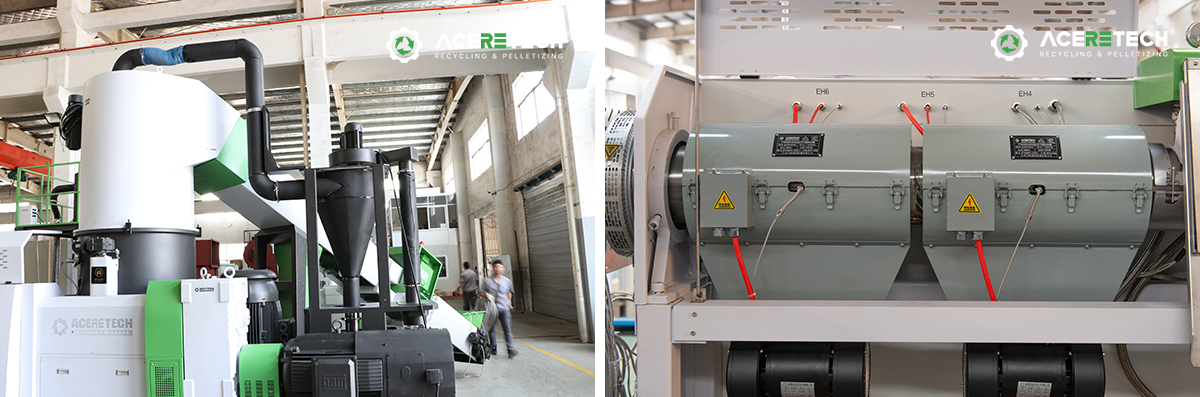
Plastic pelletizing is the process of turning "loose waste" into "standardized particles."
Feeding: Raw materials are fed in through quantitative feeding, forced feeding, or a compaction chamber (for lightweight films).
Melting & Plasticizing: Inside the extruder barrel, the plastic is molten through the shearing heat of the heater and screw.
Filtration: Impurities in the waste material are removed by a screen changer.
Extrusion: The melt is forced into a die to form a specific shape.
Pelletizing: The material is cut into pellets and cooled simultaneously or subsequently.
2. Core Machine Types
Single-stage vs. Two-stage: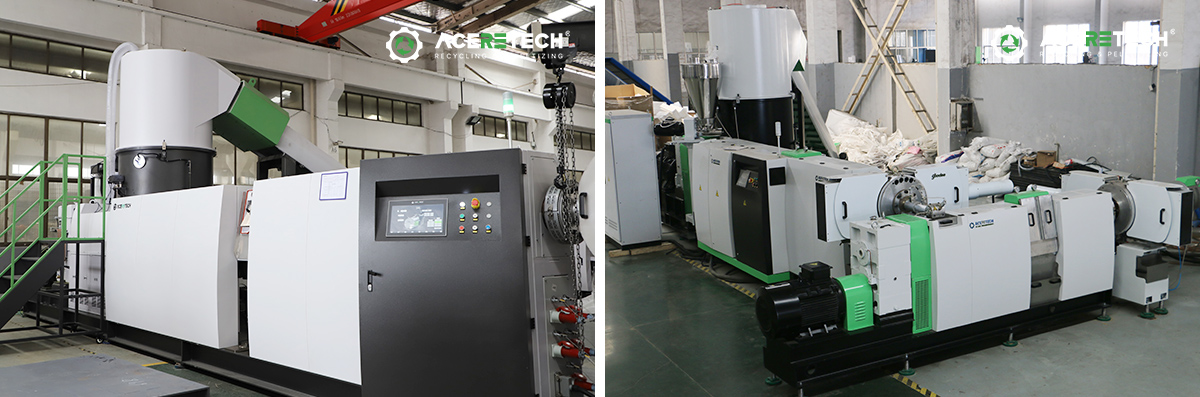
Single-stage: Simple structure, suitable for clean waste plastics.
Double-stage (mother-daughter extruder): Twin extruders connected in series. The first stage handles plasticizing and venting, while the second stage handles secondary filtration and stable pelletizing. Addresses pain points: Suitable for recycled materials with high moisture content, many impurities, and high requirements for pellet quality.
Single-screw vs. Twin-screw: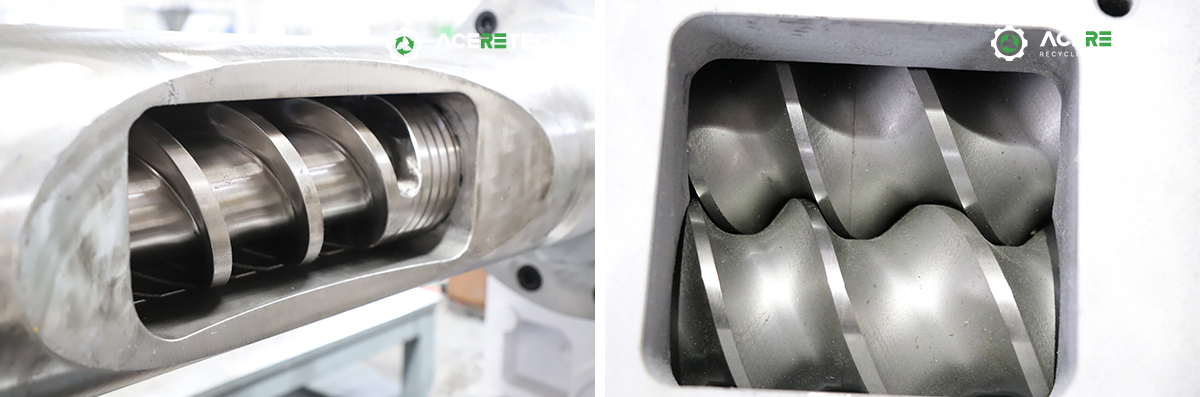
Single-screw: The mainstream model, suitable for recycling most general-purpose plastics (PE, PP).
Twin-screw: Strong shear force, good mixing effect. Suitable for modified granulation, color masterbatch or powder.
3. Core Components
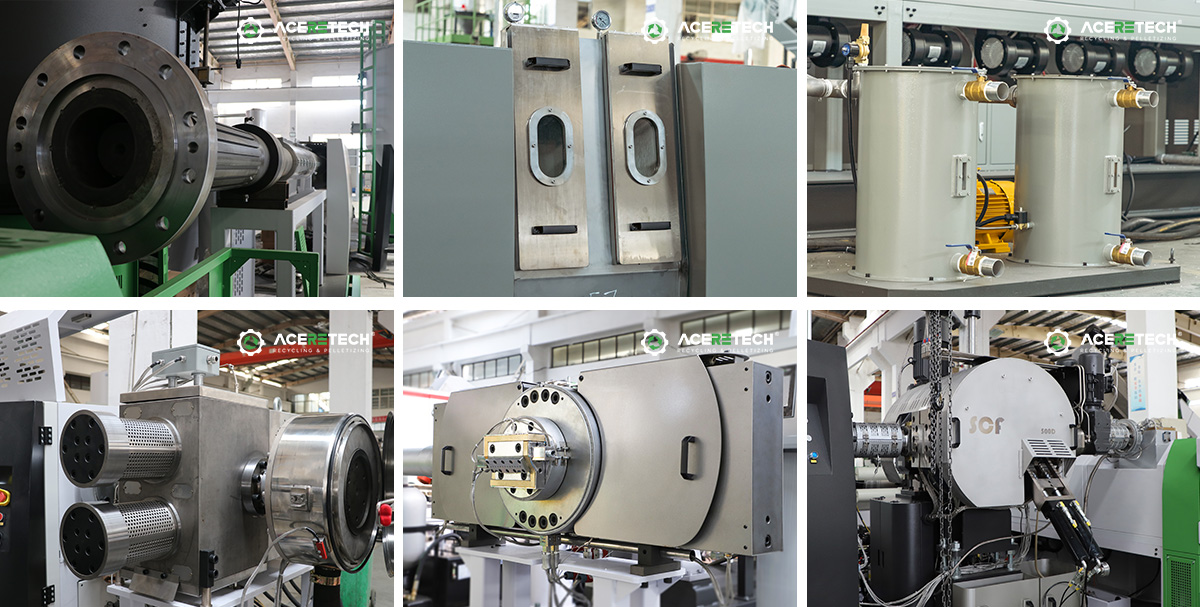
Screw & Barrel: The heart of the granulator. Materials are typically 38CrMoAlA (nitrided) or bimetallic for increased wear resistance.
Degassing System:
Natural Degassing: Removes small amounts of moisture.
Vacuum Degassing: High-pressure removal of ink, moisture, and small volatile molecules, preventing granule bubble formation.
Screen Changer:
None-Stop Piston Type Filter: Economical basic type
Plate Type Filter: Stable high-yield type
Self-Clean Filter: Fully automatic high-efficiency type
4. Selection Criteria
L/D Ratio: The ratio of screw length to diameter. Recycled materials typically require a larger L/D ratio (e.g., 30:1 or 36:1) to ensure adequate venting and plasticizing.
Capacity: Usually measured in kg/h.
Energy Consumption: How much electricity is consumed per kilogram of pellets (kW/kg), a key indicator of a manufacturer's technological sophistication.
5. Key Technologies: How to Choose the Most Suitable Pelletizing System?
The pelletizing method directly affects the appearance and commercial value of the pellets. The table below compares three currently mainstream technologies:
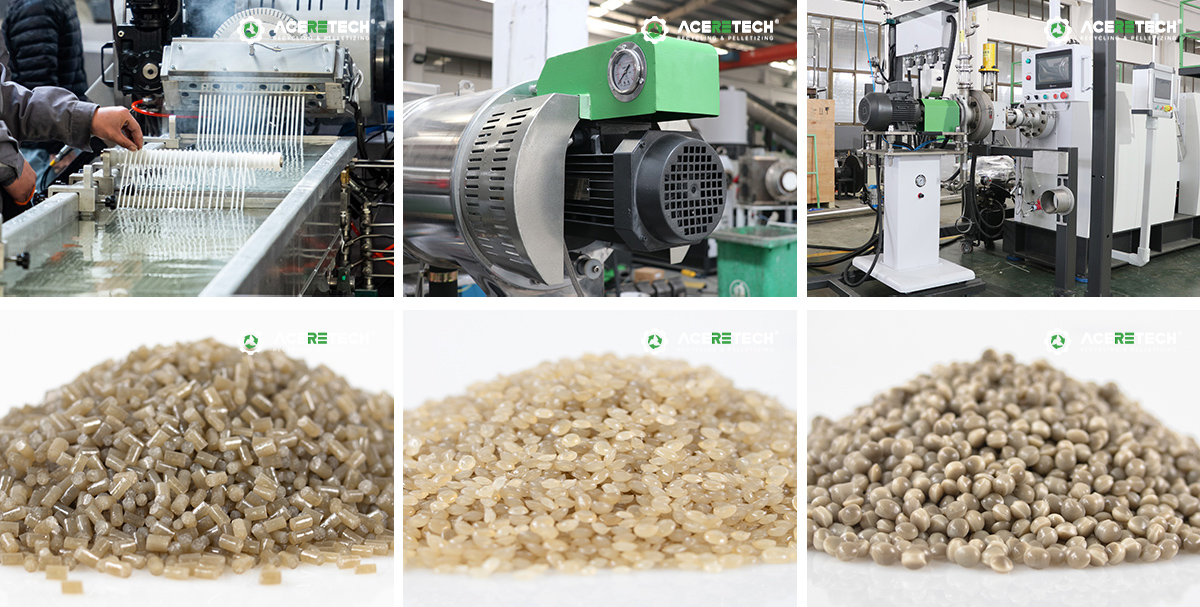
Pelletizing Systems Comparison:
| Pelletizing Methods | Process Principles | Core Advantages | Applicable Materials |
| Strand Pelletizing |
Strands are cooled in a water tank before entering the pelletizer |
Mature technology, low cost, intuitive operation | Rigid crushed materials (ABS/PC), PET |
| Water-ring Pelletizing | The die surface is hot-cut and then cooled by a centrifugal water ring | Small footprint, no risk of breakage, round pellets | PE, PP film or packaging bag recycling |
| Underwater Pelletizing | Cut and conveyed within a fully enclosed water chamber | Highly automated, perfect pellet quality | High-end engineering plastics, elastomers (TPU) |
II. Common Challenges and Industry Solutions
In actual production, recyclers often face three major challenges. ACERETECH offers targeted technology upgrades:
Moisture Issue: How to handle high-moisture materials after washing?
Solution: Employ compactor technology. The material is preheated and compacted through friction before entering the extruder, significantly increasing feed density and output.
Impurity Filtration: How to reduce frequent downtime for screen replacement?
Solution: Introduce a self-cleaning filter. No frequent manual intervention is required; it automatically removes slag, ensuring continuous 24-hour production.
Particle Quality: How to avoid bubbles and odors?
Solution: Enhance the three-stage vacuum degassing system. This forcibly removes ink, moisture, and small volatile molecules from the melt, ensuring crystal-clear, dense, and bubble-free particles.
III. Why Choose ACERETECH?
As a leading global manufacturer of plastic pelletizers, ACERETECH is committed to providing customers with highly competitive recycling solutions.
High Cost-Effectiveness and Low Cost: We offer factory-direct pricing, reducing unit energy consumption through optimized energy-saving design, ensuring customers recover costs in the shortest possible time.
Superior Quality and Certifications: The equipment operates stably and reliably, is CE/ISO/CSA certified, and complies with FDA standards. The pellet purity is suitable for direct use in downstream high-end product manufacturing.
Global Service Support: We offer OEM/ODM customization services, have an experienced global installation and maintenance team, and provide a one-year warranty, ensuring worry-free production.
Intelligent Connectivity: Equipped with an advanced PLC intelligent control system, it enables one-button start/stop and real-time monitoring, simplifying complex recycling processes and making them more efficient.
IV. Conclusion
Choosing the right plastic pelletizing equipment is the cornerstone of balancing environmental protection and business profitability. ACERETECH's high-efficiency pelletizing lines not only help you solve the problem of waste plastics but also create high-quality recycled resources.
[Take Action Now] Want more technical specifications?
👉 [Click here to download the ACERETECH Technical Manual]
👉 [Contact our engineers for a customized quote]
FAQ
Q1: How often should I replace the screw and barrel of my plastic pelletizing machine?
A: The lifespan of the screw and barrel depends on the material being processed (e.g., whether it contains glass fiber or highly abrasive impurities). A standard nitrided screw typically lasts 8-12 months. ACERETECH uses bimetallic screws and barrels, which are 3-5 times more wear-resistant and corrosion-resistant than ordinary screws. This significantly extends replacement cycles and reduces long-term maintenance costs when handling highly abrasive recycled materials.
Q2: Can one pelletizing line handle different types of plastic materials?
A: This is a common misconception. Although the basic principles are similar, PE/PP (polyolefin) and PET (polyester) have completely different melting points and rheological properties. PE/PP typically uses water-ring hot cutting, while PET often uses strip pelletizing and requires special crystallization treatment. ACERETECH offers multi-functional customized solutions. By changing specific screw combinations and die systems, a single machine can achieve maximum flexibility in handling multiple similar materials, helping customers expand their business scope.
Q3: Which is better for PE/PP film recycling: Single-stage or Two-stage pelletizing?
A: This depends on the cleanliness of the raw material and the ink content. If you are processing clean factory waste, a single-stage system is more cost-effective. However, if you are processing post-consumer waste plastics containing printing ink or other impurities, a two-stage/mother-baby system is a better choice because it provides secondary filtration and stronger vacuum degassing capabilities, effectively eliminating particle bubbles.
Q4: How do I choose between Strand, Water-ring, and Underwater pelletizing?
A: Strand: Most economical, suitable for rigid materials (such as PET flakes and ABS).
Water-ring: Most versatile, suitable for PP/PE recycling, requires less space and eliminates the problem of broken strips.
Underwater: Most advanced, suitable for high-volume or viscous materials, producing spherical pellets with the highest market price.
Q5: Is ACERETECH’s machine energy-efficient?
A: Yes. ACERETECH employs an intelligent energy management system, coupled with inverter control and high-efficiency heaters, which can reduce energy consumption per ton (kW/kg) by approximately 15%-25% compared to traditional pelletizers. Furthermore, our equipment complies with CE and ISO standards, ensuring high production capacity while minimizing operating costs.