I. HDPE Recycling
HDPE (High-Density Polyethylene) is widely used in plastic containers, industrial packaging, household goods, pipes and other applications. During manufacturing and post-consumer recycling, HDPE scrap can be processed into flakes via proper recycling and pelletizing processes, and reused as recycled raw material.
For recycling enterprises and plastic processors, converting HDPE flakes into uniform recycled pellets requires stable material feeding, controllable melting, effective degassing, melt filtration and reliable pelletizing.
In this application test, ACERETECH demonstrated the capability of its ASE single-screw plastic recycling machine for processing HDPE flakes, with an actual output of approximately 380–450 kg/h.
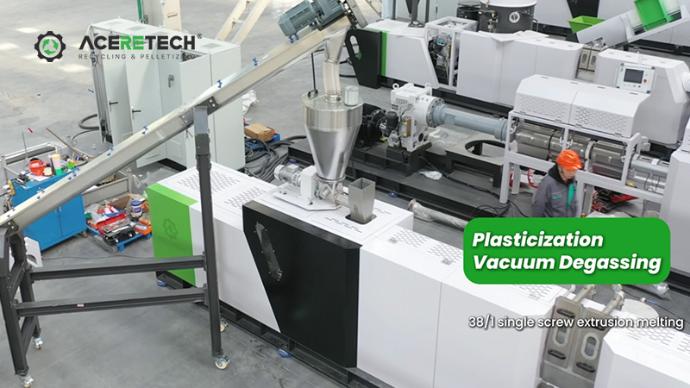
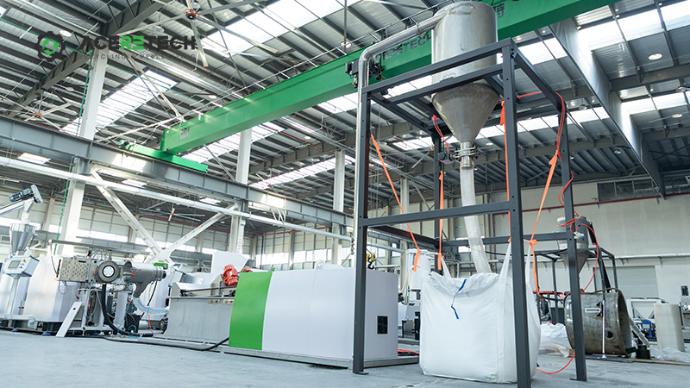
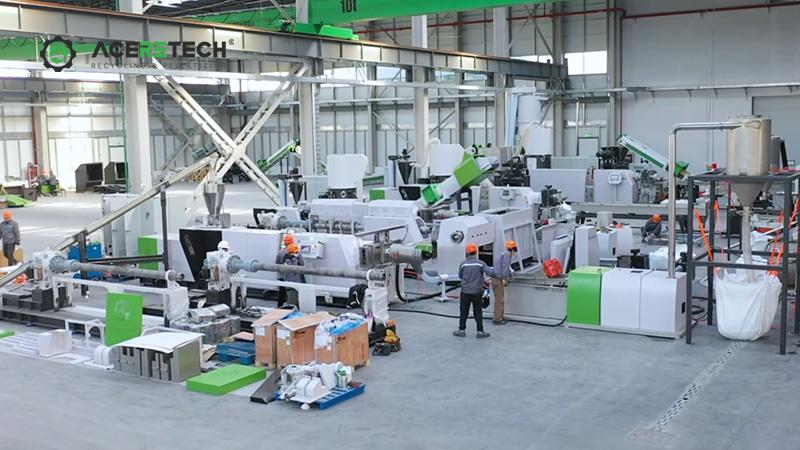
The system integrates screw feeding, single-screw extrusion, vacuum degassing, plate-type melt filtration, water-ring pelletizing and pellet dewatering, forming a complete HDPE flakes recycling and pelletizing line.
II. HDPE Flakes Recycling: Processing Requirements & Challenges
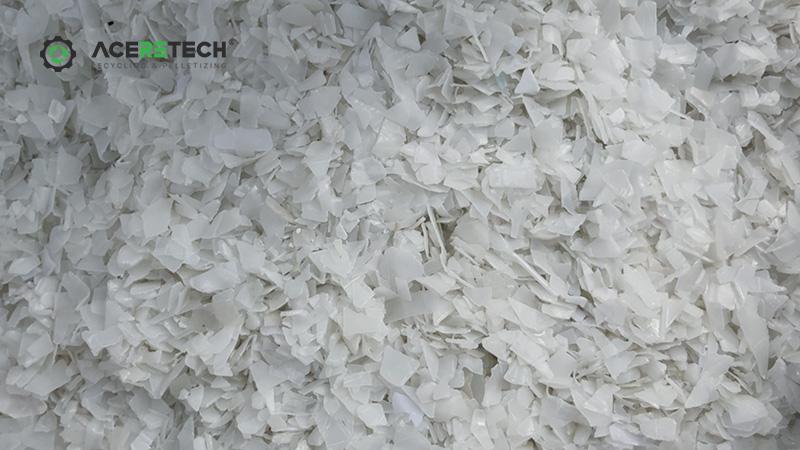
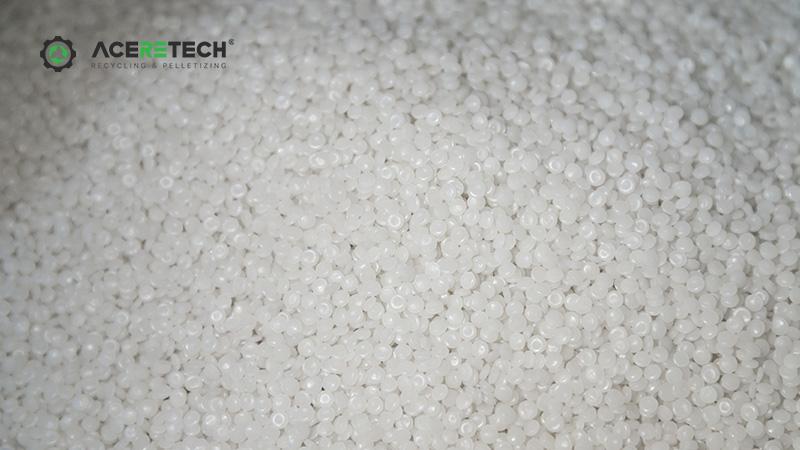
HDPE flakes are generally obtained by shredding, crushing and, where necessary, washing rigid HDPE scrap. Their physical properties may vary depending on the original product, upstream processing conditions and material sources.
Compared with consistent virgin resin, recycled HDPE flakes may bring the following challenges during processing:
1. Feeding Stability
Flakes feature irregular shapes and variable bulk density, and their flowability is usually inferior to standard plastic pellets. Unstable feeding causes fluctuation in extrusion output and undermines production stability.
2. Plasticization Consistency
Variations in flake size and material properties affect melting and homogenization. The extrusion system must deliver sufficient melting and mixing capacity to guarantee stable polymer melt.
3. Removal of Moisture & Volatiles
Residual moisture, entrained air and volatile substances may compromise melt processing and the appearance of recycled pellets. A properly configured vacuum degassing system helps efficiently remove these substances during extrusion.
4. Melt Contamination
Foreign particles and unmelted impurities may remain in recycled materials after upstream processing. Melt filtration separates these contaminants prior to pelletizing.
5. Pelletizing & Dewatering
Filtered molten HDPE needs to be made into uniformly shaped pellets. Efficient cooling, pellet separation and dewatering are critical for subsequent material handling and storage.
Based on the above requirements, when selecting HDPE flakes recycling equipment, priority shall be given to the integrated solution of feeding, extrusion, degassing, filtration and pelletizing systems.
III. ACERETECH ASE Series Single-Screw Plastic Recycling Machine
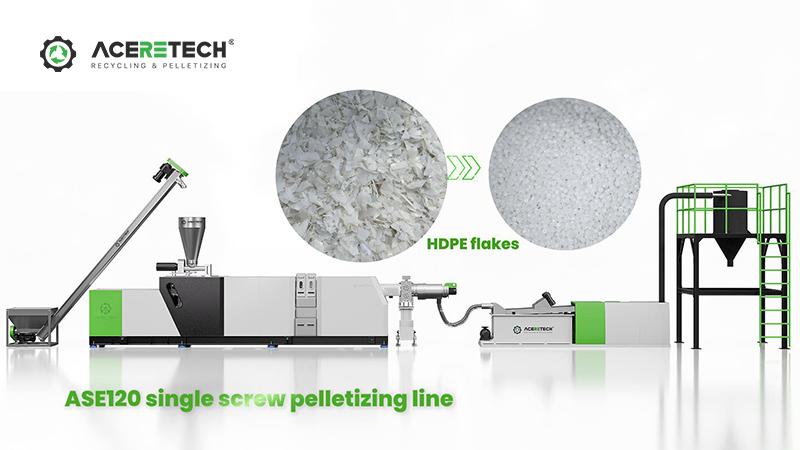
ACERETECH ASE series machines are suitable for recycling and re-pelletizing pre-processed rigid plastics, including HDPE, PP, ABS, PS and other compatible plastic flakes.
For this HDPE flakes recycling application, the ASE single-screw extruder is equipped with a 120 mm bimetallic screw (L/D ratio: 38), together with a vacuum degassing system, plate filter and water-ring pelletizing system.
During the test, the overall line achieved an actual output of around 380–450 kg/h. The practical capacity may vary subject to flake size, bulk density, moisture content, contamination level, HDPE grade, melt flow characteristics and operating parameters.
| Main Equipment Specifications |
|
| Item |
Technical Details |
| Equipment Model |
ASE Single Screw Extruder Rigid Plastic Recycling Pelletizing Machine |
| Processed Material | HDPE Flakes |
| Actual Output | 380–450 kg/h |
| Feeding System | Screw Conveyor + Volumetric Feeder Hopper |
| Screw Diameter | 120 mm |
| Screw L/D Ratio | 38 |
| Max Screw Speed | 105 rpm |
| Barrel Heating | Ceramic Heaters + Stainless Steel Cover |
| Degassing Mode | Vacuum Degassing System |
| Melt Filtration | Plate Filter |
| Pelletizing Method | Water-Ring Pelletizing |
IV. HDPE Flakes Pelletizing Process: Step-by-Step Introduction
The ASE HDPE recycling and pelletizing line adopts an integrated process covering the whole workflow from material feeding to finished pellet collection.
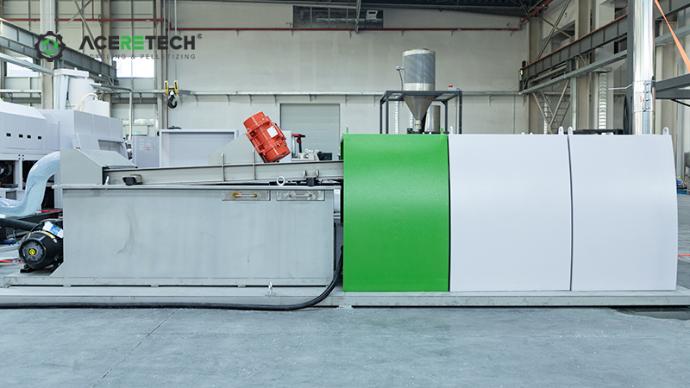
1. Screw Conveying & Volumetric Feeding
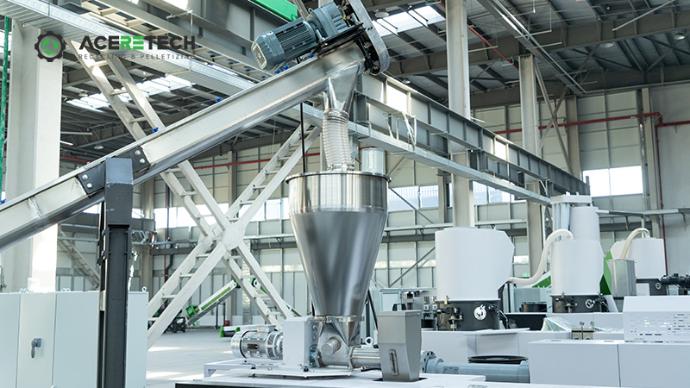
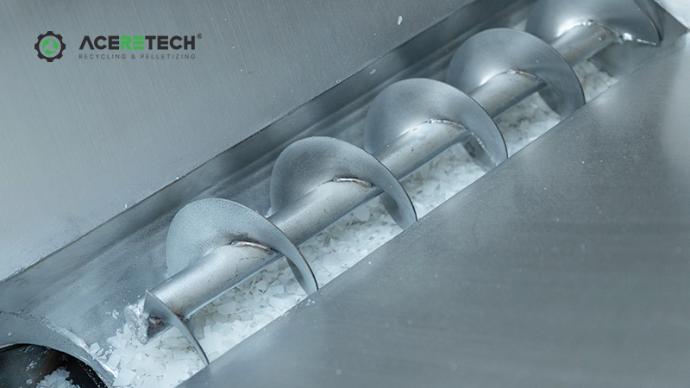
The recycling process starts with a screw conveyor, which delivers pre-treated HDPE flakes to the feeding section of the extruder.
The volumetric feeder hopper regulates material supply to the extrusion system. This feeding configuration stabilizes material flow and reduces fluctuations caused by uneven feeding.
For this application, the screw conveyor is specially configured to adapt to the HDPE flakes used in the test.
2. Single-Screw Extrusion & Plasticization
After entering the extruder, HDPE flakes are conveyed, heated and melted by the rotating single screw.
The ASE system is fitted with a 120 mm bimetallic screw and barrel at an L/D ratio of 38, with a maximum screw speed of 105 rpm.
The bimetallic construction is designed to improve wear resistance when processing recycled rigid plastics. The barrel is heated by ceramic heaters with stainless steel guards outside heating zones.
Screw geometry and temperature settings work together to ensure controlled melting and melt homogenization.
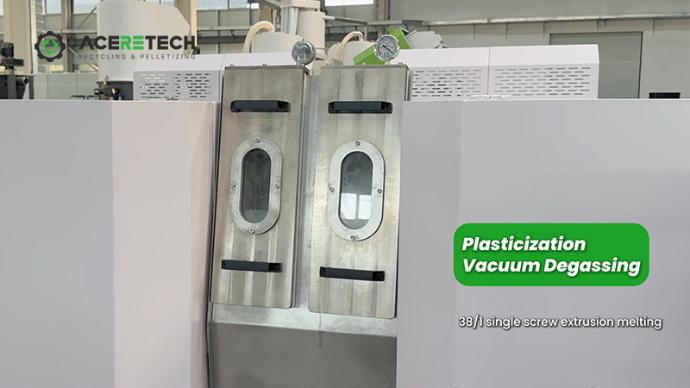
3. Vacuum Degassing System
During extrusion, the vacuum degassing system removes moisture, entrained air and volatile substances from molten plastic.
This process minimizes gas-related defects in recycled pellets such as bubbles and voids.
Degassing performance depends on feed moisture content, contamination level, extrusion parameters and vacuum system operation.
4. Plate-Type Melt Filtration
After plasticization and degassing, molten HDPE flows into the plate melt filter.
Before melt enters the pelletizing section, the filtration system separates foreign particles and unmelted impurities from the polymer melt.
This step improves melt cleanliness and ensures consistent quality of recycled pellets.
Specific filtration grade shall be selected according to the cleanliness of incoming flakes and quality requirements of final pellets.
5. Water-Ring Pelletizing System
Filtered molten HDPE is extruded through the die and cut into pellets by the water-ring pelletizing system.
Cutting speed is matched with extrusion conditions to guarantee uniform pellet formation.
Water-ring pelletizing combines cutting and cooling, making it a practical option for automated plastic recycling pelletizing lines.
6. Pellet Dewatering & Collection
Once pelletizing is completed, pellets pass through a vibrating dewatering screen to remove most surface moisture.
Further mechanical dewatering is performed by a centrifugal dryer, after which pellets are conveyed to the storage silo.
This downstream setup enables continuous pellet processing and facilitates subsequent packaging or storage.
Related HDPE Recycling Solutions
Explore more HDPE recycling solutions for different types of plastic waste:
HDPE Film Recycling and Pelletizing Solution
Discover an efficient recycling process for HDPE film, from compaction and extrusion to high-quality recycled pellets.
In-Plant Recycling Solution for HDPE Hollow Bottles
Learn how to recycle HDPE bottle production waste directly within manufacturing facilities, helping reduce material waste and improve resource utilization.
V. Why Choose ACERETECH ASE HDPE Recycling Machine?
Selecting a proper HDPE flakes recycling machine requires consideration not only of extrusion output, but also feeding stability, wear resistance, degassing performance, melt filtration capacity and downstream pellet handling. These factors jointly determine overall processing performance.
Developed for rigid plastic recycling, ACERETECH ASE series features multiple design advantages:
1. Wear-Resistant Bimetallic Screw & Barrel
Equipped with bimetallic screw and barrel specially engineered to resist wear generated during rigid plastic recycling, extending the service life of key extrusion components.
2. Controllable Material Feeding
Screw conveyor and volumetric feeder hopper provide dedicated feeding solutions for pre-processed plastic flakes and crushed rigid plastics.
3. Vacuum Degassing
The vacuum degassing system helps remove moisture, air and volatiles inside molten polymer during extrusion.
4. Multiple Melt Filtration Options Upon Customer Request
🔹 SCF Self-Cleaning Filter – Preferred for High-Contamination Materials
Fully automatic continuous slag discharge, no screen change interruption, suitable for high-output and highly automated lines.
🔹 Plate Filter – Cost-Effective Option
Dual-station design for standby operation, screen change without shutdown, balancing production continuity and investment cost.
🔹 Non-Stop Piston Filter – Classic Reliable Choice
Easy operation, low running cost, screen change without halt, widely used for rigid plastic recycling.
5. Flexible Pelletizing Configurations
Based on material characteristics and production demands, ASE series supports multiple pelletizing technologies including water-ring pelletizing, strand pelletizing and underwater pelletizing systems.
6. Intelligent Control System
The integrated control system allows operators to monitor and adjust all production parameters to coordinate every section of the recycling line.
VI. Applications of Recycled HDPE Pellets
Recycled HDPE pellets can be used in various manufacturing sectors, subject to raw material source, recycling process, pellet quality and performance requirements of end products.
Potential downstream applications include:
- Plastic pipes and fittings production
- Plastic injection-molded products
- Industrial containers and packaging components
- Plastic pallets and turnover boxes
- Non-food-contact plastic articles
- Other applicable HDPE extrusion and forming applications
The suitability of recycled HDPE pellets for a specific application shall be assessed via material testing and end-product performance verification. Additional testing and certification may be required if the application involves regulatory requirements or product safety standards.
VII. Customized HDPE Recycling & Pelletizing Solutions
HDPE recycling projects differ widely in raw material source, flake size, contamination level, moisture content and production targets. Therefore, raw material properties and quality requirements for final recycled pellets must be fully considered when selecting HDPE recycling equipment.
ACERETECH supplies recycling and pelletizing equipment for various rigid plastics (HDPE, PP, ABS, PS and other compatible materials). The recycling process can integrate upstream shredding, crushing, washing, drying as well as downstream extrusion, melt filtration and pelletizing systems according to project requirements.
ACERETECH ASE series single-screw extruders are well suited for projects requiring re-pelletizing of pre-processed rigid plastic flakes.
Are you sourcing HDPE flakes recycling equipment or a customized plastic recycling and pelletizing line?
Feel free to contact ACERETECH to discuss your material characteristics, processing requirements and equipment configuration plans.
FAQ
The right machine depends on the specific condition of HDPE flakes, required production capacity and quality standards for final pellets. For pre-processed rigid HDPE flakes, a single-screw plastic recycling extruder equipped with matched feeding, vacuum degassing, melt filtration and pelletizing systems is a viable solution.
The ASE series covers multiple models with different processing capacities. In this HDPE flakes recycling test, the ASE unit with a 120 mm screw achieved an actual output of approximately 380–450 kg/h. Exact capacity varies with material properties and operating conditions.
The vacuum degassing system removes moisture, entrained air and volatile substances from molten plastic during extrusion. It reduces defects caused by residual gas and improves consistency of recycled pellet quality. Actual degassing effect is subject to material condition and system configuration.
Yes. The ASE series is designed to handle various pre-processed rigid plastics including HDPE, LDPE, PP, ABS, PS, HIPS and PC. Specific applications require matched screw design and process configuration.
Water-ring pelletizing cuts molten melt directly at the die, with water flow cooling and conveying pellets simultaneously. Strand pelletizing first extrudes molten plastic into continuous strands, which are cooled then cut into pellets. The selection depends on material properties, melt flowability, production capacity and operational preference.
Yes. ACERETECH provides equipment and customized solutions covering plastic shredding, crushing, washing, drying, extrusion, melt filtration and pelletizing. System configuration can be adjusted according to customer’s raw material features, target output and end-product specifications.