I. Recycling HDPE Preform Production Scrap Directly in the Production Plant
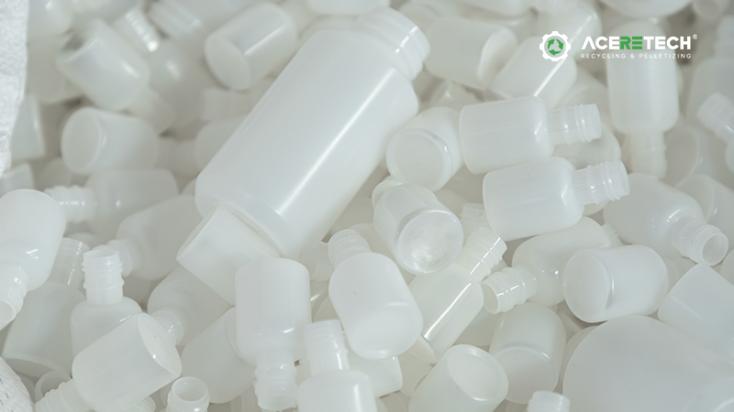
HDPE preform manufacturing generates different types of production scrap, including defective preforms, startup waste, machine setup scrap, and production changeover waste.
For manufacturers producing preforms continuously, storing this waste for later recycling can create additional material handling, storage, and labor requirements.
For this application, ACERETECH uses the ASP-ECO integrated in-plant recycling system to process HDPE preform waste directly where it is generated.
The system integrates:
Shredding → Forced Feeding → Extrusion → Filtration → Air-Ring Pelletizing
into one compact unit.
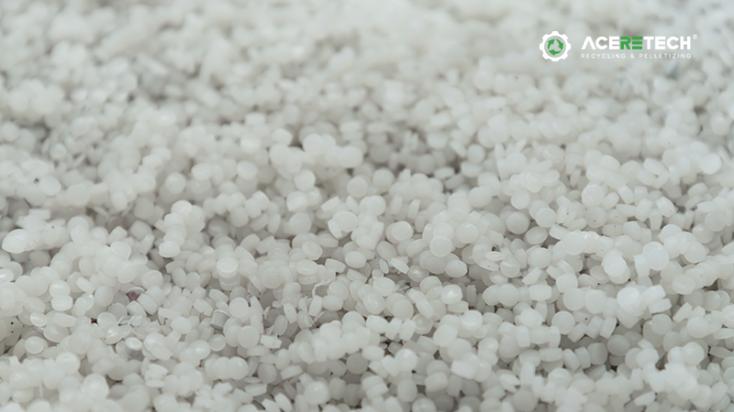
With a processing capacity of approximately 50–70 kg/h, the system is designed for immediate recycling of HDPE preform production scrap and conversion into recycled plastic pellets.
II. Application Background
HDPE preform production inevitably generates a certain amount of production scrap.
Typical waste materials include:
• Defective HDPE preforms
• Startup waste
• Machine setup waste
• Production changeover waste
• Other in-plant HDPE production scrap
Although these materials are relatively clean compared with post-consumer plastic waste, they can still create practical problems when they are collected and processed offline.
The waste needs to be:
1. Collected
2. Stored
3. Transported
4. Reprocessed
5. Returned to production
For a continuous manufacturing operation, these additional handling steps can increase labor requirements and occupy valuable production-floor space.
The objective of this application is therefore to recycle the production scrap directly inside the manufacturing plant.
III. Why In-Plant Recycling?
The main difference between this application and conventional plastic recycling is where the recycling takes place.
Conventional Offline Recycling
Production Scrap → Collection → Temporary Storage → Transportation → External / Separate Recycling Line → Recycled Pellets
In-Plant Recycling
HDPE Preform Scrap → ASP-ECO → Recycled Pellets
The ASP-ECO allows the production scrap to be processed close to the point where it is generated.
This reduces the need for secondary material handling and allows the recycled material to be returned to the manufacturing process more efficiently.
IV. Application Process
The actual process in this application is:
HDPE Preform Waste → Shredding → Forced Feeding → Melting & Extrusion → Filtration → Air-Ring Pelletizing → Recycled HDPE Pellets
The entire process is integrated into the ASP-ECO system.



Step One: HDPE Preform Shredding
HDPE preforms are relatively rigid and have an irregular shape.
They are therefore not suitable for direct feeding into the extrusion section without prior size reduction.
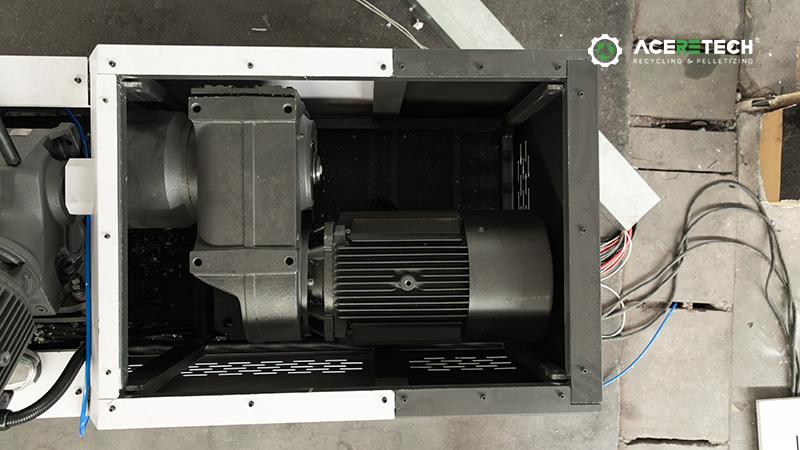
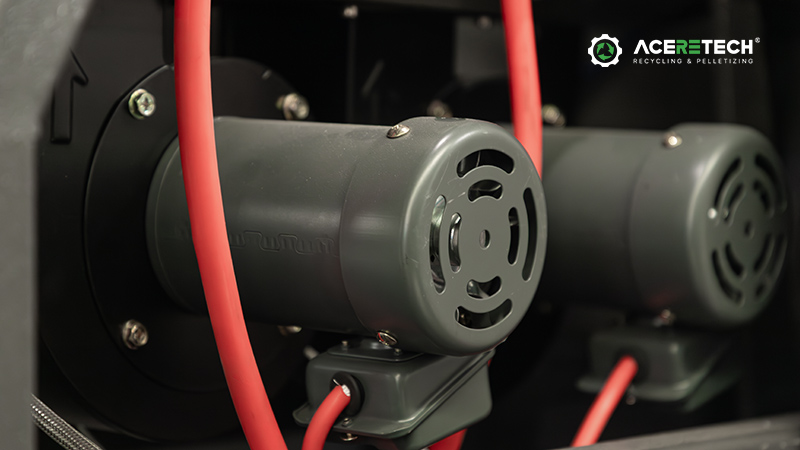
The ASP-ECO integrates a low-speed, high-torque shredding system at the front of the machine.
The shredding stage reduces the size of the HDPE preform waste and prepares it for stable feeding into the extrusion section.
The purpose of this stage is primarily:
• Size reduction
• Material preparation
• Stable feeding
• Continuous processing
This allows the preform waste to move directly into the following processing stage without requiring a separate external crusher or shredder.
Step Two: Forced Feeding
After shredding, the prepared HDPE material is transferred to the forced feeding section.
The ASP-ECO uses a controlled feeding system to continuously push the material into the extrusion section.
This is particularly important for an integrated recycling system because the shredding and extrusion processes need to operate continuously.
The system also includes feeding options such as:
• Belt conveyor
• Traction rollers
• Manual feeding port
These components help maintain a controlled material flow into the recycling system.
Step Three: Melting and Extrusion
The prepared HDPE material then enters the single-screw extrusion system.
The current ASP-ECO configuration presented in this application uses:
• Ø80 mm screw
• L/D 15
The extrusion section melts and plasticizes the shredded HDPE material before filtration and pelletizing.
The purpose of this stage is to transform the solid shredded preform material into a homogeneous plastic melt suitable for downstream filtration and pelletizing.
Step Four: Melt Filtration
After plasticization, the molten HDPE passes through the filtration section.
The purpose of filtration is to remove impurities from the melt before pelletizing.
For this application, the ASP-ECO uses a manual screen changer.
The filtration stage helps improve the consistency of the recycled material before it enters the pelletizing section.
Step Five: Air-Ring Pelletizing
After filtration, the molten HDPE enters the pelletizing section.
The ASP-ECO uses an air-ring pelletizing system to convert the filtered melt into recycled HDPE pellets.
The pelletizing stage produces a more uniform and manageable recycled material form.
The final product can then be collected and transferred back into the manufacturing process according to the customer's production requirements.
Closed-Loop In-Plant Recycling
One of the main characteristics of this application is its closed-loop production concept.
Instead of sending production scrap to a separate recycling process, the material can be processed directly within the manufacturing plant.
The simplified material flow is:
HDPE Preform Production → Production Scrap → ASP-ECO In-Plant Recycling → Recycled HDPE Pellets → Return to Production
This allows manufacturers to recover value from their own production scrap while reducing the amount of material that needs to leave the production facility.
V. Application Configuration
| ItemApplication Configuration | Application Configuration |
| Feedstock |
HDPE preform production scrap |
| Application | In-plant / online recycling |
| Capacity | Approx. 50–70 kg/h |
| Shredding | Integrated low-speed, high-torque shredder |
| Feeding | Forced feeding |
| Extruder | Single screw, Ø80 mm, L/D 15 |
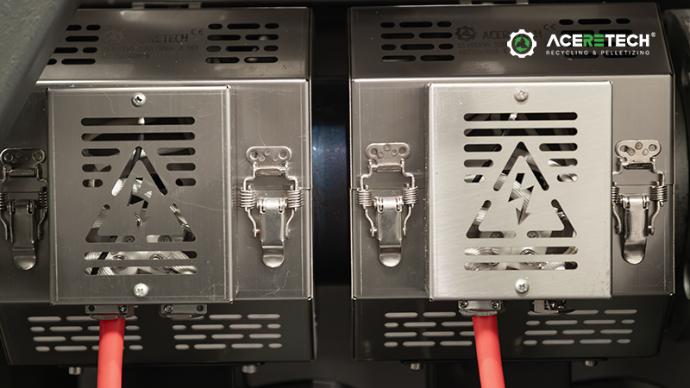
| Heating | Ceramic heaters |
| Cooling | Air-cooling system |
| Filtration | Manual screen changer |
| Pelletizing | Air-ring pelletizer |
| Final Product | Recycled HDPE pellets |
VI. Why Integrate Shredding and Pelletizing?
For relatively clean production scrap, using a large standalone recycling line is not always necessary.
The ASP-ECO combines several processing stages into one compact system:
• Shredding
• Feeding
• Extrusion
• Filtration
• Pelletizing
This integrated configuration reduces the number of separate machines and intermediate conveying stages required.
For manufacturers with limited floor space or relatively small amounts of production scrap, this makes the system particularly suitable for in-plant recycling applications.
VII. Application Value
The main value of this application is not simply converting HDPE waste into pellets.
It is the ability to recycle production scrap close to the point where it is generated.
1. Immediate Waste Recovery
Production scrap can be processed without long-term accumulation.
2. Reduced Secondary Handling
The material does not need to be repeatedly transported between the production area and a separate recycling area.
3. Compact System Design
Shredding, extrusion, filtration, and pelletizing are integrated into one system.
4. Reduced Floor-Space Requirement
The integrated design requires less space than a conventional multi-machine recycling setup.
5. Material Recovery
Clean HDPE production scrap can be converted back into recycled HDPE pellets.
6. Closed-Loop Production
The recycled pellets can be returned to the manufacturing process according to the customer's material and product requirements.
VIII. From HDPE Preform Waste to Recycled Pellets
The complete application can be summarized as:
Defective HDPE Preforms / Production Scrap → Integrated Shredding → Forced Feeding → Melting & Plasticizing → Melt Filtration → Air-Ring Pelletizing → Recycled HDPE Pellets
The entire process takes place within the compact ASP-ECO system.
This makes the solution suitable for manufacturers looking to establish an in-plant recycling loop for their HDPE preform production scrap.
IX. Application Summary
This application demonstrates the use of the ASP-ECO integrated recycling system for HDPE preform production scrap.
The main challenge is not the contamination typically associated with post-consumer waste, but rather the need to efficiently handle clean production scrap without accumulating, transporting, and separately processing it.
The ASP-ECO addresses this requirement by integrating:
Shredding → Forced Feeding → Extrusion → Filtration → Pelletizing
into one compact system.
With a capacity of approximately 50–70 kg/h, the system converts HDPE preform production scrap into recycled HDPE pellets directly within the manufacturing plant.
Have HDPE Preform Production Scrap to Recycle?
If your HDPE preform production generates clean defective preforms, startup scrap, or changeover waste, an in-plant recycling system can help convert this production scrap back into usable recycled HDPE pellets.
The ASP-ECO integrates:
Shredding → Forced Feeding → Extrusion → Filtration → Air-Ring Pelletizing
in one compact system with a processing capacity of approximately 50–70 kg/h.
Contact ACERETECH to discuss your in-plant HDPE recycling application.
FAQ
Q1: What type of HDPE waste can be processed?
A: This application focuses on clean HDPE preform production scrap, including defective preforms, startup waste, machine setup waste, and production changeover waste.
Q2: Can HDPE preforms be fed directly into the extruder?
A: It is not recommended.
HDPE preforms are relatively large and rigid, so they first need to be shredded to provide suitable feedstock for the extrusion section. The ASP-ECO integrates the shredding and extrusion functions into one system.
Q3: Does the ASP-ECO include a filtration system?
A: Yes. The system includes a manual screen changer for melt filtration before pelletizing.
Q4: What is the main difference between this and a conventional recycling line?
A: The key difference is the in-plant integrated configuration.
Instead of collecting and transporting the production scrap to a separate recycling line, the ASP-ECO combines the main recycling stages into one compact system that can be installed directly in the production workshop.
Q5: What is the capacity of the ASP-ECO?
A: The capacity presented in this application is approximately 50–70 kg/h.
Q6: Can the recycled pellets be reused in production?
A: For clean HDPE production scrap, the recycled pellets can be returned to injection molding or extrusion production according to the customer's specific product requirements and allowable recycled-material ratio.
Q7. Is the ASP-ECO only for HDPE preforms?
A: No. The current system is also described as suitable for other relatively clean in-plant plastic waste streams, including PE film waste, edge trims, woven bags, and hollow containers. However, the application presented here focuses specifically on HDPE preform recycling.