Friction Agglomeration Pelletizer
The ACERETECH Friction Agglomeration Pelletizing Line is specifically engineered for the recycling of flexible materials—such as synthetic fibers, fabrics, and filaments. By integrating a DTS disc shredder with friction agglomeration technology, the system achieves continuous, tangle-free processing, low-energy pelletizing, and the production of high-quality recycled granules. It is ideally suited for applications involving the recycling of textile waste and plastic films.
I. Why is Chemical Fiber Recycling Becoming Increasingly Important?
Against the backdrop of increasingly stringent global environmental regulations and the rapid expansion of the circular economy, chemical fiber recycling is emerging as a key growth driver within the plastics recycling industry:
♻️ Rapidly growing demand for the recycling of waste textiles
📉 Continuously rising raw material costs
🌍 Increasing brand demand for recycled materials (rPET / rPP)
👉 Efficiently processing flexible chemical fiber materials has become a critical challenge for the industry.
II. Core Challenges in Recycling Chemical Fiber Materials
Compared to rigid plastics, chemical fiber materials (such as filaments, yarns, and fabrics) present distinct challenges during the recycling process; their unique physical properties directly increase the difficulty of handling:
🔹 Prone to Entanglement (Filaments & Fibers)
The filamentous structure makes these materials highly prone to wrapping around the main shafts of rotating machinery, leading to increased equipment load and potential shutdowns.
🔹 Prone to Bridging (Bridging Effect)
Materials tend to form "bridges" within hoppers or during conveyance, resulting in irregular feeding or complete material flow blockages.
🔹 High Flexibility
The elastic nature of these materials makes them difficult to cut effectively using traditional blades, thereby reducing shredding efficiency.
🔹 High Volume, Low Density (Low Bulk Density)
These materials occupy a large amount of space and are inefficient to convey, leading to increased overall energy consumption.
In actual production environments, these issues typically result in:
❌ Frequent clogging of shredders and downtime for maintenance
❌ Instability in the conveying system, disrupting continuous production
❌ Significantly increased energy consumption and rising operational costs
❌ The inability to achieve fully automated operation across the entire recycling line
👉 Conclusion: Traditional plastics recycling equipment is ill-equipped to handle the specific processing requirements of chemical fiber materials; therefore, specialized solutions optimized for flexible materials are essential.
III. Core Solution: DTS Disc-Type Shredder
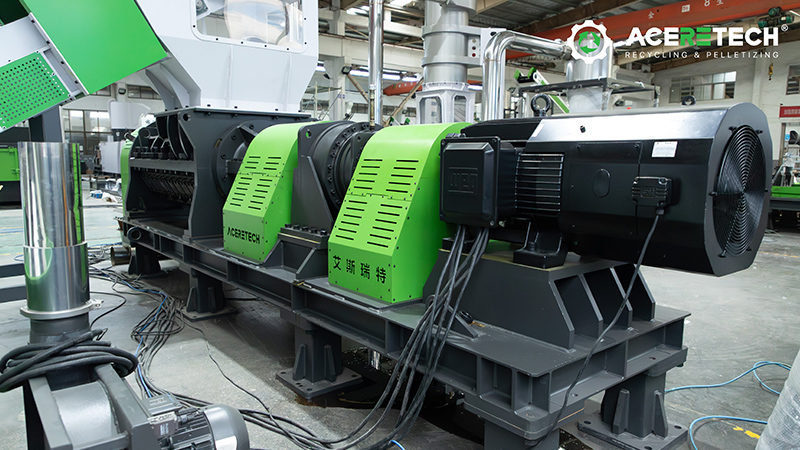
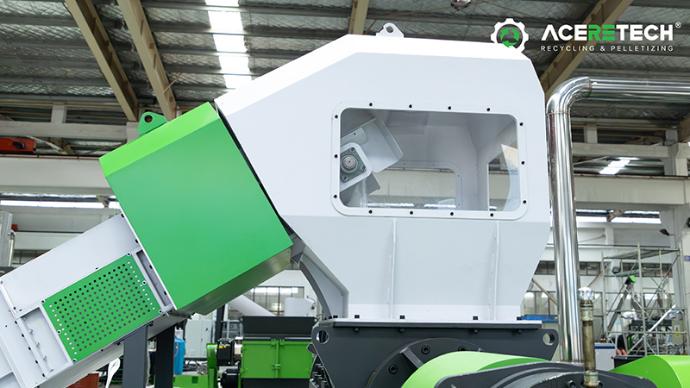
To effectively address the industry challenges of "easy entanglement" and "cutting difficulty" associated with flexible materials—such as chemical fibers—during the recycling process, ACERETECH has introduced the DTS Series Plastic Shredder (Disc-Type Shredder). Specifically engineered for flexible materials, this system ensures the stable and reliable operation of the entire processing line.
✔ Optimized Design for Flexible Materials
Suitable for a wide range of challenging recyclable materials:
Synthetic Filaments / Yarns
Waste Fabrics / Textiles
Plastic Films / Woven Bags
👉 Effectively resolves the "material entanglement leading to shutdown" issue common in traditional equipment.
✔ Disc Cutter Structure (Core Technological Advantage)
Utilizes an innovative Disc Cutting System, offering the following advantages:
Anti-entanglement structural design: Reduces the risk of material wrapping around the main shaft.
Strong continuous cutting capability: Boosts processing efficiency.
Minimizes stretching effects: Prevents flexible materials from being "stretched without severing."
👉 Achieves a more stable and smoother shredding process.
✔ Single-Shaft Structure + High-Precision Blade Gap Control
Through optimized mechanical structure and manufacturing precision, the system achieves:
Uniform output size → Facilitates stable operation of downstream granulation equipment.
Reduced equipment load fluctuation → Enhances overall system reliability.
Minimized risk of material blockage and machine jamming.
IV. Core Process: Friction Agglomeration Technology
Following the initial shredding stage, the material enters the core component of the entire production line: the Friction Agglomerator. This technology is specifically designed for flexible materials and serves as the key to achieving highly efficient recycling and low-energy production.
✔ Working Principle
The equipment generates intense friction through high-speed rotation, causing the material to heat up rapidly within a short timeframe and undergo a physical structural transformation:
👍 Volume Reduction
Significantly reduces the loose volume of the material, thereby enhancing efficiency in conveying and storage.
👍 Densification
Increases bulk density, providing a stable feedstock for subsequent processing.
👍 Agglomeration
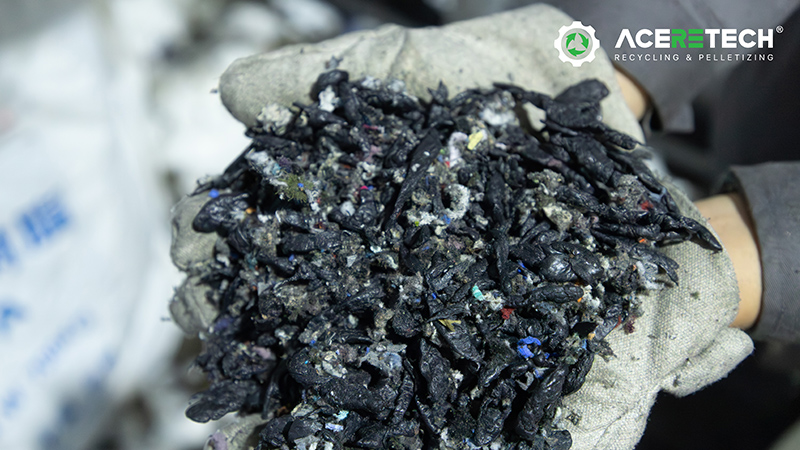
Transforms loose fibers into uniform granules, facilitating direct reuse.
👉 Core Advantage: No Need for Traditional Heating Systems
Compared to traditional melt extrusion granulation, the greatest breakthrough of this technology lies in the fact that:
❌ No electric heating or prolonged preheating is required.
❌ No complex drying systems are needed.
❌ No high-energy-consumption extrusion processes are involved.
👉 Material transformation is achieved solely through friction-generated heat.
✔ Practical Value Delivered
🔋 Significant Energy Savings
⚡ Faster startup times, boosting production efficiency
♻️ Reduced thermal degradation, improving material utilization rates
🎯 Uniform granules, suitable for direct downstream applications
👉 Friction Agglomeration Technology = Lower Energy Consumption + Shorter Process + More Stable Output
👉 Compared to traditional extrusion granulation systems, this technology is particularly well-suited for low-density, easily entangled flexible materials, offering a more efficient alternative solution within the field of chemical fiber recycling.
Comparison with Traditional Pelletizing Processes
| Comparison Criteria | Friction Agglomeration Pelletizing | Traditional Extrusion Pelletizing |
| Energy Consumption | ✅ Low | ❌ High |
| Pre-treatment | ❌ No drying required | ✅ Required |
| Equipment Complexity | ✅ Simple | ❌ Complex |
V. Complete Line Configuration and Automation System
✔ Core Components of the Complete Line
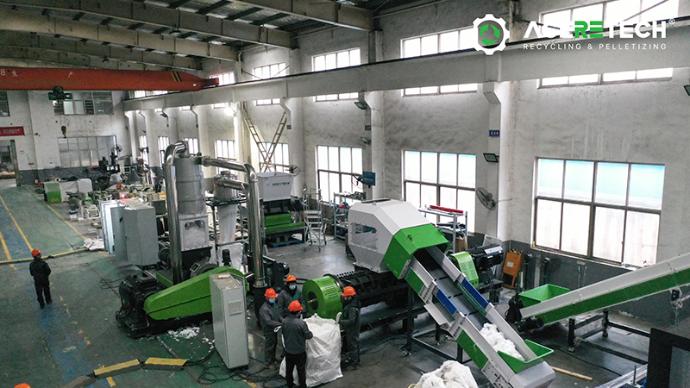
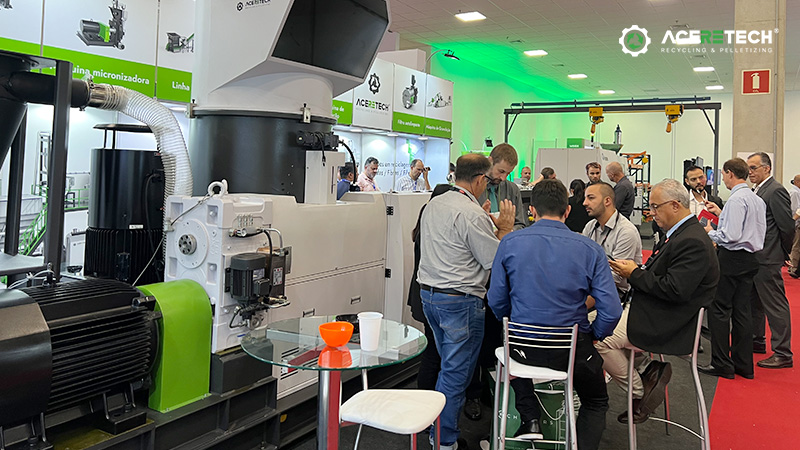
The ACERETECH Friction Agglomeration Pelletizing Line features a modular design, comprising three core units:
🔹 DTS Disc Shredder
Enables efficient, anti-tangling pre-treatment of flexible materials.
🔹 Friction Agglomeration Pelletizer
Accomplishes volume reduction, densification, and granule formation.
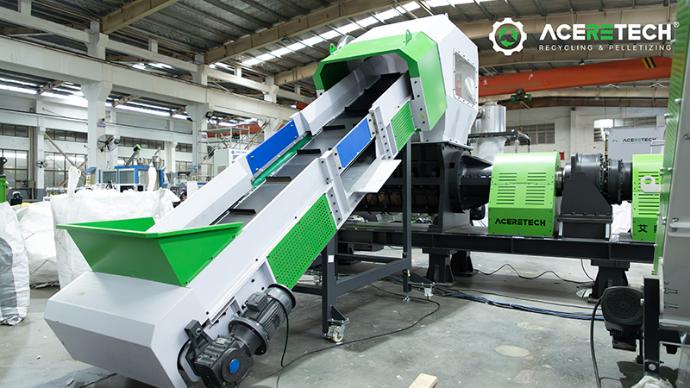
🔹 Storage Silo & Intelligent Conveying System
Ensures stable material transport and continuous feeding.



✔ Advantages of Automation and Continuous Operation
Through an intelligent PLC control system and sensor-feedback mechanisms, the complete line achieves:
Automatic adjustment of feeding rates and operational pace
Reduced manual intervention and operational complexity
Enhanced equipment utilization and production stability
👉 Realizing truly continuous and automated production.
✔ Production Capacity
Standard Capacity: Approx. 1000 kg/h (1 ton/hour)
Supports customized designs based on specific material characteristics.
👉 Meets the requirements of medium-to-large-scale chemical fiber recycling projects.
VI. Why Choose ACERETECH Solutions?
Among the many suppliers of plastic recycling equipment, ACERETECH possesses distinct advantages:
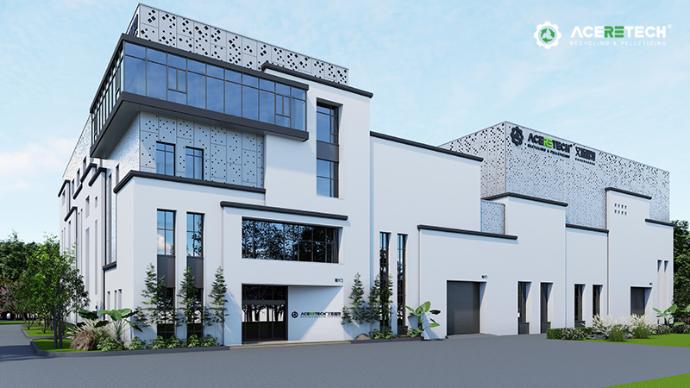
✅ Years of dedicated focus on manufacturing plastic recycling equipment
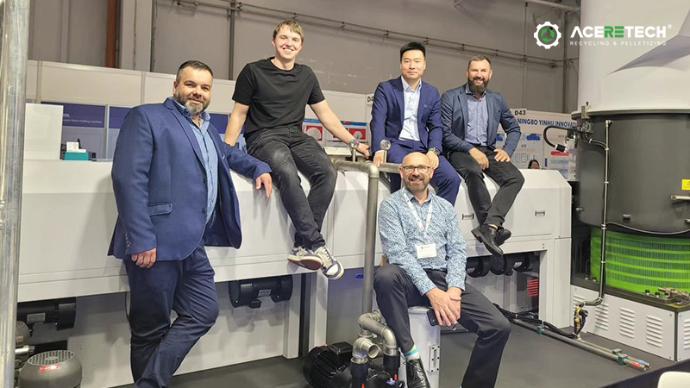
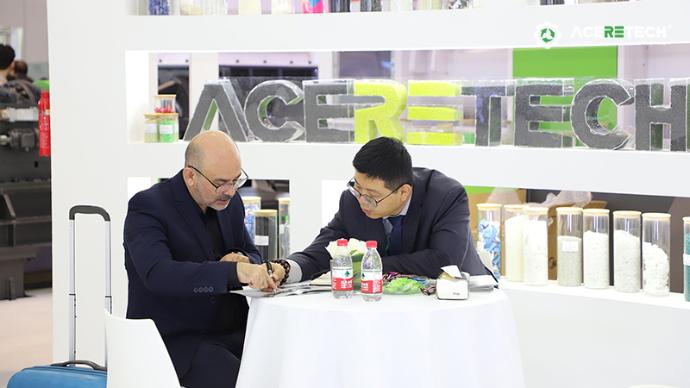
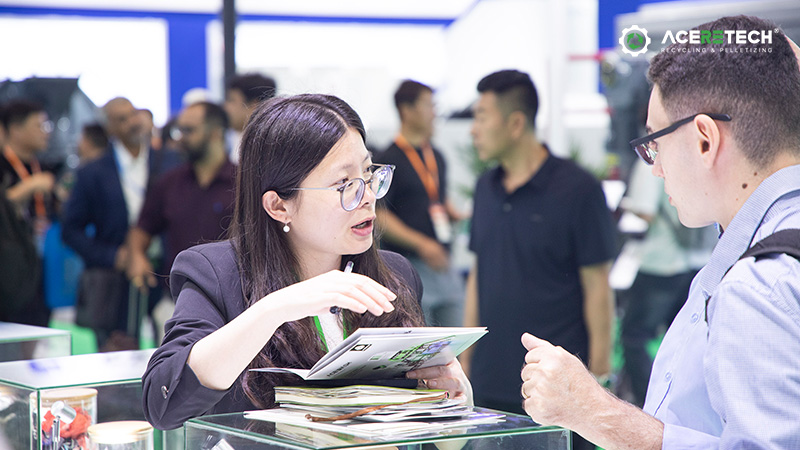
✅ Serving clients in over 100 countries worldwide
✅ Extensive experience in processing flexible materials
✅ Provision of complete, turnkey line solutions
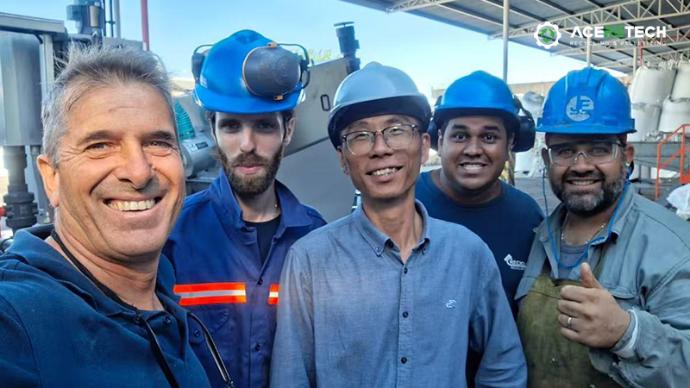
✅ Comprehensive system for installation, commissioning, and after-sales service
👉 We provide not just equipment, but stable and practical recycling solutions.


VII. Summary
The ACERETECH Friction Agglomeration Pelletizing Line—powered by:
👉 DTS High-Efficiency Shredding + Friction Agglomeration Technology
Successfully overcomes key bottlenecks in chemical fiber recycling. It resolves the industry's persistent challenges regarding materials that are "prone to tangling and difficult to process," achieving:
🔋 Lower Energy Consumption
⚡ Higher Efficiency
🔄 More Stable and Continuous Operation
🎯 Superior Quality of Recycled Granules
FAQ
Q1. Which materials are suitable for friction agglomeration pelletizing?
A: It is suitable for flexible plastic materials such as chemical fibers, fabrics, yarns, films, and woven bags.
Q2. Is washing or drying required?
A: Generally, complex drying procedures are not necessary; however, a washing system can be optionally added depending on the contamination level of the raw materials.
Q3. What are the advantages compared to traditional extrusion granulation?
A: Friction agglomeration granulation offers several advantages, including low energy consumption, the elimination of the need for a heating system, and a shorter process flow, making it particularly well-suited for low-density flexible materials.
Q4. Can the output capacity be adjusted according to specific requirements?
A: Yes, the entire production line can be custom-designed to meet specific material types and required production capacities.
Q5. Can the granules be used directly for production?
A: Yes, the granules are dense and uniform, making them suitable for direct use in downstream applications such as film blowing and injection molding.