Abstract
PP woven bags are widely utilized across various sectors—including fertilizers, cement, grain, chemical raw materials, animal feed, and industrial packaging—serving as an indispensable packaging material in global industry and agriculture. With the massive volume of discarded woven bags generated annually, achieving efficient, eco-friendly, and cost-effective PP woven bag recycling has emerged as a critical challenge within the plastics circular economy.
Given the inherent characteristics of PP woven bags—specifically their high toughness, tendency to entangle, and high impurity content—traditional crushing equipment often struggles to process them reliably. This frequently leads to operational issues such as material jamming, serious blade wear, and low throughput.
To solve these industry pain points, ACERETECH has introduced the HS Series Single Shaft Shredder. Featuring a heavy-duty structural design, a V-shaped anti-tangling rotor, wear-resistant alloy steel blades, and an intelligent PLC control system, this machine delivers a professional, efficient, and stable shredding solution for PP woven bag recycling, empowering enterprises to maximize recycling value while minimizing operational costs.
I. Ubiquitous Industrial Packaging Waste: PP Woven Bags
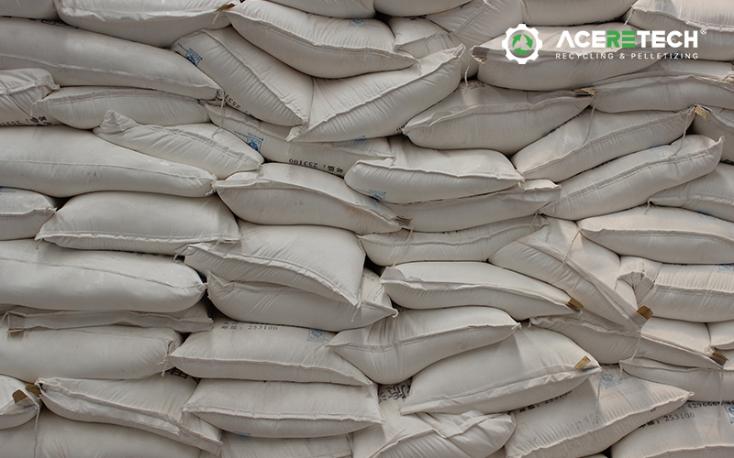
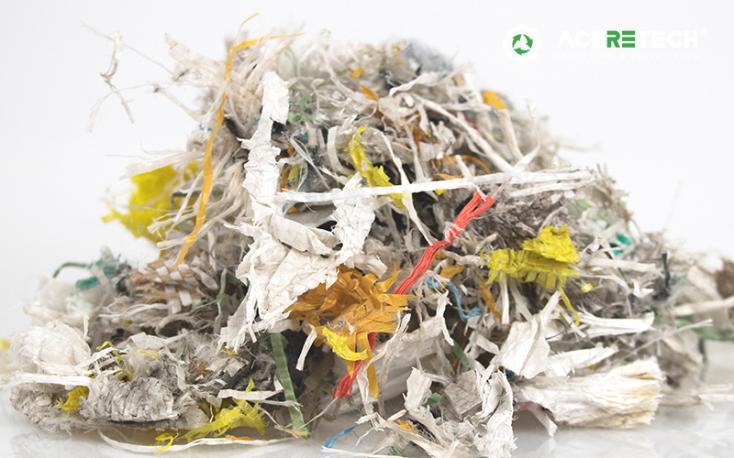
The application scope of PP woven bags covers both agricultural and industrial fields. With its excellent properties such as high strength, wear resistance, moisture resistance, and tear resistance, it can be widely used for packaging various products including fertilizers, cement, grains, animal feed, chemical raw materials, building materials, and industrial logistics transportation materials; However, once these packaging bags are used up, they will gradually accumulate and form a large amount of industrial waste.
If such waste is not promptly and professionally recycled and treated, it will not only cause serious environmental pollution, but also result in the waste of a large amount of reusable polypropylene (PP) resources.
Therefore, developing an efficient PP woven bag recycling system has become a key strategic direction for the plastic recycling industry.
II. Why PP woven bag recycling cannot be ignored?
1. Growing environmental pressures
PP is classified as a non-degradable plastic, possessing an extremely long decomposition cycle within the natural environment.
If disposed via landfilling:
It consumes a large amount of land resources
It contaminates groundwater systems.
It creates long-term "white pollution" (persistent plastic waste).
If disposed via direct incineration:
It releases harmful gases.
It increases carbon emissions.
It causes air pollution.
Therefore, the recycling and utilization of PP woven bags have become a top priority driven by environmental protection policies
2. The Resource Value of Polypropylene
The primary raw material for PP woven bags is high-value polypropylene (PP).
Recycling just one ton of discarded PP woven bags can be:
Converted into petroleum resources
Reduced production costs for virgin plastics
Lower carbon emission burdens
Improve resource recycling rates
This is a key reason why an increasing number of enterprises are investing in and deploying plastic recycling machinery.
3. Strong market demand for recycled materials
After shredded, washed, and pelletized, recycled PP granules can be widely utilized in the production of:
Plastic pallets
Wood-plastic composites
Piping and tubing
Injection-molded products
Industrial packaging materials
Construction materials
The cost of recycled granules is significantly lower than that of virgin materials, offering substantial economic benefits.
Click to view case studies on PP woven bag washing;
Click to view case studies on PP woven bag pelletizing;
III. Why Are PP Woven Bags So Difficult to crush?
Theoretically, PP woven bags are recyclable; however it presents significant challenges during recycling:
1. High Toughness + High Strength +Easy to Entanglement
PP woven bags are woven from high-strength, stretched flat filaments, resulting in an extremely tough and durable structure.
When processed using traditional plastic crushers, common issues arise: rapid wear of cutting blades, material wrapped around the rotor shaft, material blockages causing machine jams, and frequent equipment downtime—all of these reduce production efficiency.
2. Complex contamination
Waste PP woven bags are often contaminated with a mixture of impurities, including: cement residue, chemical powders, soil and grit, ropes, metal tags, and various foreign objects. These hard and abrasive contaminants can inflict serious damage on standard crushing equipment.
3. Frequent Manual Intervention and Low Efficiency
Due to the inherent instability of traditional equipment, operators are frequently required to: clean wrapped materials, manually resolve blockages, replace worn blades, and stop operations for maintenance. This leads to a sharp decline in recycling efficiency.
This is precisely the main reason why many companies hold a highly cautious attitude towards investing in PP woven bag recycling projects.
IV. A Professional Solution: The ACERETECH HS Series Single-Shaft Shredder
When dealing with the PP woven bag recycling, standard equipment is obviously far from enough; It is crucial to adopt a professional heavy duty single shaft shredder machine.
ACERETECH HS series single shaft shredder is designed specifically for processing materials with high toughness, high tensile strength, and high contamination.
V. Analysis of the HS Series' Core Advantages
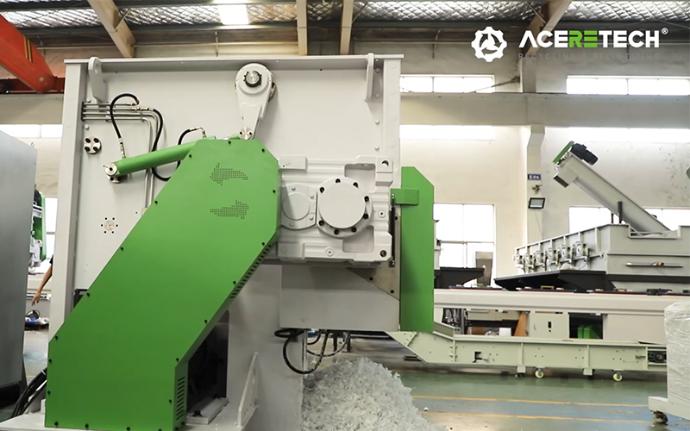
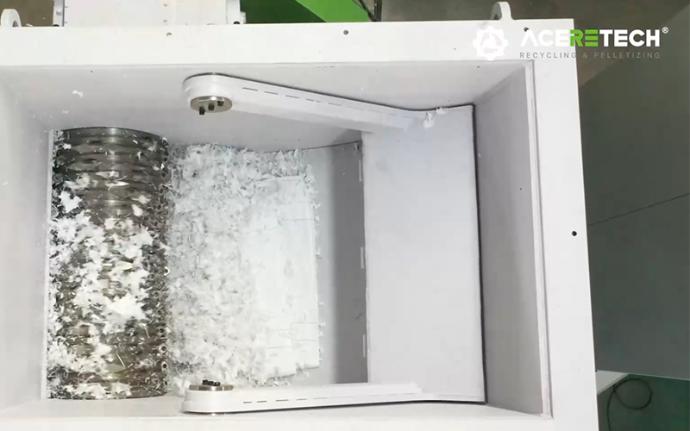
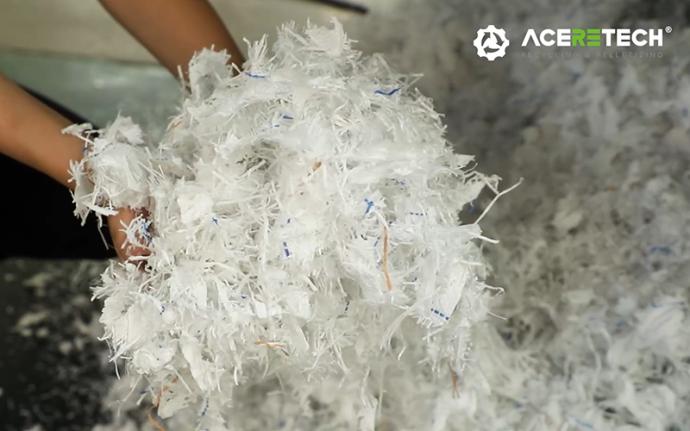
1. Heavy-Duty Structural Design: Specifically designed for high-load operating conditions
HS Series features a heavy-duty machine body structure, and offers exceptional impact resistance..
Core components are sourced from internationally renowned brands:
Siemens Motors
SKF Bearings
High-Quality Gearboxes
This ensures that the equipment can maintain stability and reliability during long-term high load operation.
Applicable for:
PP Woven Bag Recycling
Jumbo bag Recycling
Agricultural Film Recycling
Plastic Film Recycling
Industrial Packaging Waste Recycling
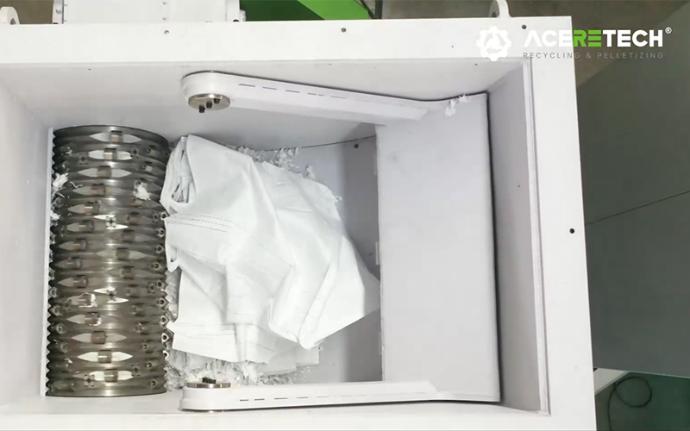
2. Unique V-Shaped Rotor Design with anti-wrapped knife design: A True Solution to prevent Material Entanglement
This represents the HS Series' most significant technical advantage. Its rotating blades are mounted on the rotor shaft in a unique V-shaped configuration, generating a powerful inward pulling force during the feeding process.
Key advantages include:
Active Material Gripping
Anti-Entanglement Function
Prevention of Bridging and Clogging
Enhanced Feeding Efficiency
Stable and Continuous Shredding
Particularly well-suited for PP Woven Bag Shredding applications.
3. High Wear-Resistant Alloy Steel Blades: handling Complex Contaminants
Using fully heat-treated integral alloy tool steel blades, the system offers:
High Hardness
Superior Wear Resistance
High Impact Resistance
Extended Service Life
Even when confronted with:
Sand and gravel Contaminants
Cement Residues
Foreign Metal Objects
The equipment continues to operate stably, significantly reducing maintenance costs.
4. Siemens PLC Intelligent Control System
The equipment is equipped with a Siemens PLC automatic control system, enabling:
Automatic Forward/Reverse Rotation
Automatic Overload Protection
Automatic Alarm and Shutdown
Intelligent Anti-Jamming Protection
This effectively protects core components, elevates the automation level of the entire recycling line, and ensures truly stable, safe, and efficient operation.
5. Flexible Screen mesh System: Controllable Output Size
By simply replacement of screens with different mesh sizes, the output flakes size can be flexibly controlled:
Ideal for integration with:
Downstream Washing Systems
Recycling Granulation Systems
Secondary Crushing Systems
Direct Reuse Systems
Meeting the customized requirements of a diverse range of clients.
VI. Conclusion: Choosing Professional Equipment Is the Key for Efficient Recycling
Recycling PP woven bags is not a simple crushing operation, but a complex system engineering challenge that places extremely high demands on the stability, wear resistance, and anti entanglement performance of the equipment.
Choosing standard equipment means
Higher failure rates
Higher maintenance costs
Lower production capacity
Poorer return on investment
In contrast, the ACERETECH HS Series single-shaft shredder—distinguished by its:
Heavy-duty structural design
V-shaped, anti-tangling rotor
Highly wear-resistant alloy steel blades
Siemens intelligent control system
Flexible screen configurations
delivers a truly professional, efficient, and stable solution for the PP woven bag recycling industry.
It serves not only as the core machinery for PP woven bag recycling but also as a vital guarantee for enterprises seeking to achieve low-cost operations, high-efficiency production, and the maximization of circular economy value. Choosing the HS Series means choosing a more efficient, reliable, and sustainable future.
FAQ
Q1: Why is it crucial to use a single shaft shredder instead of a standard crusher when recycling PP woven bags?
A: PP woven bags are characterized by their high toughness, high tensile strength, and extreme propensity to tangle. During processing, standard crushers are prone to issues such as rotor entanglement, material clogging, machine jamming, and rapid blade wear—problems that severely compromise production efficiency.
The Single-Shaft Shredder employs a low-speed, high-torque design, coupled with a V-shaped rotor structure. This configuration enables active material feeding and prevents entanglement, thereby ensuring stable and continuous shredding—making it the ideal choice for large-scale industrial recycling operations.
Q2: What equipment typically comprises a PP woven bag recycling production line?
A: A complete PP Woven Bag Recycling Line typically includes the following equipment:
Conveying system
Single-shaft shredder (Coarse shredding)
Crusher (Fine shredding)
Washing system
Dewatering system
Squeezing/Drying system
Pelletizing machine
Storage system
Depending on the contamination level of the raw materials and the client's specific capacity requirements, the line can also be custom-configured to ensure even more efficient and stable recycling results.
Q3: Can impurities such as cement, sand, or gravel found in PP woven bags damage the equipment?
A: Yes, they can. Standard crushing equipment, in particular, is highly susceptible to severe blade wear—or even outright mechanical failure—when exposed to hard, abrasive impurities.
Consequently, professional PP woven bag shredders typically feature highly wear-resistant alloy steel blades and are equipped with intelligent reverse-rotation protection systems to safeguard against such damage. When the equipment encounters uncrushable foreign objects, it automatically reverses to discharge the material, thereby preventing damage to the main shaft and gearbox and significantly extending the service life of the equipment.
Q4: What industries are the recycled pellets from PP woven bags mainly used in?
A: Following the processes of shredding, washing, and pelletizing, the recycled PP pellets are widely applied in the following sectors:
Manufacturing of plastic pallets
Wood-Plastic Composites (WPC)
Drainage pipes and industrial piping
Injection-molded products
Waste bins
Packaging materials
Construction auxiliary materials
Industrial logistics products
Since the cost of recycled materials is significantly lower than that of virgin materials, market demand continues to grow, offering substantial economic value.
Q5: Can Jumbo Bags (FIBCs) and standard PP woven bags be processed using the same model of equipment?
A: Yes, they can; however, it is recommended to opt for a heavy-duty single-shaft shredder.
Jumbo Bags are thicker, heavier, and possess higher tensile strength than standard PP woven bags; consequently, they impose higher demands on the equipment's torque and the durability of its cutting blades. The HS series of heavy-duty shredders is capable of meeting the recycling requirements for both standard woven bags and Jumbo Bags, making it suitable for a broader range of industrial packaging waste processing scenarios.