The Application of Conical Twin-Screw Extruder in the Production of WPC Profiles
A blend of PE resin(containing a small amount of aluminum powder), wood powder, and additives constitutes a typical formulation for high-filled Wood-Plastic Composites (WPC). This material is widely used in the production of WPC profiles, architectural decorative profiles, outdoor decking, fencing profiles, and industrial composite profiles.
For such kind of formula, wood powder serves to enhance rigidity, while aluminum powder improves stability and weather resistance. Consequently, the finished products exhibit superior strength, better dimensional stability, and a longer service life—which have a continuous increase in demand of the construction and outdoor applications.
However, the processing of high-filled composite materials presents numerous challenges, including unstable feeding, uneven plasticization, severe equipment wear, significant fluctuations in output, and inconsistent surface quality in the finished products. Traditional single-screw equipment often struggles to meet the demands of such operating conditions.
The ACERETECH conical twin-screw profile extruder is specifically designed for high-filled composite materials. Featuring forced feeding, high-efficiency compounding, stable plasticization, continuous degassing, and a highly wear-resistant structural design, it enables the continuous and stable production of high-quality profiles, it is ideal solution for composite profile manufacturing.
I. Analysis of Raw Material Characteristics
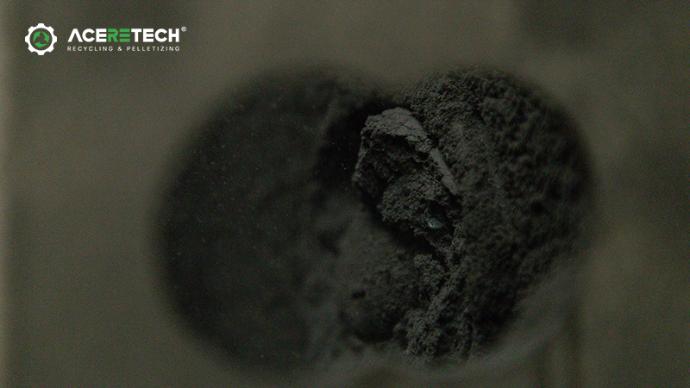
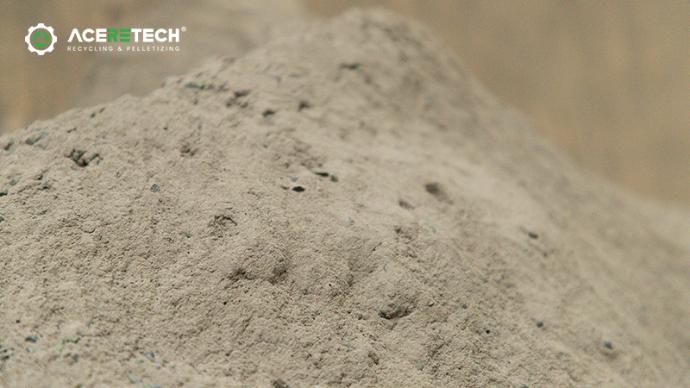
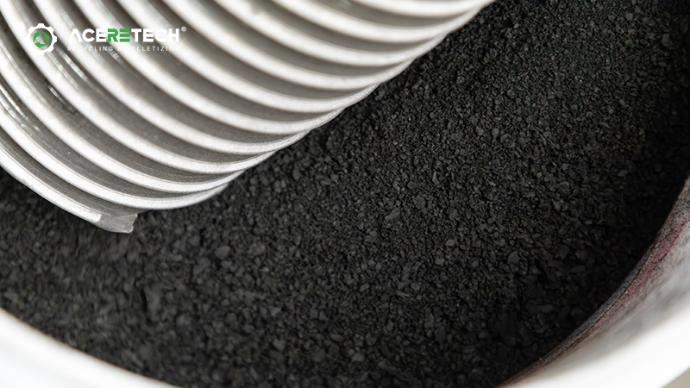
The raw materials used in this trial run included:
PE (Polyethylene)
Wood Powder
A small amount of Aluminum Powder
Additives (Lubricants, stabilizers, coupling agents, etc.)
Key characteristics of this formulation:
High Filling Ratio
The high content of wood powder and aluminum powder results in high material density and poor flowability, placing high demands on the equipment's torque and conveying capacity.
High Mixing Requirements
Insufficient dispersion can easily lead to:
* Rough profile surfaces
* Reduced product strength
* Noticeable color variations
* Dimensional instability
* Shortened service life
High Abrasiveness
The presence of wood powder and metal powders accelerates wear on the screws and barrels; therefore, the equipment must be configured with highly wear-resistant components.
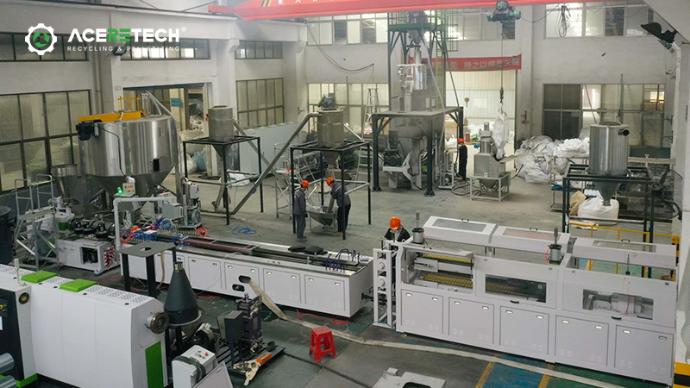
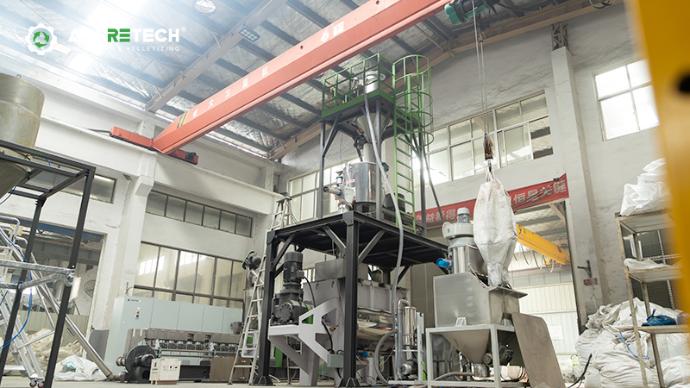
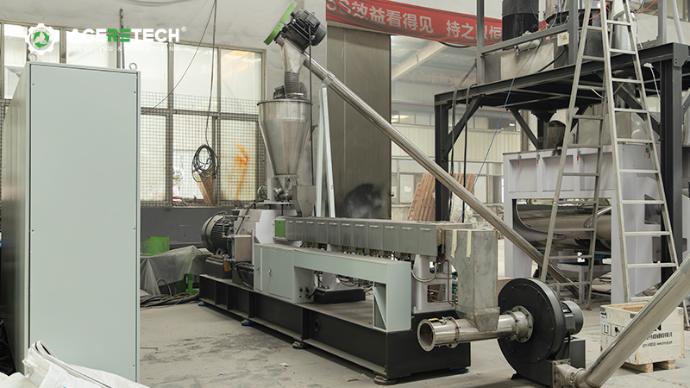
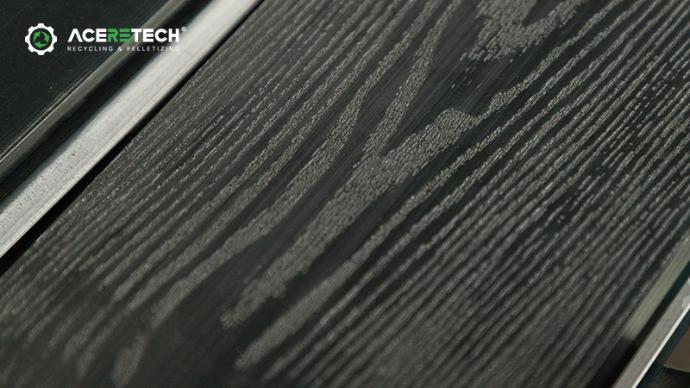
Compared to standard single-screw equipment, the ACERETECH ATE twin-screw extruder is better suited for the production of highly filled composite materials.
1. More Stable Forced Feeding
The twin-screw design features superior conveying capabilities, effectively preventing bridging, material blockages, feeding instability, and output fluctuations, thereby ensuring continuous and stable production.
2. Enhanced Compounding Performance
An optimized screw configuration delivers: stronger shear forces, more thorough plasticization, and more uniform dispersion.
This ensures that the resulting profiles feature: smoother surfaces, higher strength, a more consistent appearance, and greater dimensional stability.
3. High Wear Resistance Design
Highly wear-resistant screw elements, alloy steel barrels, and a reinforced gearbox system—effectively extending equipment service life and reducing maintenance costs.
4. Precise Temperature Control System
Utilizing ceramic heaters, an air-cooling system, and intelligent PID temperature control, the system effectively prevents the carbonization of wood powder and the degradation of PE, thereby ensuring consistent finished product quality.
III. Complete Production Process
Raw Material automatic Feeding System → High-Speed Mixer → ATE Twin-Screw Extruder → Air blower - Conical twin screw extruder -Die mould → Vacuum Calibration Table → Cooling System → Haul-off Unit → Cutting Machine → Finished Profiles
The complete system enables:
Automated, continuous production
Stable, high-output operation
Reduced labor costs
Improved production efficiency
Guaranteed product consistency
IV. Applications for Finished Profiles
The finished profiles are widely utilized in the following field:
Construction Industry
Door and window profiles
Wall panels
Decorative moldings
Outdoor fencing
Wood-Plastic Composite (WPC) Industry
Outdoor decking
Landscaping materials
Boardwalk planks
Corrosion-resistant railings
Industrial field
Structural support components
Packaging profiles
Industrial composite panels
Home Decoration
Skirting boards
Furniture decorative panels
Wall decorative profiles
Conclusion
The processing of raw materials such as PE (containing a small amount of aluminum powder), wood powder, and various additives places higher demands on extrusion equipment.
With its stable feeding, efficient compounding, high wear-resistance design, and precise temperature control system, the ACERETECH twin-screw profile extruder help customer to achieve high-quality, high-efficiency, and high-return profile production. If you are seeking professional extrusion solutions for wood-plastic composite profiles production line, twin-screw extruder is a trustworthy choice.
Please feel free to contact us to obtain a customized profile production solution.
FAQ
These terms of service ("Terms", "Agreement") are an agreement between the website ("Website operator", "us", "we" or "our") and you ("User", "you" or "your"). This Agreement sets forth the general terms and conditions of your use of this website and any of its products or services (collectively, "Website" or "Services").
Q1: Why are twin-screw extruders better suited for wood-flour composites?
A: Because wood flour features a high filling ratio and poor flow characteristics, single-screw extruders are prone to issues such as uneven plasticization and material clogging. Twin-screw extruders, conversely, possess superior mixing and conveying capabilities, making them far more suitable for high-filler formulations.
These terms of service ("Terms", "Agreement") are an agreement between the website ("Website operator", "us", "we" or "our") and you ("User", "you" or "your"). This Agreement sets forth the general terms and conditions of your use of this website and any of its products or services (collectively, "Website" or "Services").
Q2: Will the presence of a small amount of aluminum powder affect the equipment's service life?
A: Yes, it will. Aluminum powder is abrasive; therefore, we recommend configuring the equipment with highly wear-resistant screws and alloy steel barrels to extend the service life of the machinery.
These terms of service ("Terms", "Agreement") are an agreement between the website ("Website operator", "us", "we" or "our") and you ("User", "you" or "your"). This Agreement sets forth the general terms and conditions of your use of this website and any of its products or services (collectively, "Website" or "Services").
Q3: Which types of profiles are suitable for production using this formulation?
A: This formulation is suitable for a wide range of products, including wood-plastic flooring, outdoor fencing, architectural decorative profiles, furniture panels, and industrial support profiles.
These terms of service ("Terms", "Agreement") are an agreement between the website ("Website operator", "us", "we" or "our") and you ("User", "you" or "your"). This Agreement sets forth the general terms and conditions of your use of this website and any of its products or services (collectively, "Website" or "Services").
Q4: Can the production capacity of twin-screw extruders be customized?
A: Yes. Based on the client's raw materials, product dimensions, and target output requirements, we can provide various models and customized complete-line solutions.
These terms of service ("Terms", "Agreement") are an agreement between the website ("Website operator", "us", "we" or "our") and you ("User", "you" or "your"). This Agreement sets forth the general terms and conditions of your use of this website and any of its products or services (collectively, "Website" or "Services").
Q5: How can carbonization of the wood flour be prevented during the production process?
A: Through the implementation of a precise temperature control system, an optimized screw design, and a stable feeding system, temperatures can be effectively regulated to prevent the wood flour from overheating and carbonizing.