Abstract
In the plastic recycling industry, PE pipes—characterized by their high toughness, substantial wall thickness, and considerable length—often present challenges for traditional shredding methods, such as difficult feeding, frequent material jamming, excessive dust generation, and low efficiency. To solve these industry pain points, ACERETECH has introduced the GP Series plastic pipe crusher. Specifically designed for the crushing of small diameter plastic pipes, this GP Series crusher are suitable for the recycling and processing of pipes and profiles such as PE, PP, and PVC material.
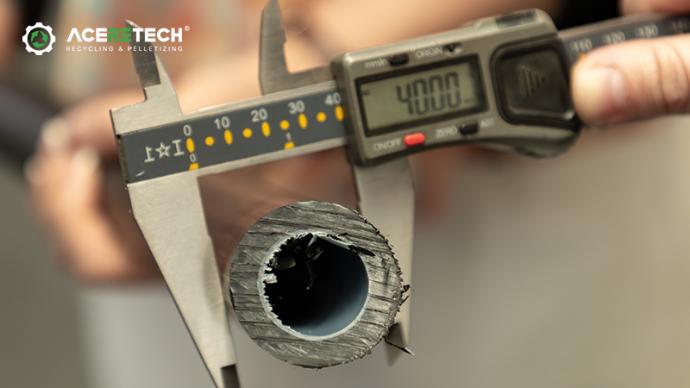
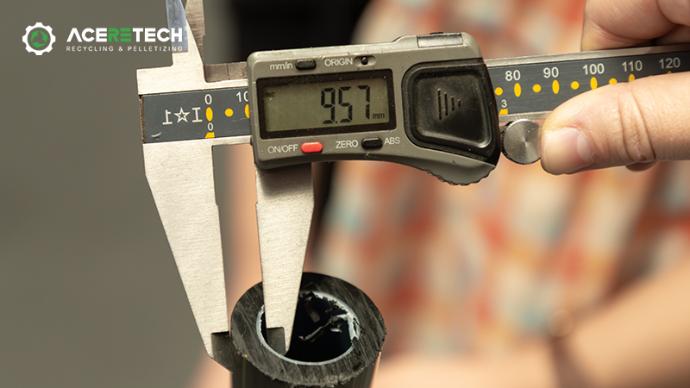
The material used in this trial is PE pipes (40 mm in diameter, 9.57 mm in wall thickness). A GP Series crusher was employed to achieve high-efficiency size reduction. The equipment configuration featured a rotor with a diameter of 560 mm and a width of 700 mm, and equipped with anti-splash baffles—features that significantly enhanced both operational safety and production efficiency.
I. Project Background: Why is PE Pipe Crusher More Challenging?
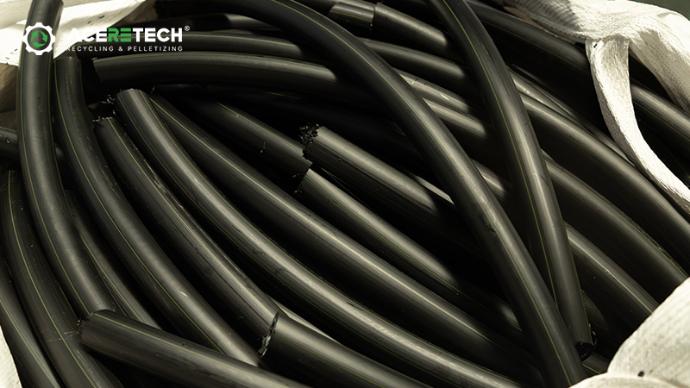
PE pipes are widely used in a variety of applications:
* Water supply and drainage systems
* Gas transmission pipelines
* Agricultural irrigation systems
* Protective conduits for power and telecommunications cables
* Industrial conveying systems
These types of pipes typically exhibit the following characteristics:
1. Long Length; Difficult to Feed:
Traditional pipe size reduction often require the pipes to be pre-cut into shorter, which increasing labor costs.
2. High Toughness; Difficult to Grip Stably:
PE pipe material with high flexibility; so standard shredders can’t solve pipe slippage and rebounding problem.
3. Thicker Wall; High Shredding Load:
Particularly with thick-walled PE pipes, the demands for the rotor's torque and the cutting blades' wear resistance are extremely high.
4. High Safety Risks:
During the shredding process, long pipes are easily cause material to be ejected or "splashed" outward, posing a risk to operator safety.
Therefore, for the recycling of small diameter pipes, it is essential to utilize specialized crushing equipment designed specifically for pipeline recycling.
II. Parameters of the Current Trial Run Case
Trial Material
PE Pipes
Pipe Diameter: 40 mm
Wall Thickness: 9.57 mm
This material represents a typical example of a small-diameter, medium-to-thick-walled PE pipe, it is an ideal candidate for verifying the equipment's capability for continuous and stable crushing.
III. Solution: GP Series Pipe Crusher
Selected Model:
GP Series Plastic Crusher Machine for Grinding Long Plastic Pipes
Core Configuration:
Rotor Diameter: 560mm
Rotor width: 700mm
Horizontal Feeding Structure
Anti-Splash Safety Baffle
V-Shaped Rotor Design
External Bearing Structure
Heavy-Duty Welded Crushing Chamber
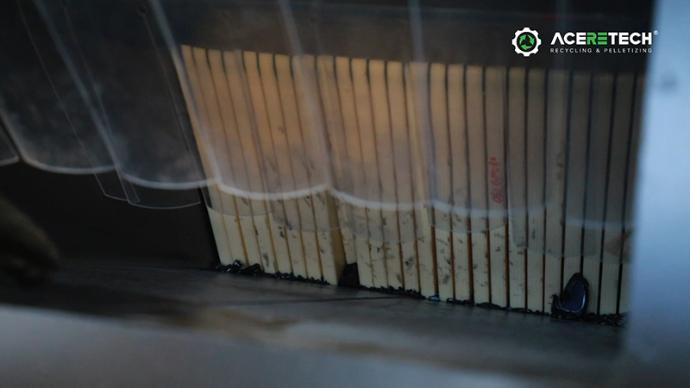
The GP series crusher is specifically designed for long small diameter pipes and profiles, making it particularly suitable for crushing PE, PP and PVC pipes. Its horizontal hopper sits nearly parallel to the ground, facilitating the direct feeding of long pipes without the need for extensive pre-cutting.
IV. Core Advantages of the GP Series Crusher
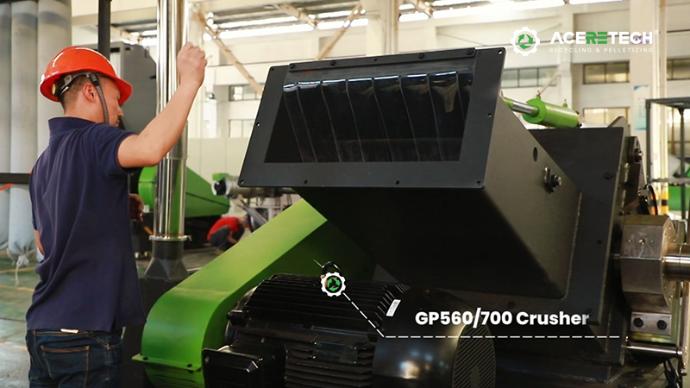
1. Horizontal Feeding Design: Direct Crushing of Long Pipes
Unlike traditional vertical-feeding crushers, GP series features:
A Nearly Horizontal Feeding Hopper, allowing for the direct feeding of long PE pipes. This significantly reduces the need for pre-cutting—saving both labor and time costs—and is particularly efficient when processing PE pipes with a diameter up to 250mm.
2. V-Shaped Rotor Design: Enhanced Gripping Capability
The GP series utilizes a: V-Shaped Rotor
Its advantages include:
More stable automatic gripping
Increased cutting efficiency
Reduced dust generation
Lower energy consumption
More uniform discharge
It is especially suitable for the continuous crushing of high-toughness PE pipes.
3. Anti-Splash Baffle: Enhanced Safety
Key Safety Feature: Anti-Splash Protection Baffle
This effectively prevents:
Pipe kickback
Increased operational risks
The improvement in safety is particularly pronounced when processing thick-walled PE pipes.
4. External Bearings + Wear-Resistant Chamber: Extended Service Life
The GP series configuration includes:
An external bearing structure
Wear-resistant liners
A high-hardness blade cutting chamber
A heavy-duty welded steel machine body
This design effectively prevents dust and impurities from entering the bearing system, thereby extending the equipment's service life. According to official specifications, the crushing chamber features a high-strength structural design, complemented by wear-resistant plates to minimize the risk of contamination ingress.
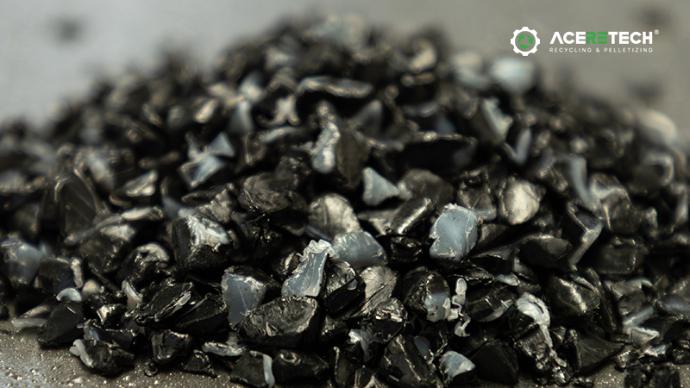
5. Uniform Discharge: Facilitates Subsequent Washing and Pelletizing
Standard Screen mesh: 6–30mm (Adjustable Screen Sizes)
Benefits:
Uniform flake output
No need for secondary crushing
Enhanced efficiency in subsequent washing
Improved stability in the pelletizing process
Ideal for integration into complete plastic recycling lines: Crushing → Washing → Dewatering → Pelletizing.
Related Articles
Click to view PE Pipe Washing Case Study
Click to view PE Sheet Pelletizing Case Study
V. Applicable Materials
The GP Series is widely used for:
PP, PE, PVC, PPR, and HDPE pipes, corrugated pipes, profiles, window and door profiles, and wide-format sheets. Its scope of application covers a diverse range of plastic materials and accommodates varying hardness requirements.
FAQ
Q1: Why PE pipes can't be processed directly using standard plastic shredders?
A: PE pipes possess high toughness and significant length; standard shredders typically employ a vertical feeding mechanism, which often leads to issues such as material jamming, kickback, feeding difficulties, and low efficiency. This is particularly true for thick-walled PE pipes, which demand greater material-gripping capability and rotor torque from the equipment; therefore, the GP Series shredder—specifically designed for pipes—is the more suitable choice.
Q2: Does the GP Series crusher require long pipes to be cut into shorter segments before crushing?
A: In most cases, no. The GP Series features a near-horizontal feeding structure specifically engineered for long-dimension pipes, allowing long PE pipes to be fed directly into the shredding chamber. This significantly reduces the need for pre-cutting operations. This not only saves on labor costs but also boosts overall production efficiency, making it particularly well-suited for continuous, high-volume recycling operations.
Q3: What is the function of the anti-splash baffle during pipe shredding?
A: During the shredding of long PE pipes, the material's length and elasticity can easily lead to kickback or the scattering of fragments. The anti-splash baffle effectively prevents material kickback, thereby enhancing operational safety while minimizing the need for manual intervention and ensuring the continuous, stable operation of the equipment.
Q4: Can the flakes produced by shredding PE pipes be fed directly into the pelletizing system?
A: Typically, yes. The GP Series shredder utilizes a screen to control the output size, resulting in highly uniform flakes that effectively meet the specific feeding requirements of subsequent washing, dewatering, and pelletizing systems. The complete process typically involves: pipe shredding → washing → dewatering → granulation → production of finished recycled pellets. This approach significantly enhances the economic value of the recycled plastic.
Q5: What are the most critical parameters to consider when selecting a shredder specifically designed for pipes?
A: The primary focus should be placed on the following core parameters:
Rotor diameter (determines cutting capacity)
Rotor length (determines throughput)
Feeding mechanism (suitability for long pipes)
Presence of anti-splash/containment devices
Cutter material and wear resistance
Adjustable range of screen mesh sizes
Motor power and overall structural stability
Notably, when processing long PE pipes, a horizontal feeding mechanism and reliable gripping capabilities are often more critical factors than sheer motor power alone.