I. Key Challenges in PE Film Recycling and Pelletizing
PE film is widely used in packaging, agriculture, industrial production, and consumer goods. Due to characteristics such as low bulk density, softness, fluffiness, and a tendency to tangle, feeding PE film directly into an extruder for recycling often leads to issues like unstable feeding, low feeding efficiency, and difficulty in fully removing moisture and volatiles from the melt.
Therefore, for PE film recycling and pelletizing, stable front-end compacting, efficient plasticization, thorough degassing, and continuous filtration are critical factors influencing the quality of recycled plastic pellets and production efficiency.
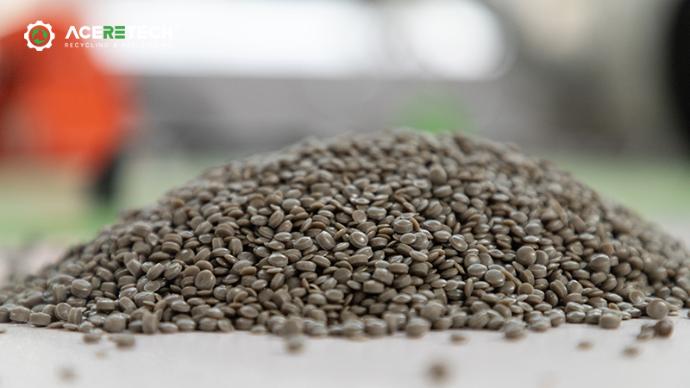
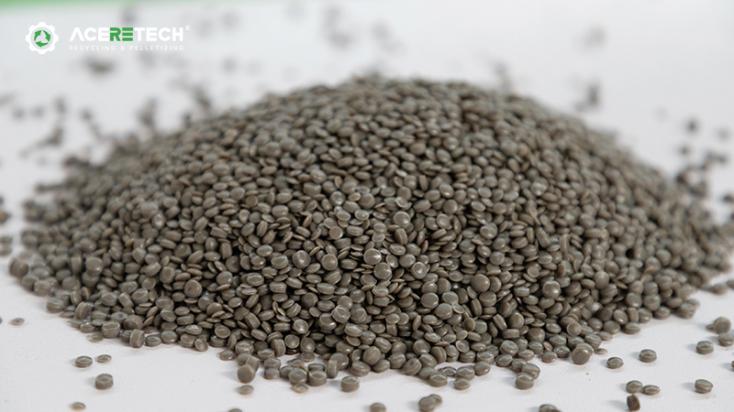
ACERETECH’s ACSS single-screw two-stage compacting and pelletizing machine is designed specifically for the processing characteristics of low-bulk-density plastic films. It integrates compacting, plasticization, extrusion, vacuum degassing, melt filtration, and water-ring pelletizing into a single system, providing a continuous recycling and pelletizing solution for PE film.
II. Customized ACSS Film Pelletizing Solution
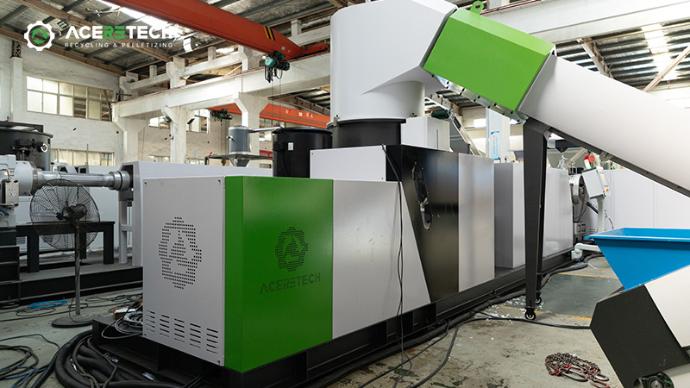
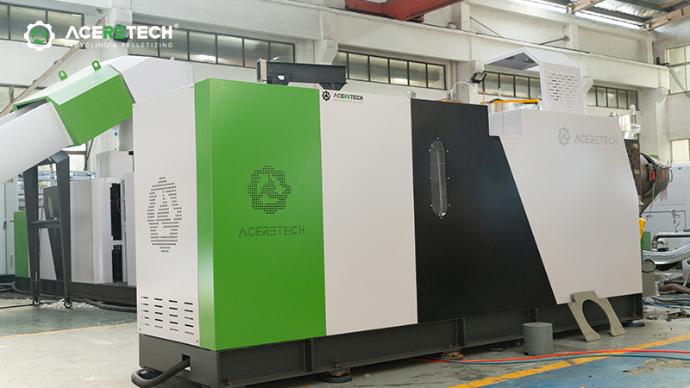
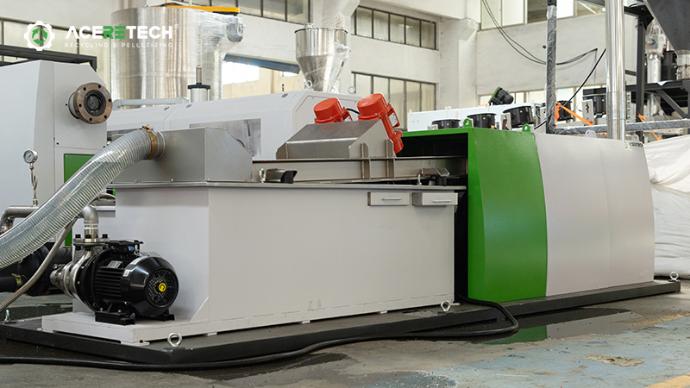
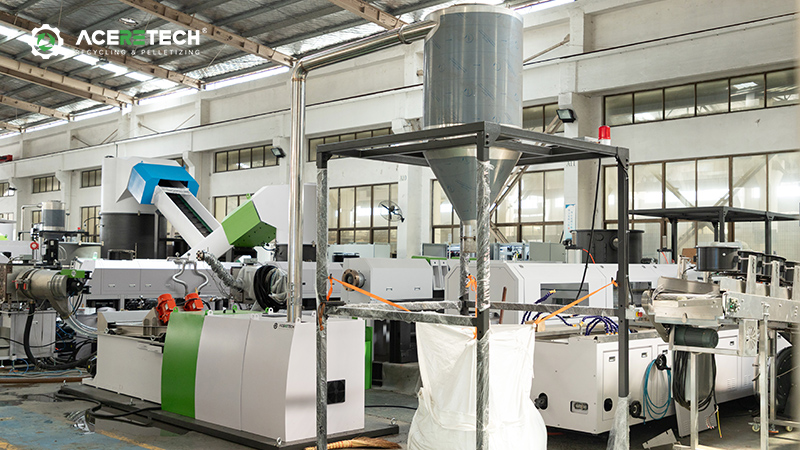
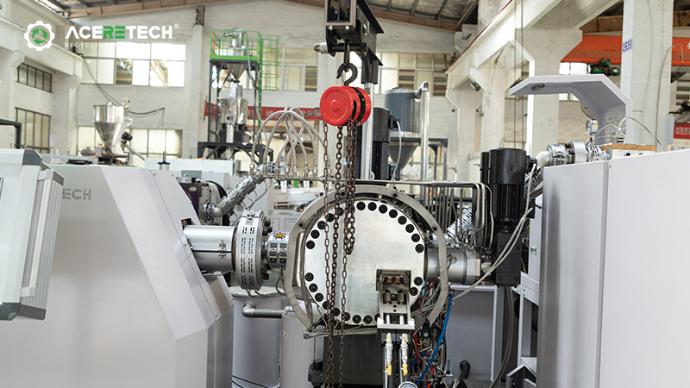
To meet specific customer requirements, this ACSS system utilizes a process configuration comprising a PVC belt conveyor, an 800L compacting silo, a single-screw two-stage extrusion system, dual-stage vacuum degassing, dual-stage filtration, water-ring pelletizing, a vibrating screen, centrifugal dewatering, and a product silo.
The basic process flow is as follows:
PE Film → PVC Belt Conveyor → Compacting Pre-treatment → First-Stage Extrusion → Dual-Stage Vacuum Degassing → SCF Continuous Filtration → Second-Stage Extrusion → Piston-Type Filtration → Water-Ring Pelletizing → Vibrating Screen → Centrifugal Dewatering → Finished Pellets
This process enables continuous handling of the film—from initial feeding to the final pellet stage—addressing various processing requirements and enhancing overall production stability.
1. PVC Belt Conveying for Stable Feeding
PE film is fed into the compacting silo via a PVC belt conveyor.
The belt conveying method allows for the continuous transport of fluffy PE film into the compacting system. It enables the adjustment of feeding speeds based on production requirements, ensuring a stable supply of material for the subsequent compacting and extrusion processes. For PE films with low bulk density, stable upstream feeding is a crucial foundation for enhancing the operational efficiency of the entire line.
2. 800L Compaction Chamber: Increasing PE Film Bulk Density
The ACSS features an 800L compaction chamber designed to pre-treat PE film before it enters the extrusion system.
Rotating blades at the bottom of the chamber work in tandem with stationary blades on the chamber wall to cut and agitate the plastic film. As the material moves continuously, mechanical friction generates heat, causing the film to gradually warm up, dry, and shrink; this reduces the material's volume and increases its bulk density.
By combining cutting, drying, preheating, and compacting into a single process, the system improves the feed condition of low-bulk-density PE film, creating more stable conditions for the subsequent extrusion process.
The compactor utilizes variable frequency drive (VFD) control, allowing the rotational speed to be adjusted based on the material's state, which helps reduce energy consumption during operation.
Additionally, the ACSS is equipped with a servo-motor-driven sliding gate to regulate the volume of compacted material entering the extruder, thereby enhancing the stability of the feed control.
3. Single-Screw Two-Stage Extrusion: Enhancing Plasticization and Degassing
The ACSS employs a single-screw, two-stage extrusion configuration, enabling the compacted PE film to undergo further plasticization, melting, degassing, and filtration.
First-Stage Extrusion
The first stage features:
Screw diameter: 120 mm
Screw L/D ratio: 42
The extended screw processing section provides ample space for material plasticization, melting, and mixing, while vacuum degassing and SCF filtration systems further process the melt.
Second-Stage Extrusion
The second stage features:
Screw diameter: 150 mm
Screw L/D ratio: 12
After processing in the first stage, the melt enters the second stage for further stabilization, followed by final filtration using a continuous piston-type filter.
This two-stage structure allows for the rational distribution of processing functions, facilitating a more stable melt processing operation.
4. Dual-stage degassing system enhances recycled material quality
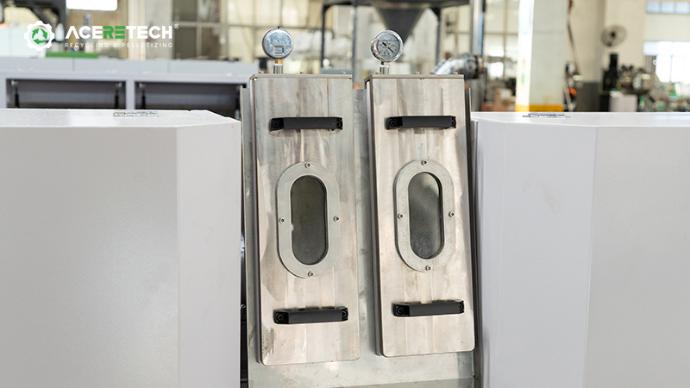
The ACSS is equipped with a dual-stage degassing system that effectively removes moisture, low-molecular-weight volatiles, and other gaseous components from the melt.
The dual-stage extrusion configuration features vacuum degassing in the first stage and atmospheric venting in the second stage. This setup further releases residual moisture, ink volatiles, and other gases, thereby minimizing the impact of bubbles, odors, and volatile substances on the quality of the recycled pellets.
Depending on specific material characteristics and quality requirements, the second-stage atmospheric vent can be upgraded to a forced vacuum degassing system. This further enhances degassing and devolatilization capabilities to meet the demands of applications requiring superior recycled material quality.
For recycled materials containing moisture, ink, or volatiles—such as films and regrind—efficient degassing helps stabilize the melt, reduce gas entrapment during granulation, and improve the quality and consistency of the final recycled plastic pellets.
5. SCF disc-type self-cleaning filtration for high-contamination loads
Melt filtration is a critical step influencing the quality of recycled pellets during PE film granulation.
The ACSS utilizes the SCF series disc-type self-cleaning filtration system in its first stage.
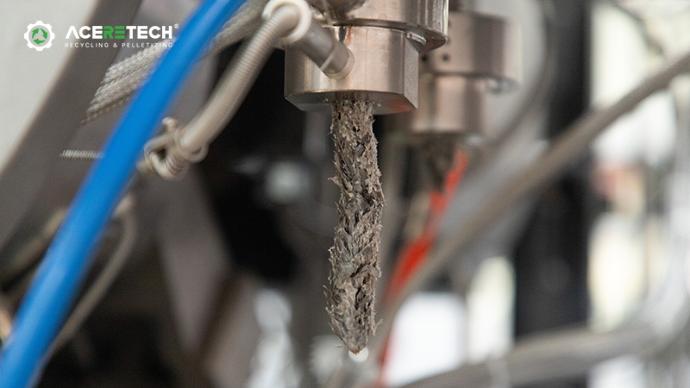
Unlike traditional filtration equipment that requires frequent screen changes, the SCF system employs steel microporous filter discs. It achieves continuous filtration by using an automatic cleaning mechanism to constantly remove contaminants from the disc surfaces.
The SCF system offers filtration precision down to 120 μm and can handle contaminant levels of up to approximately 5% in the melt. Depending on the material, separable contaminants include paper, wood chips, aluminum fragments, unmelted plastic, and rubber.
Key features of the SCF system include:
Eliminates the need for traditional filter screens; filter discs offer a long service life
Continuous filtration minimizes downtime caused by screen changes
Automatic filter disc cleaning
Relatively stable filtration pressure
Filtration process takes place within the filtration chamber
Low melt loss
Filtration precision up to 120 μm
Large filtration area with up to 2.32 million micropores
PLC automatic control
Filter disc replacement time is approximately 30 minutes
For PE film recyclate with complex origins and solid impurities, continuous self-cleaning filtration reduces production interruptions caused by frequent screen changes.
6. Second-stage continuous piston filtration for further melt quality stabilization
After the first stage of SCF filtration, the melt enters the second-stage extrusion system, where it undergoes further filtration using a continuous piston-type filter.
This dual-stage filtration structure processes the melt at both stages, ensuring greater stability in the melt entering the pelletizing system. This helps minimize the impact of residual impurities on pellet appearance and downstream processing performance.
7. Water-ring pelletizing for automated pellet formation
The extruded and filtered PE melt enters the water-ring pelletizing system.
The ACSS water-ring pelletizing system automatically adjusts the cutter speed based on the melt pressure at the die head, maintaining a stable pelletizing process and yielding more uniform recycled plastic pellets.
The cutter employs a pneumatic feed mechanism to ensure the blades maintain optimal contact with the die head surface. Simultaneously, high-precision pressure sensors automatically regulate cutter pressure to keep the cutting force consistent.
After pelletizing, the recycled PE pellets proceed through the following stages:
Vibrating screen → Centrifugal dryer → Storage silo (completing screening, dewatering, and finished product collection).
8. Wear-resistant extrusion components for long-term continuous production
Key extrusion components of the ACSS system feature a bimetallic structure.
Screw: 38CrMoAlA nitrided steel + nickel-based alloy
Barrel: 38CrMoAlA nitrided steel + wear-resistant iron-based alloy
This bimetallic structure enhances the wear resistance of the screw and barrel working surfaces, ensuring stable equipment operation during long-term continuous production.
The heating system utilizes ceramic heaters with stainless steel shrouds; infrared heaters are also available as an option.
Infrared heating offers advantages such as rapid heating, easy installation/removal, high thermal conductivity, energy efficiency, and a long service life; configurations can be tailored to specific customer production needs.
The equipment employs air cooling to meet temperature control requirements during the extrusion process.
Related Articles
PE Film Washing Solutions
PE Film Crushing Solutions
III. Core advantages of the PE film pelletizing solution
Taking the entire recycling process into account, the ACSS single-screw, two-stage compacting and pelletizing machine is specifically designed to address the key challenges associated with PE film recycling.
Stable Feeding of Low-Bulk-Density Materials
The 800L compaction chamber increases the bulk density of PE film through cutting, friction, preheating, and shrinkage. A servo-driven sliding gate controls the feed rate, facilitating the continuous feeding of film materials.
Two-Stage Extrusion Enhances Melt Processing Capacity
A 120 mm + 150 mm two-stage single-screw configuration rationally distributes processes such as plasticization, degassing, filtration, and melt stabilization.
Dual-Stage Vacuum Degassing Improves Recycled Material Quality
Multi-stage vacuum degassing effectively removes moisture and low-molecular-weight volatiles from the melt, minimizing the impact of gases on the quality of the recycled pellets.
Continuous Filtration Minimizes Production Interruptions
An SCF disc-type self-cleaning filtration system, combined with a second-stage piston-type filter, enables continuous melt filtration—ideal for PE film recycling applications requiring high filtration stability.
Automated Water-Ring Pelletizing
Cutter speed and pressure adjust automatically based on operating conditions, ensuring consistent pelletizing results and uniform pellet quality.
Intelligent Control
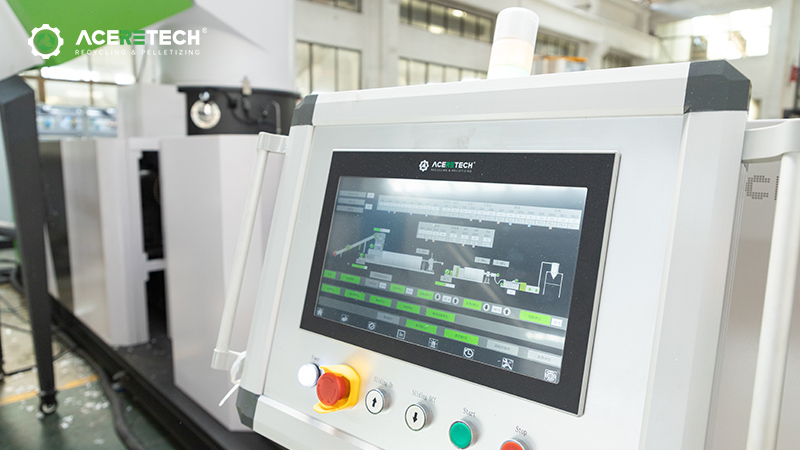
The entire system utilizes a PLC control platform and features premium electrical components and gearboxes. This enables centralized control over key processes—compaction, extrusion, degassing, filtration, and pelletizing—enhancing operational convenience and production stability.
IV. Applications of the ACSS Single-Screw Compacting & Pelletizing System
The ACSS single-screw compacting and pelletizing system is primarily designed for recycling low-bulk-density plastic films (such as PE and PP) and other plastic scrap suitable for compaction and pelletizing. Through compaction, plasticization, extrusion, filtration, and pelletizing, it continuously transforms loose plastic waste into uniform recycled plastic pellets.
Typical applicable materials include:
PE film
LDPE film
PP film
Packaging film
Industrial plastic film
Film production scrap
Clean plastic regrind
Other low-bulk-density plastics suitable for compaction and pelletizing
PE film is a primary application for the ACSS compacting and pelletizing system. For film-based materials, the compaction system pre-compacts and densifies loose film during the feeding process. This enhances continuous feeding capability and facilitates subsequent extrusion, plasticization, and stable pelletizing.
Actual throughput, filtration configuration, and the quality of the final recycled pellets depend on factors such as material type, contamination level, moisture content, feed condition, and target product specifications. Therefore, when selecting PE film recycling and pelletizing equipment, the process design and equipment configuration should be tailored to specific material characteristics and product requirements to ensure stable production capacity and pellet quality that meets standards.
V. Conclusion
For PE film recycling, key factors for efficient pelletizing include stable feeding, thorough compaction, efficient plasticization, vacuum degassing, continuous filtration, and stable pellet cutting.
The ACERETECH ACSS single-screw two-stage compaction and pelletizing system offers a comprehensive solution for PE film—covering everything from pre-treatment to the production of recycled pellets—by integrating technologies such as an 800L compaction chamber, two-stage single-screw extrusion, dual-stage vacuum degassing, SCF disc-type self-cleaning filtration, continuous piston filtration, and water-ring pelletizing.
With an optimized process configuration, PE film waste can be continuously processed into reusable PE plastic pellets, enabling plastic manufacturers to establish more stable and efficient internal waste recycling and recovery systems.
FAQ
Q1. Why is a pre-compactor needed for PE film pelletizing?
A: PE film typically has a low bulk density; feeding it directly into an extruder can lead to unstable feeding. The ACSS pre-compactor shreds, heats, dries, and densifies the film prior to extrusion, thereby improving feeding stability and ensuring a more uniform material flow.
Q2. How does the ACSS two-stage extrusion system optimize PE film recycling?
A: The ACSS utilizes a two-stage single-screw extrusion system that distributes processes—such as plasticization, melting, degassing, filtration, and melt pressure stabilization—across distinct processing stages. This design facilitates stable melt processing and uniform pelletizing, making it particularly suitable for demanding PE film recycling application
Q3. How does the dual-stage vacuum degassing system work during PE film pelletizing?
A: During the extrusion process, the dual-stage vacuum degassing system removes moisture, low-molecular-weight volatiles, and entrapped gases from the polymer melt. Effective degassing minimizes the impact of moisture and volatile substances on melt quality, thereby ensuring stable production of recycled PE pellets.
Q4. Can the ACSS handle PE film containing impurities?
A: Yes. The ACSS can be equipped with an SCF disc-type self-cleaning filtration system specifically designed for recycling applications involving contaminated plastics. Depending on the specific material conditions, the SCF system can process melts containing up to approximately 5% impurities (such as paper, wood chips, aluminum, unmelted plastic, and rubber).
Q5. What are the advantages of the SCF self-cleaning filter compared to traditional screen changers?
A: The SCF utilizes microporous steel filter discs and performs automatic cleaning within the filtration chamber. This enables continuous filtration without the need for frequent manual screen changes. The system offers a filtration fineness of up to 120 μm, combined with a large filtration area and stable melt pressure.