I. PET Fiber Recycling Challenges: Processing Lightweight and Flexible Textile Waste
Polyester (PET) fibers are widely used in textiles, nonwoven fabrics, industrial materials, and various manufacturing applications. During production and processing, waste PET fibers, fiber scraps, and discarded PET fabrics are generated in different forms. Recovering these materials can help reduce plastic waste and improve the utilization of recyclable resources.
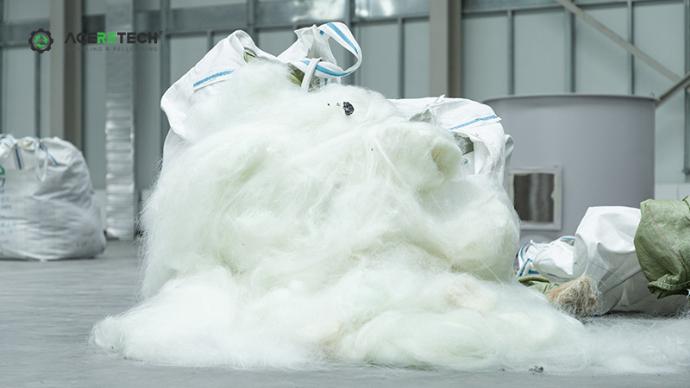
However, recycling waste PET fibers presents specific processing challenges. Compared with conventional rigid plastic scrap, PET fibers and textile waste are typically lightweight, flexible, and sometimes loosely structured. Their low bulk density can make feeding and conveying less stable, while their fibrous structure requires appropriate size reduction before extrusion.
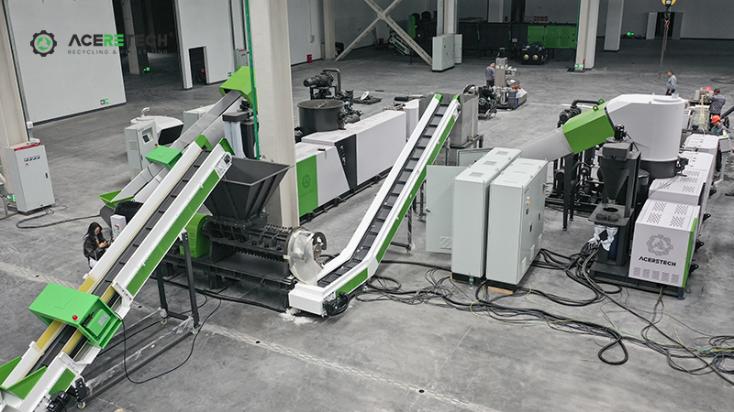
A practical PET fiber recycling solution therefore needs to address both material preparation and downstream pelletizing. In this application, ACERETECH combines the DTS single shaft shredder with the ACS-H cutter compactor pelletizing line to process waste PET fibers into recycled plastic pellets.
The complete system achieved a tested processing capacity of 500 kg/h, demonstrating an integrated approach to PET fiber shredding and pelletizing.
II. PET Fiber Shredding: Preparing Flexible Materials for Extrusion
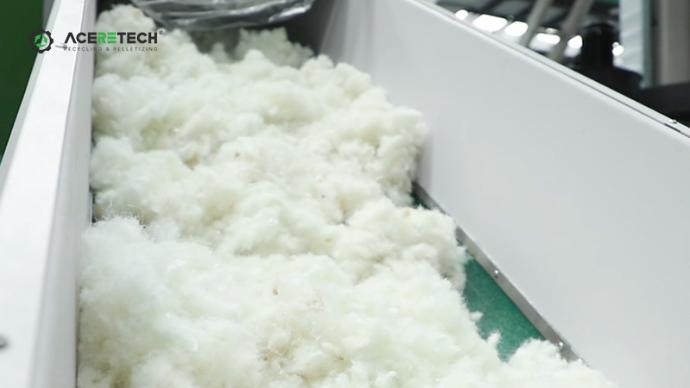
The first stage of the PET fiber recycling process is size reduction. Loose fibers and fabric waste can be difficult to feed directly into an extrusion system due to their irregular shapes and low bulk density.
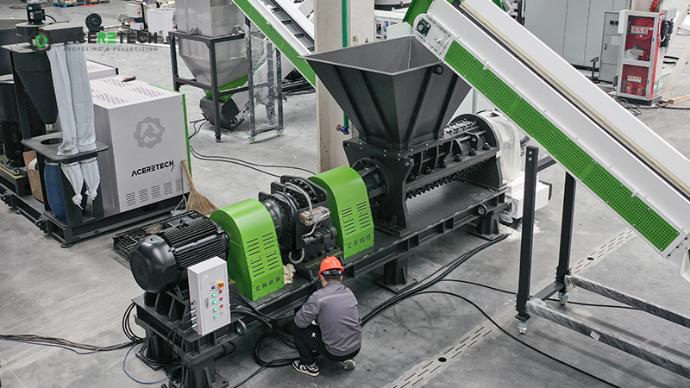
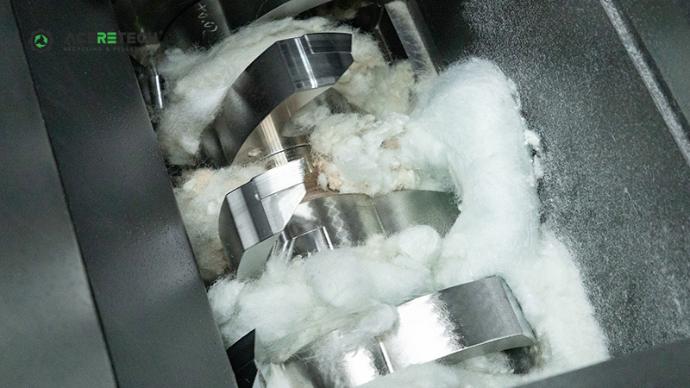
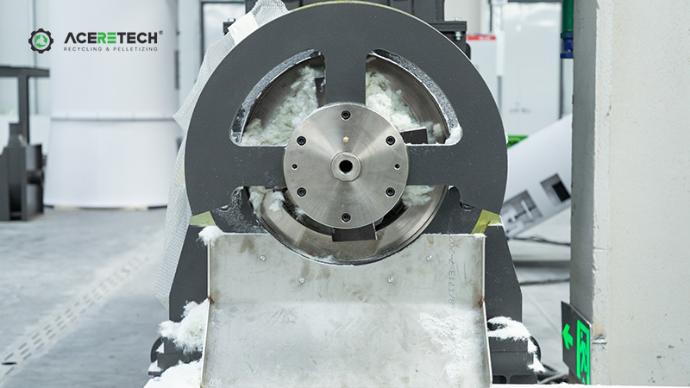
The ACERETECH DTS single shaft shredder is designed for flexible materials, including fibers, filaments, fabrics, films, and woven bags. Its cutting configuration helps reduce bulky textile waste into smaller pieces for subsequent processing.
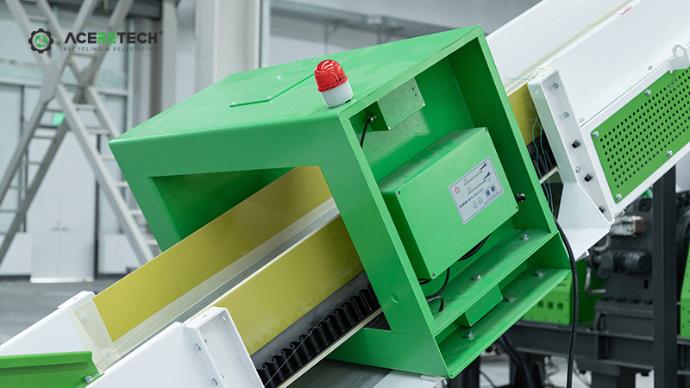
In this project, the DTS single shaft shredder is equipped with a 600 mm wide PVC belt conveyor integrated with a metal detection system. The conveyor transports PET fiber waste into the shredding chamber, while the detection system helps identify metal contaminants and protect downstream equipment.
DTS Shredder Configuration
| Effective cutting area |
1,800 × 400 mm |
| Feeding inlet |
750 × 600 mm |
| Rotor speed | 54.5 rpm |
| Rotor diameter | 400 mm |
| Blade material | Forged wear-resistant rigid material |
| Main shaft material | 40Cr, heat-treated to HB250–280 |
| Discharge system | Belt conveyor |
| Material storage | Stainless steel silo |
| Particle size of PET fiber material after shredding | approximate 30–50 mm |
This size reduction stage makes the material more manageable for conveying and helps prepare it for the next stage of compaction and extrusion.
III. PET Fiber Pelletizing: From Compaction to Melt Extrusion
After shredding, the PET fiber material is conveyed to the ACS-H single-stage cutter compactor pelletizing line for further processing. Since PET fibers are typically lightweight and have a relatively low bulk density, proper material preparation is important for maintaining stable feeding and consistent extrusion.
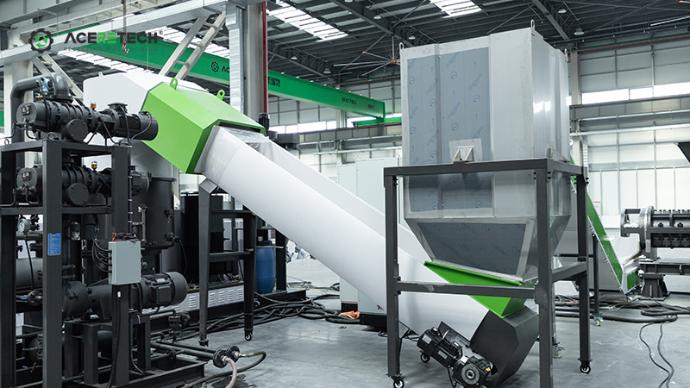
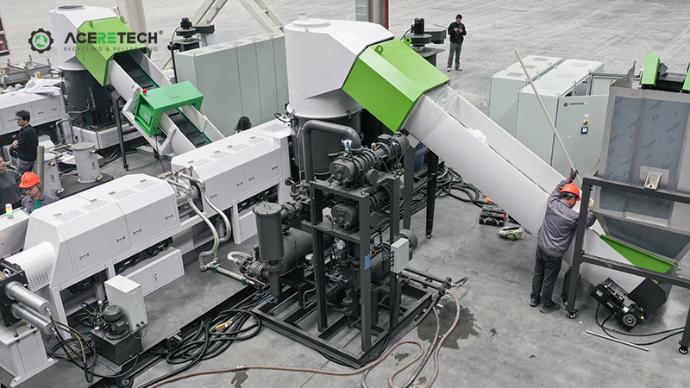
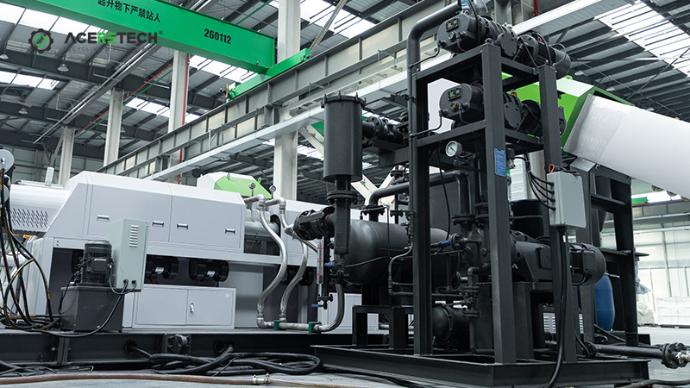
The ACS-H integrates material compaction, single-screw extrusion, vacuum degassing, melt filtration, and strand pelletizing into one processing line.
1. Cutter Compaction for Efficient Material Feeding
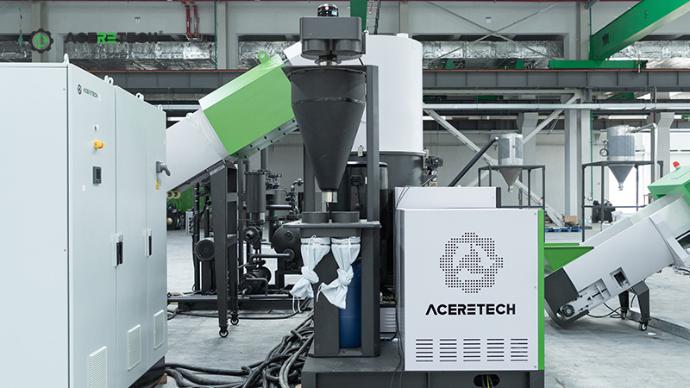
The first stage takes place in the cutter compactor, where rotating blades cut, mix, and compact the incoming PET fiber material. Frictional heat generated during operation helps preheat the material, while the compaction process reduces its volume and increases bulk density.
For this application, the ACS-H is equipped with an 800 L compaction chamber, featuring a variable frequency drive, movable sliding gate, and dust collection and dehumidification system. These components help regulate material processing and support controlled feeding into the extruder.
2. Single-Screw Extrusion and Plasticizing
The compacted PET material is then transferred into the single-screw extruder for melting and homogenization.
The system features a Ø120 mm single screw with an L/D ratio of 42:1, using a standard bimetallic screw and barrel construction. The screw conveys, melts, and plasticizes the material under controlled processing conditions, preparing a homogeneous melt for subsequent treatment.
3. Vacuum Degassing and Continuous Melt Filtration
During extrusion, residual moisture and volatile components may affect melt stability and recycled pellet quality. The integrated vacuum degassing system helps remove these components from the molten PET material, reducing potential processing defects associated with moisture and volatiles.
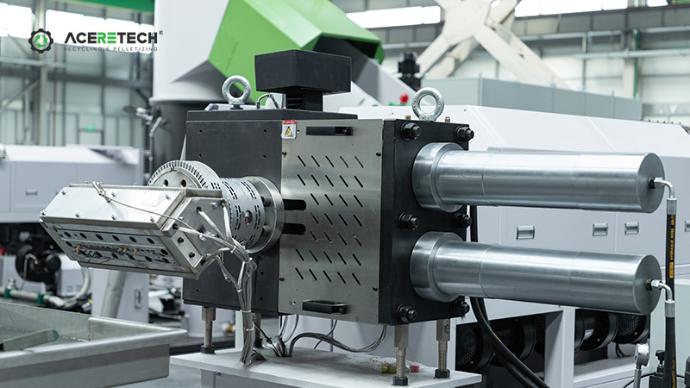
After degassing, the melt passes through a large-area, continuous piston-type melt filtration system. The filter retains solid contaminants before pelletizing and is designed to reduce production interruptions associated with conventional filter replacement.
Actual degassing and filtration performance depends on the incoming material condition, contaminant characteristics, and operating parameters.
4. Water-Cooled Strand Pelletizing
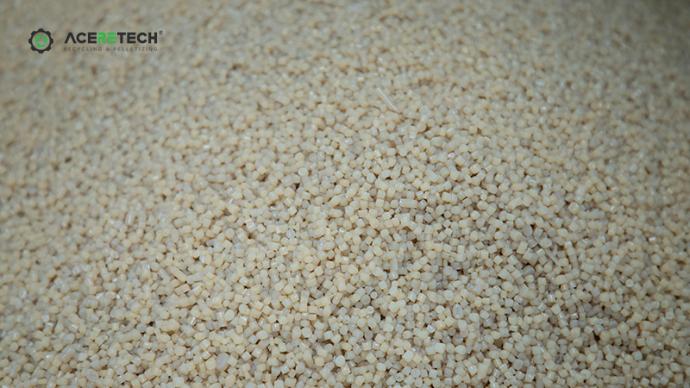
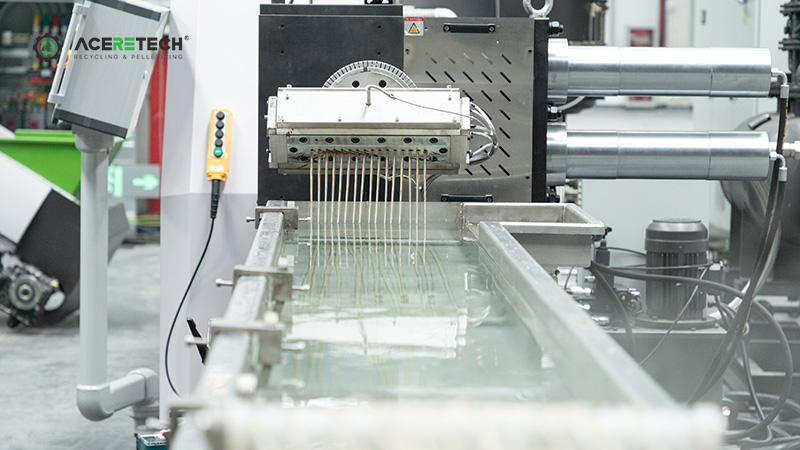
After extrusion and melt filtration, the molten PET material passes through the die head to form continuous strands. These strands are cooled in water before entering the pelletizing unit, where they are cut into relatively uniform recycled PET pellets.
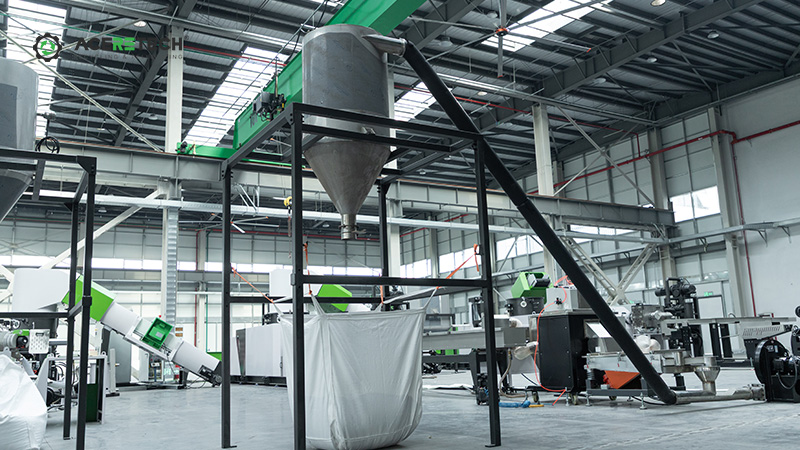
The finished pellets are collected in a storage silo for subsequent handling, quality inspection, and downstream processing.
The final pellet quality depends on several factors, including raw material composition, moisture content, contamination level, extrusion temperature, filtration accuracy, and pelletizing conditions. Appropriate processing parameters should therefore be established according to the actual PET fiber material.
Related Recycling Solutions
Explore More Fiber Recycling Solutions
Looking for solutions to recycle other types of nylon fibers? Explore our related shredding and pelletizing applications:
PA6 Fiber Recycling and Pelletizing Solution
PA66 Nylon Waste Fiber Recycling Solution
PA Fiber Recycling and Pelletizing Solution
IV. PET Fiber Recycling Line: Actual Test Results and Project Highlights
This ACERETECH recycling test demonstrates how a dedicated shredding and pelletizing combination can be applied to waste PET fiber processing.
Project Information
Raw material: Waste PET fibers / PET fabric
Shredding equipment: DTS single shaft shredder
Pelletizing equipment: ACS-H single-stage cutter compactor pelletizing line
Tested processing capacity: 500 kg/h
Shredded material size: Approximately 30–50 mm
Extruder screw diameter: 120 mm
Screw L/D ratio: 42:1
Compaction chamber volume: 800 L
Pelletizing method: Water-cooled strand pelletizing
Processing Workflow
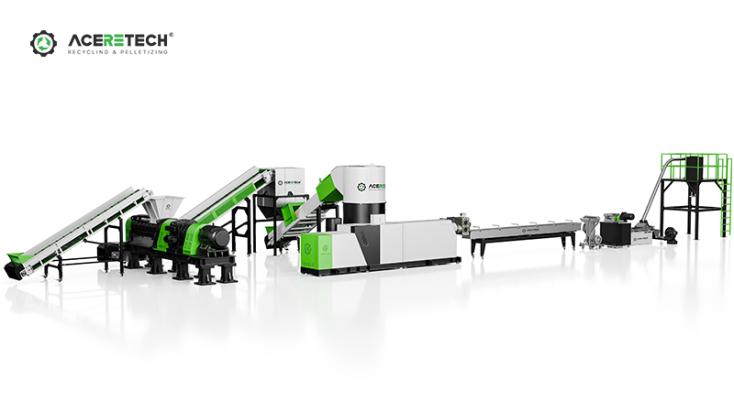
Waste PET Fibers → Belt Conveying and Metal Detection → DTS Shredding → Material Conveying → ACS-H Compaction → Single-Screw Extrusion → Vacuum Degassing → Melt Filtration → Water-Cooled Strand Pelletizing → Recycled PET Pellets
The integrated configuration connects material size reduction with extrusion and pelletizing, providing a coordinated processing route for flexible PET fiber waste.
With a tested capacity of 500 kg/h, this project offers a practical reference for recycling facilities seeking to process PET fiber scraps and similar textile-derived plastic waste.
V. Customized PET Fiber Recycling Solutions by ACERETECH
Different PET fiber waste streams may vary in fiber length, density, moisture content, contamination level, and material composition. These factors can influence shredding performance, feeding stability, extrusion conditions, and final pellet quality.
Selecting a suitable PET fiber recycling machine therefore requires an evaluation of the actual material rather than relying solely on nominal equipment capacity.
ACERETECH provides plastic shredding and pelletizing solutions for different flexible plastic recycling applications. By combining appropriate pre-processing equipment with an integrated cutter compactor extrusion system, the recycling line can be configured according to specific material characteristics and production requirements.
Whether processing PET fiber scraps, textile waste, or other flexible plastic materials, ACERETECH supports customers in developing practical recycling solutions from size reduction to pellet production.
Contact ACERETECH to discuss your PET fiber recycling project and request a customized equipment proposal.
FAQ
Q1. What is the best way to recycle waste PET fibers?
A: A typical mechanical recycling process involves shredding, compaction, extrusion, vacuum degassing, melt filtration, and pelletizing. For lightweight and flexible PET fiber waste, pre-shredding can help improve material handling, while a cutter compactor can increase bulk density and support more stable extrusion feeding.
Q2. What is the function of a cutter compactor in PET fiber recycling?
A: A cutter compactor combines cutting, mixing, and densification. During operation, frictional heat helps preheat and partially dry the material, while the compaction process reduces its volume and increases bulk density. This helps improve feeding conditions before extrusion.
Q3. What is the function of vacuum degassing in a PET recycling pelletizing line?
A: Vacuum degassing helps remove residual moisture and volatile components from molten plastic during extrusion. It can improve melt stability and reduce defects associated with moisture and volatile substances. Its effectiveness depends on the incoming material condition and operating parameters.
Q4. What is the purpose of melt filtration in PET fiber pelletizing?
A: Melt filtration helps retain solid contaminants in the molten plastic before pelletizing. A suitable filtration system can reduce the presence of impurities in recycled pellets and support more consistent processing. Filter selection should be based on the contamination level and required filtration accuracy.
Q5. Can the ACS-H pelletizing line process other flexible plastic materials?
A: Yes. The ACS-H series is designed for a range of flexible plastic waste, including PE and PP films, raffia, woven bags, fibers, filaments, and other suitable plastic scraps. The processing configuration should be selected according to the material type and required output quality.