I. Introduction: Challenges in Recycling Nylon Fiber Waste
Nylon (also known as Polyamide or PA) is widely used in the production of textiles, automotive parts, industrial ropes, fishing nets, and other industrial goods. Thanks to its excellent mechanical strength, wear resistance, and toughness, nylon fiber plays a vital role in numerous industrial applications.
During spinning, weaving, and related processing stages, companies often generate nylon fiber waste, fiber bundles, tangled waste masses, and other production offcuts. These materials are characterized by varying lengths, high flexibility, and a tendency to tangle or knot, posing challenges for the stable operation of conventional size-reduction equipment.
For nylon fiber waste recycling projects, the key lies not only in cutting the fibers but also in minimizing the risk of material entanglement, maintaining continuous feeding, and processing the waste into a size suitable for subsequent sorting, washing, or regeneration.
To address these long, tough fibers, the ACERETECH HS series single-shaft shredder serves as an ideal option for pre-processing nylon fiber waste. Models equipped with a 1200 mm wide rotor offer an expanded working area for handling larger volumes of material. Specific equipment configurations and processing capacities should be determined based on the waste's length, form, moisture content, and actual test results.
II. Why Recycle Nylon Fiber Waste?
Centralized processing of recyclable nylon fiber waste helps maximize the resource utilization of production scrap and minimizes the waste of recoverable materials.
1. Improving Resource Utilization of Production Waste
Nylon waste generated during textile and chemical fiber production—provided it meets quality and recyclability standards—can be reclaimed through mechanical pre-processing and subsequent regeneration techniques. Depending on the polymer type, cleanliness, and quality requirements of the raw material, the processed material can be utilized in appropriate regeneration workflows.
2. Reducing the burden of waste handling, storage, and transport
Agglomerated nylon waste filaments are typically bulky, occupying significant storage and transport space. Appropriate shredding pre-treatment can reduce the material to smaller sizes, facilitating subsequent conveying, storage, and process integration. The actual volume reduction achieved depends on the material's physical form and the subsequent processing methods employed.
3. Supporting the circular economy and sustainable production
Establishing standardized recycling processes for nylon waste filaments helps enterprises minimize the loss of recyclable resources and improves the standardization of industrial waste management. For manufacturers with a steady supply of waste filaments, effectively planning the shredding, sorting, and recycling stages is crucial for enhancing resource utilization efficiency.
It should be noted that the suitability of nylon waste filaments for conversion into high-quality recycled raw materials depends on factors such as material composition, contamination levels, additives, and subsequent processing steps; not all waste filaments are suitable for the direct production of high-quality recycled products.
III. Key technical challenges in shredding nylon fiber waste
Nylon fiber waste differs significantly from conventional rigid plastic blocks. Its long-fiber structure and high toughness require shredding equipment to possess specific capabilities regarding material feeding, shearing, and overload protection.
1. Fiber entanglement and material bridging
Nylon waste filaments tend to tangle around rotating components and can form clumps in the hopper or feed zone, destabilizing the material flow into the shredding chamber. In severe cases, entanglement can increase motor load, leading to equipment stoppage or the need for manual clearing.
Therefore, processing nylon fiber waste requires careful consideration of rotor design, blade configuration, feeding methods, and the equipment's overload protection mechanisms.
2. Impact of material toughness on shredding efficiency
Nylon fibers possess significant tensile strength and toughness; the difficulty of cutting them depends on factors such as fiber diameter, the tightness of fiber bundles, material moisture content, and the condition of the cutting blades.
If the blade design is incompatible with the material properties, issues such as incomplete cutting, repeated stress on the material, or accelerated blade wear may occur. Therefore, factors such as cutter material, geometry, and maintenance protocols must be considered when selecting equipment.
3. Continuous Feeding and Processing Capacity
Nylon waste filaments typically have a low bulk density, and material batches may vary in length and degree of agglomeration. Uneven feeding can limit the equipment's actual processing capacity.
For enterprises requiring continuous processing of large volumes of production waste filaments, the rotor width, feeding system, and drive configuration should be selected based on the specific material characteristics; operational stability and actual throughput should then be verified through trial runs.
IV. ACERETECH HS Series Single-Shaft Shredder Solution for Nylon Waste Filaments
The ACERETECH HS series single-shaft shredder is suitable for size reduction across a wide range of plastic waste materials. When processing nylon fiber waste, equipment configuration should be evaluated with a focus on three key aspects: rotor width, cutter shearing geometry, and automatic control systems.
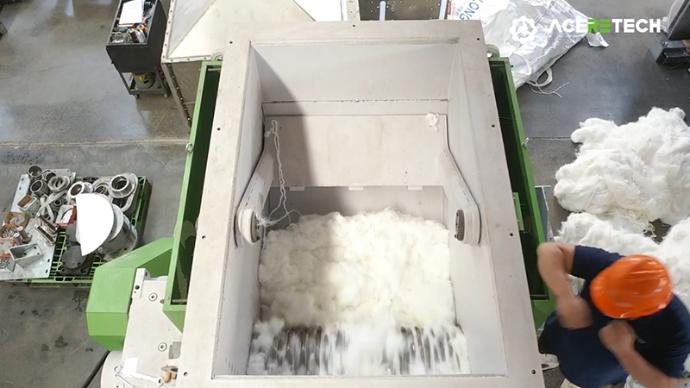
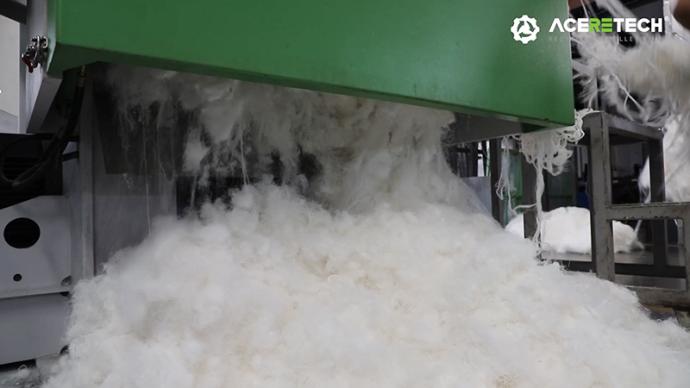
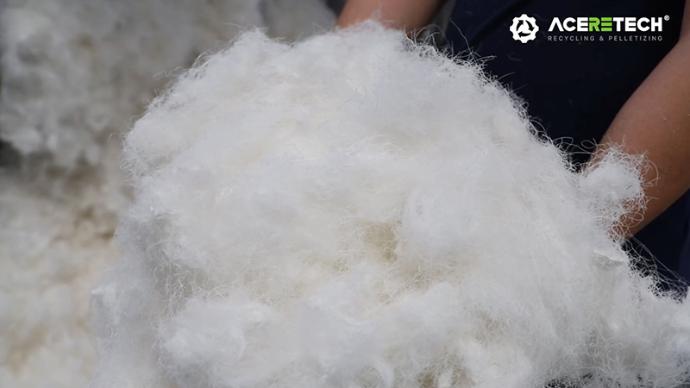
1. 1200 mm Wide Rotor: Providing a Wider Working Area for Long-Fiber Materials
When processing nylon waste filaments that are clumped, bundled, or long, the rotor's working width is a critical factor in equipment selection.
A 1200 mm wide rotor offers a larger effective working area, facilitating the handling of wide or unevenly distributed feed material. When combined with appropriate feeding methods and cutter layouts, the equipment can continuously grab, shear, and tear the fiber waste entering the shredding chamber, thereby progressively reducing the material size.
For materials prone to tangling, rotor width is not the sole determining factor. Actual processing performance also depends on rotor diameter, cutter arrangement, rotational speed, drive power, the ram/pusher mechanism, and the specific physical form of the waste filaments. Therefore, the equipment's final throughput capacity cannot be determined based on the 1200 mm rotor width alone.
For nylon fiber manufacturers with high-volume processing needs, it is recommended to determine the appropriate HS series model and supporting configuration based on the results of on-site material testing.
2. Cutter and Shearing Structure: Optimizing Nylon Fiber Size Reduction
The structure and material of the shredding cutters directly impact the equipment's shearing efficiency, wear characteristics, and maintenance intervals.
The HS series single-shaft shredder shears and tears material through the synergistic action of rotor cutters and stationary cutters. When processing nylon fiber waste, key considerations include whether the cutter configuration accommodates the morphology of the fiber bundles and whether the equipment can maintain stable operation under reasonable load conditions.
Cutter materials, heat treatment processes, and wear-resistant designs depend on the specific machine configuration. For materials with high toughness or impurities, conducting trial runs prior to full-scale production is recommended to verify cutter suitability, shredding performance, and maintenance requirements.
3. PLC Control and Overload Protection: Enhancing Operational Stability
During the shredding of nylon fiber waste, material entanglement or sudden surges in feed volume can cause load fluctuations. Equipment featuring automatic control and overload protection helps mitigate the impact of abnormal loads on the drive system.
Depending on the specific configuration, HS series units utilize PLC control systems to monitor operational status. In the event of an overload meeting specific control logic criteria, the system executes protective actions—such as rotor reversal—to alleviate the risk of rotor stalling.
It should be noted that automatic reversal is primarily intended to assist in handling certain overload scenarios; it cannot entirely eliminate fiber entanglement or prevent all instances of abnormal shutdowns. Actual control functions, sensor configurations, and the level of automation are subject to the technical specifications of the selected model.
V. Nylon Fiber Waste Recycling Process Flow
For nylon fiber waste recycling projects primarily utilizing production offcuts, the following processing workflow can be planned based on material characteristics:
Collection of nylon fiber waste → Manual or mechanical pre-treatment → Single-shaft shredding → Subsequent sorting or washing (if required) → Pelletizing and regeneration processing in accordance with material requirements
The specific process flow should be determined based on raw material cleanliness, moisture content, fiber morphology, and final product requirements. Raw Material Inspection: Identify the polymer type of the waste fiber and check for contaminants such as metal, stones, or other foreign objects that could damage the equipment.
Shredding Pre-treatment: Use a suitable single-shaft shredder to reduce the size of the waste fiber, facilitating subsequent conveying and processing.
Sorting and Cleaning: Implement appropriate treatment steps—based on recycling process requirements—for waste fibers contaminated with oil, dust, or other impurities.
Subsequent Recycling Processing: Select suitable processes—such as granulation, melt filtration, and pelletizing—based on material composition and product quality requirements.
Shredding is merely a preliminary size-reduction step; it cannot, on its own, ensure the material meets the quality standards required for spinning-grade or engineering-plastic-grade recycled feedstock.
Related Article
PA66 Nylon Waste Fiber Pelletizing
VI. Conclusion: Selecting the Right Shredding Equipment for Nylon Fiber Waste
The high toughness, long-fiber structure, and tendency to tangle characteristic of nylon fiber waste necessitate specialized equipment design and process planning. Key factors to consider during equipment selection include rotor width, blade shearing configuration, stable feeding methods, and appropriate overload protection mechanisms.
The ACERETECH HS series single-shaft shredder is a viable option for the pre-treatment of nylon fiber waste. For projects requiring high throughput, the model featuring a 1200 mm wide rotor warrants evaluation based on specific material characteristics.
ACERETECH can assist in evaluating suitable shredding equipment and supporting processes based on the type of nylon waste, material form, target capacity, and downstream processing requirements provided by the client. Through proper equipment selection and process design, enterprises can more effectively utilize nylon fiber waste as a resource.
FAQ
Q1: Can the ACERETECH HS Series Single Shaft Shredder Process Nylon Fiber Waste?
A: Yes. The ACERETECH HS series single shaft shredder can be evaluated for processing nylon fiber waste, including nylon fiber bundles and certain types of production scrap. Its V-type rotor design and hydraulic pusher support controlled feeding and size reduction. Actual shredding performance depends on fiber length, bundle density, material condition, and machine configuration. Material testing is recommended to confirm suitability for specific nylon fiber recycling applications.
Q2: What Are the Advantages of a 1200 mm Rotor for Nylon Fiber Waste Shredding?
A: A 1200 mm rotor provides a wide working area for handling bulky or unevenly distributed nylon fiber waste. When combined with an appropriate knife arrangement and feeding system, it can help process larger quantities of material across the cutting chamber. However, rotor width alone does not determine throughput. Actual capacity depends on the physical characteristics of the nylon waste, drive configuration, feeding conditions, and required output size.
Q3: How Does the Hydraulic Pusher Help Reduce Feeding Problems When Shredding Nylon Fiber Waste?
A: The hydraulic pusher moves material toward the rotor to support controlled feeding during shredding. On the HS series, the redesigned hydraulic pusher also helps improve pushing performance and reduce the risk of material blockage associated with unsuitable feeding conditions. For long, flexible nylon fibers that may tangle or form compacted bundles, proper coordination between the pusher, rotor, and feeding system is important for stable operation. The actual result depends on the material and machine setup.
Q4: Can the Output Size of the HS Series Shredder Be Adjusted for Nylon Fiber Recycling?
A: Yes. The output size can be influenced by the aperture of the replaceable screen installed beneath the rotor. The HS series product page lists standard screen options ranging from 40 to 100 mm, depending on the selected model and configuration. The appropriate screen should be selected according to the requirements of downstream conveying, sorting, or recycling processes. If a smaller particle size is required, secondary size reduction may be necessary.
Q5: What Happens to Nylon Fiber Waste After Shredding?
A: After shredding, nylon fiber waste can be transferred to suitable downstream processing equipment, depending on its composition, cleanliness, and intended reuse. A typical recycling process may include sorting, washing when necessary, further size reduction, and pelletizing. Shredding is primarily a size-reduction step; it does not by itself guarantee that the material meets the quality requirements for fiber production or engineering plastic applications.