🔍 Abstract
The pelletizing method employed by a plastic granulator directly impacts pellet quality, production efficiency, and the level of automation.
👉 The three currently dominant pelletizing methods include:
Water Ring Pelletizing
Strand Pelletizing
Underwater Pelletizing
Different pelletizing methods are suited to specific material types and production capacity requirements. Selecting the appropriate pelletizing system is crucial for enhancing product quality and reducing operational costs.
I. Why Is the Pelletizing Method So Important?
In the process of plastic recycling and granulation, pelletizing is the final—and critically important—step.
👉 The pelletizing method directly influences:
Pellet appearance (uniformity and roundness)
Moisture content and the complexity of post-processing
The degree of automation
Production stability and energy consumption
Therefore, selecting the correct pelletizing system not only affects product quality but also determines the overall efficiency of the entire production line.
ACERETECH granulators primarily utilize three proven pelletizing solutions, covering a wide range of application scenarios:
1️⃣ Water Ring Pelletizing System
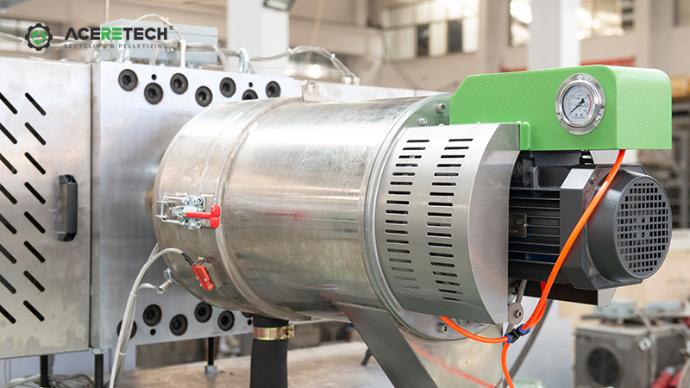
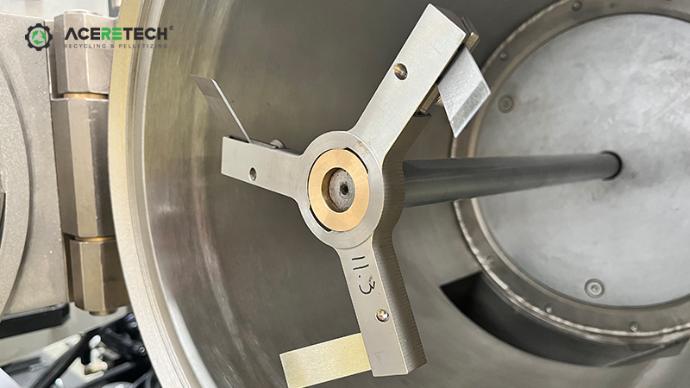
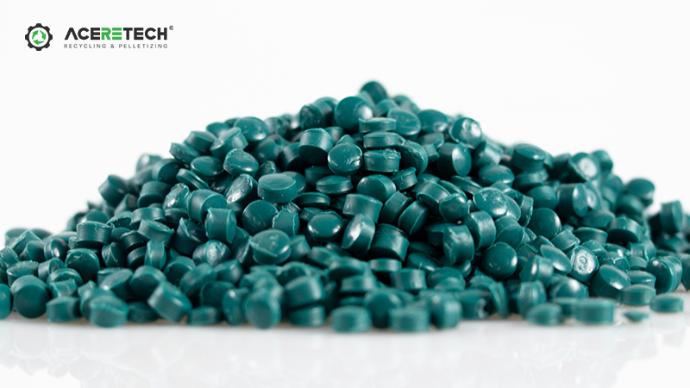
Working Principle
After molten plastic is extruded through the die head, it is cut by high-speed rotating blades; simultaneously, a water ring cools and conveys the material, forming the finished pellets.
Key Features
✅ Self-Adjusting Cutting Head Design
Maintains precise blade pressure at all times
Enhances pellet uniformity
✅ Automatic Speed Control System
Blade rotation speed automatically adjusts based on melt pressure
Ensures stable pelletizing operations
✅ Ease of Operation
Quick and easy blade replacement
Requires no complex adjustments
Suitable Materials
PE and PP films
Woven bags
Lightweight, soft plastics
Summary of Advantages
👉 Simple structure + Moderate cost + Wide range of applications
👉 Currently the most common and cost-effective pelletizing method available
2️⃣ Strand Pelletizing System
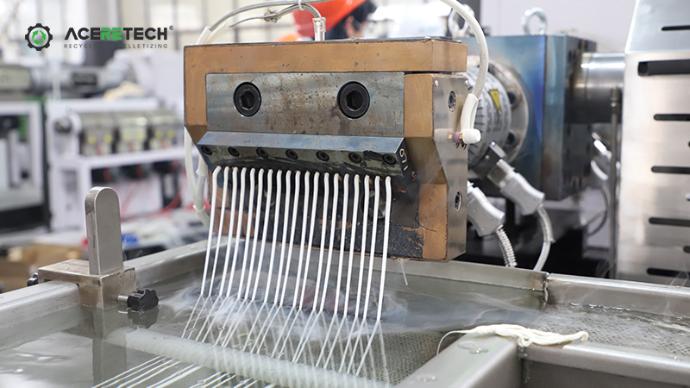
Working Principle
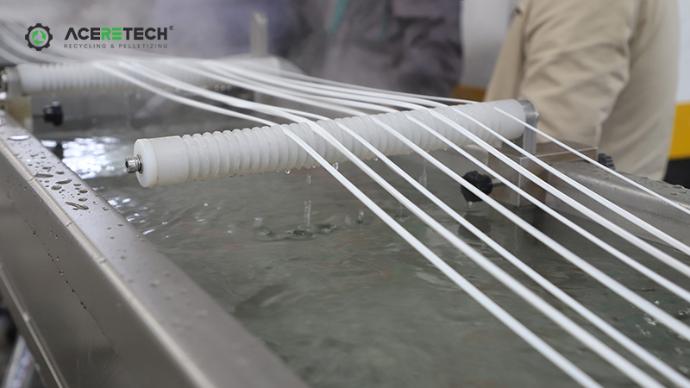
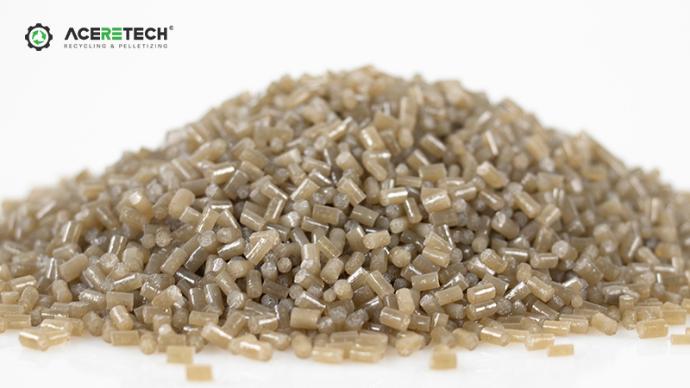
Molten plastic is extruded from the die head to form continuous strands → enters a water tank for cooling → is stably conveyed by a traction device → and is finally cut into pellets by the granulator.
Process Flow
Melt → Strand Drawing → Water Cooling → Hauling → Pelletizing
Key Features
✅ Stable and Reliable Process
Pellet size is controllable
Suitable for the production of regular-shaped pellets
✅ Intuitive Operation
Easy to observe and maintain
Applicable Materials
Rigid plastics (e.g., ABS, PS, PC)
Engineering plastics
Modified plastics
Summary of Advantages
👉 Low investment cost
👉 Suitable for applications where strict pellet shape requirements are not critical
⚠️ Note:
Lower degree of automation
Higher reliance on operator expertise
3️⃣ Underwater Pelletizing System
Working Principle
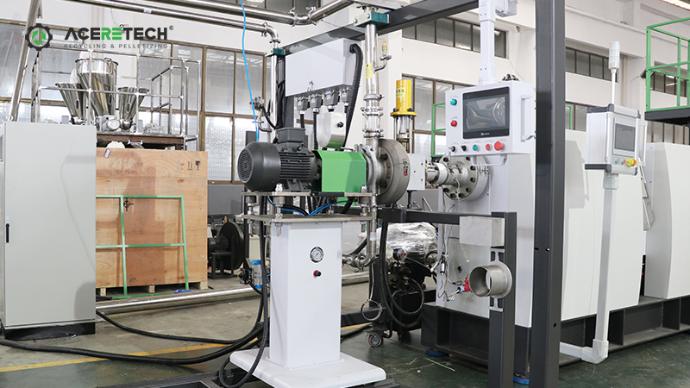
At the die head outlet, the plastic melt is directly cut by rotating blades submerged in water; the pellets complete their cooling process within the water and are then conveyed to downstream systems.
System Components
Pelletizer
Automatic Valve System
Conveying Pipelines
Dewatering Vibrating Screen
Storage Silo
Key Features
✅ Highly Automated
Continuous operation
Minimizes manual intervention
✅ High-Capacity Design
Suitable for large-scale production
✅ Superior Pellet Quality
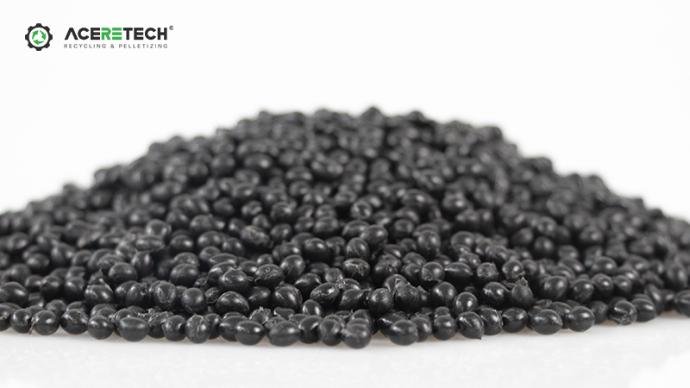
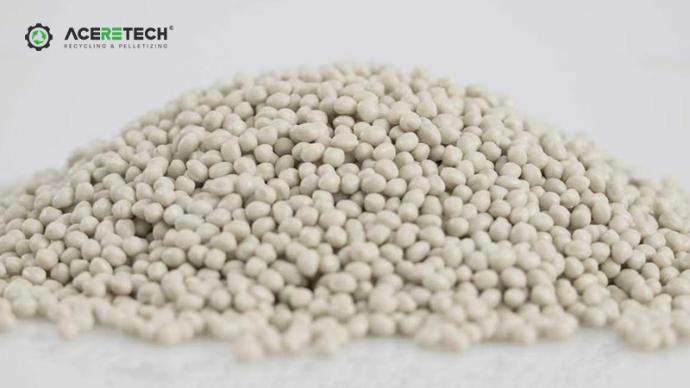
Round and uniform shape
Smooth surface finish
Applicable Materials
High-MFI materials
Engineering plastics (e.g., PET, PA)
High-end modified plastics
Summary of Advantages
👉 Highest degree of automation
👉 Best pellet quality
👉 Suitable for high-end markets
⚠️ However: Higher equipment investment costs and more stringent system requirements
III. How to Choose the Right Pelletizing Method?
👉 Key factors to consider when making a choice:
1️⃣ Material Type
Films → Water-Ring Pelletizing
Rigid Plastics → Strand Pelletizing
High-End Materials → Underwater Pelletizing
2️⃣ Production Capacity Requirements
Small to Medium Output → Water-Ring / Strand
Large-Scale Production → Underwater
3️⃣ Investment Budget
Limited Budget → Strand
Prioritizing Efficiency → Water-Ring
High-End Positioning → Underwater
IV. Conclusion
The pelletizing method employed by a plastic granulator is not merely the "final step," but a critical link that determines both product quality and production efficiency.
👉 Water-Ring Pelletizing: The cost-effective choice
👉 Strand Pelletizing: Stable and reliable
👉 Underwater Pelletizing: High-end and efficient
Based on a client's specific materials, production capacity, and application scenarios, ACERETECH offers customized pelletizing solutions designed to help clients achieve stable production and maximize value.
FAQ
Q1. How can I quickly determine which pelletizing method is suitable based on my specific materials?
A: Generally, the appropriate method can be determined based on the material's physical form and melt characteristics:
Films and Soft Materials (PE/PP) 👉 Water-ring pelletizing is the preferred choice.
Rigid Plastics (ABS/PS/PC) 👉 Strand pelletizing is suitable.
High-Flow or Premium Materials (PET/PA) 👉 Underwater pelletizing is recommended.
👉 If the material is complex or a mixture, it is advisable to conduct a trial run to determine the optimal solution.
Q2. Which pelletizing method is better suited for long-term, stable production?
A: If the goal is long-term, stable operation:
Water-ring Pelletizing: Offers the best balance of stability and cost-effectiveness.
Underwater Pelletizing: Provides the highest stability, but involves a more complex system.
👉 For large-scale, continuous production, underwater pelletizing offers distinct advantages.
Q3. Does the pelletizing method affect the final selling price of the product?
A: Yes, and the impact is significant:
Uniform, Spherical Pellets (e.g., from underwater pelletizing) 👉 Easier access to high-end markets.
Irregular Pellets (e.g., from certain strand pelletizing methods) 👉 Command a relatively lower price.
👉 High-quality pelletizing can significantly enhance the added value of recycled materials.
Q4. Is there a significant difference in maintenance costs between different pelletizing systems?
A: Generally speaking:
Strand Pelletizing 👉 Simplest maintenance, lowest cost.
Water-ring Pelletizing 👉 Moderate maintenance requirements; blade replacement is convenient.
Underwater Pelletizing 👉 Complex system requiring more specialized maintenance expertise.
👉 When making a selection, it is advisable to consider the total cost—combining "equipment acquisition cost + long-term maintenance costs."
Q5. Is it possible to switch or upgrade the pelletizing method at a later stage?
A: In some cases, yes; however, the compatibility of the entire production line must be taken into account:
Water-ring ↔ Strand: Relatively easy to adjust.
Upgrading to Underwater Pelletizing: Typically requires reconfiguring the entire system.
👉 It is recommended to clearly define your target market during the initial planning phase to avoid incurring high modification costs later on.