I. Transforming Waste Plastics into High-Value Recycled Granules
With the continuous global growth in demand for recycled plastics, PP woven bags and PE films have emerged as critical recyclable materials within the circular economy. These flexible plastics are widely utilized across the packaging, agricultural, logistics, construction, and industrial sectors, generating vast quantities of industrial scrap and post-consumer waste annually.
However, compared to rigid plastics, PP woven bags and PE films present unique challenges during the recycling process due to characteristics such as low bulk density, high contamination levels, and a propensity to retain moisture. To ensure stable production and yield high-quality recycled pellets, recycling enterprises must optimize every stage of the recycling workflow—from sorting and washing to drying and pelletizing.
This article will provide an in-depth exploration of the complete recycling process for PP woven bags and PE films, the common challenges encountered, key considerations for equipment selection, and practical strategies for enhancing both recycling efficiency and pellet quality.
II. Why Are PP Woven Bags and PE Films Difficult to Recycle?
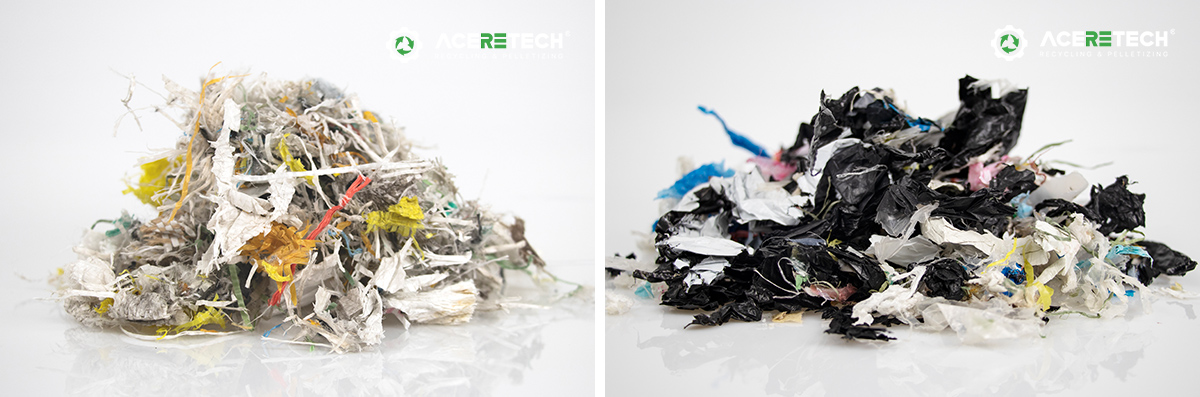
Although both materials possess excellent recyclability, their physical properties present multiple challenges during the processing stage.
1. Low Bulk Density
Waste films and woven bags are lightweight yet occupy a disproportionately large amount of storage space. Their low-density nature often creates difficulties regarding material transport, feeding into machinery, and continuous processing operations.
2. High Degree of Contamination
Collected waste materials typically contain the following contaminants:
Soil and sand
Labels and adhesives
Organic residues
Printing inks
Metal impurities
Miscellaneous other plastic materials
Without effective washing and separation methods, these contaminants will severely compromise the quality of the recycled pellets and disrupt the smooth operation of subsequent processing stages.
3. Complex Washing Process
Films and woven fabrics are lightweight and thin in texture; during the washing process, they are highly prone to tangling and folding, thereby trapping contaminants within their fibers or structural matrix. Conventional washing methods often struggle to thoroughly remove this deeply embedded dirt and these impurities. 4. Moisture Sensitivity During the Granulation Process
If excessive moisture enters the extrusion granulation stage, it may trigger the following issues:
Formation of internal voids within the recycled granules
Appearance of surface defects on the granules
Degradation of the material's mechanical properties
Reduction in production efficiency
Therefore, efficient dewatering and drying constitute a critically important stage within the entire recycling process.
III. Typical Recycling Process Flow for PP Woven Bags and PE Films
A well-designed recycling system typically consists of multiple interconnected stages, aimed at ensuring material cleanliness and guaranteeing the stability and smoothness of the recycled pellet production process. Process Flow:
Collection & Sorting → Shredding / Crushing → Pre-washing → Friction Washing → Flotation Separation → Dewatering → Drying → Pelletizing → Recycled Pellets
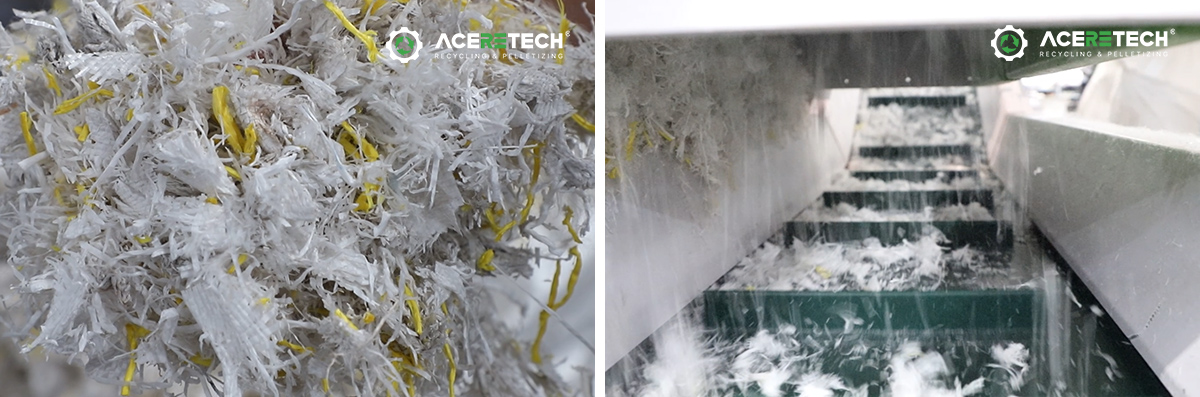
The recycling process begins with the inspection and sorting of the materials.
Prior to subsequent processing, large contaminants—such as stones, wood chips, metal parts, and incompatible plastics—must be removed.
Subsequently, the materials are shredded or crushed into smaller fragments (flakes) to facilitate subsequent washing and downstream processing.
For PE films, a wet crushing process is typically preferred, as it simultaneously reduces material size and performs a preliminary wash, while minimizing dust generation.
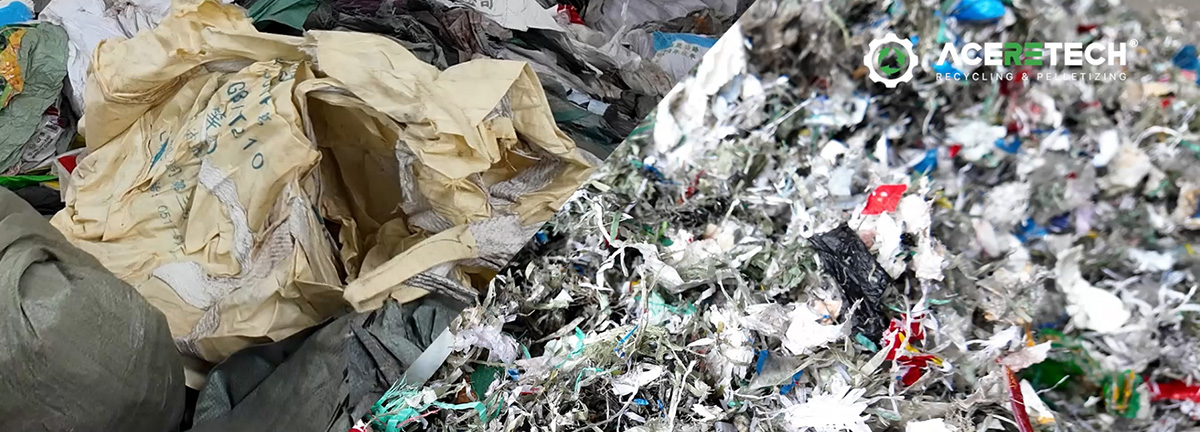
Washing is one of the most critical stages in the production of high-quality recycled pellets.
1. Pre-washing
The pre-washing system is responsible for removing loose dirt and surface contaminants from the materials, thereby preparing them for subsequent deep cleaning.
2. Friction Washing
High-speed friction washers generate a powerful mechanical cleaning action through intense friction—both between the material particles themselves and between the materials and the equipment components.
This process is highly effective at removing the following contaminants:
Soil/Dirt
Oil and grease residues
Adhesives
Fine particulate impurities
3. Flotation Separation
Flotation tanks utilize the density differences between various materials to separate the plastics from denser contaminants, such as sand, stones, glass, and metal particles.
This stage, performed prior to the drying process, further enhances the purity of the material stream.
Step 3: Dewatering and Drying
Once cleaning is complete—and prior to entering the extrusion stage—the moisture content within the material must be reduced.
Commonly used dewatering technologies include:
Centrifugal dewaterers
Screw press dewaterers
Hot air drying systems
Modern extrusion dewatering systems not only significantly reduce the material's moisture content but also simultaneously increase its bulk density; this contributes to improved feeding stability and processing performance during the subsequent extrusion stage.
To produce high-quality recycled pellets, recycling processors typically strive to minimize residual moisture in the material before it proceeds to the pelletizing stage.
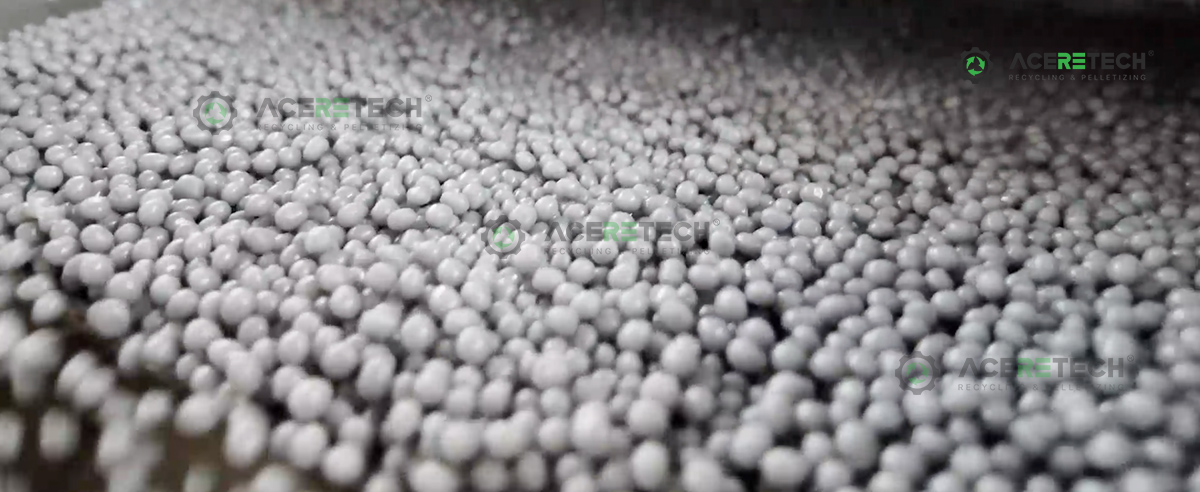
The pelletizing process transforms cleaned plastic scraps into uniformly shaped recycled pellets, which can be directly reused in various manufacturing operations.
Pelletizing systems integrate feeding, melting, filtration, venting (degassing), and pellet cutting functions to process materials into recycled pellets suitable for a wide range of downstream applications.
Depending on the degree of material contamination, recycling processors can select different filtration and venting configurations to ensure that the final recycled pellets meet the required quality standards.
Typical applications for recycled pellets include:
Garbage bags
Agricultural films
Packaging products
Plastic pipes
Injection-molded products
Industrial plastic components
IV. Key Strategies for Enhancing Recycling Efficiency
Successful recycling operations depend not only on the selection of equipment but also on the optimization of the process itself.
1. Enhance Cleaning Efficiency
Compared to relying solely on a single cleaning method, combining multiple cleaning stages often yields superior cleaning results.
2. Improve Moisture Control
Efficient dewatering and drying treatments help minimize defects generated during the extrusion process and ensure consistent pellet quality.
3. Optimize Filtration and Venting
Advanced filtration systems help remove residual contaminants, while proper venting ensures the maximum removal of moisture and volatile compounds from the material.
4. Adopt Intelligent Process Control
Modern recycling lines are increasingly adopting automated control systems to monitor key parameters in real-time, such as:
Temperature
Motor load
Water circulation status
Material flow rate
The application of automation technology helps reduce operational variables, thereby enhancing production consistency and stability.
V. Industry Trends Driving the Growth of Flexible Plastics Recycling
Driven by the following factors, market demand for recycled PE (polyethylene) and PP (polypropylene) materials continues to rise:
Sustainability initiatives
Policies related to the circular economy
Corporate targets for recycled content inclusion
Growing market demand for recycled packaging materials
As regulations become increasingly stringent and the market value of recycled materials continues to appreciate, efficient recycling technologies are becoming ever more critical for plastic processors and recycling enterprises worldwide.
VI. Conclusion
PP woven bags and PE films represent highly valuable resources within the global plastics recycling industry. However, producing high-quality recycled pellets requires far more than the mere collection and basic processing of plastic waste.
Successful recycling operations depend on an optimized combination of technologies—including sorting, washing, dewatering, drying, and pelletizing. By continuously enhancing process efficiency and material quality, recycling enterprises can not only effectively boost their profitability but also contribute significantly to the development of a more sustainable plastics economy.
As a specialized manufacturer of plastics recycling equipment, ACERETECH is dedicated to providing customized recycling solutions for PP woven bags, PE films, and various types of post-consumer plastic waste, thereby empowering our clients to comprehensively enhance both their recycling efficiency and the quality of their recycled pellets.
Related Articles
Woven Bags
PP Woven Bag Shredding Solutions
PP Woven Bag Washing Solutions
PP Woven Bag Pelletizing Solutions
Films
PE Film Washing Solutions
PE Film Shredding & Pelletizing Solutions
FAQ
Q1. Is it necessary to wash PE film before pelletizing?
A: Yes. Most post-consumer waste films and agricultural films often contain contaminants such as soil, dust, paper labels, or organic residues; to ensure the quality of the final recycled pellets, these impurities must be thoroughly removed prior to extrusion and pelletizing.
Q2. What is considered an acceptable moisture content level for materials prior to the pelletizing process?
A: Generally speaking, the lower the moisture content of the material, the more it contributes to the stability of the extrusion and pelletizing process, thereby resulting in higher-quality recycled pellets. Efficient dewatering and drying systems are crucial for minimizing product defects caused by moisture.
Q3. Can agricultural films be recycled?
A: Yes. Agricultural films can be successfully recycled; however, due to contamination by soil and prolonged exposure to outdoor environments, they typically require intensive washing.
Q4. Which factors have the greatest impact on the quality of recycled pellets?
A: Material sorting, washing efficiency, moisture control, filtration performance, and extrusion stability are the most critical factors influencing the quality of the final pellets.
Q5. What are the common application areas for recycled PE (polyethylene) and PP (polypropylene) pellets?
A: Recycled pellets are widely used in the production of garbage bags, agricultural films, packaging products, pipes, injection-molded components, and various industrial applications.