I. A Key Element for Enhancing Pellet Quality, Stabilizing Production, and Minimizing Defects

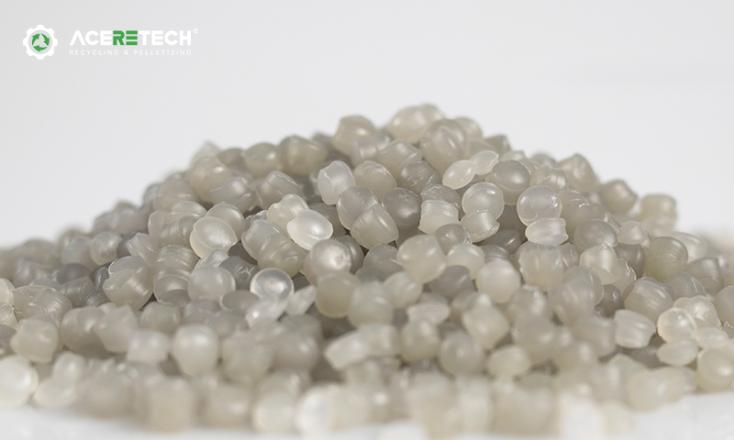
During the plastic recycling and pelletizing process, many clients tend to focus primarily on the extruder, filtration system, and pelletizing method, yet they often overlook a critical core component that determines pellet quality: the Degassing System.
In fact, for materials such as PE films, PP woven bags, PET bottle flakes, printed films, agricultural films, and waste plastics with high moisture content, the effectiveness of the degassing process directly impacts:
Pellet appearance
Melt stability
Product odor
The quality of downstream products
Extrusion efficiency
Equipment operational stability
Particularly when processing recycled plastics that are heavily contaminated, high in moisture, or contain inks and volatile substances, a highly efficient degassing system has become virtually a "standard feature" for any high-quality pelletizing line.
II. What is a Degassing System in Plastic Pelletizing?
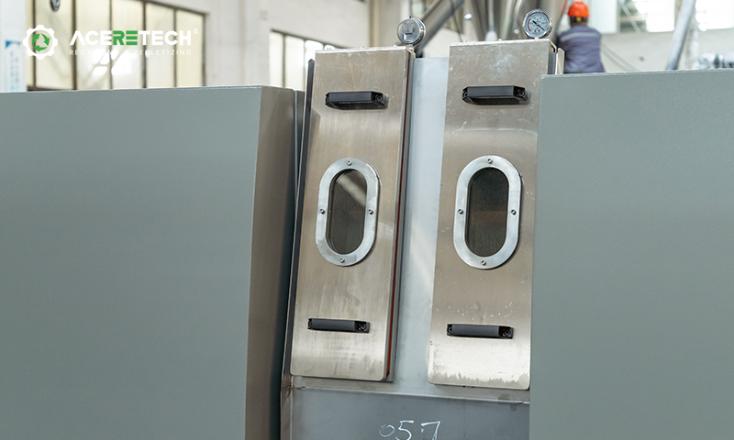
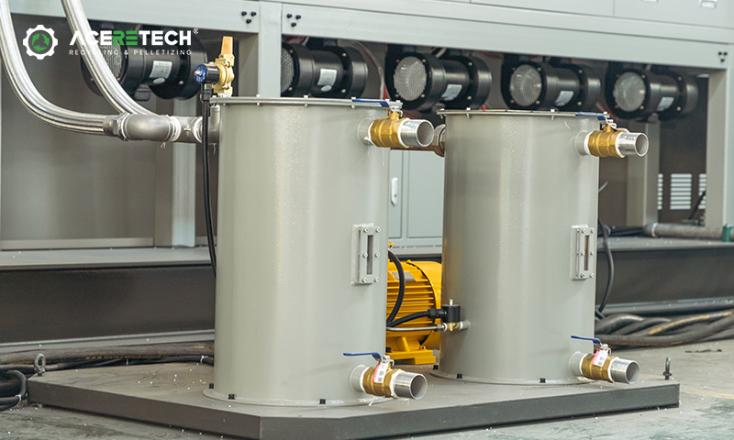
A degassing system is a critical functional module installed on a plastic pelletizing extruder. Its primary functions are to:
Vent moisture
Remove volatile gases
Eliminate inks and low-molecular-weight impurities
Reduce air content within the melt
Stabilize the plasticization process
During the plastic melting process, waste plastics often contain various internal contaminants, including:
Moisture/Water vapor
Oil residues
Adhesives
Printing inks
Volatile Organic Compounds (VOCs)
Residual cleaning agents
Trapped air
If these substances are not effectively and promptly vented, they will severely compromise the quality of the final pellets.
III. Why is the Degassing System So Important?
1. Preventing Bubbles and Internal Voids in Pellets
When moisture or gases trapped within the plastic melt cannot be expelled, the cooling and pelletizing stages often result in:
Pellets containing bubbles
Internal voids
Rough surface textures
Irregularly shaped pellets
These issues directly degrade the quality of the recycled material, negatively impacting its performance in subsequent downstream processes such as film blowing, injection molding, or fiber drawing.
This is particularly critical in the recycling and pelletizing of PE films; since agricultural films and packaging films often possess high moisture levels, the absence of effective degassing makes them highly susceptible to pellet foaming issues.
2. Reducing Pellet Odor and Enhancing the Value of Recycled Materials
Waste plastics frequently retain residues such as:
Printing inks
Food residues
Cleaning agents
Organic contaminants
During the high-temperature plasticization process, these substances release odors. An efficient vacuum degassing system effectively extracts volatile gases, thereby:
Reducing odors in granules
Enhancing the market value of recycled materials
Expanding the application scope of finished products
Low-odor granules are particularly critical for the high-end film, injection molding, and packaging industries.
3. Enhancing Plasticization Stability
If a significant amount of gas is present within the polymer melt:
Melt pressure will fluctuate
Electrical current will be unstable
Extrusion will be uneven
Granule size will be inconsistent
Conversely, stable degassing serves to:
Improve melt homogeneity
Enhance extrusion stability
Maintain continuous production
Minimize the risk of downtime
This is especially crucial for large-scale, continuous recycling production lines.
4. Preventing Defects such as "Silver Streaks" and "Flow Marks" in Finished Products
If residual gas remains within recycled granules, downstream processing of finished products is prone to defects such as:
Silver streaks
Flow marks (gas marks)
Black spots
Surface pitting
Reduced mechanical strength
Particularly in demanding processes such as:
Film blowing
Injection molding
Wire drawing
Pipe extrusion
insufficient degassing can significantly compromise the quality of the finished product.
IV. Common Degassing Methods in Plastic Pelletizing
1. Atmospheric Venting
Releasing a portion of the gas through open vent ports.
Characteristics:
Simple structure
Low cost
Suitable for clean materials
However, its effectiveness is limited for plastics with high moisture content or heavy contamination.
2. Vacuum Degassing
Utilizing a vacuum system to forcibly extract volatile gases and moisture.
Advantages:
High degassing efficiency
Reduces pellet odor
Improves pellet density
Better suited for recycled plastics
Currently widely applied in:
PE film pelletizing
PP woven bag recycling
PET recycling
Industrial waste plastic recycling
3. Dual-Stage Degassing System
High-end pelletizing lines typically employ:
A primary atmospheric vent
A secondary vacuum degassing unit
This configuration achieves a more thorough removal of volatile substances.
Particularly suitable for:
Heavily printed films
High-moisture agricultural films
Heavily contaminated industrial waste plastics
V. Conclusion
In the plastic pelletizing process, the degassing system is not merely an "auxiliary function," but a critical core technology that determines the quality of the pellets.
Especially within the waste plastic recycling industry—as market demands for the quality of recycled materials continue to rise—efficient degassing has become an essential standard for high-end pelletizing equipment. For companies seeking to enhance granule quality, minimize odors, improve production stability, and expand the scope of recycled material applications, selecting the appropriate degassing system will directly impact the economic viability and market competitiveness of their entire recycling project.
Click to view detailed information on plastic pelletizers.
FAQ
Q1. Why is a large volume of gas generated during the plastic pelletizing process?
A: Because waste plastics typically contain moisture, inks, adhesives, organic matter, and trapped air; when subjected to high-temperature melting, these substances volatilize to form gases.
Q2. How does vacuum degassing affect the quality of plastic pellets?
A: Vacuum degassing helps reduce bubbles within the pellets, minimizes odors, improves density, and enhances stability during subsequent processing stages.
Q3. Which types of plastics require a robust degassing system most urgently?
A: PE agricultural films, PP woven bags, printed films, moisture-laden films, and heavily contaminated industrial plastic waste place the highest demands on degassing systems.
Q4. What is the difference between single-stage and double-stage degassing?
A: Double-stage degassing offers superior capacity for removing volatile substances, making it better suited for recycling applications involving high moisture content, heavy contamination, or strict quality requirements.
Q5. What problems can result from insufficient degassing?
A: It may lead to:
Bubbles within the pellets
"Silver streaks" (voids/streaks)
Unpleasant odors
Melt instability
Defects in downstream products
Reduced pellet strength