Summary
Plastic film is widely utilized across the packaging, agricultural, industrial, and logistics sectors; it constitutes one of the largest-volume materials in the plastic recycling stream and holds some of the highest recycling value. Common types of recyclable films include PE film, PP film, BOPP film, stretch film, agricultural film, and factory scrap/edge trim.
However, recycling plastic film presents significant challenges due to its inherent characteristics: it is lightweight and thin, prone to tangling, often contains high levels of impurities, is difficult to clean, and incurs high transportation costs.
The key to efficiently recycling plastic film lies in establishing a complete and stable recycling workflow:
Shredding → Crushing → Washing → Dewatering & Drying → Extrusion & Pelletizing → Recycled Pellets
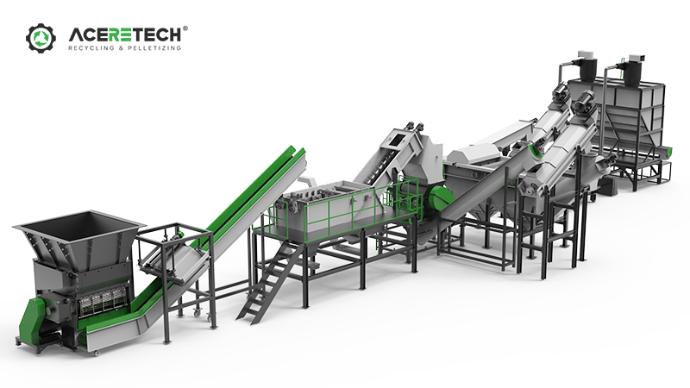
ACERETECH offers a complete solution for film recycling—comprising the HS Shredder, GE Crusher, AWS-PE Washing Line, and ACS-H Pelletizer—helping clients achieve high-quality, high-efficiency, and high-yield film recycling operations.
I. What Are the Different Types of Plastic Film?
Common types of plastic film primarily include:
PE Film (Polyethylene)
Includes LDPE, LLDPE, and HDPE; widely used for shopping bags, packaging films, stretch films, agricultural mulching films, trash bags, etc.
PP Film (Polypropylene)
Commonly used for food packaging, industrial packaging bags, inner liners for woven bags, etc.
BOPP Film
Primarily used for food packaging, adhesive tape substrates, labeling films, and printed packaging materials.
Agricultural Film
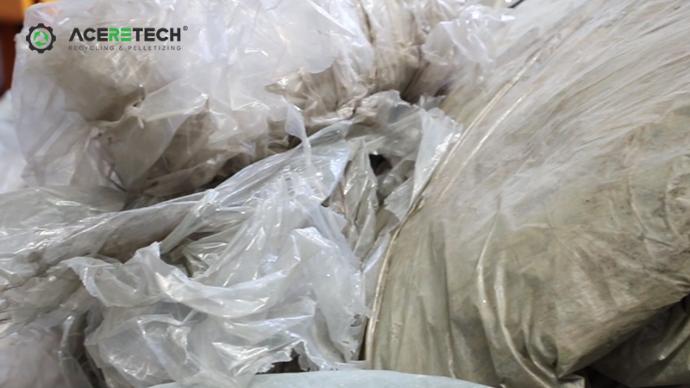
Such as greenhouse films, mulching films, drip irrigation films, and silage films; these typically contain high levels of contamination, making their recycling more challenging.
Industrial Packaging Film
Such as factory offcuts/scraps, blown film waste, and waste sheet film; these generally have lower contamination levels and possess high recycling value.
II. Which Plastic Films Can Be Recycled?
Most single-material films possess high recycling value, particularly:
✓ PE Film
✓ PP Film
✓ BOPP Film
✓ Stretch Film
✓ Factory Edge Trim/Scrap
Conversely, multi-layer composite films, heavily contaminated agricultural films, and printed films containing large amounts of ink present relatively greater challenges for recycling.
III. Why Recycle Plastic Film?
There are four primary reasons:
Reduced Raw Material Costs
Recycled pellets can substitute for a portion of virgin plastic, thereby helping companies lower their production costs.
Continuous Growth in Market Demand
Recycled PE and PP pellets are widely utilized in the blown film, injection molding, pipe manufacturing, and packaging industries.
Policies Promoting a Circular Economy
Global environmental policies continue to drive the recycling and reuse of plastics.
Massive Volume of Waste Materials
Film waste accounts for a significant proportion of total plastic waste, presenting immense potential for recycling.
IV. Challenges in Plastic Film Recycling
Compared to rigid plastics, recycling plastic film presents greater challenges:
Prone to Entanglement and Clogging
Films are lightweight, thin, and fluffy; standard equipment is prone to shaft entanglement and material blockages when processing them.
High Moisture Content
This is particularly true for agricultural films and washed films, where effective dewatering is difficult to achieve.
Severe Contamination
Films often contain impurities such as dirt, oil stains, labels, and metal fragments.
Unstable Feeding
Direct extrusion of film waste can easily lead to insufficient plasticization and difficulties in degassing.
Therefore, the use of specialized film recycling systems is essential.
V. The Plastic Film Recycling Process
The complete process is as follows:
Waste Film →
Shredding → Crushing → Washing → Dewatering & Drying → Extrusion & Pelletizing → Recycled Pellets
VI. Detailed Overview of Core Film Recycling Processes
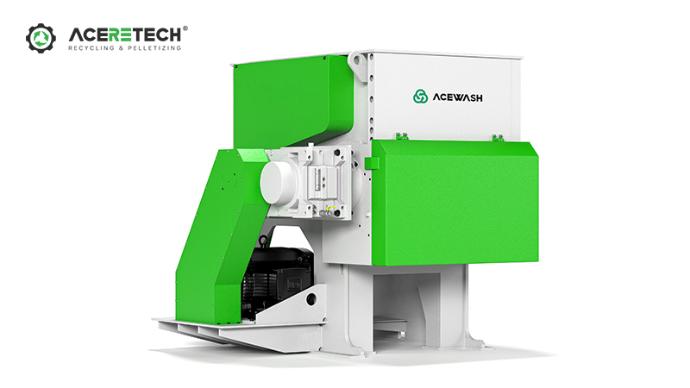
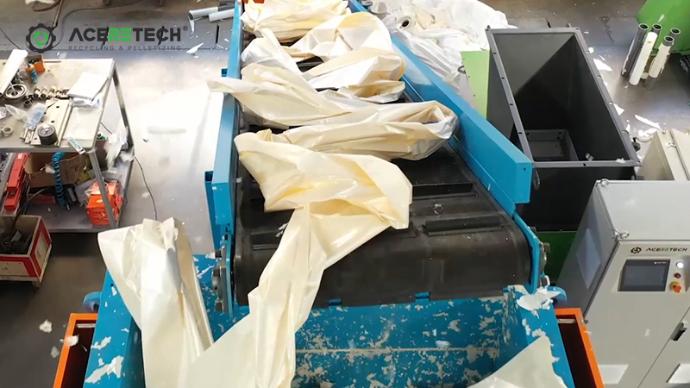
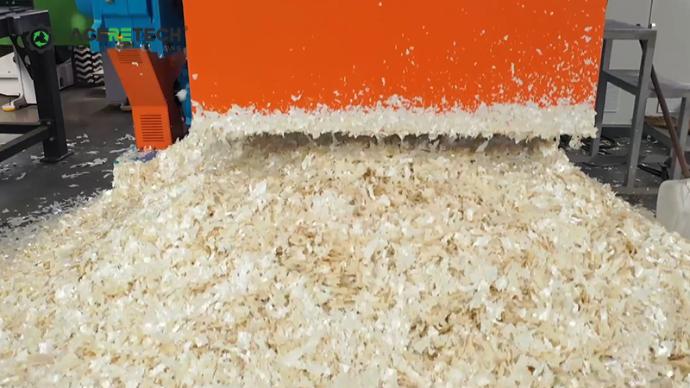
Film Shredding
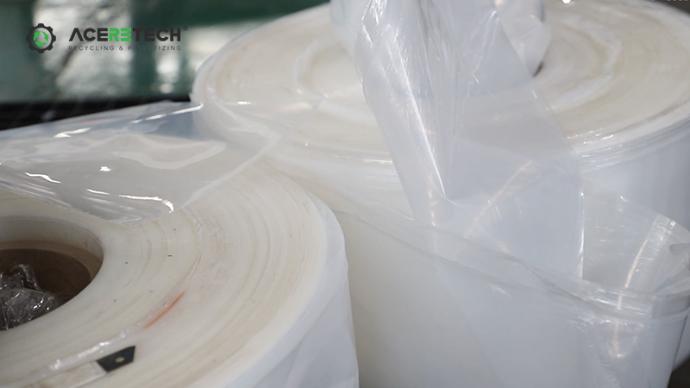
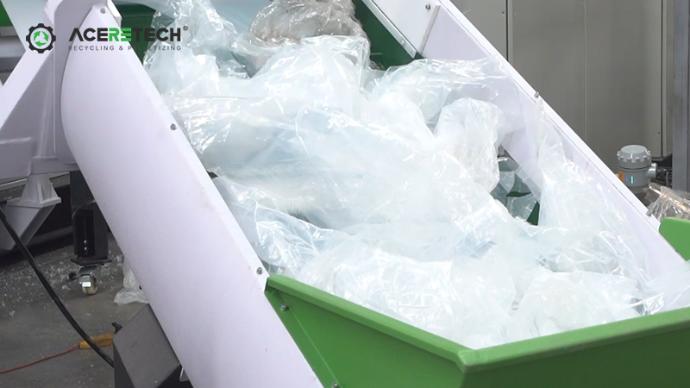
Whole rolls of film and baled films cannot be processed directly; they must first undergo size reduction.
Purpose:
Reduce material size
Ensure stable feeding
Prevent entanglement
Enhance the efficiency of subsequent processing stages
Recommended Equipment: HS Series Shredders
Suitable for PE agricultural films, stretch films, industrial packaging films, bulk bags (jumbo bags), and similar materials. These machines offer key advantages such as low-speed, high-torque operation, anti-entanglement capabilities, and continuous, stable feeding.
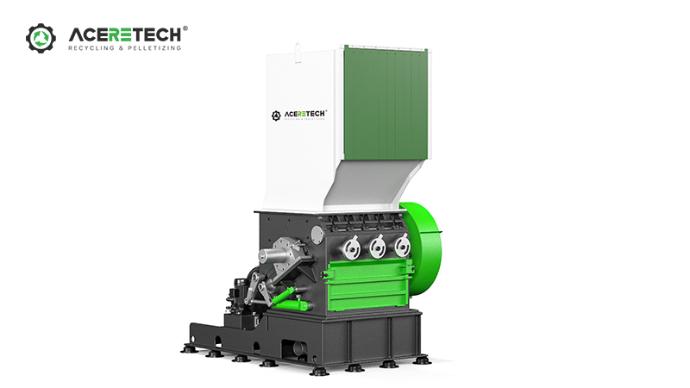
Film Crushing
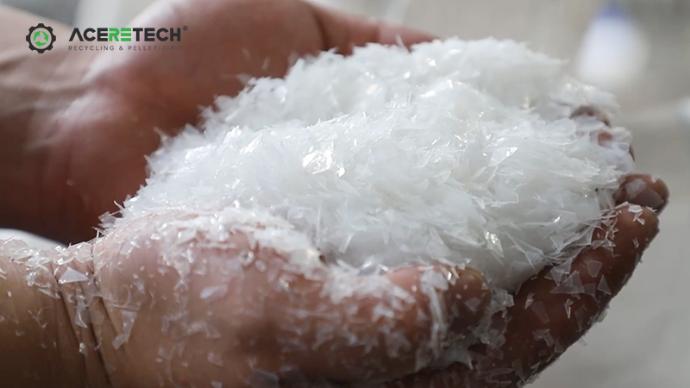
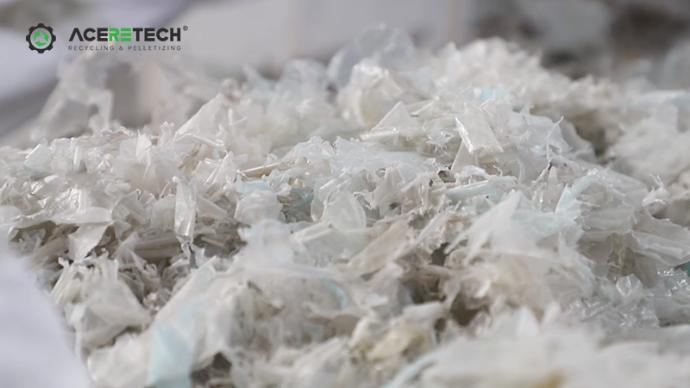
After shredding, the material still requires further crushing into uniform flakes to facilitate subsequent washing and granulation.
Function:
Standardizes material size
Improves washing efficiency
Enhances dewatering effectiveness
Increases granulation stability
Recommended Equipment: GE Series Crushers
Featuring a large feed opening and an anti-entanglement structure, these machines are ideally suited for the wet crushing of plastic films.
Film Washing
Standard Washing Process:
Pre-washing → Rotary Screening → Friction Washing → Rinsing → Centrifugal Dewatering → Pneumatic Drying
The quality of the washing process directly determines the quality of the recycled pellets and, ultimately, the profitability of the operation.
Recommended Equipment: AWS-PE Film Washing Line
Suitable for heavily contaminated agricultural films and packaging films, featuring efficient decontamination, automated operation, and high dewatering efficiency.
Film Pelletizing
Main Process:
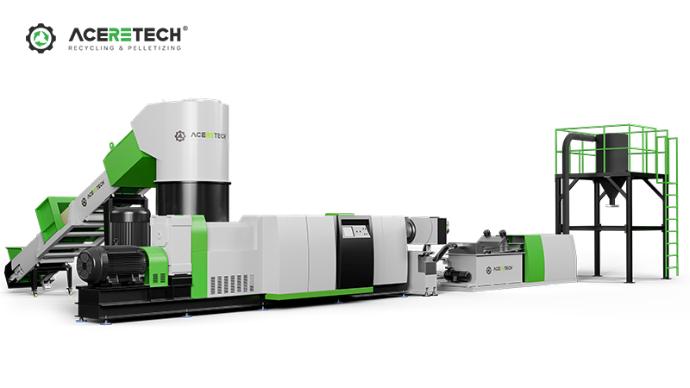
Compaction Silo → Single-Screw Extrusion → Filtration → Pelletizing → Vibrating Screen → Finished Product Silo
The compaction silo serves as the core component of the film pelletizing process, enabling preheating, compression, and stable feeding.
Recommended Equipment: ACS-H Film Pelletizing Machine
Suitable for PE, PP, and BOPP films, as well as factory edge trims and scrap; features efficient degassing, automatic filtration, and a stable pelletizing system.
Conclusion
The key to efficient plastic film recycling lies not in a single piece of equipment, but in a complete system solution.
ACERETECH offers:
An Integrated Recycling System covering Shredding + Crushing + Washing + Pelletizing
Helping clients achieve:
Higher Output
Lower Energy Consumption
More Stable Quality
Higher Return on Investment (ROI)
Contact us today to receive your customized plastic film recycling solution.
FAQ
Q1. Can plastic film be recycled?
A: Yes, most single-material plastic films such as PE film, PP film, LDPE film, LLDPE stretch film, and agricultural film can be recycled efficiently. These materials can be processed through shredding, crushing, washing, drying, and pelletizing to produce high-quality recycled pellets. However, multilayer laminated films and heavily contaminated films are more difficult to recycle.
Q2. What machine is used for plastic film recycling?
A: A complete plastic film recycling system usually includes four main machines:
Film shredder for size reduction
Film crusher for secondary crushing
Film washing line for cleaning and drying
Film pelletizing machine for producing recycled pellets
For example, ACERETECH provides HS shredder, GE crusher, AWS-PE washing line, and ACS-H pelletizing machine as a complete film recycling solution.
Q3. Why is agricultural film recycling more difficult?
A: Agricultural film usually contains large amounts of soil, sand, water, grass, and organic contamination. It is also highly entangled and has high moisture content. This makes feeding, washing, and drying much more challenging than industrial film recycling. Therefore, a stronger washing system and efficient dewatering system are required.
Q4. Why is a compactor important in film pelletizing?
A: Plastic film is light, soft, and has very low bulk density, which makes direct feeding into the extruder unstable. A compactor helps preheat, densify, and compress the film before extrusion, ensuring stable feeding, better plasticizing performance, and higher pellet quality. It is one of the most critical parts of a film pelletizing system.
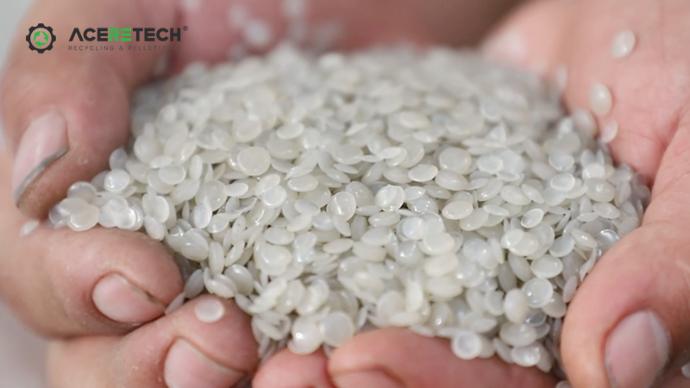
Q5. What is the final product of plastic film recycling?
A: The final product is recycled plastic pellets (regranules), which can be reused in blown film production, injection molding, pipe extrusion, packaging products, and many other plastic manufacturing applications. High-quality recycled pellets can significantly reduce raw material costs and improve production sustainability.