I. HDPE Film Recycling Application
HDPE film is widely used in packaging, industrial applications, and other plastic product sectors. Significant amounts of HDPE film waste and scrap are generated during production and processing. Due to the low bulk density of the film—and the potential presence of moisture, dust, printing residues, or other impurities—achieving stable feeding, drying, melting, and filtration is critical during the recycling process.
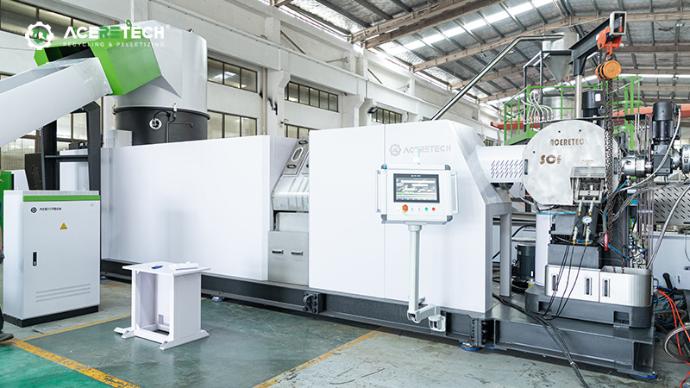
In this application test, ACERETECH utilized the ACSS double-stage cutting-compacting and pelletizing system to process HDPE film.
Under the specified test conditions, the system achieved an output of approximately 800–1,000 kg/h. The integrated recycling process encompasses feeding, cutting-compacting, drying, double-stage extrusion, melt filtration, vacuum degassing, water-ring pelletizing, dewatering, and pellet collection.
The process is designed to convert HDPE film waste into recycled HDPE pellets suitable for subsequent plastic processing.
II. HDPE Film Recycling and Pelletizing Process
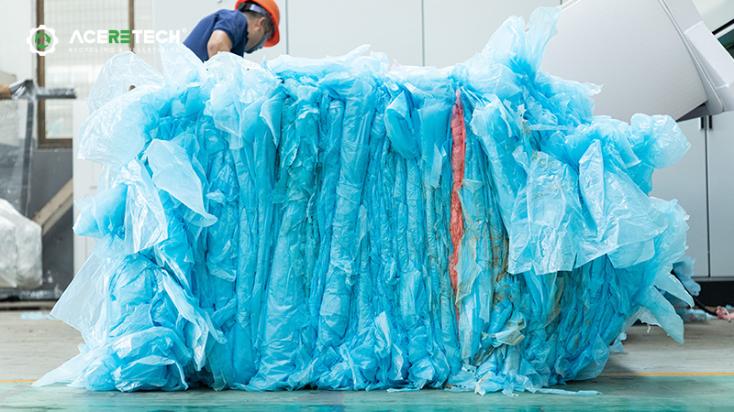
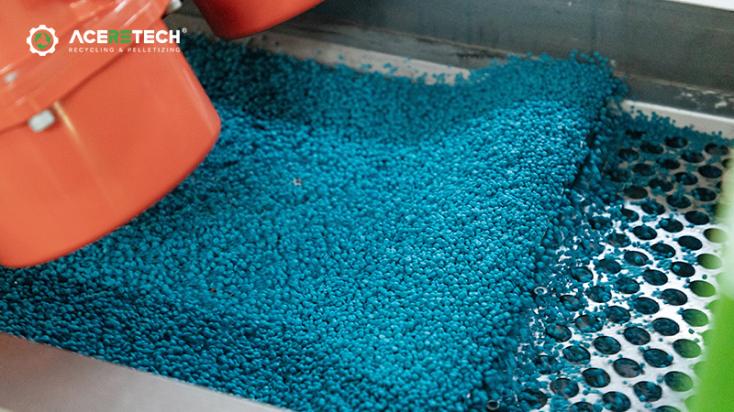
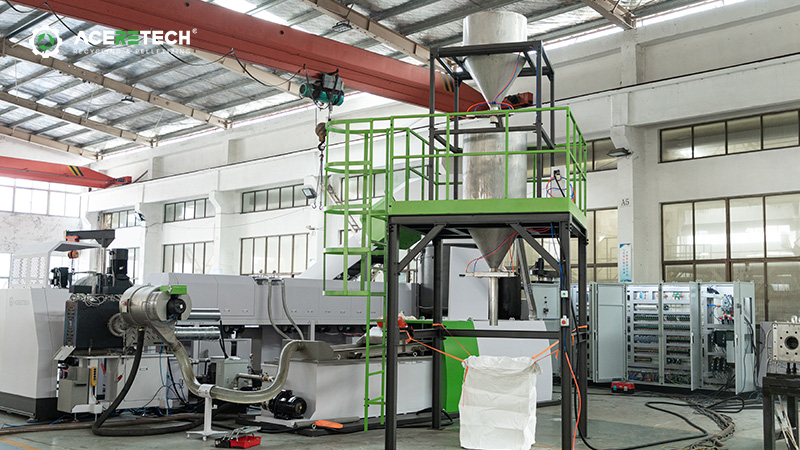
The ACSS double-stage compacting-pelletizing system follows a continuous processing workflow:
HDPE film feeding → Metal detection → Cutting-compaction → First-stage extrusion → SCF filtration → Vacuum degassing → Second-stage extrusion → Continuous melt filtration → Water-ring pelletizing → Vibratory dewatering → Centrifugal drying → Weighing and collection
Each processing stage performs a specific function aimed at enhancing feeding stability, melt quality, and the consistency of the overall recycling process.
III. Components of the ACSS Double-Stage Compacting-Pelletizing System
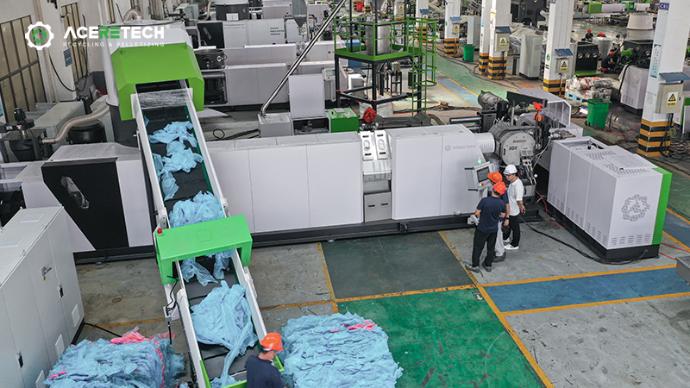
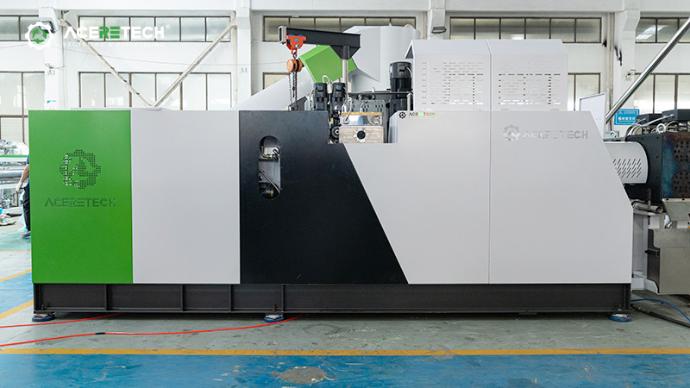
1. Metal Detection and Controlled Feeding
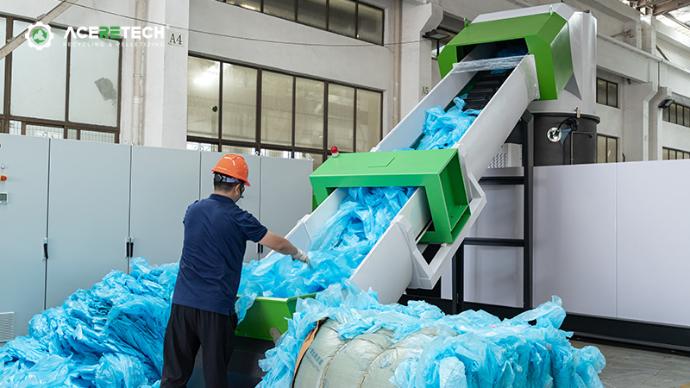
HDPE film is fed into the recycling system via a belt conveyor equipped with a metal detection system.
The conveyor belt width is approximately 800 mm. When metal impurities are detected, the conveyor automatically stops, thereby reducing the risk of metal entering the downstream cutting-compaction and extrusion equipment. This controlled-feed design is particularly effective when processing recycled or in-process HDPE film, as these materials may occasionally contain foreign metal objects.
2. 2000L Cutter-Compactor for HDPE Film Pre-treatment
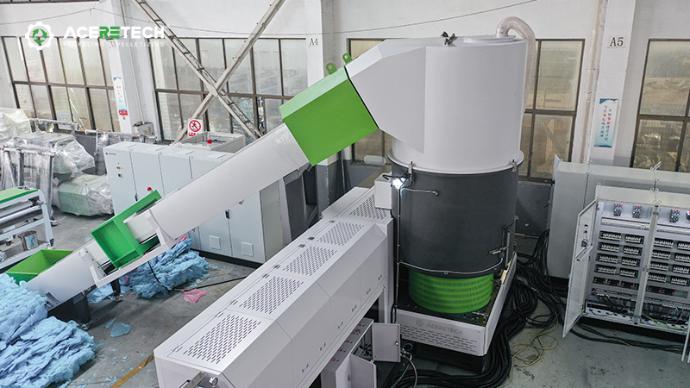
The ACSS system is equipped with a 2000L cutter-compactor for the pre-treatment of HDPE film.
→ Rotating blades within the compactor cut and agitate the film, reducing its size while generating frictional heat. This process helps to:
Reduce the bulk volume of low-density film;
Pre-heat the material prior to extrusion;
Facilitate moisture removal;
Increase the material's bulk density;
Improve feeding conditions for the extrusion stage.
Effective pre-compaction is crucial for film recycling, as loose film is often difficult to feed consistently into conventional extruders.
→ Variable-Speed Cutter Control
A variable frequency drive (VFD) adjusts the cutter disc's rotational speed based on material fill levels and motor current.
This allows the operating speed to adapt to actual material conditions and helps reduce the risk of cutter disc jamming. Under optimal operating conditions, variable-speed control can achieve energy savings of approximately 10%–15% compared to fixed-speed operation; actual energy consumption depends on material properties, moisture content, impurity levels, throughput, and operating conditions.
→ Sliding Gate for Feed Control
The ACSS system utilizes a movable sliding gate to regulate the flow of material from the compactor into the extruder.
This gate controls the material's residence time within the compaction chamber, ensuring adequate pre-treatment before the material enters the extruder.
This design also accommodates differences between softer films and relatively harder plastic feedstocks.
By controlling the volume of material entering the extruder, the system helps maintain a more stable and uniform feed rate.
3. Dust and Moisture Removal
Dust and moisture can affect the stability of the plastic extrusion process and the quality of the recycled pellets. The ACSS cutter-compactor integrates dust removal and dehumidification functions during the pre-treatment stage. This system helps remove dust and moisture generated during cutting and compaction, thereby reducing the material's moisture content prior to extrusion. This pre-treatment enhances extrusion stability, particularly when processing HDPE film containing residual moisture or dust.
Actual drying and dehumidification performance depends on feed material conditions and system operating parameters.
4. Two-stage extrusion process for HDPE film pelletizing
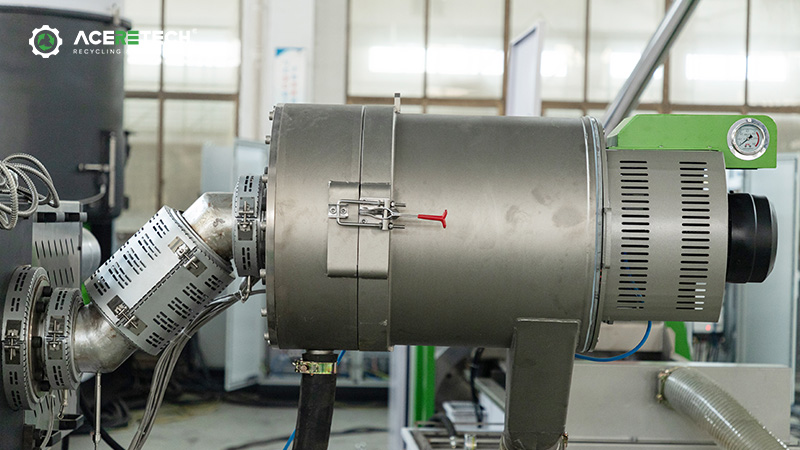
Following pre-compaction, the HDPE film enters a two-stage single-screw extrusion system.
Compared to single-stage extrusion, the two-stage configuration separates the primary melting and plasticizing process from the subsequent melt homogenization and filtration stages.
Screw and barrel configurations can be selected based on the characteristics of the recycled material, ensuring the pre-compacted HDPE film undergoes a controlled melting and plasticizing process.
First-stage extrusion configuration:
Screw diameter: Ø180 mm
L/D ratio: 42:1
The extended processing section provides sufficient residence time and processing length for the melting, plasticizing, and homogenization of the HDPE film.
Second-stage extrusion configuration:
Screw diameter: Ø200 mm
L/D ratio: 12:1
The second-stage extruder further homogenizes the filtered melt and prepares it for the subsequent pelletizing process. This two-stage configuration provides independent processing zones for melting, filtration, degassing, and final melt conditioning.
5. Melt filtration
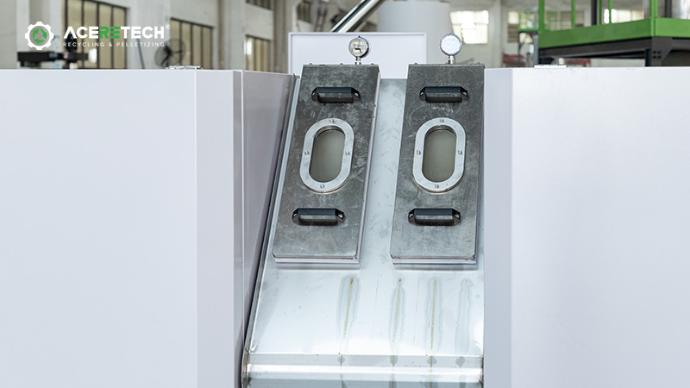
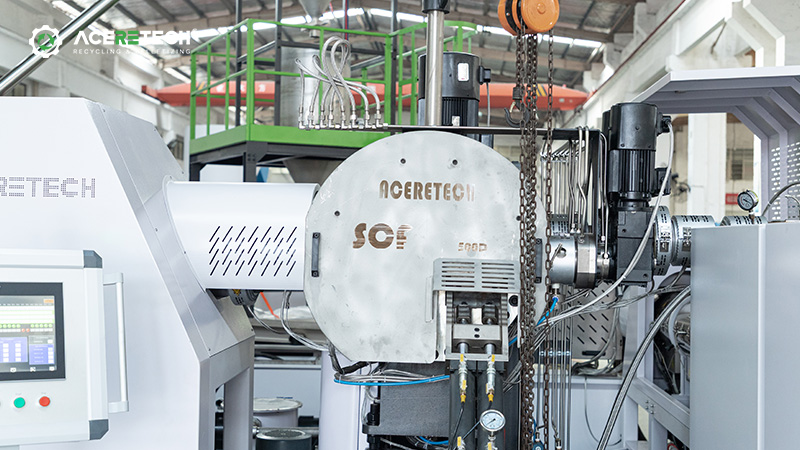
Melt filtration is a critical step in HDPE film recycling, especially when the feedstock contains paper scraps, dust, unmelted particles, or other impurities. The ACSS configuration combines an SCF filtration system with a large-area continuous screen changer at the second-stage extrusion section.
→ The first stage is equipped with an SCF continuous self-cleaning disc melt filtration system.
The SCF system is designed for continuous melt filtration and automatically discharges impurities during operation, thereby minimizing production interruptions associated with traditional manual screen changes.
→ The second stage is equipped with a P5500 large-area continuous screen changer, offering a filtration area of approximately 2,600 × 2 cm² and a rated processing capacity of up to 5,000 kg/h. Its continuous filtration design allows for melt filtration during system operation, helping to minimize production interruptions associated with traditional screen-changing procedures; actual filtration performance depends on impurity content, material composition, and the selected filtration configuration.
6. Dual Vacuum Degassing System
During the HDPE film recycling process, residual moisture and volatile substances may remain in the pre-treated material.
The ACSS system employs a dual vacuum degassing system during extrusion to remove moisture, volatile substances, and low-molecular-weight compounds from the molten plastic.
Effective vacuum degassing helps to:
Reduce residual moisture in the melt;
Remove volatile components;
Enhance melt stability;
Reduce extrusion defects caused by gas;
Improve the consistency of recycled pellets.
This function is particularly important when processing printed film or feedstock containing high levels of volatile impurities. However, vacuum degassing is not a substitute for proper feedstock pre-treatment. The quality of the final pellets still depends on the cleanliness, moisture content, polymer composition, and impurity contamination levels of the input material.
7. Water-Ring Pelletizing System
This pelletizing system automatically adjusts the cutting speed based on operating conditions to maintain relatively consistent pellet sizes.
The system utilizes precision sensing devices to maintain stable cutter pressure, thereby ensuring consistent pelletizing performance.
8. Pellet Dewatering and Drying
Following water-ring pelletizing, the recycled pellets pass through a vibrating dewatering screen and a centrifugal dryer to remove surface moisture before collection.
Effective pellet dewatering is crucial for subsequent storage, packaging, and further processing, especially when the recycled HDPE pellets must meet strict moisture control requirements.
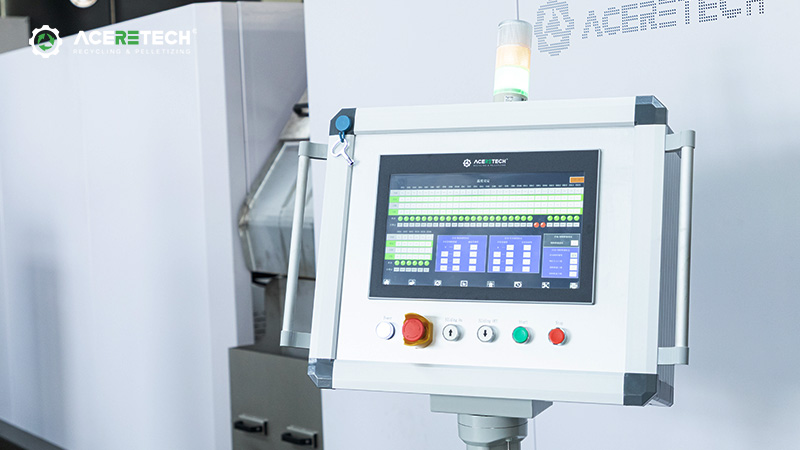
9. Online Weighing and Intelligent Control
The system monitors output in real-time and provides production data to operators during operation.
10. Intelligent Control System
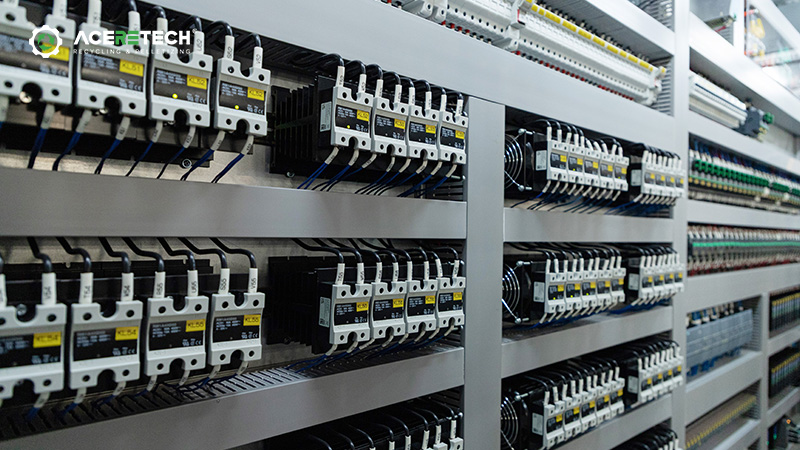
This system coordinates key equipment and process parameters, covering stages such as feeding, densification, extrusion, filtration, and pelletizing. The ACSS pelletizing system utilizes electrical components and gearboxes from renowned brands, meeting relevant international CE and CSA standards.
Related Articles
IV. HDPE Film Recycling and Pelletizing Test Results
In this application test, the ACSS two-stage cutter-compactor pelletizing system processed HDPE film under specified conditions, achieving an output of approximately 800–1000 kg/h. Actual throughput and recycled pellet quality may vary depending on factors such as HDPE film type, bulk density, moisture content, contamination levels, printing or coating conditions, raw material composition, and specific pellet quality requirements.
V. ACSS HDPE Film Recycling Solution
The ACSS two-stage cutter-compactor pelletizing system is an integrated solution designed to provide reliable and stable pelletizing for post-consumer and industrial plastic waste (including plastic film, flat yarn, filaments, woven bags, and foam materials).
Combining processes such as cutting, compacting, feeding, two-stage extrusion, continuous melt filtration, and vacuum degassing, the system effectively addresses common challenges in film recycling, such as low bulk density, moisture, dust, and melt impurities.
For HDPE film recyclers and plastic processors, the system offers a continuous process flow extending from the pre-treatment of film waste to the production of recycled pellets. For specific HDPE film recycling projects, ACERETECH evaluates factors such as material type, moisture content, contamination levels, required throughput, and target pellet quality to determine the optimal equipment configuration.
FAQ
Q1. Can the ACSS system directly recycle HDPE film into pellets?
A: The ACSS system is designed to process suitable HDPE film through stages including cutting, compacting, controlled feeding, extrusion, melt filtration, vacuum degassing, and pelletizing. Direct processing capability depends on the film's moisture content, contamination level, polymer composition, and the quality requirements for the recycled pellets.
Q2. What is the processing capacity of the ACSS system for HDPE film?
A: In the application test described here, the ACSS system's processing capacity for HDPE film was approximately 800–1000 kg/h. Actual throughput depends on the material's bulk density, moisture content, contamination level, film structure, and operating conditions.
Q3. Why is a cutter-compactor used before HDPE film extrusion?
A: HDPE film has a relatively low bulk density, making stable feeding difficult. The cutter-compactor reduces the material's volume while utilizing frictional heat to preheat, dry, and compact the film. This improves feeding conditions prior to extrusion, facilitating more stable, continuous operation.
Q4. How does the ACSS system remove contaminants from HDPE film?
A: The system employs a multi-stage processing sequence. Metal contaminants can be detected before the material enters the primary recycling equipment. During extrusion, the SCF continuous self-cleaning filtration system and the P5500 continuous screen changer provide melt filtration to remove solid contaminants. Additionally, a vacuum degassing process helps remove moisture and volatile substances from the melt. The effectiveness of filtration and degassing depends on the type and concentration of contaminants in the feedstock.
Q5. What role does the dual vacuum degassing system play in HDPE film recycling?
A: The dual vacuum degassing system helps remove moisture, volatile substances, and low-molecular-weight compounds from the molten HDPE during extrusion. This enhances melt stability and reduces defects caused by residual moisture and volatile components, particularly when processing printed or contaminated films.