Key Core Components for Enhancing Pellet Quality
As a specialized manufacturer of plastic recycling equipment, ACERETECH provides comprehensive recycling and pelletizing system solutions—encompassing shredding, washing, pelletizing, and melt filtration systems.
👉 During the pelletizing process, the filtration system directly determines the quality of the final pellets as well as production stability.
To address varying levels of contamination and application requirements, ACERETECH offers four high-performance filtration solutions, catering to a full spectrum of scenarios—from materials with low impurity levels to those with high contaminant loads.
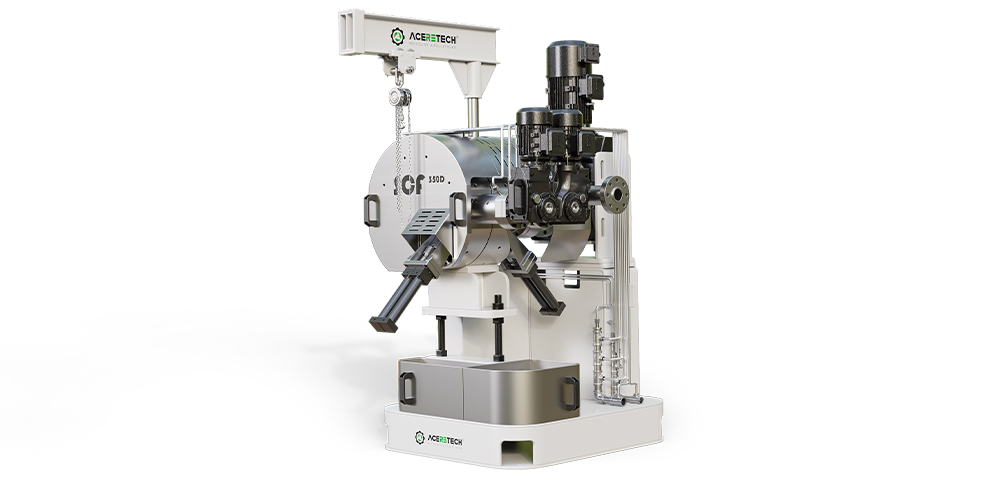
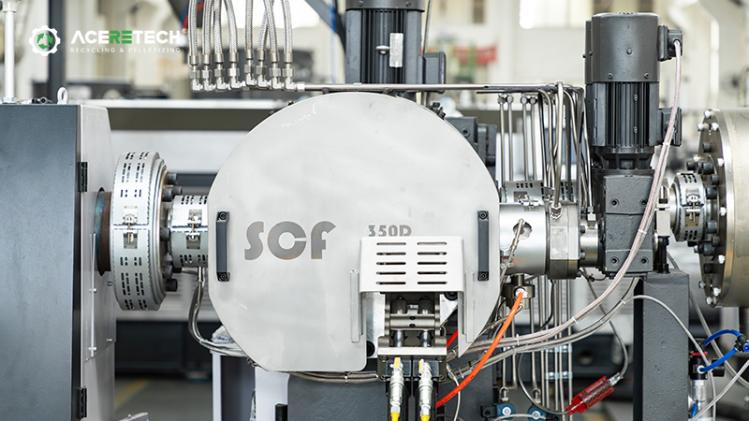
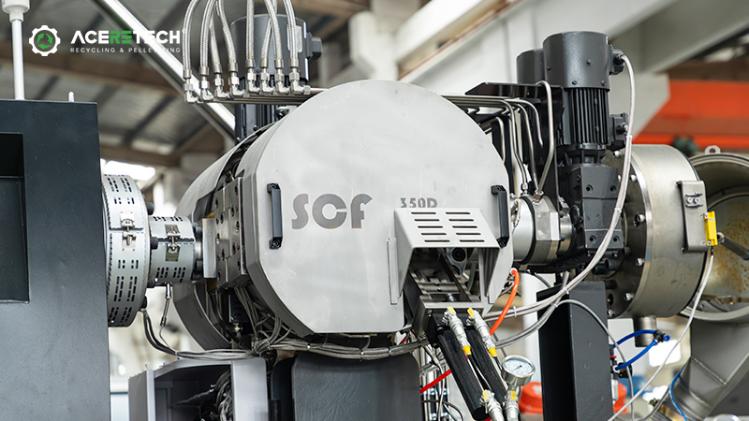
I. SCF Disc-Type Self-Cleaning Filtration System (Screenless Continuous Filtration Solution)
Specifically designed for the recycling and pelletizing of highly contaminated plastics, this system employs a screenless, disc-type structure to achieve continuous filtration and automatic impurity discharge.
🔹 Core Advantages:
🔄 Continuous Filtration (No Downtime): Disc-based structure + automatic cleaning enable truly uninterrupted production.
🧠 Fully Automatic Self-Cleaning System: Hydraulically driven scrapers automatically remove impurities, requiring no manual intervention.
♻️ Mesh-Free Design: Eliminates the need for metal filter screens, avoiding issues associated with frequent replacements and downtime.
💪 High Contamination Handling Capacity: Capable of processing melts with impurity levels of up to 5%.
📉 Low Back Pressure Design: Short flow channels combined with a large filtration area effectively reduce system pressure.
💰 Low Operating Costs: Long filter plate lifespan and low maintenance frequency minimize operational expenses.
⚙️ Working Principle (Simplified):
The melt is filtered as it passes through hardened steel filter plates containing micro-perforations.
A hydraulic system drives scrapers to continuously clean the surface of the filter plates.
Impurities are automatically discharged via a waste discharge screw.
The entire process operates continuously, requiring no system shutdown.
📊 Technical Parameters:
| Filtration Type |
Continuous, self-cleaning disc filtration |
|
Filtration Precision
|
Up to 120 μm |
| Impurity Handling Capacity | Up to approximately 5% |
| Number of Micro-perforations | Up to 2.32 million |
| Filter Plate Replacement Time | Approximately 30 minutes |
| Control System | PLC automatic control |
⚡ Operational Characteristics:
Requires no metal wire mesh screens.
Stable melt pressure with minimal fluctuation.
Extremely low melt loss during the impurity discharge process.
Ideal for high-output, continuous granulation production.
🧪 Processable Impurity Types:
Paper, wood, aluminum, unmelted plastics, rubber.
👉 Ideal Applications:
Highly contaminated films (e.g., agricultural films, waste packaging films).
Post-Consumer Recycled (PCR) plastics.
Waste materials containing labels or complex impurities.
High-output granulation production lines.
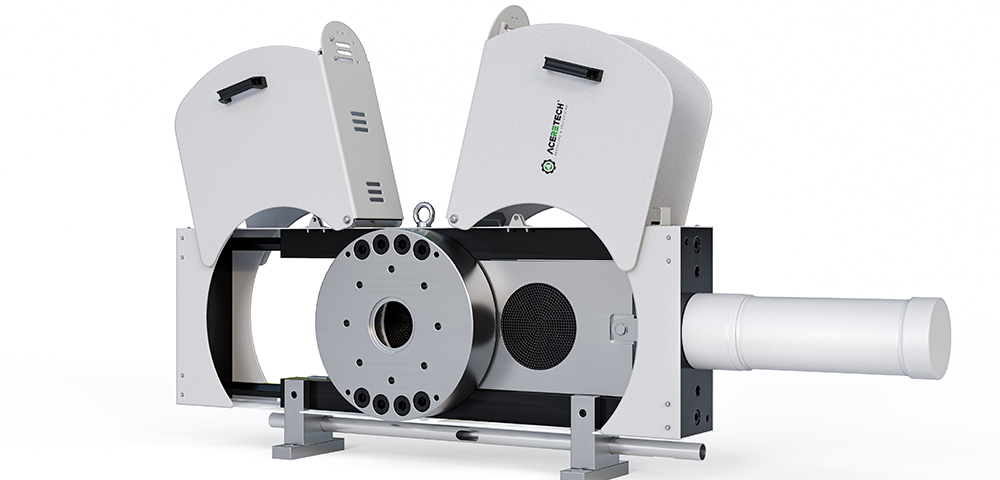
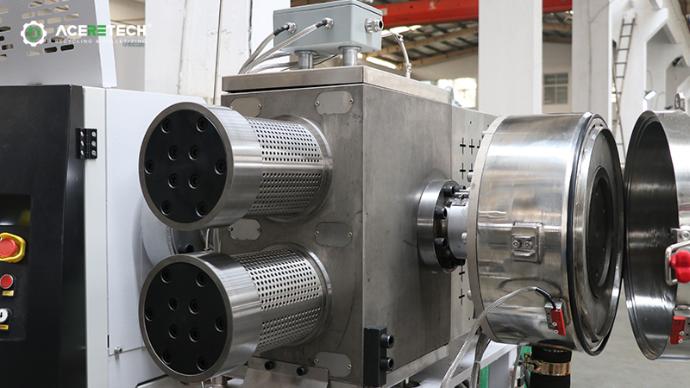
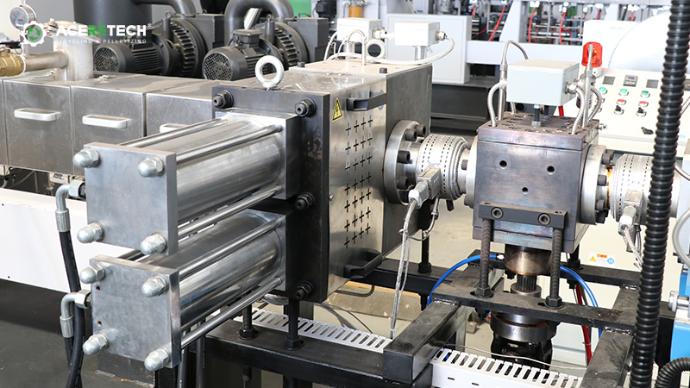
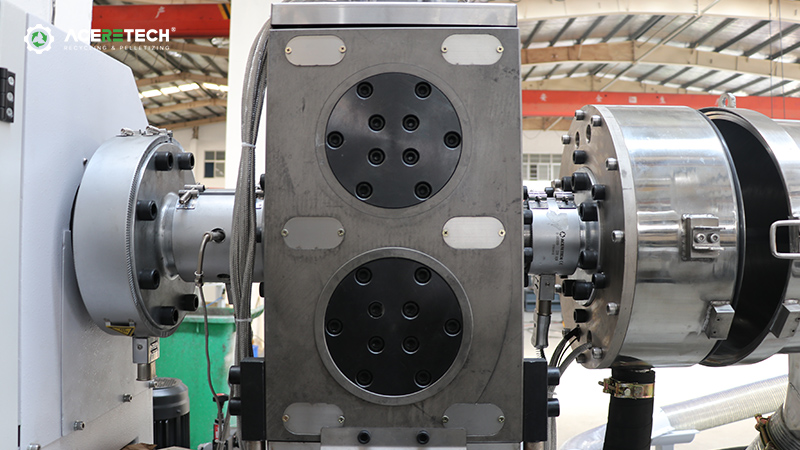
II. Extra-Large Area Dual-Piston Screen Changer (Stable & Efficient)
Suitable for customers with demanding requirements regarding continuous production and operational stability.
🔹 Key Advantages:
🔧 Dual-station / Quad-station design, supporting continuous screen changing
📈 Extra-large filtration area → Extends screen lifespan
⏱ No downtime required for screen changes
💰 Low operating costs, simple maintenance
👉 Ideal Applications:
Film granulation, woven bags, standard recycled materials
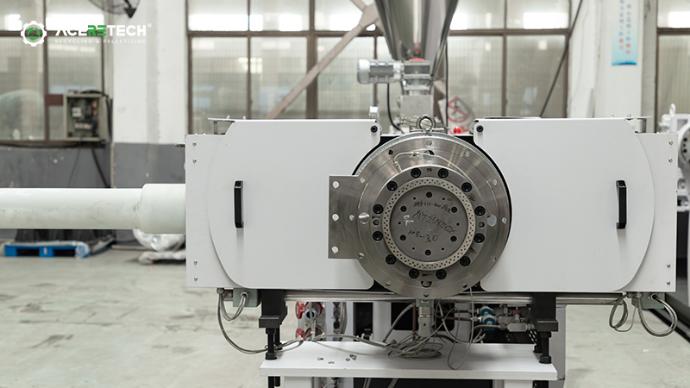
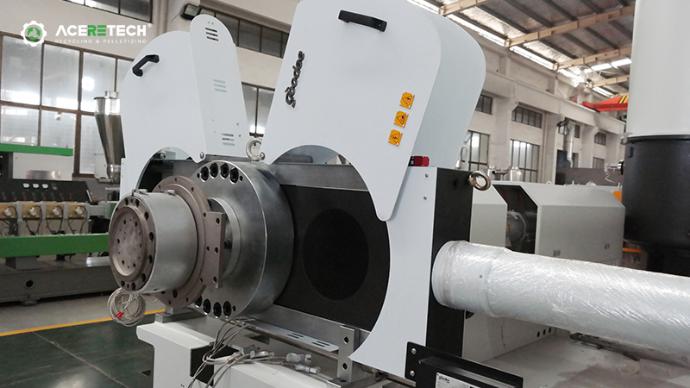
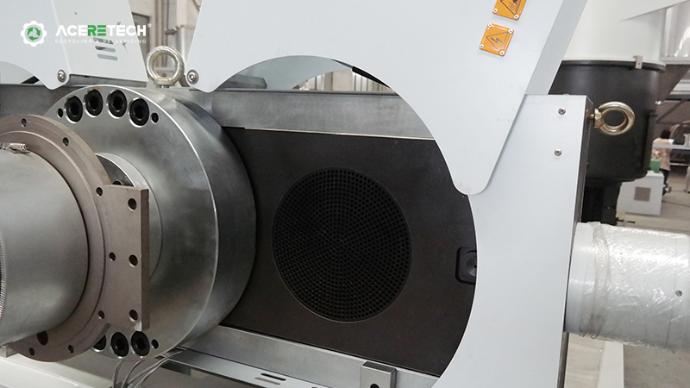
III. Continuous Plate-Type Filter (Economical & Reliable)
A practical solution that balances both cost-effectiveness and performance.
🔹 Key Advantages:
🔁 Dual plates operate alternately, ensuring continuous production
🌡 Annular heating design → Ensures more uniform temperature distribution
⚙️ Simple structure, convenient maintenance
👉 Ideal Applications:
Materials with moderate contamination levels, standard granulation lines
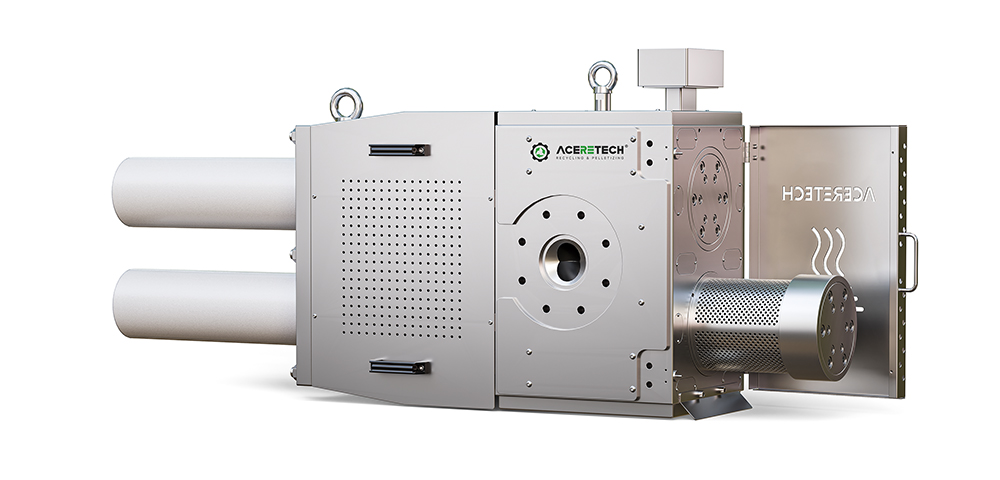
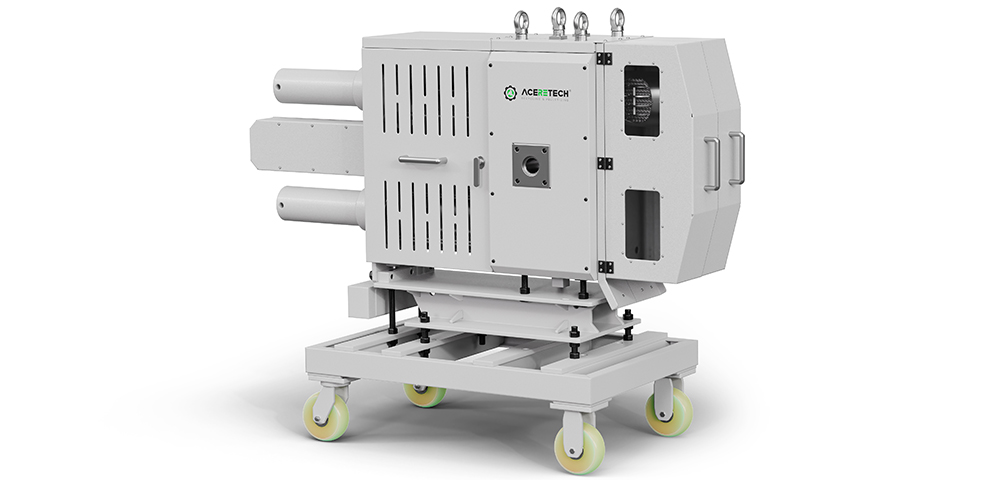
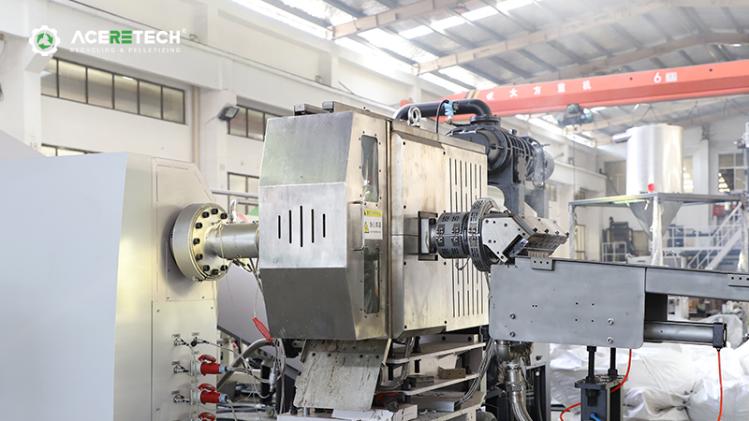
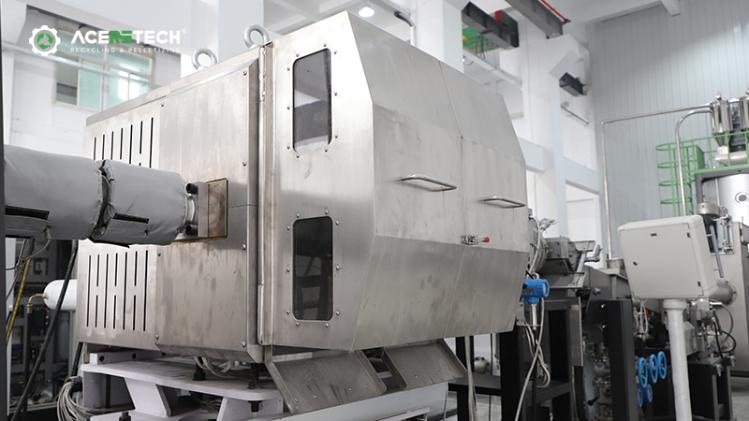
IV. Backflush Melt Filter (Automated, High-End Solution)
An advanced filtration system engineered specifically for high-quality granulation and the processing of highly contaminated materials.
🚀 Key Advantages:
✅ Continuous Operation: No downtime required, ensuring stable production line operation
✅ Automatic Backflushing: System automatically cleans the filter screen without manual intervention
✅ Stable Melt Pressure: Ensures consistent pellet quality; particularly suitable for film, sheet, and fiber production
✅ High Contamination Tolerance: Easily handles Post-Consumer Recycled (PCR) plastics
✅ Reduced Operating Costs: Minimizes labor requirements and lowers the frequency of screen replacements
⚙️ Working Principle:
Melt enters the filtration system; impurities are trapped by the filter screen
Rising pressure automatically triggers the backflushing sequence
Clean melt flows in reverse to flush the screen
Impurities are discharged from the system
👉 The entire process requires no downtime, ensuring continuous operation.
🎯 Application Areas:
Widely applicable to the following recycling and granulation scenarios:
PET bottle recycling
PP/PE film recycling
Fiber and textile waste processing
Compounding and granulation production
High-end pellet manufacturing
FAQ
Q1. How do I choose the right filtration system for my specific materials?
A: The choice of filtration system primarily depends on the contamination level of the material, production output requirements, and the quality standards for the final product:
High Contamination (e.g., post-consumer films, mixed waste) 👉 Recommended: Self-cleaning filters or backflush filters
Moderate Contamination 👉 Recommended: Dual-piston screen changers or plate-type filters
High Particle Quality Requirements (e.g., films, sheets) 👉 Preferred Choice: Backflush filters
👉 We recommend providing material samples or specifications so that we can customize the optimal solution for you.
Q2. Will the filtration system affect granulation output?
A: No; on the contrary, it will enhance overall production efficiency.
Automatic filtration systems enable continuous, non-stop operation
They reduce downtime associated with screen changes, thereby increasing actual output
They stabilize pressure, improving extrusion efficiency
👉 In practical applications, customers typically achieve higher, more stable output with fewer losses due to downtime.
Q3. What level of contamination can the filters handle?
A: Different filtration systems possess varying capabilities:
SCF Self-Cleaning Filters: Can handle impurity levels of up to approximately 5%
Backflush Filters: Suitable for highly contaminated post-consumer plastics (PCR)
Traditional Screen Changers: Better suited for materials with low to moderate contamination levels
👉 If your material contains complex impurities (such as paper, metal, wood chips, etc.), we recommend prioritizing the SCF filtration system.
Q4. What advantages do automatic filtration systems offer compared to traditional screen changers?
A: Automatic filtration systems (such as the SCF) offer distinct advantages:
✅ No need for downtime; enables continuous production
✅ Automatic cleaning reduces the need for manual intervention
✅ More stable melt pressure
✅ More consistent particle quality
✅ Lower maintenance costs
👉 Particularly well-suited for production lines with stringent requirements regarding stability and product quality.
Q5. Can ACERETECH provide customized filtration solutions?
A: Yes, ACERETECH offers comprehensive customization services:
Based on material type (PE, PP, PET, etc.)
Based on contamination levels and production output requirements
Based on the intended application of the final product (blown film, injection molding, sheet extrusion, etc.)
👉 We match each client with the most suitable combination of filtration systems to ensure the best cost-performance ratio and long-term operational stability.