High-Quality PET Bottle Flakes Recycling Starts from Efficient Washing
As global demand for recycled PET (rPET) continues to rise, the quality of PET bottle flake washing has become a critical factor influencing the value of recycled materials. For PET waste such as beverage bottles and packaging containers, the removal efficiency of caps, labels, oil stains, and impurities directly determines the quality of the subsequent recycling process and the added value of the final product.
To address the demand for high-output PET bottle flake recycling, ACERETECH introduces a 3000 kg/h PET Bottle Flake Washing and Recycling Solution. Through a multi-stage process involving high-efficiency washing, separation, and dewatering, this solution achieves deep cleaning, stable output, and high-purity recovery of PET bottle flakes.
This solution is ideally suited for a wide range of applications, including beverage bottle recycling, processing of baled bottles, general recycled PET processing, and the upstream treatment required for food-grade rPET production.
Project Basic Information
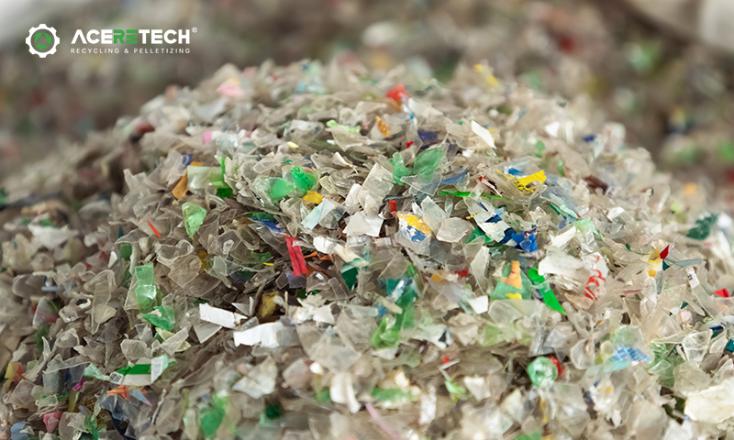
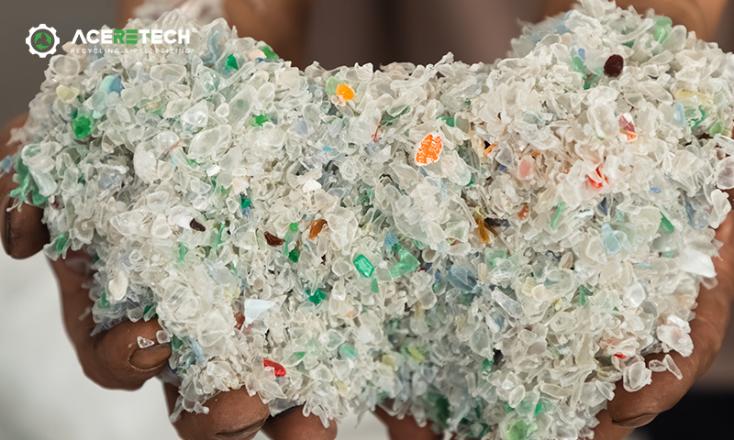
Recycling Raw Material: PET Bottle Flakes
Production Output: 3000 kg/h
Application Fields: PET Bottle Recycling, rPET Processing, Utilization of recycled plastics
Core Configuration of the PET Bottle Flake Washing Line
This PET bottle flake washing system primarily comprises the following components:
Screw loader Conveying System
Floating washing Tank with Two Channel Design
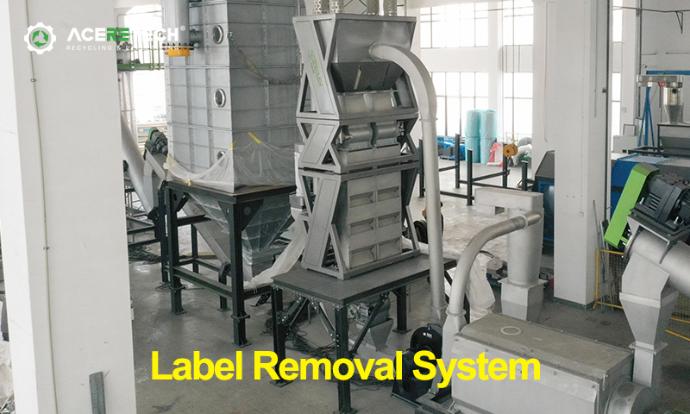
Label Removal System
Pre-heating Hopper silo
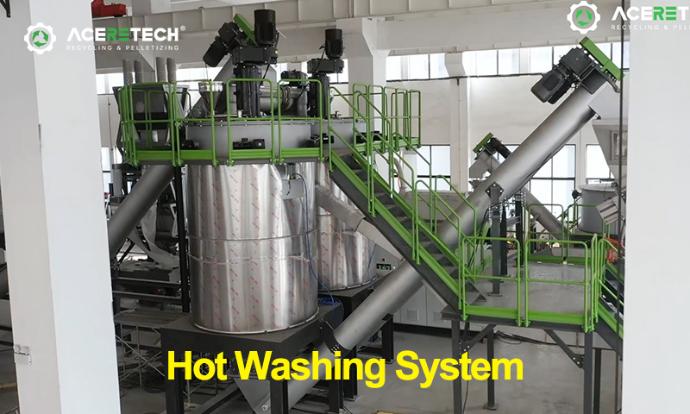
Hot Washing System
Friction Washing System
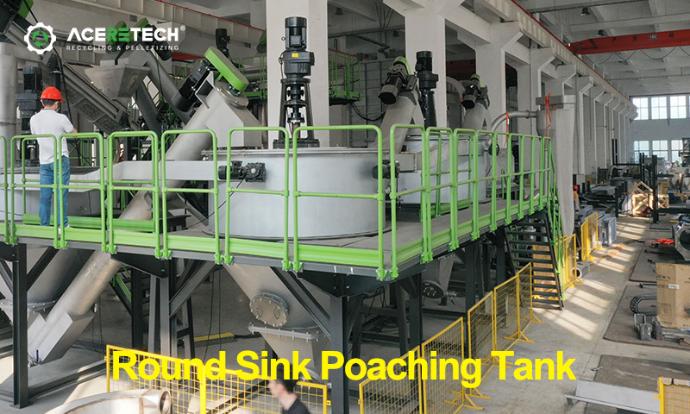
Round-sink Floating washing Tank
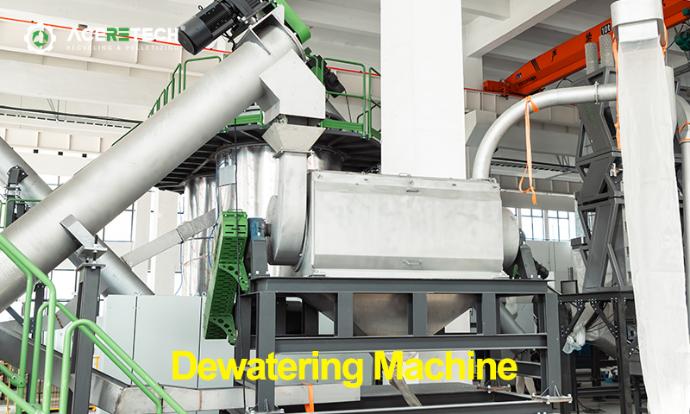
Centrifugal Dewatering Machine
Finished Product Storage Silo
The entire line features a modular design, allowing for customization based on the specific contamination level of the customer's raw materials and their required production capacity.
Analysis of the PET Bottle Flake Washing Process
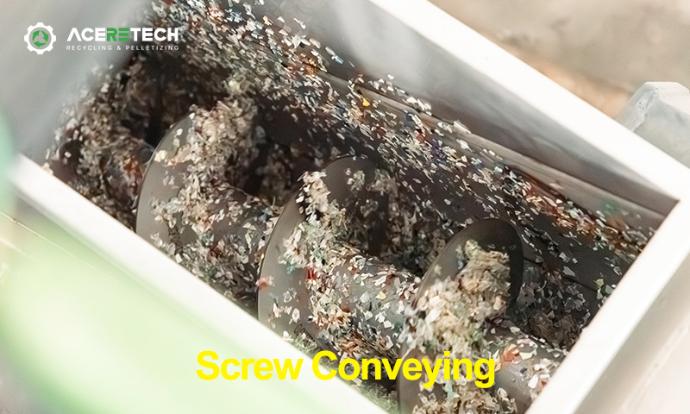
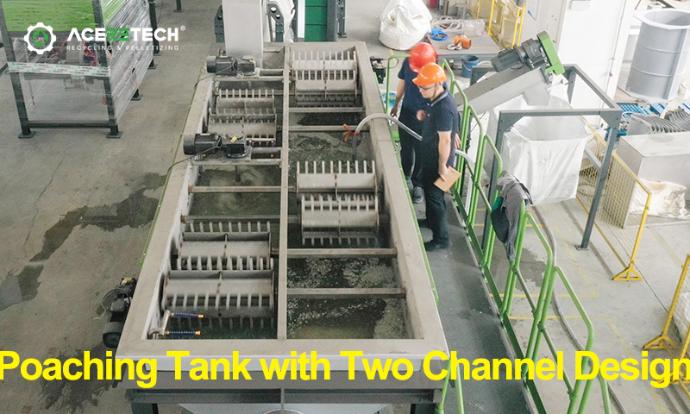
Floating washing Tank with Two Channel Design: Achieving Efficient Separation
There is a distinct difference in density between PET bottle flakes and accompanying caps and labels.
In this system, a dual channel "sinking floating" separation tank design is adopted to achieve the following functions:
Pre-washing of PET flakes
Separation of bottle caps
Separation of labels
Rinsing away impurities
During operation, the PET flakes sink to the bottom of the tank and are automatically conveyed to the next processing stage; conversely, the PP/PE caps and labels float on the water's surface and are automatically transported via a side-mounted discharge screw conveyor into ton bags for collection.
Compared to traditional rinsing equipment, this design offers:
Higher separation efficiency
Greater automation
More uniform rinsing
Reduced manual intervention
It is particularly well-suited for high-throughput PET bottle flake recycling lines.
Label Removal System: Improving PET Flake Purity
Residual labels constitute one of the primary sources of contamination affecting the quality of recycled PET. By utilizing a specialized label removal system, it is possible to effectively reduce PP/PE/PVC label contamination.
This system enhances the purity of PET flakes at the source, thereby improving the stability of subsequent granulation and recycling processes.
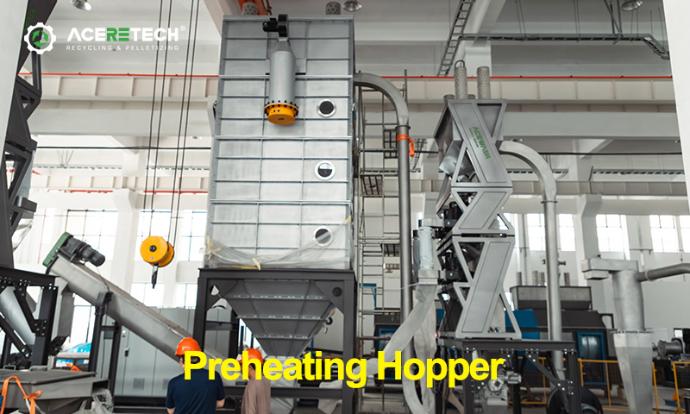
Preheating Silo: Improving Hot Washing Efficiency
The preheating silo serves not only as a material buffer but also performs a preliminary preheating treatment on the PET flakes. Its key advantages include:
Increased hot washing efficiency
Reduced energy consumption
Stabilized whole line operation
For large-scale PET washing lines—particularly with a capacity of 3,000 kg/h—stable and continuous operation is quite important.
Hot Washing System: Deep Removal of Oil and Adhesives
The hot washing process is a critical core stage in the production of high-quality recycled PET flakes. Through high-temperature hot washing, the system effectively removes:
Beverage residues
Adhesives
Oil and grease
Organic contaminants
After the hot washing process, the PET flakes exhibit a significantly higher level of cleanliness, meeting the stringent requirements for high-value-added recycled PET applications.
Friction Washing: Maximizing Surface Cleanliness
After the hot washing stage, the PET flakes enter the friction washing system, where high-speed mechanical friction is employed to further remove:
Surface stains
Residual lye
Fine impurities
Residual adhesives
This process can further improve the cleanliness of PET flakes, laying the foundation for subsequent washing and dehydration processes.
Round-sink Poaching Tank: Ensuring Uniform Rinsing
After hot-washing, the PET flakes are transferred to a circular rinsing tank for deep-level rinsing.
The circular structural design offers the following advantages:
Improved water circulation efficiency
Enhanced rinsing uniformity
Reduced residual impurities
Increased flake cleanliness
This design effectively guarantees the consistent quality of the final PET flake product.
High-Efficiency Dewatering System: Reducing Flake Moisture Content
After the cleaning process, the PET flakes undergo high-speed dewatering using a centrifugal dewatering machine. This system effectively reduces the moisture content of the flakes, thereby improving:
Storage efficiency
Packaging efficiency
Stability of subsequent granulation
Additionally, it helps reduce energy consumption during transportation and downstream processing.
Why Is High-Quality PET Bottle Flake Washing Becoming Increasingly Important?
With the rapid growth in demand for food-grade recycled PET (rPET), market requirements regarding the cleanliness and purity of PET bottle flakes are becoming increasingly stringent.
High-quality PET bottle flakes can be widely utilized in:
Recycled fibers
PET sheets
Packaging materials
Bottle-grade rPET
Industrial plastic products
Consequently, efficient, stable, and low-pollution PET bottle flake washing systems are emerging as a key direction for development within the plastics recycling industry.
Click to view PET bottle crushing case studies
Click to view PET bottle flake pelletizing case studies
ACERETECH Turkey Solutions for PET Bottle Flake Recycling
As a professional manufacturer of plastic recycling equipment, ACERETECH offers complete PET recycling systems including: shredding, crushing, washing and extrusion pelletizing systems.
We provide customized plastics recycling solutions for various plastic materials, including PET bottle flakes, PE films, PP woven bags, and rigid plastics.
If you are seeking a PET bottle flake washing line characterized by high efficiency, low energy consumption, and stable operation, we invite you to contact us for further technical proposals and equipment details.
FAQ
Q1. What is the primary function of a PET flake washing production line?
A: A PET flake washing production line is primarily designed to remove labels, caps, oil residues, adhesives, and other impurities from discarded PET bottles. Its purpose is to enhance the purity of the PET flakes, thereby providing high-quality raw materials for subsequent pelletizing, fiber production, or food-grade rPET applications.
Q2. Why is a sink-float separation system necessary for washing PET flakes?
A: There is a distinct density difference between PET flakes and PP/PE bottle caps and labels. A sink-float separation system leverages this characteristic to achieve automatic separation:
PET flakes sink
Bottle caps and labels float
This effectively reduces impurity levels and improves the purity of the PET flakes—a critical step for subsequent recycling, pelletizing, and rPET applications.
Q3. What role does the hot washing system play in PET bottle flake recycling?
A: The hot washing system constitutes a vital stage in the deep cleaning of PET flakes. Through high-temperature hot washing, the system effectively removes:
Adhesive residues
Oil stains
Residual beverage liquids
Organic contaminants
Label glues
This process enhances the overall cleanliness of the PET flakes, minimizes issues such as black spots and odors, and ultimately elevates the quality of the recycled PET.
Q4. Does the moisture content of PET bottle flakes after washing affect subsequent processing?
A: Yes, it does.
If the moisture content of PET bottle flakes is excessively high, it can negatively impact subsequent stages:
Storage
Packaging
Extrusion and granulation
Stability of recycling processes
Therefore, production lines are typically equipped with high-efficiency dewatering systems—such as centrifugal dewatering machines—to reduce the moisture content of the flakes and enhance the efficiency of downstream processing.
Q5. In which fields are high-quality PET bottle flakes typically utilized?
A: PET bottle flakes that have undergone high-efficiency washing can be widely applied in the production of:
Recycled fibers
PET sheets
Packaging materials
Industrial plastic products
Recycled PET granules
Food-grade rPET applications
With the global development of the circular economy, market demand for high-quality PET bottle flakes continues to grow.