Abstract
In the plastic recycling industry, PE film has always been regarded as a "challenging yet highly sought after" recyclable material, mainly due to its wide range of raw material sources, light weight, easy entanglement, and large fluctuations in moisture content. This situation is particularly prominent in materials such as agricultural films, packaging films, and industrial PE sheets; If the stability of the processing equipment is insufficient, it is easy to encounter problems such as material blockage, uneven plasticization, poor degassing effect, and the generation of bubbles inside the pellets.
To address the specific recycling requirements of PE films and sheets, ACERETECH has introduced the customized ACSS Two-Stage Single-Screw Compacting and Pelletizing Extrusion Line. Through a integrated solution combining "compactor + plasticization extrusion+ double vacuum degassing + intelligent filtration," this system enables continuous pelletizing production characterized by high efficiency, high quality, and low energy consumption.
For the trial featured here, we test PE film. The entire production line operated with exceptional stability, yielding uniform pellets that are ideally suited for subsequent recycling applications, including film blowing, injection molding, and extrusion.
I. Why is PE Film Recycling Considered Difficult?
Although PE film with high recycling value, actual recycling processes typically encounter the following challenges:
* The film is lightweight and thin, making it prone to tangling within the conveying system.
* The moisture content affects the stability of the plasticizing process.
* Residual printing inks and impurities can easily affect the quality of the final pellets.
* Standard single-stage pelletizing systems often lack sufficient degassing capacity.
* Unstable melt filtration processes can lead to pressure fluctuations during recycling process.
* Traditional equipment typically suffers from high energy consumption and high frequent manual intervention.
Therefore, the PE film recycling process not only tests the plasticizing ability of the pelletizing machine, but more importantly, it also tests the ability of the entire production line to achieve continuous and stable operation.
II. The ACSS Double-Stage Single-Screw Compacting and Pelletizing Extrusion Line Solution
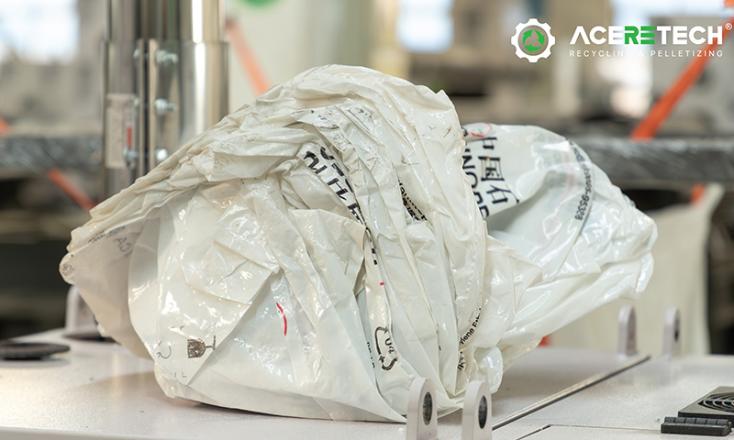
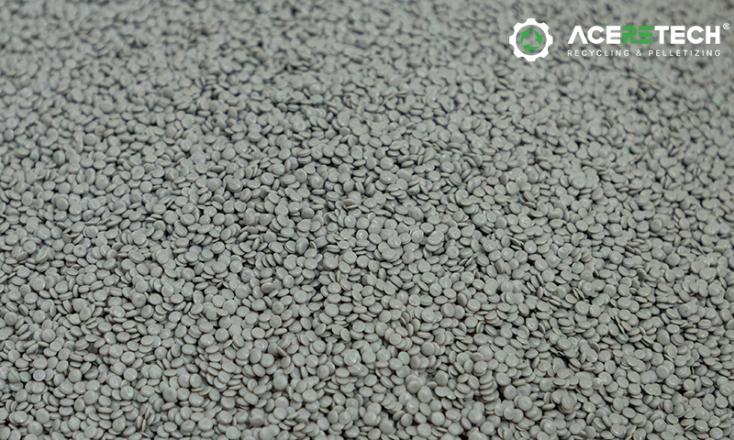
Applicable Raw Materials
* PE Films
* PE Packaging Films
* PE Industrial Sheets
* LDPE Films
* HDPE Film Edge Trims/Scrap
* Washed Flexible PE Waste
III. Core Configuration of the Complete ACSS Line
This ACSS pelletizing system customized for this customer is mainly used for the recycling and pelletizing of PE films and sheets.
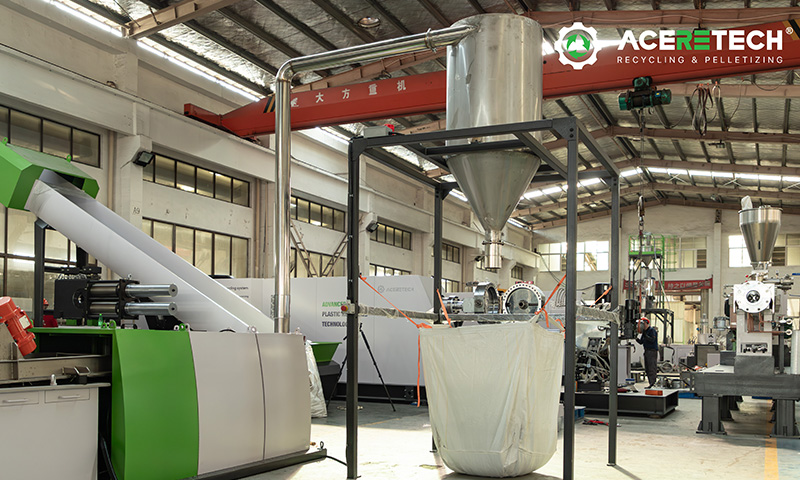
The entire production line configuration includes:
Belt conveyor system equipped with a metal detector
Compactor equipped with sliding gate,speed controlled by inverter
ACSS double-stage single-screw extruder
High-quality, high torque gearbox
Vacuum degassing system
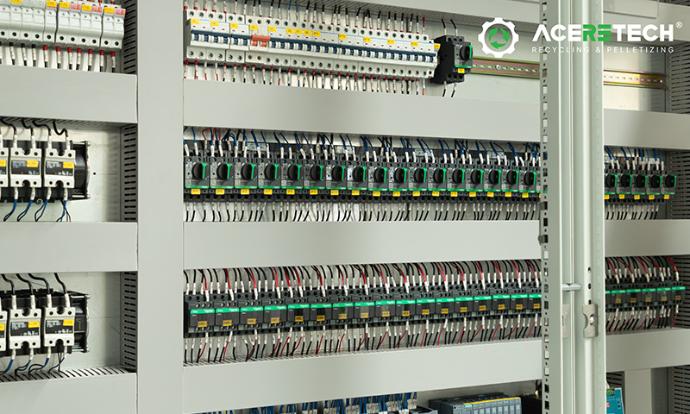
Intelligent control system
Water-ring pelletizing system
Vibrating dewatering screen
Centrifugal dewatering machine
Blower conveying system to finished pellets silo
The entire system prioritizes "stability, automation, and continuous production," making it particularly well-suited for meeting the demands of long-term, industrial-scale recycling operations.
IV. Core Advantages of the ACSS pelletizing System




1. Compactor: Increase bulk density
PE film is characterized by its low density and soft; traditional feeding methods often lead to "bridging" and unstable feeding issues. The ACSS system with a compactor/agglomerator equipped with a sliding gate, which produce frictional heating and make film shrink at high-speed rotation speed to achieve:
Increases the bulk density of the material
Ensures stable and continuous feeding
Reduces moisture content of the material
Preheating and agglomerating
These factors are critical for significantly improving subsequent plasticization efficiency and production capacity stability.
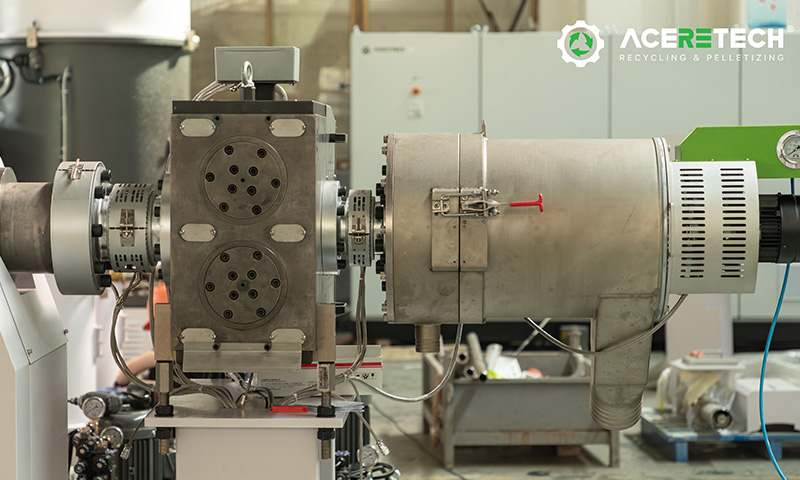
2. Two-Stage Single-Screw Extruder: Enhanced Plasticization and Degassing
Stage 1: High-Efficiency Plasticization and Filtration
Stage 1 Specifications:
Single Screw Diameter: 120 mm
L/D Ratio: 42. This L/D ratio design provides ample plasticization time, ensuring a more uniform and stable melting process for PE films.
Additionally, the system is equipped with an SCF self-cleaning filtration system, automatic discharge the impurities, enabling continuous filtration without stopping machine:
Automatic impurity discharge
Reduced manual maintenance requirements
Improved melt purity
Stable pressure maintenance
This feature is particularly crucial for the recycling of PE films containing impurities.
Stage 2: Deep Degassing and Stable Extrusion
Stage 2 Specifications:
Single Screw Diameter: 150 mm
L/D Ratio: 12
Equipped with:
Vacuum degassing system(between 1st stage and 2nd stage)
Hydraulic piston-type screen changer
Main Functions of Stage 2:
Secondary stabilization of plasticization
Removal of residual moisture and volatile substances
Second fine filtration to get more quality pellets
Compared to standard single-stage extruder, double-stage system offers advantages when processing materials such as PE films with high moisture content.
Ⅴ. High Wear-Resistance Screw&Barrel: Extending Equipment Service Life
To accommodate 24h production demands, the ACSS system is engineered using highly wear-resistant screw&barrel materials.
Screw Material: 38CrMoAlA Nitrided Steel + Nickel-based Alloy Reinforcement Layer
Barrel Material: 38CrMoAlA Nitrided Steel + Wear-resistant Iron-based Alloy
This configuration effectively enhances:
Wear resistance
Corrosion resistance
Service life
Long-term operational stability
It is particularly well-suited for continuous plastic recycling production lines.
Ⅵ. Intelligent Temperature Control System: Ensuring Stable Plasticization
Heating Method: Ceramic Heating
Ceramic heating offers the following advantages:
High thermal efficiency
Stable temperature rise
Excellent energy-saving performance
Cooling Method: Air blower cooling
The air blower cooling system enables rapid and stable control of the barrel temperature, preventing:
Over-plasticization
Material degradation
This ensures the production of high-quality and uniform pellets.
Ⅶ. Water-Ring Pelletizing System: Delivering Uniform Pellet Output
The ACSS system employs a water-ring pelletizing system, making it ideally suited for the granulation of soft PE materials.
Key advantages include:
Stable pelletizing
Uniform, rounded pellets
High automation
Suitable for continuous production
Downstream auxiliary machine:
Vibrating dewatering screen
Centrifugal dewatering machine
Blower conveying system
Packing silo
Enables rapid cooling, dewatering, and automatic transportation of pellets.
VIII. Application Fields for PE Film Granules
The recycled PE pellets processed by the ACSS system can be widely utilized in:
Blown film products
Garbage bag manufacturing
Packaging films
Injection-molded products
Pipe extrusion
Construction plastics
High-quality recycled pellets not only reduce raw material costs but also assist enterprises in achieving their sustainable production goals.
IX. Why Are More and More Enterprises Choosing PE Film Recycling?
Driven by global environmental policies and the development of the circular economy, market demand for PE film recycling continues to grow. Recycling PE film not only serves to:
Reduce plastic waste pollution
Decrease the consumption of virgin plastics
Lower production costs
Generate profits from recycled materials
but also enhances an enterprise's competitiveness in ESG performance and green manufacturing.
Conclusion
PE film recycling is not merely a simple process of "melting and granulating"; rather, it represents a comprehensive test of equipment stability, filtration capability, degassing efficiency, and automatic control systems.
The ACERETECH ACSS two-stage single-screw compacting and granulating extrusion line—through a combination of agglomerating, stable plasticization, double vacuum degassing, self-cleaning filtration and intelligent control systems—offers a highly efficient, stable, and energy-saving solution for the recycling of PE films and sheets.
For recycling enterprises seeking to improve the quality of their recycled pellets, minimize downtime, and achieve long-term continuous production, two-stage compacting and granulating systems are becoming an increasingly mainstream choice.
FAQ
Q1. Why is output instability a common issue during the PE film pelletizing process?
A: PE film is a lightweight, soft material with a low bulk density; during the conveying process, it is prone to issues such as entanglement, bridging, and uneven feeding. If the feeding and compaction systems are inadequately designed, this will directly compromise extrusion stability and overall throughput.
The ACSS compacting pelletizing system addresses these issues through:
Pre-compaction within the compaction chamber
Variable-frequency sliding gate control
Stable and continuous feeding
These features effectively increase material density and minimize feeding fluctuations, thereby ensuring a more stable and consistent pelletizing output.
Q2. What types of PE waste are suitable for processing with a two-stage single-screw extruder?
A: Dual-stage single-screw systems are particularly well-suited for:
PE packaging films
Agricultural films
Printed PE films
PE industrial sheets
Washed flexible PE scrap
PE materials containing trace amounts of moisture or volatiles
Compared to standard single-stage granulators, dual-stage systems possess superior degassing capabilities, making them better suited for processing complex film recycling materials.
Q3. What role does the vacuum degassing system play in PE film pelletizing?
A: After washing, PE films typically retain residual:
Moisture
Volatile ink components
Low-molecular-weight gases
Gaseous impurities
Insufficient degassing can result in the finished pellets exhibiting:
Bubbles
Rough surfaces
Internal voids
Melt instability
The ACSS system employs a vacuum degassing design to effectively remove volatile substances and moisture, thereby enhancing pellet density and improving the quality of the finished product.
Q4. Why is a metal detector a necessary component of a PE film recycling line?
A: During the recycling process, waste PE films may become contaminated with:
Metal fragments
Wire scraps
Screws
Hard foreign objects
If these impurities enter the extrusion system, they can easily cause:
Screw wear
Clogging of the filtration system
Damage to the screen changer
Production downtime for repairs
A conveyor belt system equipped with a metal detector can identify metallic foreign objects in advance, thereby enhancing equipment safety and reducing maintenance costs.
Q5. How can one determine if a PE film granulator is suitable for long-term continuous production?
A: High-quality PE film granulation equipment typically features the following characteristics:
A stable compaction and feeding system
Highly wear-resistant screw and barrel materials
An efficient degassing system
An automated filtration system
An intelligent temperature control system
The capability for continuous, uninterrupted operation
For instance, the ACSS two-stage single-screw granulation line utilizes:
38CrMoAlA nitrided steel
Nickel-based alloy-reinforced screws
An SCF self-cleaning filter
A hydraulic screen changer system
These features effectively enhance equipment stability and extend its operational lifespan, making the system ideally suited for industrial-scale, continuous recycling production.