Resumen
En la industria del reciclaje de plásticos, el film de PE siempre se ha considerado un material reciclable "desafiante pero muy codiciado", principalmente debido a la gran variedad de fuentes de materia prima, su bajo peso, su tendencia a enredarse y las fuertes fluctuaciones en su contenido de humedad. Esta situación es especialmente evidente en materiales como films agrícolas, films de embalaje y láminas industriales de PE; si el equipo de procesamiento carece de la estabilidad necesaria, es fácil que surjan problemas como atascos de material, plastificación irregular, una desgasificación deficiente y la formación de burbujas en el interior de los gránulos.
Para responder a las necesidades específicas de reciclaje de films y láminas de PE, ACERETECH ha lanzado la línea de extrusión, compactación y granulación de doble etapa y husillo único ACSS, diseñada a medida. Mediante una solución integrada que combina "compactador + extrusión de plastificación + doble desgasificación al vacío + filtración inteligente", este sistema permite una producción continua de gránulos caracterizada por su alta eficiencia, gran calidad y bajo consumo energético.
En la prueba que aquí se presenta, se procesó film de PE. Toda la línea de producción funcionó con una estabilidad excepcional, obteniendo gránulos uniformes e ideales para aplicaciones de reciclaje posteriores, como el soplado de film, el moldeo por inyección y la extrusión.
I. ¿Por qué se considera difícil el reciclaje de film de PE?
Aunque el film de PE posee un alto valor de reciclaje, los procesos reales suelen enfrentarse a los siguientes desafíos:
* El film es ligero y fino, lo que facilita que se enrede en el sistema de transporte.
* El contenido de humedad afecta a la estabilidad del proceso de plastificación.
* Las tintas de impresión residuales y las impurezas pueden afectar fácilmente a la calidad de los gránulos finales.
* Los sistemas de granulación estándar de una sola etapa a menudo carecen de suficiente capacidad de desgasificación.
* Los procesos inestables de filtración de masa fundida pueden provocar fluctuaciones de presión durante el reciclaje.
* Los equipos tradicionales suelen presentar un alto consumo energético y requieren frecuentes intervenciones manuales.
Por lo tanto, el proceso de reciclaje de film de PE no solo pone a prueba la capacidad de plastificación de la máquina granuladora, sino que, lo que es más importante, evalúa la capacidad de toda la línea de producción para mantener un funcionamiento continuo y estable.
II. Solución de línea de extrusión ACSS de doble etapa y husillo único para compactación y granulación
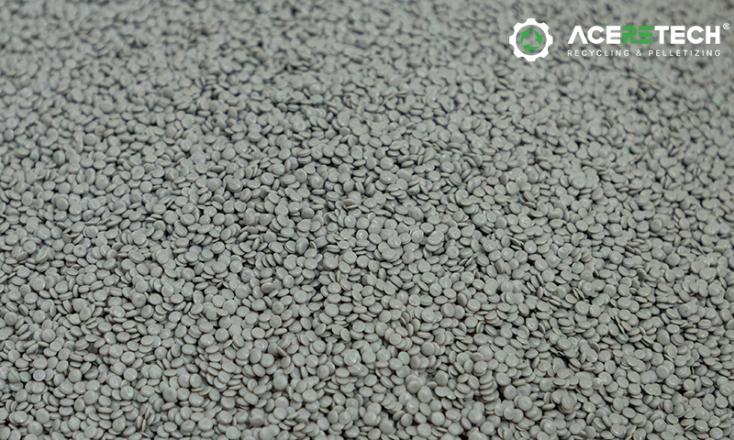
Materias primas aplicables
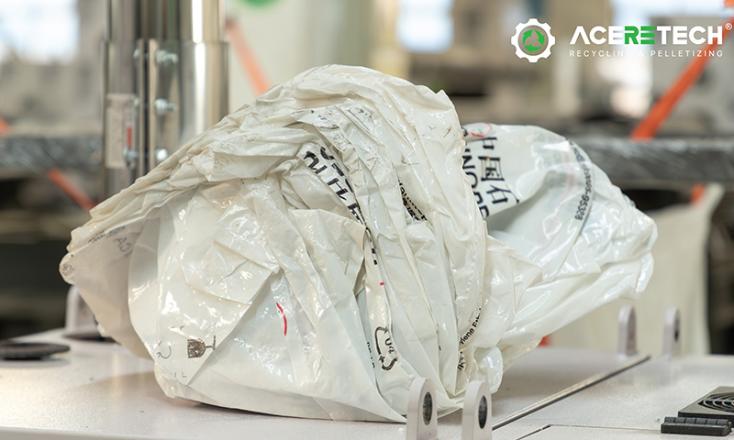
* Films de PE
* Films de embalaje de PE
* Láminas industriales de PE
* Films de LDPE
* Recortes/desechos de film de HDPE
* Residuos flexibles de PE lavados
III. Configuración principal de la línea completa ACSS
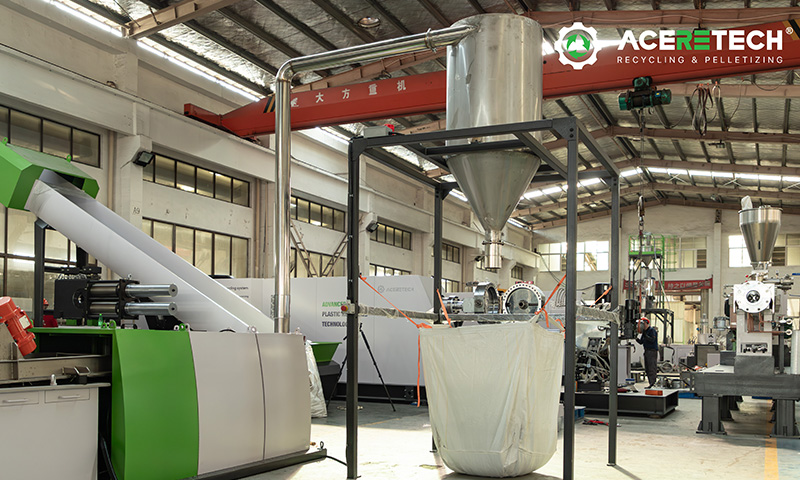
Este sistema de granulación ACSS, personalizado para el cliente, se utiliza principalmente para el reciclaje y la granulación de films y láminas de PE.
La configuración completa de la línea de producción incluye:
Sistema de cinta transportadora equipado con detector de metales
Compactador equipado con compuerta deslizante y velocidad controlada por variador de frecuencia
Extrusora ACSS de doble etapa y husillo único
Caja de engranajes de alta calidad y alto par
Sistema de desgasificación al vacío
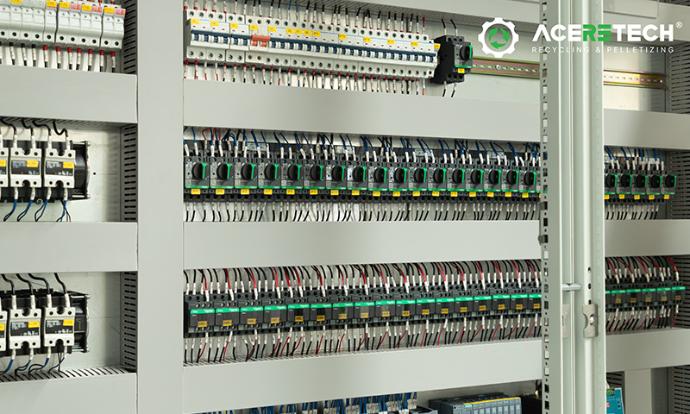
Sistema de control inteligente
Sistema de granulación por anillo de agua
Criba vibratoria de deshidratación
Máquina centrífuga de deshidratación
Sistema de transporte por soplado hacia el silo de granza terminada
El sistema integral prioriza la "estabilidad, la automatización y la producción continua", lo que lo hace especialmente adecuado para satisfacer las exigencias de operaciones de reciclaje a escala industrial y a largo plazo.
IV. Ventajas principales del sistema de granulación ACSS




1. Compactador: Aumento de la densidad aparente
El film de PE se caracteriza por su baja densidad y su naturaleza blanda; los métodos de alimentación tradicionales a menudo provocan problemas de formación de "puentes" y una alimentación inestable. El sistema ACSS incorpora un compactador/aglomerador con compuerta deslizante que genera calor por fricción y hace que el film se contraiga mediante una rotación de alta velocidad, logrando así:
Aumentar la densidad aparente del material
Garantizar una alimentación estable y continua
Reducir el contenido de humedad del material
Precalentar y aglomerar el material
Estos factores son fundamentales para mejorar significativamente la eficiencia de la plastificación posterior y la estabilidad de la capacidad de producción.
2. Extrusora de doble etapa y husillo único: Plastificación y desgasificación mejoradas
Etapa 1: Plastificación y filtración de alta eficiencia
Especificaciones de la Etapa 1:
Diámetro del husillo único: 120 mm
Relación L/D: 42. Este diseño de relación L/D proporciona un tiempo de plastificación amplio, asegurando un proceso de fusión más uniforme y estable para películas de PE.
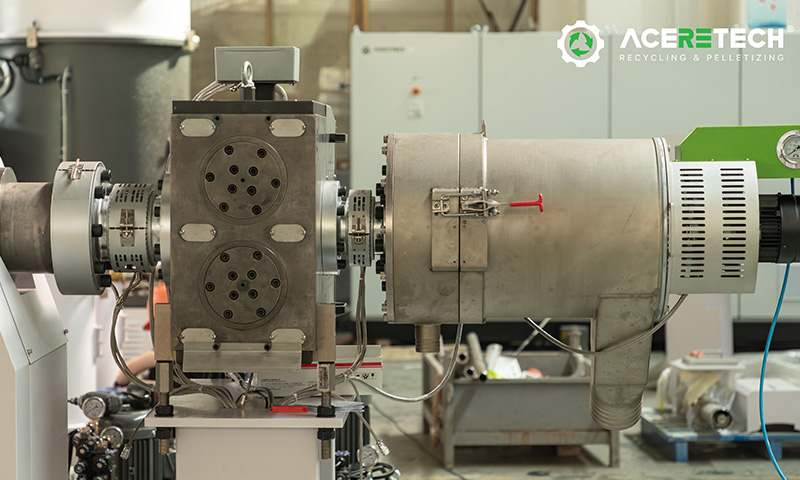
Además, el sistema está equipado con un sistema de filtración autolimpiante (SCF) que descarga automáticamente las impurezas, permitiendo una filtración continua sin detener la máquina:
Descarga automática de impurezas
Menores requisitos de mantenimiento manual
Mayor pureza del material fundido
Mantenimiento de una presión estable
Esta característica es especialmente crucial para el reciclaje de películas de PE que contienen impurezas.
Etapa 2: Desgasificación profunda y extrusión estable
Especificaciones de la Etapa 2:
Diámetro del husillo único: 150 mm
Relación L/D: 12
Equipado con:
Sistema de desgasificación al vacío (entre la primera y la segunda etapa)
Cambiador de malla hidráulico de tipo pistón
Funciones principales de la Etapa 2:
Estabilización secundaria de la plastificación
Eliminación de humedad residual y sustancias volátiles
Segunda filtración fina para obtener gránulos de mayor calidad
En comparación con las extrusoras estándar de una sola etapa, el sistema de doble etapa ofrece ventajas al procesar materiales como películas de PE con alto contenido de humedad.
Ⅴ. Husillo y cilindro de alta resistencia al desgaste: Prolongación de la vida útil del equipo
Para satisfacer las demandas de producción las 24 horas, el sistema ACSS está diseñado utilizando materiales de alta resistencia al desgaste para el husillo y el cilindro.
Material del husillo: Acero nitrurado 38CrMoAlA + capa de refuerzo de aleación a base de níquel
Material del cilindro: Acero nitrurado 38CrMoAlA + aleación a base de hierro resistente al desgaste
Esta configuración mejora eficazmente:
La resistencia al desgaste
La resistencia a la corrosión
La vida útil
La estabilidad operativa a largo plazo
Es especialmente adecuado para líneas de producción continua de reciclaje de plásticos.
Ⅵ. Sistema de control de temperatura inteligente: Garantía de una plastificación estable
Método de calentamiento: Calentamiento cerámico
El calentamiento cerámico ofrece las siguientes ventajas:
Alta eficiencia térmica
Aumento estable de la temperatura
Excelente rendimiento de ahorro energético
Método de enfriamiento: Enfriamiento por soplador de aire
El sistema de enfriamiento por soplador de aire permite un control rápido y estable de la temperatura del cilindro, evitando:
La sobreplastificación
La degradación del material
Esto asegura la producción de gránulos uniformes y de alta calidad.
Ⅶ. Sistema de granulación por anillo de agua: Producción de gránulos uniformes
El sistema ACSS utiliza un método de granulación por anillo de agua, lo que lo hace ideal para la granulación de materiales de PE (polietileno) blandos.
Entre sus principales ventajas se incluyen:
Granulación estable
Gránulos uniformes y redondeados
Alto nivel de automatización
Apto para producción continua
Equipos auxiliares posteriores:
Criba vibratoria de deshidratación
Centrífuga de deshidratación
Sistema de transporte por soplado
Silo de envasado
Permite el enfriamiento rápido, la deshidratación y el transporte automático de los gránulos.
VIII. Campos de aplicación para películas de PE post-granulación
Los gránulos de PE reciclado, procesados mediante el sistema ACSS, pueden aplicarse ampliamente en:
Productos de película soplada
Fabricación de bolsas de basura
Películas de embalaje
Productos moldeados por inyección
Extrusión de tuberías
Productos plásticos para la construcción
Los gránulos reciclados de alta calidad no solo reducen los costos de materia prima, sino que también ayudan a las empresas a alcanzar sus objetivos de producción sostenible.
IX. ¿Por qué cada vez más empresas eligen el reciclaje de film de PE?
Impulsada por las políticas ambientales globales y el desarrollo de la economía circular, la demanda del mercado para el reciclaje de películas de PE continúa creciendo. El reciclaje de películas de PE no solo sirve para:
Reducir la contaminación por residuos plásticos
Disminuir el uso de plásticos vírgenes
Reducir los costos de producción
Generar beneficios a partir de materiales reciclados
También mejora la competitividad de una empresa en términos de desempeño ESG (Ambiental, Social y de Gobernanza) y manufactura ecológica.
Conclusión
El reciclaje de film de PE no es un simple proceso de "fundir y granular"; más bien, representa una prueba integral de la estabilidad del equipo, la capacidad de filtración, la eficiencia de desgasificación y los sistemas de control automático.
La línea de extrusión de compactación y granulación de dos etapas y husillo único ACERETECH ACSS —mediante una combinación de aglomeración, plastificación estable, doble desgasificación al vacío, filtración autolimpiante y sistemas de control inteligente— ofrece una solución altamente eficiente, estable y de bajo consumo energético para el reciclaje de films y láminas de PE.
Para las empresas de reciclaje que buscan mejorar la calidad de sus gránulos reciclados, minimizar los tiempos de inactividad y lograr una producción continua a largo plazo, los sistemas de compactación y granulación de dos etapas se están convirtiendo en una opción cada vez más habitual.
Haga clic para ver estudios de caso sobre el lavado de películas de PE
FAQ
Q1. ¿Por qué la inestabilidad en la producción es un problema común durante el proceso de peletizado de películas de PE?
A: La película de PE es un material ligero y blando con una baja densidad aparente; durante el proceso de transporte, es propensa a problemas como el enredo, la formación de puentes y una alimentación irregular. Si los sistemas de alimentación y compactación están diseñados de manera inadecuada, esto comprometerá directamente la estabilidad de la extrusión y el rendimiento general.
El Sistema de Compactación y Peletizado ACSS aborda estos desafíos mediante:
Precompactación dentro de la cámara de compactación
Control de compuerta deslizante de frecuencia variable
Alimentación estable y continua
Estas características aumentan eficazmente la densidad del material y minimizan las fluctuaciones en la alimentación, asegurando así una producción de peletizado más estable y consistente.
Q2. ¿Qué tipos de residuos de PE son adecuados para su procesamiento con una extrusora de husillo único de dos etapas?
A: Los sistemas de tornillo simple de dos etapas son particularmente adecuados para:
Películas de embalaje de PE
Películas agrícolas
Películas de PE impresas
Láminas industriales de PE
Residuos flexibles de PE lavados
Materiales de PE que contienen pequeñas cantidades de humedad o sustancias volátiles
En comparación con los granuladores estándar de una sola etapa, los sistemas de dos etapas poseen capacidades de desgasificación superiores, lo que los hace más adecuados para procesar materiales reciclados de películas complejos.
Q3. ¿Qué papel desempeña el sistema de desgasificación al vacío en el peletizado de películas de PE?
A: Después del lavado, las películas de PE suelen retener residuos de:
Humedad
Componentes volátiles de la tinta
Gases de bajo peso molecular
Impurezas gaseosas
Una desgasificación insuficiente puede provocar que los gránulos terminados presenten:
Burbujas
Superficies rugosas
Huecos internos
Inestabilidad en la masa fundida
El sistema ACSS emplea un diseño de desgasificación al vacío para eliminar eficazmente las sustancias volátiles y la humedad, mejorando así la densidad del gránulo y la calidad general del producto.
Q4. ¿Por qué es necesario equipar una línea de reciclaje de películas de PE con un detector de metales?
A: Durante el proceso de reciclaje, las películas de PE residuales pueden contaminarse con:
Fragmentos metálicos
Cables metálicos
Tornillos
Objetos extraños duros
Si estas impurezas ingresan al sistema de extrusión, pueden causar fácilmente:
Desgaste del tornillo
Obstrucción del sistema de filtración
Daños en el cambiador de mallas
Tiempo de inactividad en la producción para reparaciones
Un sistema de cinta transportadora equipado con un detector de metales puede identificar objetos extraños metálicos con antelación, mejorando así la seguridad del equipo y reduciendo los costos de mantenimiento.
Q5. ¿Cómo se puede determinar si un granulador de películas de PE es adecuado para una producción continua a largo plazo?
A: Los equipos de granulación de película de PE de alta calidad suelen presentar las siguientes características:
Un sistema estable de compactación y alimentación
Materiales de alta resistencia al desgaste en el husillo y el cilindro
Un sistema de desgasificación eficiente
Un sistema de filtración automático
Un sistema inteligente de control de temperatura
Capacidad para un funcionamiento continuo e ininterrumpido
Por ejemplo, la línea de granulación de doble etapa y husillo único modelo ACSS emplea:
Acero nitrurado 38CrMoAlA
Husillos reforzados con aleaciones a base de níquel
Un filtro autolimpiante SCF
Un sistema hidráulico de cambio de mallas
Estas características mejoran eficazmente la estabilidad del equipo y prolongan su vida útil, lo que hace que el sistema resulte idóneo para la producción continua de reciclaje a escala industrial.