I. How to Achieve Efficient and Stable Shredding of Plastic Film and Bag Waste?
In the plastic recycling process, soft plastic waste—such as agricultural films, stretch films, greenhouse films, packaging films, woven bags, and bulk bags (FIBCs)—is characterized by low weight, large volume, low bulk density, and a tendency to tangle. When processing these materials, traditional shredding equipment often requires a greater focus on material grabbing capabilities, continuous feeding, and equipment wear resistance.
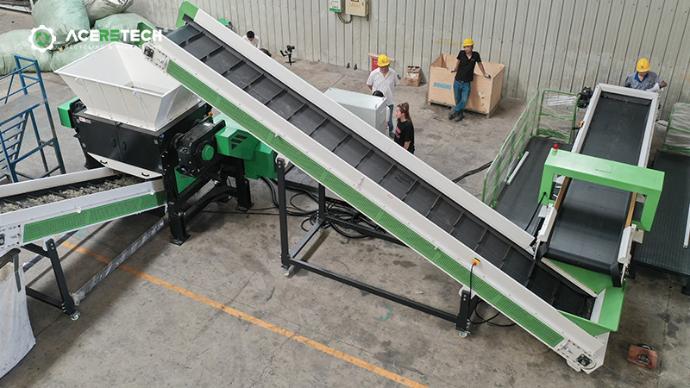
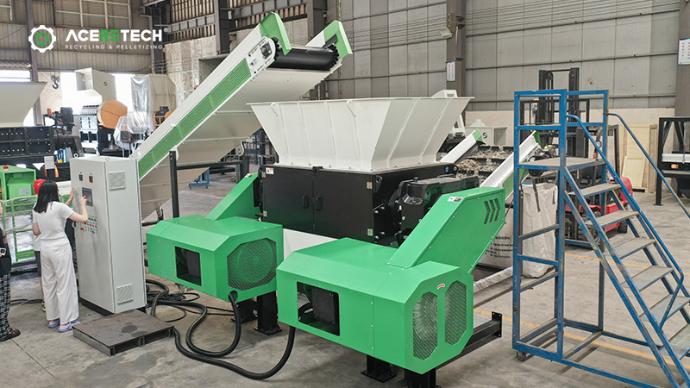
To address the specific characteristics of this type of plastic waste, the ACERETECH DSS1400 Double-Rotor Plastic Shredder utilizes a dual-rotor structure, making it particularly suitable for the primary shredding and volume reduction of soft plastics like films and bags.
The DSS1400 effectively processes materials such as plastic films, agricultural films, stretch films, greenhouse films, packaging films, woven bags, and bulk bags, offering high processing efficiency and stable, continuous operation.
II. DSS1400 Film Shredding Trial Run
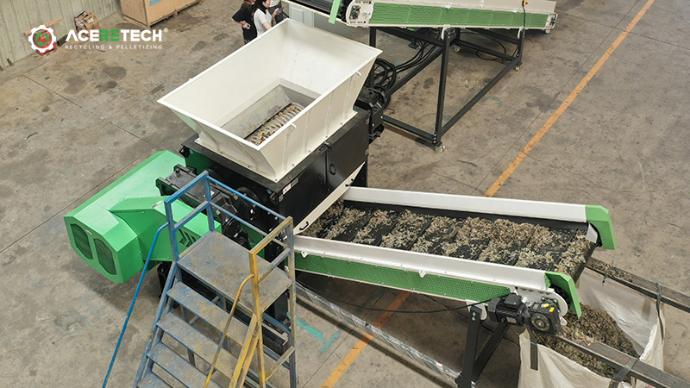
For this trial run, contaminated plastic film was used as the test material.
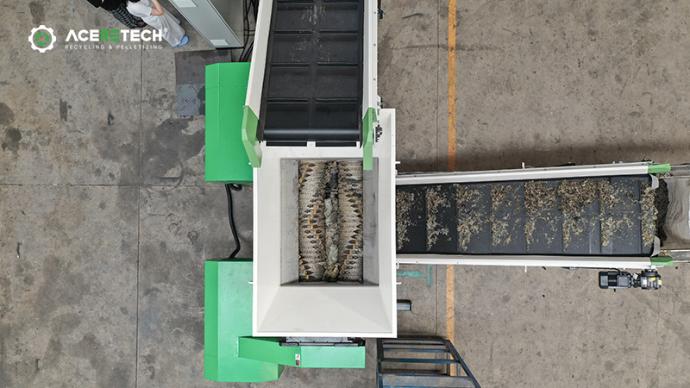
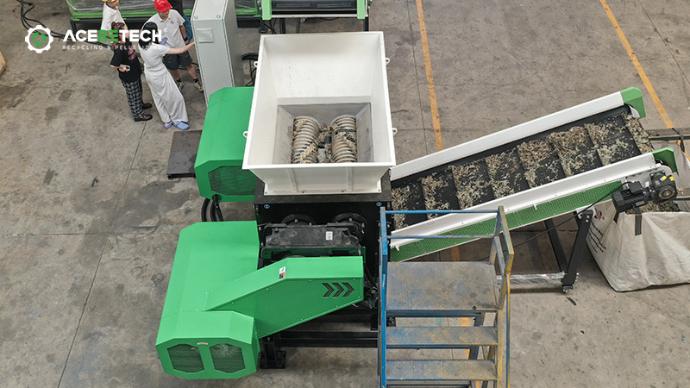
The material was fed into the system via a conveyor belt equipped with a metal detector; metal detection occurred prior to the material entering the DSS1400 shredding chamber.
The machine employs two rotors working in tandem to continuously grab, tear, and reduce the volume of the film. The trial highlighted the DSS1400's processing capabilities for flexible film materials and demonstrated the equipment's stability during continuous operation.
This test with contaminated film also showcased the DSS1400's adaptability to soft plastic waste. Beyond standard plastic films, the equipment is ideally suited for agricultural films, stretch films, greenhouse films, packaging films, woven bags, bulk bags, and similar materials.
III. Which Plastic Waste Materials Is the DSS1400 Best Suited For?
The DSS1400 twin-shaft plastic shredder is highly effective at handling soft, lightweight, and easily tangled plastic waste.
1. Agricultural Mulch Film
Agricultural mulch film typically has a large surface area and low bulk density, often leading to issues such as tangling and unstable feeding during the recycling process.
The DSS1400’s twin-rotor design continuously grabs and tears the film, effectively reducing material volume and preparing the feedstock for subsequent washing, granulating, or further shredding stages.
2. Stretch Film
Stretch film is characterized by high flexibility and a tendency to tangle. The DSS1400 uses its twin rotors to continuously tear the material, making it ideal for the initial volume reduction and shredding of large quantities of stretch film.
For waste stretch film originating from logistics, warehousing, and packaging operations, the DSS1400 serves as an effective pre-processing unit for downstream recycling systems.
3. Greenhouse Film
Waste greenhouse film is usually large in size and soft in texture, and may contain dust or other impurities.
The DSS1400 can be used for the initial shredding and volume reduction of greenhouse film, transforming large sheets into material that is easier to convey and process in subsequent stages.
4. Packaging Film
Packaging film is a common type of soft plastic waste in recycling operations. The DSS1400 is capable of continuously shredding packaging film from various sources, making it an ideal pre-processing machine for plastic recycling lines.
5. Woven Bags
PP woven bags are flexible, strong, and prone to tangling. The DSS1400’s twin rotors continuously grab and tear the bags, making the machine suitable for the volume reduction and pre-processing of large quantities of woven bags.
6. Bulk Bags (FIBCs)
Bulk bags are typically large and flexible; feeding them directly into downstream equipment can compromise feeding efficiency.
The DSS1400 can first shred and reduce the volume of bulk bags, making them better suited for subsequent processing steps such as granulating or washing.
IV. Double-Rotor Structure: Optimized for Film-Type Materials
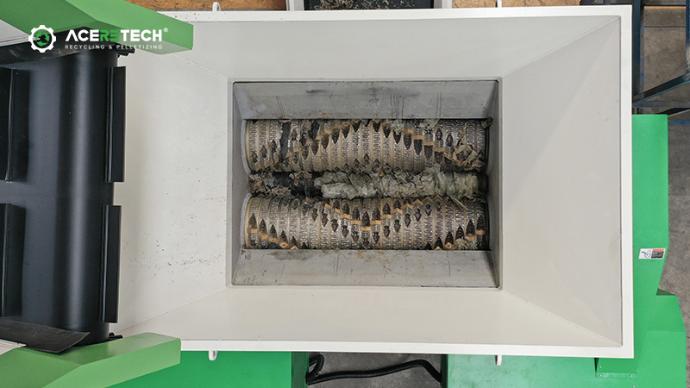
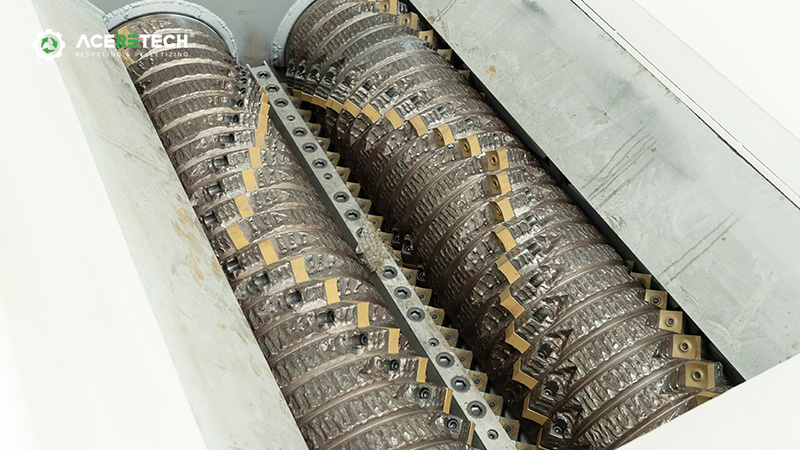
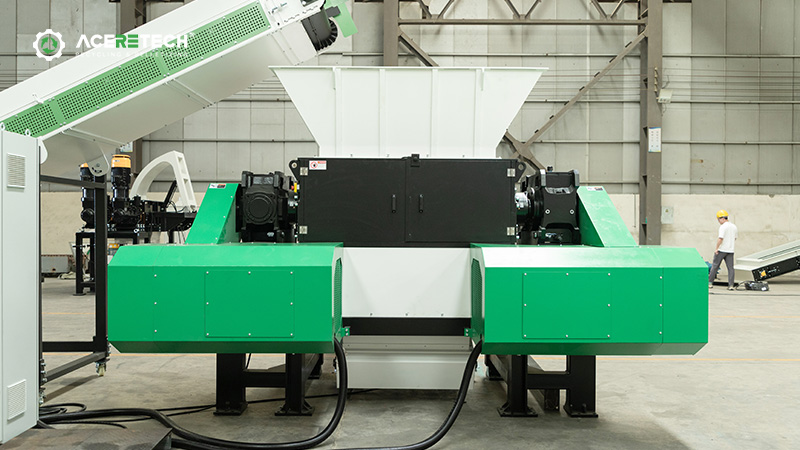
1. One of the core features of the DSS1400 is its double-rotor shredding system.
Processing flexible materials—such as films, woven bags, and bulk bags (FIBCs)—requires the equipment to possess excellent material-grabbing capabilities to ensure continuous, stable feeding and shredding.
The two rotors operate in tandem, continuously grabbing and tearing the material entering the shredding chamber, thereby achieving the following:
Enhanced ability to grab flexible materials
Volume reduction of large-format films
Increased continuous shredding efficiency
Improved feeding conditions for downstream processes
Adaptability to various forms of soft plastic waste
Consequently, the DSS1400 is particularly well-suited for recycling applications requiring the pre-processing of large volumes of plastic films and bags.
2. High Processing Efficiency and Stable, Continuous Operation
For plastic film recycling projects, equipment must not only be capable of shredding but also meet the demands of long-term, continuous operation.
The DSS1400 is specifically designed for materials such as plastic films, agricultural films, stretch wrap, greenhouse films, packaging films, woven bags, and bulk bags. It utilizes a double-rotor structure and a robust mechanical drive system to deliver efficient, continuous shredding performance.
In large-scale plastic recycling projects, the DSS1400 can serve as a primary processing unit, integrating with downstream equipment—such as granulators, washing systems, and pelletizers—to create a seamless recycling workflow.
3. SKD11 Powder Laser Cladding on Rotors: Enhanced Wear Resistance
During the long-term processing of plastic waste, rotors and blade mounts are subjected to constant mechanical stress; therefore, wear resistance is a critical factor influencing the shredder's operational stability over time.
The DSS1400 rotors feature a wear-resistant layer created using SKD11 powder laser cladding technology, rather than traditional electrode-based hardfacing methods. Laser cladding enables a metallurgical bond between the wear-resistant layer and the rotor core, ensuring excellent hardness uniformity while enhancing the layer's:
Crack resistance
Spalling resistance
Resistance to uneven wear
Long-term wear resistance
For plastic recycling lines handling films, woven bags, and bulk bags (FIBCs) continuously, this highly wear-resistant rotor design helps improve long-term operational reliability.
4. 10-Year Rotor Warranty: Ensuring Long-Term Reliability
ACERETECH is fully confident in the manufacturing process of its laser-clad rotors and key wear components, offering long-term warranties:
Laser-clad shredder rotor: 10-year warranty
Rotary blade holder: 5-year warranty
This long-term warranty provides added assurance for plastic recycling projects requiring continuous, long-term operation.
V. Metal-Detecting Conveyor System: Enhancing Pre-processing Safety
The DSS1400 is equipped with a belt conveyor featuring integrated metal detection capabilities.
Plastic waste in recycling processes often originates from diverse sources, carrying a risk of metal contaminants in the feedstock. Detecting metal before the material enters the shredder helps minimize the risk of foreign metal objects damaging the equipment.
The conveyor system is integrated with the shredder and can be customized based on the customer's site layout, feeding method, and downstream equipment requirements.
VI. Application of DSS1400 in Plastic Film Recycling Lines
The DSS1400 serves as a primary pre-processing unit in recycling lines for plastic films and bags.
A typical process flow, configurable to meet specific end-product requirements, is as follows:
Waste plastic film/woven bags/bulk bags → Belt conveying & metal detection → DSS1400 dual-shaft shredding → Granulation/Crushing → Washing → Dewatering/Drying → Extrusion & Pelletizing
For plastic film and bag waste destined for pelletizing, initial shredding reduces material volume and optimizes feeding conditions for subsequent processing stages.
Actual production line configurations are determined based on material type, contamination levels, moisture content, target throughput, and end-product specifications.
VII. DSS1400 Key Technical Specifications
| Item |
Parameter |
| Model |
DSS1400 |
| Number of Rotors | 2 |
| Shredding Chamber Dimensions | 1,100 × 1,360 mm |
| Rotor Diameter | 400 mm |
| Rotor Speed | 73 rpm |
| Screen Aperture | 60 mm |
| Machine Weight | Approx. 7,500 kg |
| Overall Dimensions | Approx. 3,520 × 2,259 × 2,151 mm |
| Electrical Components | ABB, Siemens, Schneider, Omron, DLX |
| Discharge Height | Customizable based on customer requirements |
VIII. Key Advantages of the DSS1400 Double-Rotor Plastic Shredder
1. Widely Applicable to Plastic Films and Bags
Specially designed for soft plastic waste such as agricultural mulch film, stretch wrap, greenhouse film, packaging film, woven bags, and jumbo bags (FIBCs).
2. Efficient Shredding and Volume Reduction
The double-rotor structure enhances material gripping and tearing capabilities, making it suitable for continuous, high-volume plastic waste processing.
3. Stable Operation
Designed specifically for the characteristics of flexible materials like plastic film; suitable for continuous front-end pre-processing in plastic recycling lines.
4. Highly Wear-Resistant Rotors
Utilizes SKD11 powder laser cladding technology to improve rotor wear resistance and long-term operational durability.
5. Metal Detection Conveying
Metal detection is performed before material enters the shredder, providing an additional safeguard for equipment operation.
6. Flexible Production Line Integration
Can be used as a standalone unit or integrated with shredding, washing, dewatering, and extrusion/granulation equipment to form a complete plastic recycling system.
Conclusion
The ACERETECH DSS1400 double-rotor plastic shredder is ideally suited for the efficient shredding and volume reduction of soft plastic waste, such as films and bags. Designed for bulky plastic waste prone to tangling—such as agricultural films, stretch wrap, greenhouse films, packaging films, woven bags, and bulk bags (FIBCs)—the DSS1400 utilizes a dual-rotor structure to ensure stable material grabbing and continuous tearing. Combined with SKD11 powder laser-clad rotors, a metal-detecting conveyor system, and intelligent controls, it offers plastic recycling enterprises a highly efficient and reliable pre-shredding solution.
This trial run with contaminated plastic film demonstrated the DSS1400's performance under real-world processing conditions. For recycling projects seeking to improve the efficiency of pre-processing film and bag waste, ACERETECH provides tailored equipment and comprehensive recycling solutions based on specific material characteristics and production requirements.
FAQ
Q1. What materials can the DSS1400 double-rotor plastic shredder process?
A: The DSS1400 is particularly well-suited for processing soft plastic waste, such as plastic films, agricultural films, stretch wrap, greenhouse films, packaging films, woven bags, and bulk bags. Additionally, it can be configured to handle other types of plastic waste based on material properties.
Q2. Why is the double-rotor design so effective for processing plastic film?
A: Plastic film is lightweight, flexible, and prone to tangling. Two counter-rotating rotors provide continuous grabbing and tearing forces, ensuring stable feeding and efficient shredding of flexible plastic waste.
Q3. What are the advantages of using the SKD11 powder laser cladding process for the rotors?
A: The SKD11 powder laser cladding layer forms a metallurgical bond with the rotor base, offering excellent wear resistance. Compared to traditional welding rod hard-facing, this process ensures more uniform hardness and effectively prevents cracking, spalling, and uneven wear.
Q4. What kind of warranty does ACERETECH offer for the DSS1400 rotors?
A: ACERETECH provides a 10-year warranty on the laser-clad shredding rotors and a 5-year warranty on the moving blade holders.
Q5. Can the DSS1400 be customized for different plastic recycling projects?
A: Yes. ACERETECH can configure the DSS1400 based on the customer's material characteristics, feeding conditions, production requirements, and downstream processes. Additionally, the discharge height can be designed to meet the specific requirements of the customer's production line.