Abstract
Due to its high toughness, exceptional elasticity, and resistance to brittle fracture, large-block TPU (Thermoplastic Polyurethane) often presents significant challenges during the recycling process—including feeding difficulties, low crushing efficiency, and blades wear.
Traditional single crushing solutions struggle to accommodate the feeding requirements of large-sized materials. To solve this industry pain point, ACERETECH provide a two-stage crushing system comprising HS single-shaft shredder and the GF high-efficiency crusher. This system is specifically designed for processing large-block TPU materials; by adopting a scientifically proven "pre-shredding followed by crushing" workflow, it achieves a stable, high-capacity output of 1,000 kg/h.
This solution is widely applicable to TPU waste recycling —including automotive components, shoe midsoles, electronic accessories, and industrial products—providing clients with an efficient, stable, and low-maintenance industrial-grade TPU recycling solution.
Why is Recycling Large-Block TPU So Difficult?
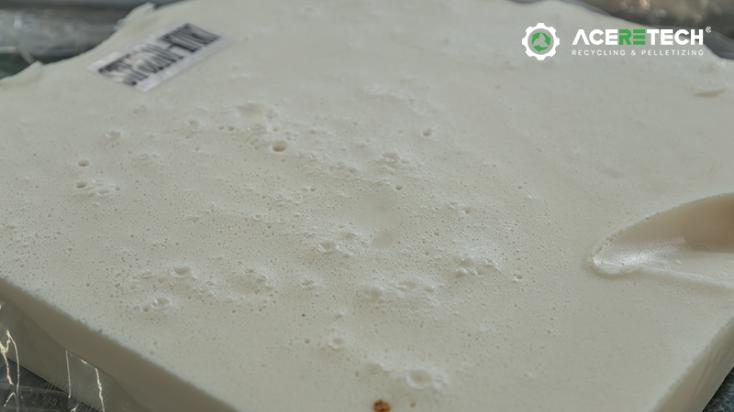
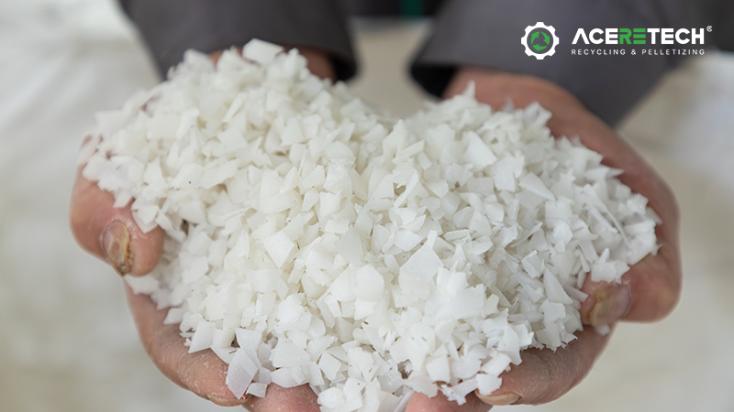
Within the plastics recycling industry, Thermoplastic Polyurethane (TPU) is widely utilized across numerous applications—thanks to its superior elasticity, abrasion resistance, oil resistance, and impact strength—including:
* Automotive components
* Shoe midsoles
* Electronic accessories
* Industrial seals and gaskets
* High-performance sheets and films
However, as the scope of its applications continues to expand, the emergence of large-sized, high-toughness, and heavy-block TPU waste has introduced new challenges to the recycling and processing workflow.
When handle large-block TPU, traditional single crushing solutions frequently face the following issues:
❌ Feeding difficulties, requiring frequent manual intervention
❌ Low cutting efficiency, resulting in limited throughput
❌ High impact stress on blades, leading to rapid wear
❌ Prone to rotor entanglement, machine jamming, and material clogging
❌ Inconsistent quality in the subsequent granulation stage
This is the primary reason why more and more clients are now seeking specialized, combined solutions with a shredder machine and a crusher machine.
ACERETECH TPU Recycling Solution: HS + GF Two-Stage Size Reduction System
To solve a critical pain point within this industry, ACERETECH has provided a specialized solution designed for the shredding and crushing of large-size TPU scrap:
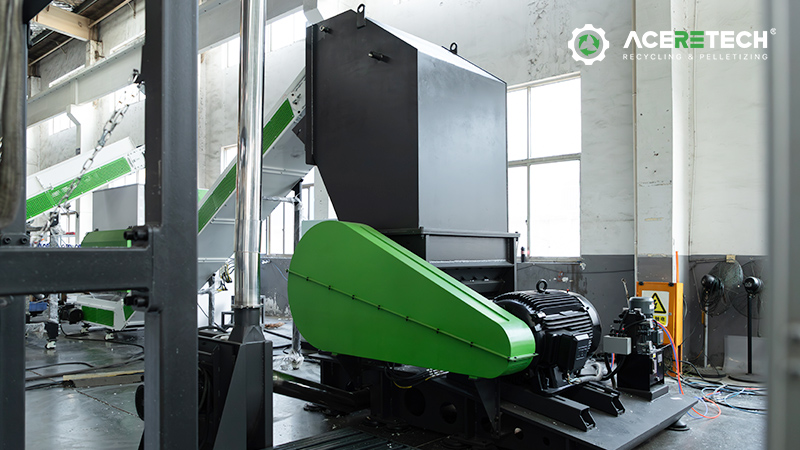
HS Series Single-Shaft Shredder + GF Series High-Efficiency Crusher
This solution adopts a scientifically designed phased processing approach, enabling the implementation of a complete closed-loop workflow.
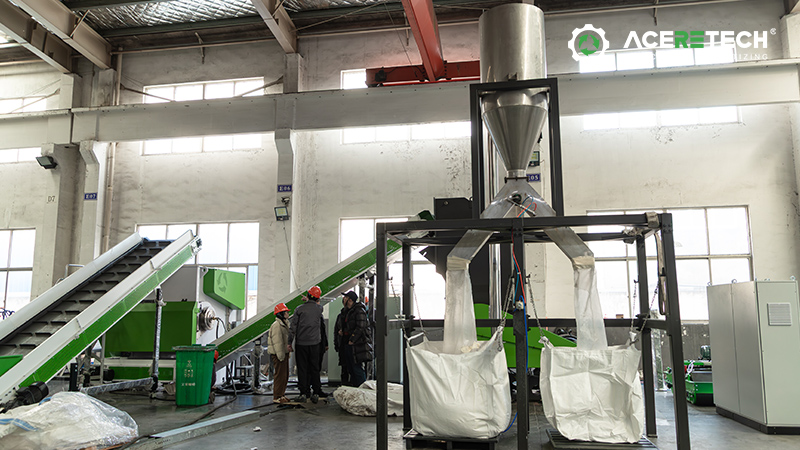
TPU Scrap → Shredding → Crushing → Uniform Flakes → Pelletizing.
With a stable output capacity reaching up to 1,000 kg/h, this system truly delivers highly efficient and continuous TPU waste recycling.
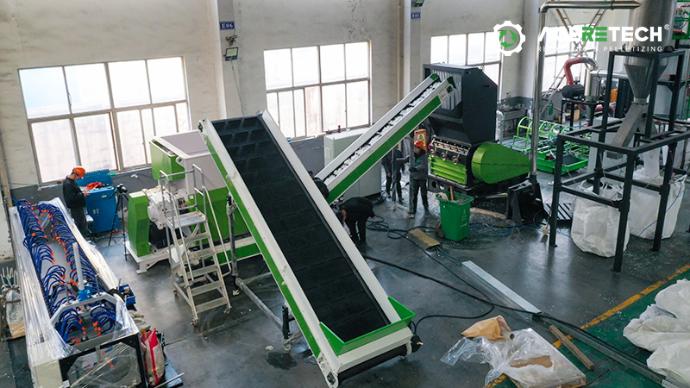
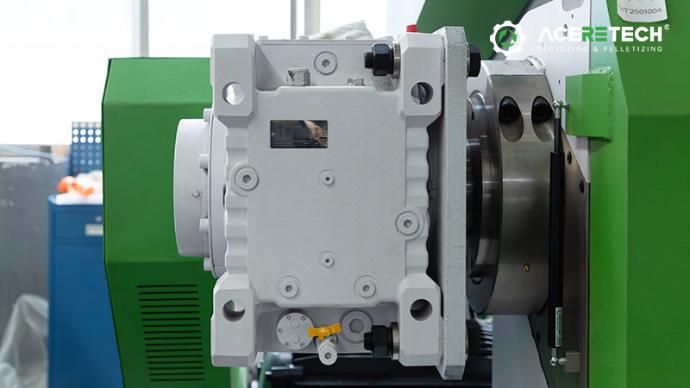
Core Advantages
Powerful Shredding, Effortless Feeding
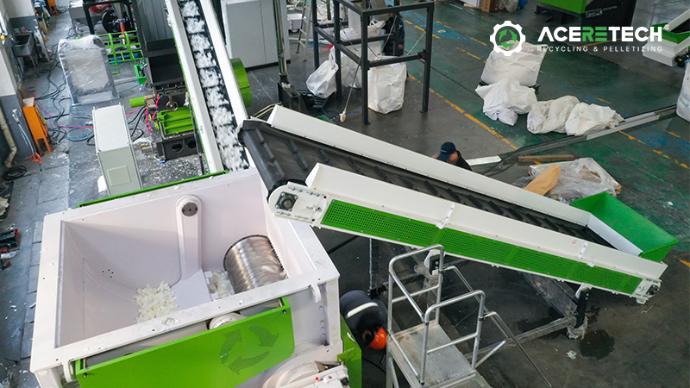
As the core component at the front of the entire line, the HS Series single-shaft shredder is specifically designed for large-sized, high-strength plastics such as huge TPU blocks.
Automatic Feeding System
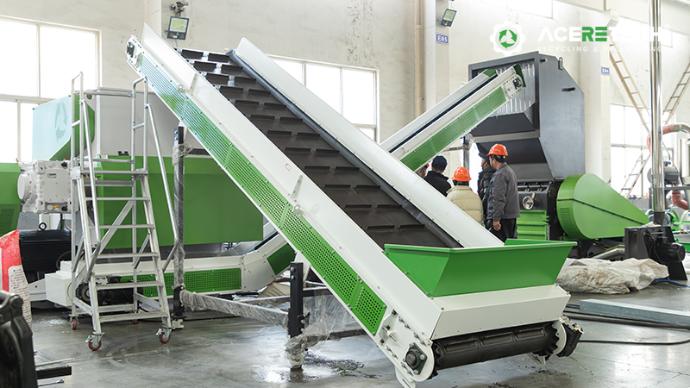
Equipped with a heavy-duty belt conveyor, which ensures continuous and stable feeding, thereby reducing manual labor and enhancing operational safety.
Large-Diameter, High-Torque Rotor
With a rotor diameter reaching up to 560mm, it operates in a low-speed, high-torque mode. Its powerful tearing force, allowing it to easily grip and process thick and heavy TPU blocks while preventing common issues such as material jamming or blade reversal.
Stable, Low-Speed Operation
This equipment is particularly suitable for processing high toughness materials, which can significantly reduce impact loads. While maintaining high efficiency, it can also produce material sizes that meet the requirements for downstream crushing processing
Performance Highlights
Fine Crushing, High & Stable Output
Following the initial shredding stage, the TPU material enters the GF Series crusher to undergo final fine crushing, meeting the specific flake size requirements for subsequent pelletizing system.
High-Throughput Crushing Structure
Featuring a 700 mm rotor diameter and 1200 mm rotor width, the spacious crushing chamber ensures excellent material flow-through, consistently achieving:
A High Output of 1000 kg/h
An ideal solution for medium-to-large-scale TPU recycling plants.
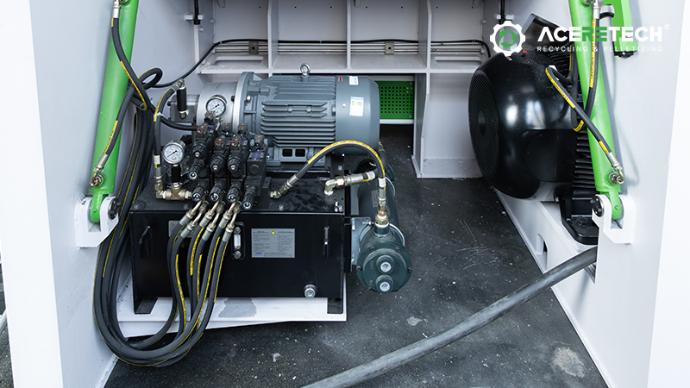
Intelligent Hydraulic Pushing System
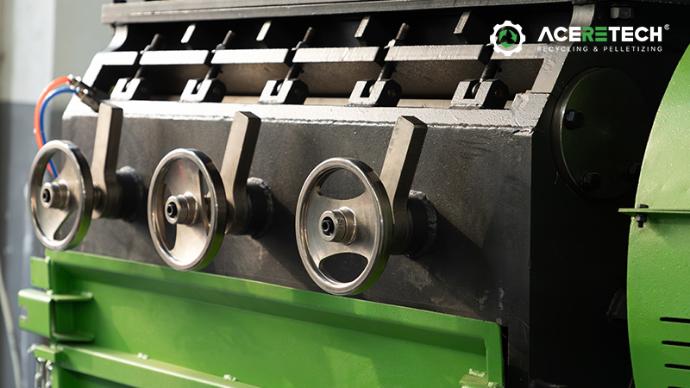
The hydraulic cylinder can automatically adjust its pushing speed based on the crushing load, ensuring that the crushing chamber always operates at optimal efficiency while effectively preventing motor overload. It is driven by a spur gear transmission.
Utilizing a combination of a top-brand gearbox and a high-quality motor, this system offers great advantages over traditional belt-driven mechanisms:
✔ Higher transmission efficiency
✔ More stable torque output
✔ Better suited for high-toughness TPU materials
Continuous Operation Design
Equipped with belt conveyor for material discharge to the downstream crushing stage; this design realize smooth, continuous production line.
Summary of Core Value: HS + GF Integrated Solution
The combination of the HS Shredder and GF Granulator forms an Industrial TPU Recycling Solution, which is deeply optimized and specifically engineered to the unique characteristics of TPU materials:
🚀 High Throughput
A stable output of 1,000 kg/h meets the production demands of medium-to-large-scale recycling facilities.
🔄 Automatic Process
Dual-belt conveying system enables truly continuous, uninterrupted operation.
🛠️ Low-Wear Design
1st shredding stage for material size reduction to around 100mm, then 2nd crushing stage for material size reduction to 12-16mm, which significantly extends the service life of the blades.
📏 Uniform Output
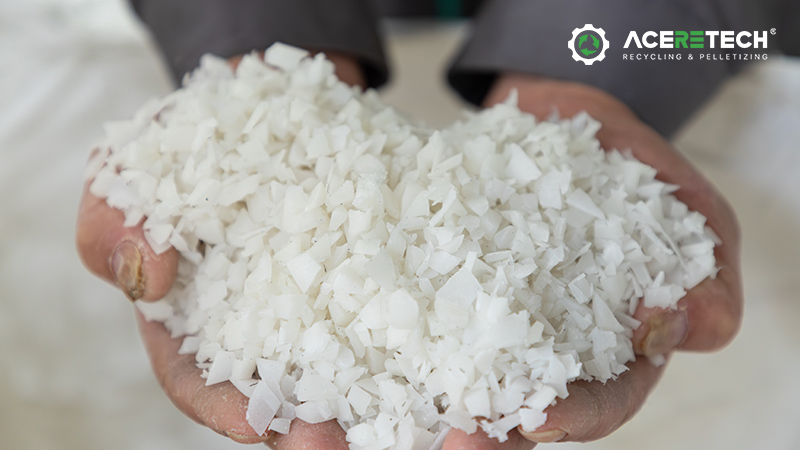
Precise control the crushed material size, which enables the production of high-value raw materials suitable for subsequent granulation or direct reuse.
💰 Lower Operating Costs
Minimizes manual intervention, reduces maintenance frequency, and enhances the Return on Investment (ROI).
FAQ
Q1. Why is TPU more difficult to crush than ordinary plastics?
A: TPU (Thermoplastic Polyurethane) is characterized by its high elasticity, exceptional toughness, and strong resilience. Unlike plastics such as PP or PE—which tend to be brittle and fracture easily—TPU resists brittle fracture. Consequently, traditional granulators often operate inefficiently when processing TPU, frequently encountering issues such as cutter entanglement, machine jamming, and rapid cutter wear.
Adopting a two-stage "shredding + granulating" processing scheme offers a highly efficient solution to this specific challenge.
Q2. Why is the "Shredder + Granulator" combination better suited for TPU recycling?
A: A single piece of granulating equipment struggles to simultaneously handle the intake of large-sized materials *and* achieve efficient fine granulation.
The shredder performs the coarse reduction and volume reduction, breaking down large pieces and relieving internal material stress; the granulator then executes the precision cutting to produce a uniform output.
This combined approach not only boosts throughput but also significantly extends the lifespan of the cutters and reduces maintenance costs.
Q3. What types of TPU waste materials suitable for the HS Shredder processing?
A: The HS series single-shaft shredder is particularly suitable for:
Large-block TPU scrap
Shoe midsole waste
Automotive interior TPU waste
Industrial seal waste
TPU sheet and film scrap
Thick, high-toughness plastic blocks
It is especially well-suited for processing high-strength, large-sized, and difficult-to-handle materials.
Q4. Is the output flakes size of the GF crusher adjustable?
A: Yes, it is.
The GF series crusher allows for the control of final output size by changing the screen mesh aperture. This enables it to meet the diverse requirements of various downstream processes—such as regranulation, direct reuse via injection molding, or other recycling and processing applications.
This feature significantly enhances the equipment's versatility and adaptability.
Q5. What is the production capacity of the complete TPU recycling system?
A: Depending on the specific model configuration, ACERETECH’s HS + GF combination solution can consistently achieve a production capacity of 500–1000 kg/h, or even higher.
In the specific case study presented here, the system achieved a stable output of 1000 kg/h, making it an ideal solution for meeting the continuous production demands of medium-to-large-scale plastic recycling facilities.