I. Project Background
PA6 (Nylon 6) fiber is widely used in textile manufacturing, industrial fabrics, automotive applications, carpets, airbags, fishing nets, and other industrial products.
During production and processing, different types of PA6 fiber waste can be generated, including yarn waste, production rejects, textile offcuts, fiber bundles, and tangled fiber materials.
Compared with rigid plastic scrap, PA6 fiber waste has very different physical characteristics. The material is lightweight, flexible, tough, and often consists of long and tangled fibers.
These characteristics make conventional size-reduction equipment more difficult to use effectively.
For this application, ACERETECH uses an HS Series Single-Shaft Shredder to process long and tangled PA6 fiber waste.
The main objective of the system is to provide stable feeding and reliable size reduction of the fiber material, making the shredded material easier to handle and suitable for subsequent recycling processes.
II. PA6 Fiber Waste in This Application
The material handled by this type of application can include:
• PA6 yarn waste
• Nylon textile waste
• Industrial fiber waste
• PA6 production rejects
• Textile manufacturing offcuts
• Fiber bundles
• Tangled fiber waste
• Airbag fabric
• Carpet fiber
• Industrial ropes
• Non-woven fiber materials
• Fishing net waste
The physical condition of these materials can vary significantly.
Some materials may enter the machine as loose fibers, while others may arrive as compact fiber bundles, tangled masses, yarn waste, or irregular production offcuts.
This variation makes stable feeding one of the important considerations for the shredding process.
III. The Main Challenge: Long and Tangled PA6 Fibers
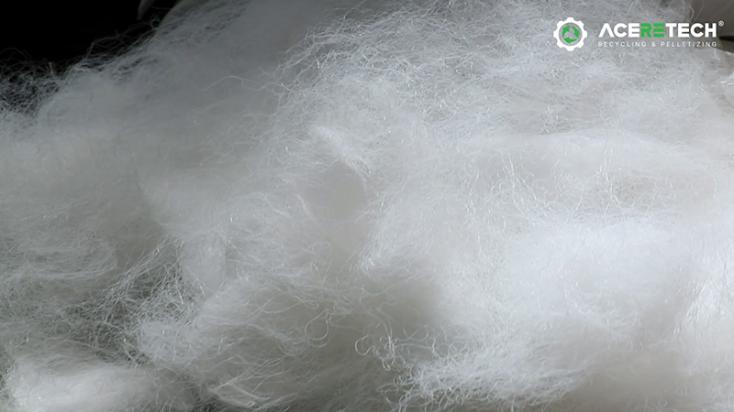
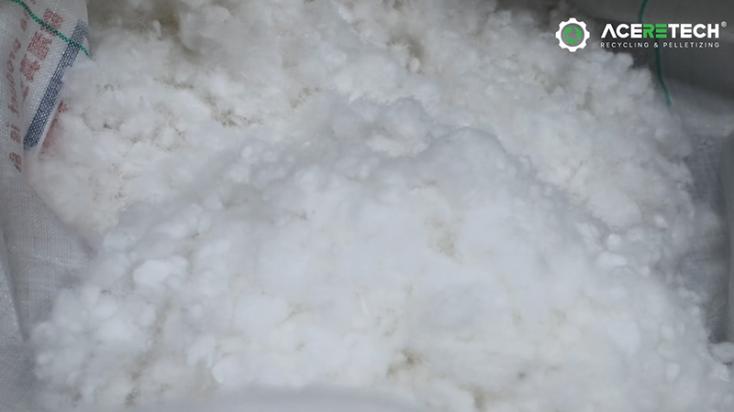
The main challenge of this application is not simply the hardness of PA6.
It is the physical form of the fiber waste.
PA6 fibers are typically:
• Long
• Flexible
• Tough
• Lightweight
• Low in bulk density
• Easy to tangle
During shredding, these characteristics can create several problems.
Fiber Winding
Long fibers can wrap around the rotor instead of entering the cutting area efficiently.
Material Bridging
Loose and tangled fibers can form bridges inside the hopper, interrupting material flow.
Unstable Feeding
Because of the low bulk density of fiber waste, it can be difficult to maintain a stable feed into the shredding chamber.
Material Accumulation
Tangled fibers can accumulate around the rotor or inside the cutting chamber if the material is not effectively guided into the cutting zone.
Therefore, the key requirement for this application is not simply a powerful cutting system.
The machine must also provide stable feeding and effective material guidance during shredding.
IV. Why the HS Single-Shaft Shredder Is Used
For this PA6 fiber application, the HS Series Single-Shaft Shredder is configured to address the specific characteristics of long and flexible fiber materials.
The main functions of the system are:
Controlled Feeding → Hydraulic Pushing → Material Guidance → Shredding → Size Reduction
The machine combines several design features to support this process:
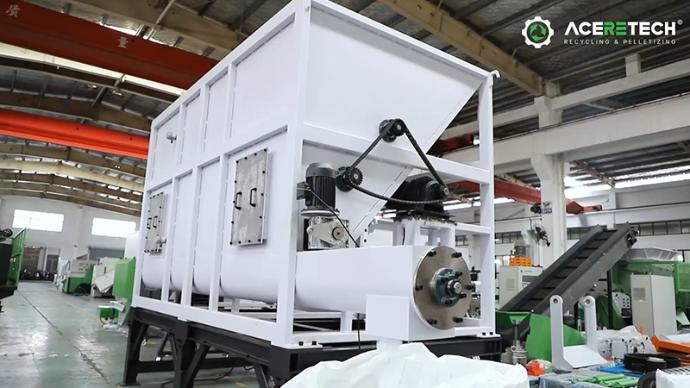
• Belt conveyor feeding
• Hydraulic pusher system
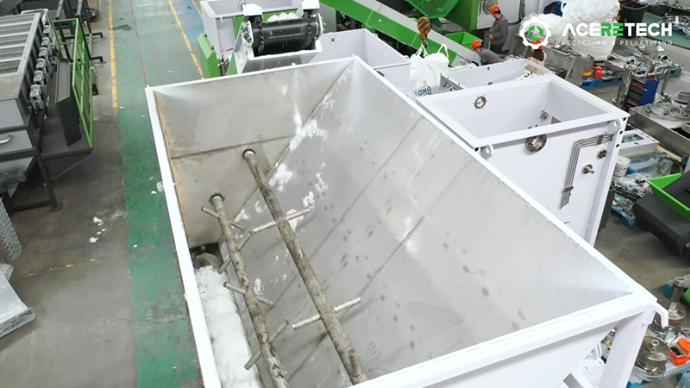
• Anti-bridging hopper
• Spiral anti-clogging structure
• V-rotor
• Heavy-duty drive system
• Intelligent PLC control
Together, these features help the material enter the cutting zone more consistently and reduce problems associated with fiber winding and bridging.
V. Key Components of the HS Single-Shaft Shredder
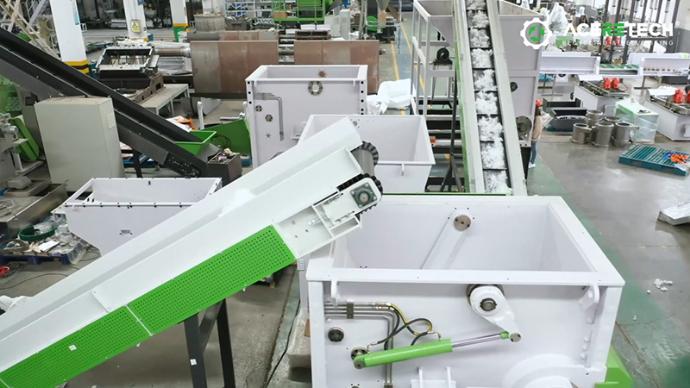
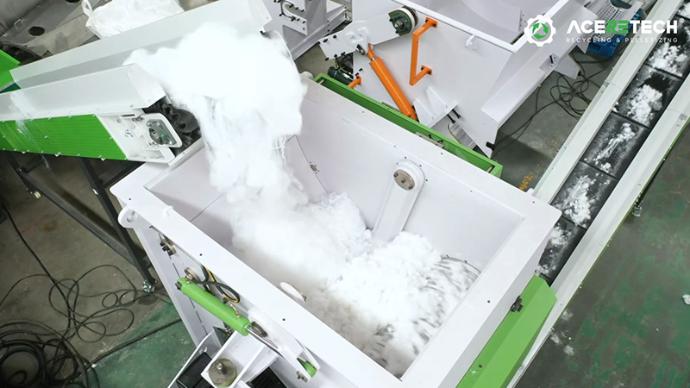
1. Belt Conveyor Feeding
Loose PA6 fiber waste has a relatively low bulk density and can be difficult to feed manually in a stable manner.
The system therefore uses a belt conveyor to transfer the material toward the shredding chamber.
The conveyor provides a more controlled material flow and reduces the need for manual feeding.
For irregular fiber waste, this is particularly useful because the material can be continuously transferred from the feeding area toward the shredder rather than being manually loaded directly into the hopper.
2. Hydraulic Pusher for Stable Feeding
After the material enters the hopper, the hydraulic pusher assists in moving the fiber material toward the rotor.
This is particularly important for loose or tangled fiber waste.
The hydraulic pusher helps address problems such as:
• Material bridging
• Insufficient material contact with the rotor
• Feeding interruptions
• Unstable material flow
Instead of relying only on gravity, the hydraulic system actively pushes the material toward the cutting zone.
This helps maintain a more stable shredding process when processing low-density fiber materials.
3. Anti-Bridging Hopper Design
One of the challenges when processing PA6 fiber is that loose fibers can form tangled masses inside the hopper.
These masses can prevent material from moving downward normally.
The HS Series uses an anti-bridging hopper structure to facilitate material movement toward the rotor.
The hopper geometry is designed to reduce the tendency of fibers to remain suspended or form large bridges above the cutting chamber.
This supports more continuous material feeding during operation.
4. Spiral Anti-Clogging Structure
The HS Series also incorporates a spiral material-guiding structure inside the shredding area.
Its function is to help guide the material downward toward the cutting zone.
For long fibers, effective material guidance is important because it reduces the possibility of fibers simply remaining around the rotor shaft.
Instead, the material is continuously directed toward the cutting area for further size reduction.
This design is particularly relevant when processing long and flexible fiber materials.
5. Optimized V-Rotor
The HS Series uses an optimized V-shaped rotor for the shredding process.
The rotor and knife arrangement are designed to provide effective contact between the material and cutting tools.
For PA6 fiber waste, the rotor configuration helps:
• Draw material into the cutting area
• Provide effective cutting
• Reduce unnecessary material accumulation
• Support stable operation
• Reduce the tendency of long fibers to wind around the rotor
The rotor is dynamically balanced to support stable mechanical operation.
The final shredded material characteristics depend on the material itself and the selected machine configuration.
6. Heavy-Duty Drive System
Although PA6 fiber is lightweight, the material itself is tough and can create considerable mechanical resistance during shredding, particularly when processing dense fiber bundles or tangled masses.
The HS Series is equipped with a heavy-duty drive system consisting of:
• High-performance motor
• Heavy-duty gearbox
• High-torque transmission system
The drive system provides the torque required to continuously process tough fiber materials.
This allows the shredder to handle variations in material density and feed condition during operation.
7. Intelligent PLC Control
The HS Series is equipped with an intelligent PLC control system for monitoring the operating condition of the machine.
The control system monitors parameters such as:
• Motor current
• Hydraulic pressure
• Rotor load
• Equipment operating status
When an overload condition occurs, the rotor can automatically reverse to help clear the blockage.
After the blockage is cleared, the system can resume normal operation.
This automatic protection function helps reduce unnecessary downtime and protects the main mechanical components of the shredder.
VI. Complete Process for This Application
For this application, the core process is:
PA6 Fiber Waste → Belt Conveyor Feeding → HS Single-Shaft Shredder → Shredded PA6 Fiber
This is the actual size-reduction stage covered by this application.
The shredded material can then be transferred to the customer's subsequent recycling or processing system according to the final application.
The downstream process is therefore not treated as part of the HS shredding case itself.
VII. What Happens After Shredding?
The HS shredder is used as the front-end size-reduction equipment.
After shredding, the next step depends on the customer's material condition and final recycling requirements.
For example, the shredded PA6 fiber can be transferred to subsequent processes if further processing is required.
Possible downstream operations may include:
• Further size reduction
• Washing
• Drying
• Pelletizing
• Other material processing
However, these processes depend on the customer's specific requirements and should not be regarded as part of the HS shredding configuration described in this application.
The key role of the HS system is to reduce the size and bulk of difficult long-fiber material and make it easier to handle for subsequent processing.
VIII. Key Advantages Demonstrated by This Application
1. table Feeding of Low-Density Fiber
The belt conveyor and hydraulic pusher work together to maintain a more stable material flow.
2. Reduced Material Bridging
The hopper design helps reduce the formation of large fiber bridges that can interrupt feeding.
3. Reduced Fiber Winding
The material-guiding structure and optimized rotor help reduce the tendency of long fibers to accumulate around the rotor.
4. Heavy-Duty Shredding
The high-torque drive system provides the mechanical force required for tough PA6 fiber materials.
5. Automatic Overload Protection
The PLC system can automatically reverse the rotor when an overload condition occurs, helping clear blockages and protect the equipment.
6. Suitable for Different Fiber Forms
The system can process PA6 fiber waste in different physical forms, including yarn waste, fiber bundles, textile offcuts, and tangled fiber materials.
IX. Application Value
The main value of the HS shredder in this application is not simply reducing the size of PA6 fiber.
It is making a difficult-to-handle material easier to process.
Before shredding, long and tangled fiber waste can be difficult to feed, transport, store, and process.
After shredding, the material has a reduced size and bulk and can be transferred more easily to subsequent recycling or processing equipment.
The process can therefore be summarized as:
Long / Tangled PA6 Fiber Waste → Stable Feeding → Controlled Shredding → Reduced-Size PA6 Fiber → Easier Downstream Handling
This is the main application value demonstrated by the HS Series in PA6 fiber recycling.
X. Application Summary
This application demonstrates the use of the ACERETECH HS Series Single-Shaft Shredder for long and tangled PA6 fiber waste.
The main challenge of the application is the physical form of the material rather than simply its polymer type.
Long and flexible PA6 fibers have a strong tendency to tangle, bridge, and wind around rotating components.
To address these characteristics, the HS Series combines:
Belt Conveyor Feeding
Hydraulic Pusher
Anti-Bridging Hopper
Spiral Material-Guiding Structure
Optimized V-Rotor
Heavy-Duty Drive System
Intelligent PLC Control
These features work together to provide stable feeding and controlled size reduction of PA6 fiber waste.
The resulting shredded material can then be transferred to subsequent recycling or processing equipment according to the customer's requirements.
The HS Series therefore provides a practical front-end shredding solution for long, flexible, and tangled PA6 fiber waste.
Looking for a PA6 Fiber Shredding Solution?
For long, flexible, and tangled PA6 fiber waste, the ACERETECH HS Series Single-Shaft Shredder provides a dedicated front-end size-reduction solution.
The system combines:
Belt Conveyor Feeding → Hydraulic Pushing → Anti-Bridging Design → Controlled Shredding → Reduced-Size Fiber
The shredded material can then be transferred to the customer's subsequent recycling or processing system according to the actual application requirements.
Contact ACERETECH to discuss your PA6 fiber shredding application.
Related Articles
PA6 Fiber Recycling and Pelletizing Solutions
PA6/PA66 Fiber Filament Disk-Type Shredding Solutions
FAQ
Q1. Why is PA6 fiber difficult to shred?
A: PA6 fiber is long, flexible, tough, and lightweight. These characteristics make it prone to tangling, bridging, and winding around rotating components during shredding.
Q2. What types of PA6 fiber waste can the HS Series process?
A: Typical materials include PA6 yarn waste, fiber bundles, textile offcuts, production rejects, industrial fiber waste, and other long or tangled PA6 fiber materials.
Q3. Why is a hydraulic pusher used?
A: The hydraulic pusher helps move low-density and tangled fiber material toward the rotor.
This helps reduce material bridging and feeding interruptions.
Q4. How does the HS Series reduce fiber winding?
A: The HS Series combines the hopper structure, spiral material-guiding design, and optimized V-rotor to guide fiber material toward the cutting zone and reduce excessive accumulation around the rotor.
Q5. What is the role of the HS shredder in the recycling process?
A: The HS shredder performs the initial size-reduction stage.
Its purpose is to reduce the size and bulk of long and tangled fiber waste and make the material easier to handle for subsequent processing.