I. High-Efficiency PE Film Recycling Starts with the Right Pelletizing Technology
As global demand for recycled plastics continues to rise, PE film recycling has become one of the fastest-growing sectors in the plastics recycling industry. Vast quantities of LDPE, LLDPE, and HDPE films—including packaging films, agricultural films, shopping bags, stretch films, and industrial film scrap—are generated daily.
Despite the high recycling value of PE films, their characteristics—light weight, high moisture content, and susceptibility to contamination—make effective processing with conventional extrusion equipment difficult.
To address these challenges, ACERETECH developed the ACSS single-screw two-stage compacting and pelletizing system—an intelligent recycling solution. This system integrates compacting, extrusion, filtration, vacuum degassing, and pelletizing into a continuous production process, ensuring stable output, high-quality pellets, and lower operating costs.
II. Common Applications for PE Film Recycling
The ACSS pelletizing line is suitable for processing various types of polyethylene films, including:
LDPE film
LLDPE film
HDPE film
Stretch film
Agricultural film
Packaging film
Shopping bags
Industrial film scrap
Printed film
Clean industrial film waste
Washed post-consumer film waste
The recycled pellets can be reused to manufacture plastic bags, film products, pipes, sheets, injection-molded parts, and other plastic goods.
III. Challenges in PE Film Recycling
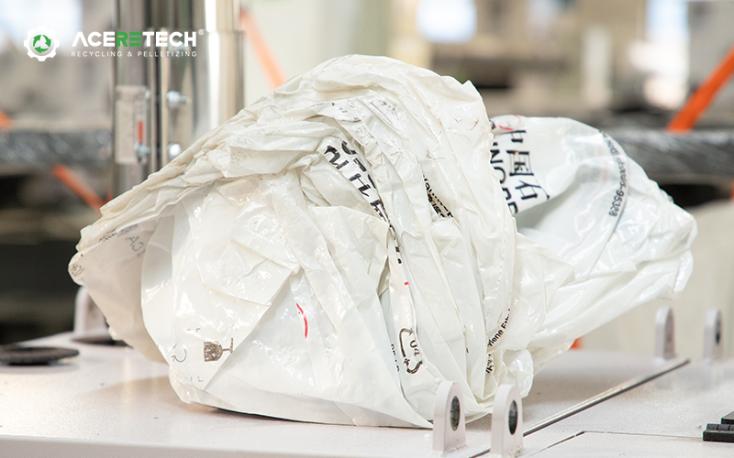
Compared to rigid plastics, PE films present several technical challenges during the recycling process.
1. Lightweight Material Makes Feeding Difficult
PE films have low bulk density and tend to float, bridge, or wrap around rotating parts, leading to unstable feeding.
An efficient compacting system is crucial for achieving continuous extrusion.
2. Moisture and Dust Affect Pellet Quality
Even after washing, PE films often retain residual moisture, dust, and paper fibers. Failure to effectively remove these impurities may result in:
Bubble formation
Poor pellet appearance
Unstable extrusion pressure
Reduced mechanical properties
3. Melt Contamination
Waste PE film often contains:
Sand particles
Aluminum foil
Labels
Paper
Wood chips
Melt impurities
Without an efficient filtration system, contaminants remain in the melt, thereby reducing the quality of the recycled pellets.
4. Volatile Gases During Extrusion
Residual moisture and low-molecular-weight volatiles generate gases during the melting process.
Inadequate degassing may lead to the following issues with the pellets:
Internal voids
Surface defects
Reduced density
Instability in downstream processing
IV. ACERETECH PE Film Recycling and Pelletizing Solution
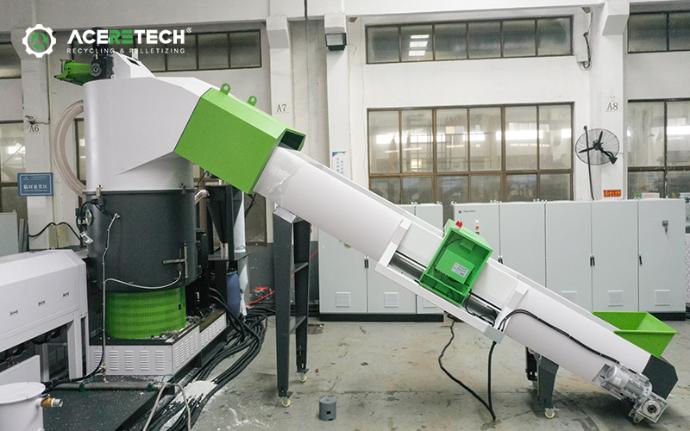
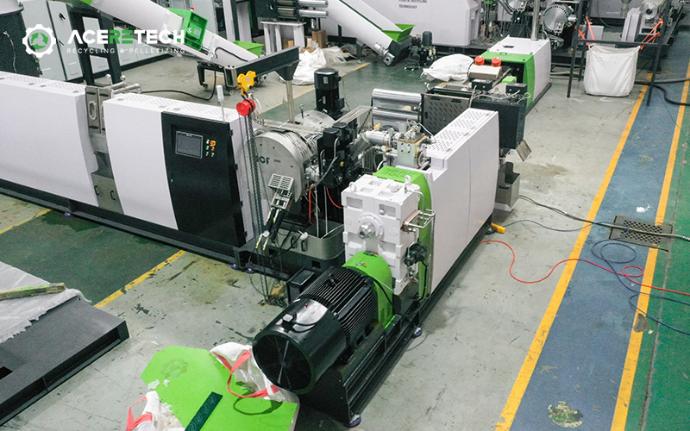
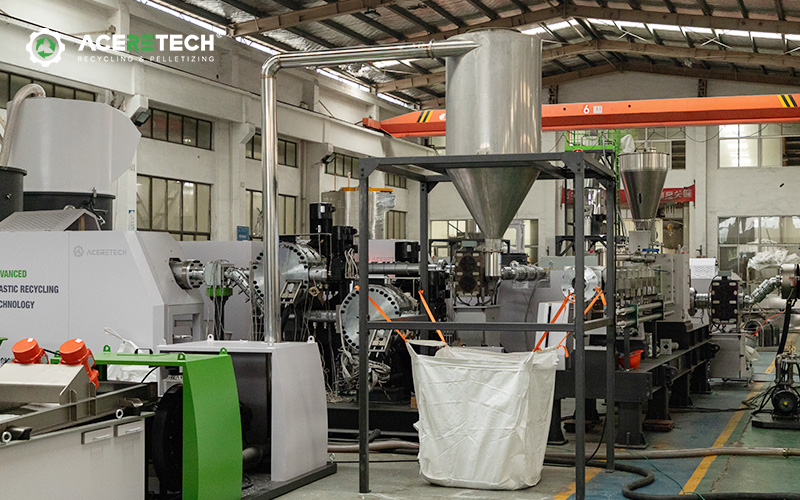
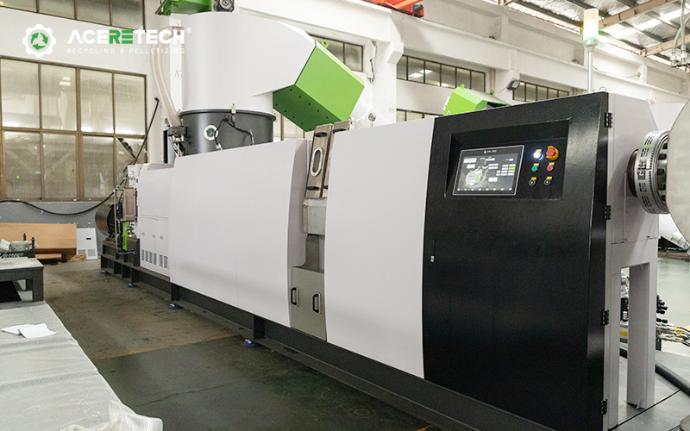
The ACSS single-screw, two-stage compacting and pelletizing line integrates multiple processing technologies into a single intelligent recycling system.
1. Line Configuration
Belt conveyor equipped with a metal detector and traction rollers
Dedusting and dehumidification system
1200L high-efficiency compacting silo
Two-stage single-screw extruder
Dual vacuum degassing system
SCF 500D self-cleaning melt filter
Continuous piston-type screen changer
Water-ring pelletizing system
Vibrating dewatering screen
Storage silo
Intelligent PLC control system
The entire production process operates continuously and automatically, reducing labor requirements while increasing production efficiency.
2. Comprehensive PE Film Recycling Process
The recycling process follows an efficient workflow:
PE film → Belt feeding → Metal detection → Dedusting → Compacting silo → Primary extrusion → Vacuum degassing → SCF self-cleaning filtration → Secondary extrusion → Continuous filtration → Water-ring pelletizing → Dewatering → Storage
This integrated process minimizes material loss while producing high-quality recycled pellets with consistent properties.
V. Key Technologies of the ACSS Two-Stage Compacting and Pelletizing System
1. Intelligent Feeding and Forced Feeding
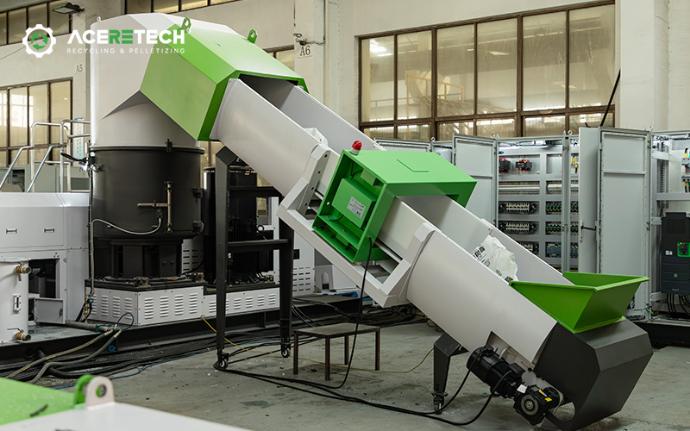
The system utilizes a belt conveyor equipped with a metal detector and traction rollers to ensure stable material feeding. A 1200L compaction silo continuously compacts lightweight PE film, significantly enhancing feeding efficiency and extrusion stability.
2. High-Performance Extrusion System
The extrusion screws are manufactured from 38CrMoAlA nitrided steel and feature a wear-resistant iron-based alloy coating, ensuring exceptional durability.
Configuration Parameters:
First Stage
Screw Diameter: 160 mm
L/D Ratio: 36:1
Achieves efficient melting and plasticization.
Second Stage
Screw Diameter: 180 mm
L/D Ratio: 12:1
Ensures stable pressure and uniform melt quality prior to pelletizing.
3. Dual-Stage Vacuum Degassing
A key advantage of this system is its dual-stage vacuum degassing technology.
The vacuum system effectively removes:
Moisture
Low-molecular-weight volatiles
Residual gases
Benefits include:
Higher pellet density
Superior surface finish
Improved downstream processing performance
Reduced odor
Stable extrusion pressure
4. Dual Filtration for Superior Melt Purity
To ensure exceptional melt purity, the system employs a two-stage filtration design.
First Stage
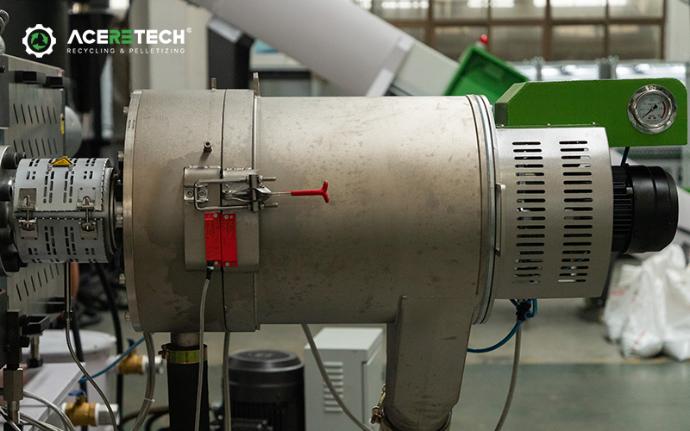
SCF 500D Self-Cleaning Melt Filter
Advantages:
Continuous impurity removal
Uninterrupted production
Reduced screen-changing frequency
Lower maintenance costs
Second Stage
Continuous Piston-Type Screen Changer
Provides secondary filtration, further enhancing melt purity and pellet uniformity.
5. Water-Ring Pelletizing System
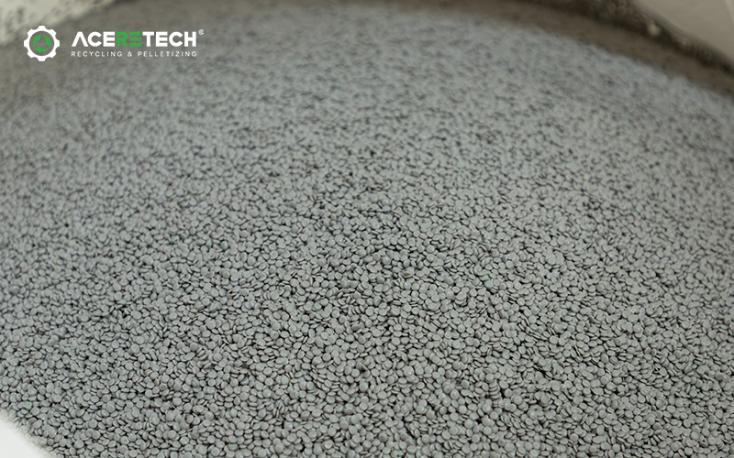
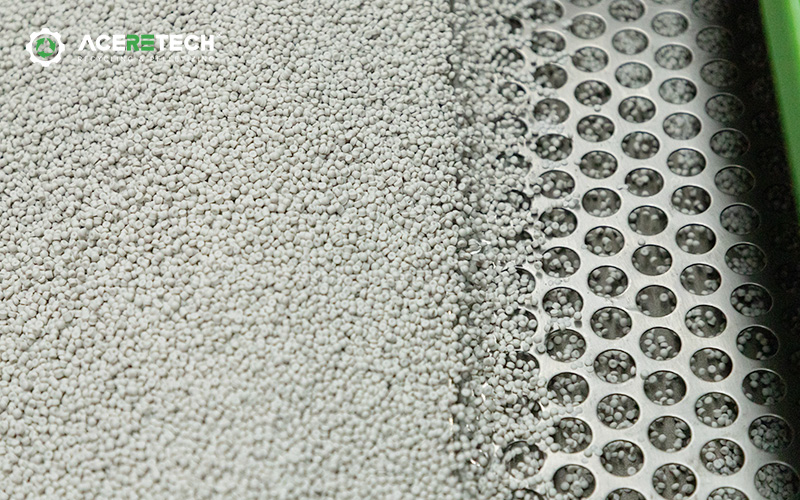
Pellets produced by the water-ring pelletizer feature:
Uniform pellet size
Smooth surface
High cutting efficiency
Stable, continuous operation
After pelletizing, the pellets pass through a vibrating dewatering screen before entering the storage silo.
6. Intelligent Automation and Safety Protection
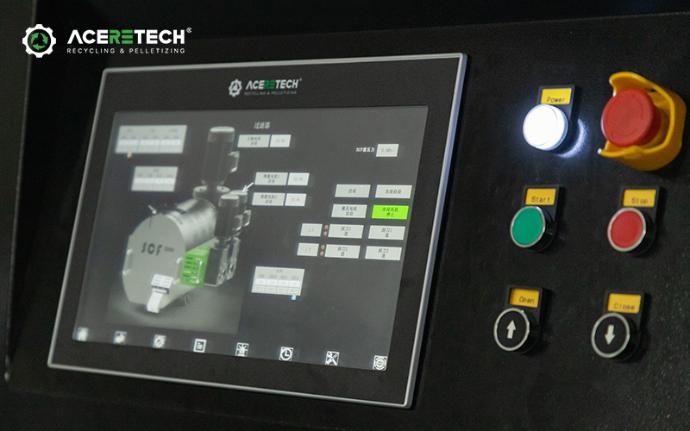
The entire recycling line is managed by an advanced PLC intelligent control system.
Automatic protection features include:
Motor overload protection
Screw over-pressure protection
Intelligent process monitoring
Automatic alarm system
Stable production management
These features significantly enhance operational safety while minimizing downtime.
Related Articles
PE Film Shredding Solutions
PE Film Washing Solutions
PE Film In-Plant Recycling Solutions
VI. Advantages of the ACSS PE Film Pelletizing Line
Compared to traditional pelletizing systems, ACERETECH’s ACSS solution offers the following advantages:
Stable feeding of lightweight PE film
High-efficiency pre-compaction technology
Superior plasticizing performance
Dual-stage vacuum degassing
Two-stage filtration system
High-quality recycled pellets
Continuous operation
Reduced labor costs
Lower energy consumption
Intelligent automation
Long equipment service life
Easy maintenance
VII. Typical End Products
The recycled PE pellets produced by this system can be widely used to manufacture:
Plastic bags
Trash bags
Agricultural films
Stretch wrap films
Pipes
Plastic sheets
Blow-molded products
Injection-molded products
Construction materials
VIII. Why Choose ACERETECH?
ACERETECH is dedicated to providing comprehensive plastic film recycling solutions to customers worldwide.
From individual pelletizers to complete recycling plants, we help plastic recycling enterprises boost production efficiency, lower operating costs, and produce high-quality recycled pellets that meet the demands of rigorous applications.
Whether processing industrial waste PE film or washed post-consumer film, the ACSS single-screw, two-stage compaction and pelletizing system delivers a reliable, intelligent, and efficient recycling solution.
FAQ
Q1. What types of PE film can the ACSS pelletizing line recycle?
A: The ACSS single-screw, two-stage compaction and pelletizing line is specifically designed for recycling various PE film materials, including LDPE, LLDPE, and HDPE films, stretch films, agricultural films, packaging films, shopping bags, industrial film scrap, and washed post-consumer PE films. The system ensures stable feeding and high-quality pelletizing results for both industrial and post-consumer waste recycling applications.
Q2. Why is a two-stage pelletizing system better suited for PE film recycling?
A: The two-stage pelletizing system significantly enhances melt quality by incorporating a second stage for plasticization and filtration. Compared to single-stage extruders, it offers superior impurity removal, more stable melt pressure, better degassing performance, and higher-quality recycled pellets, making it particularly effective for processing contaminated or moisture-laden PE films.
Q3. How does the dual-vacuum degassing system improve pellet quality?
A: The dual-vacuum degassing system efficiently removes residual moisture, low-molecular-weight volatiles, and entrapped gases from the molten plastic. This helps minimize bubbles, black specks, and surface defects, resulting in denser, cleaner, and more uniform recycled pellets that meet the requirements of high-value-added applications.
Q4. What are the advantages of the SCF self-cleaning filtration system?
A: The SCF self-cleaning melt filter continuously removes impurities from the plastic melt without interrupting production. It minimizes the need for manual screen changes, reduces maintenance costs, stabilizes extrusion pressure, and significantly improves pellet cleanliness and overall production efficiency.
Q5. In which industries can the recycled PE pellets produced by this system be used?
A: These recycled PE pellets are widely used to manufacture packaging films, shopping bags, trash bags, agricultural films, pipes, sheets, blow-molded products, injection-molded parts, and various other polyethylene products. Their high quality also facilitates closed-loop recycling and sustainable manufacturing.