I. 高效PE薄膜回收,始于恰当的造粒技术
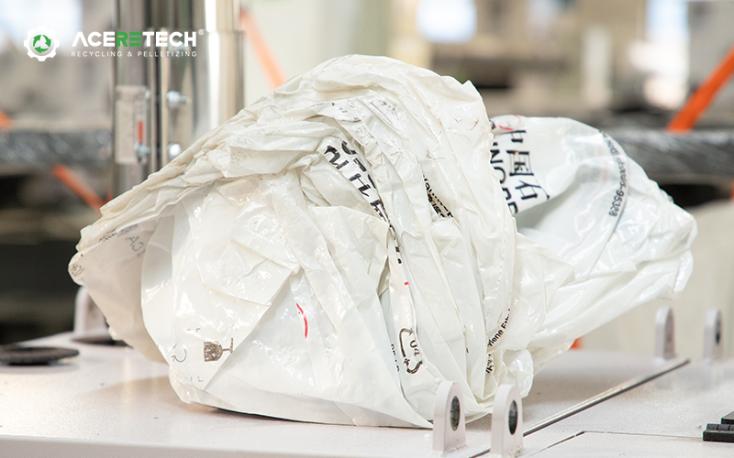
随着全球对再生塑料需求的持续增长,PE薄膜回收已成为塑料回收行业中增长最快的领域之一。每天都会产生大量的LDPE薄膜、LLDPE薄膜、HDPE薄膜、包装膜、农用膜、购物袋、拉伸膜及工业薄膜边角料。
尽管PE薄膜具有极高的回收价值,但其质轻、含水量高及易受污染的特性,使得常规挤出设备难以对其进行有效加工。
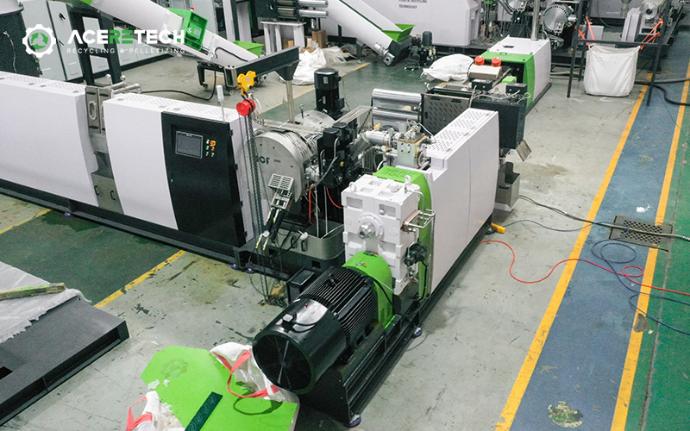
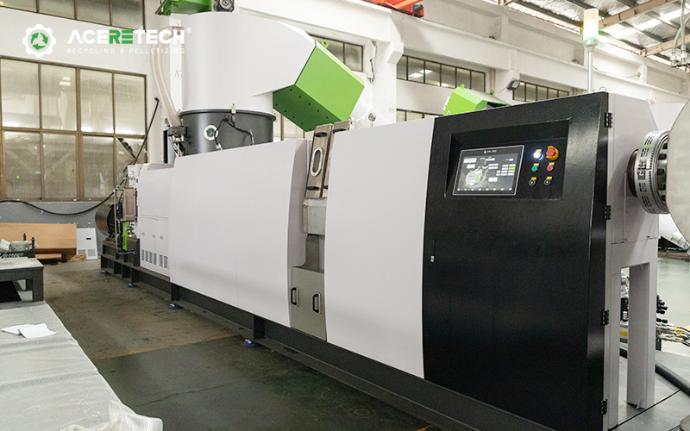
为应对这些挑战,ACERETECH开发了专为PE薄膜设计的ACSS单螺杆双级压实造粒系统——一套智能化的回收解决方案。该系统将压实、挤出、过滤、真空脱气及造粒工序整合为连续生产流程,确保了稳定的产量、优质的颗粒质量以及更低的运营成本。
II. PE薄膜回收的常见应用
ACSS造粒生产线适用于加工多种类型的聚乙烯薄膜,包括:
LDPE薄膜
LLDPE薄膜
HDPE薄膜
拉伸膜
农用膜
包装膜
购物袋
工业生产薄膜边角料
印刷薄膜
洁净的工业废膜
经清洗的消费后废膜
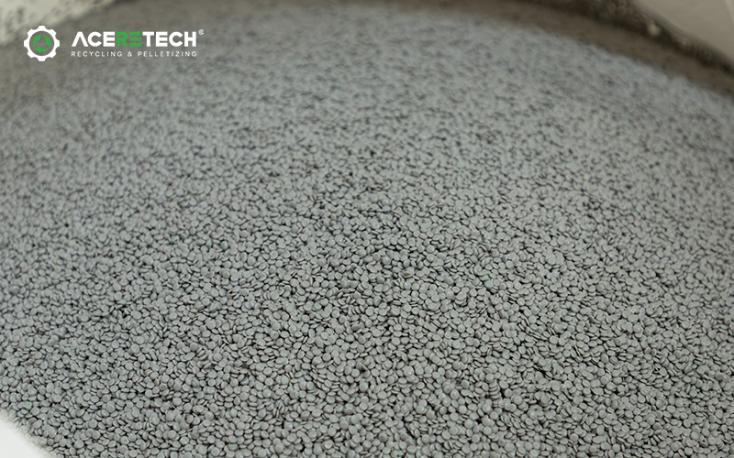
再生颗粒可重新用于生产塑料袋、薄膜制品、管材、板材、注塑件及其他塑料制品。
III. PE薄膜回收面临的挑战
与硬质塑料相比,PE薄膜在回收过程中面临诸多技术挑战。
1. 材质轻盈,进料困难
PE薄膜堆积密度低,易漂浮、架桥或缠绕在旋转部件上,导致进料不稳定。
高效的压实系统对于实现连续挤出至关重要。
2. 水分与粉尘影响颗粒质量
即使经过清洗,PE薄膜通常仍残留水分、粉尘及纸纤维。
若无法有效去除这些杂质,可能导致:
气泡产生
颗粒外观不佳
挤出压力不稳定
力学性能下降
3. 熔体污染
废旧PE薄膜中常含有:
沙粒
铝箔
标签
纸张
木屑
熔融杂质
若缺乏高效的过滤系统,污染物将残留在熔体中,从而降低再生颗粒的质量。
4. 挤出过程中的挥发性气体
残留水分和低分子量挥发物在熔融过程中会产生气体。
若脱气不充分,颗粒可能会出现以下问题:
内部气孔
表面缺陷
密度降低
下游加工不稳定
IV. ACERETECH PE薄膜回收造粒解决方案
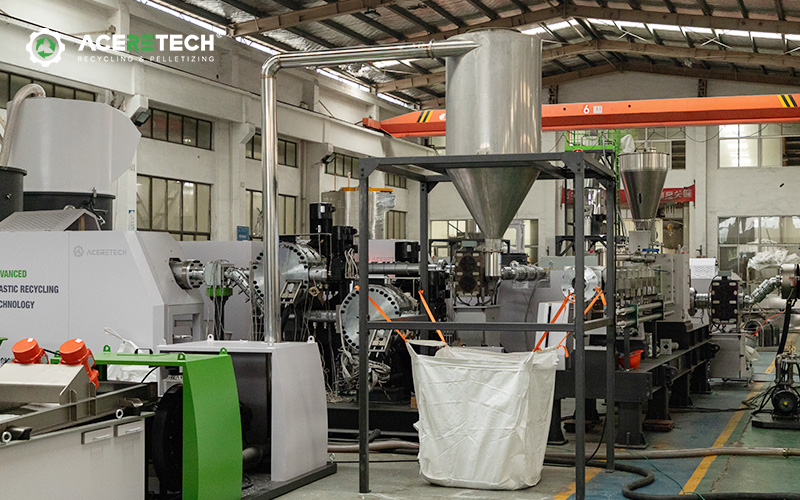
ACSS单螺杆双阶压实造粒生产线将多种加工技术集成于一个智能回收系统中。
1. 整线配置
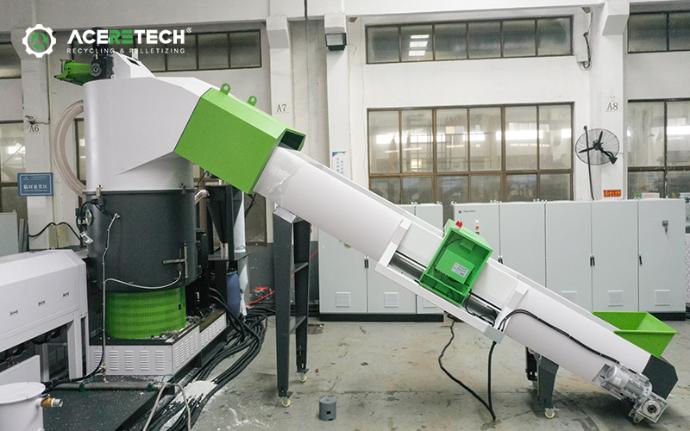
配备金属探测器和牵引辊的皮带输送机
除尘与除湿系统
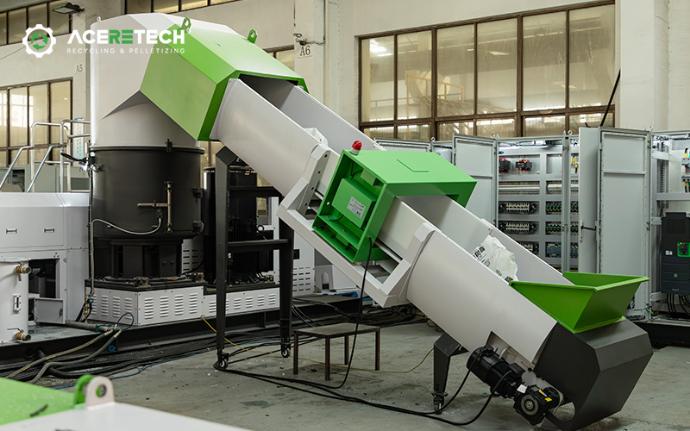
1200L高效压实仓
双阶单螺杆挤出机
双重真空脱气系统
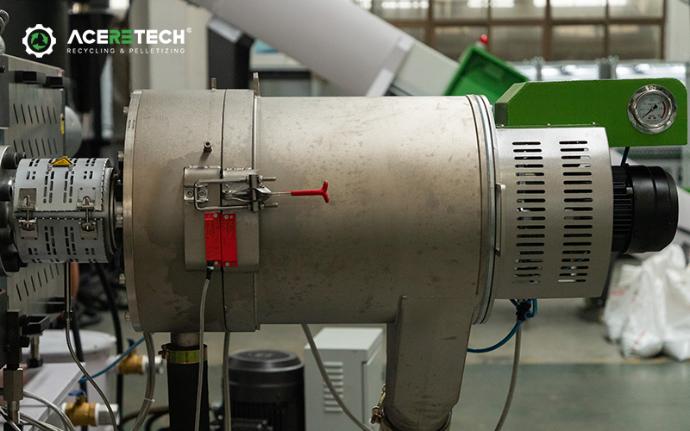
SCF 500D自清洗熔体过滤器
连续式柱塞换网器
水环造粒系统
振动脱水筛
储料仓
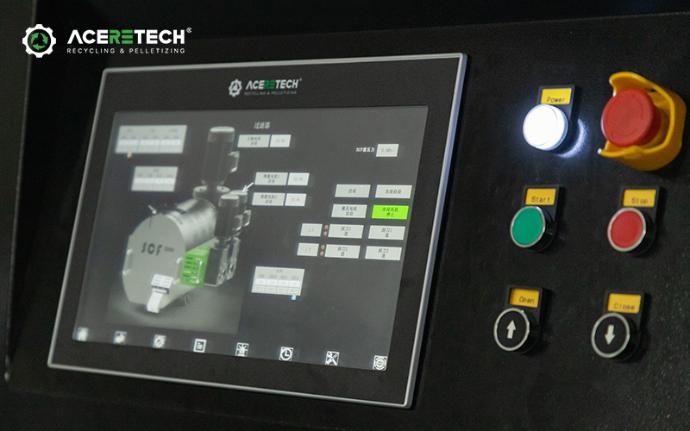
智能PLC控制系统
整个生产过程实现连续自动化运行,既降低了人工需求,又提高了生产效率。
2. 完整的PE薄膜回收工艺
回收过程遵循高效的工作流程:
PE薄膜 → 皮带进料 → 金属检测 → 除尘 →压实仓 → 一级挤出 → 真空脱气 → SCF自清洗过滤 → 二级挤出 → 连续过滤 → 水环造粒 → 脱水 → 储存
该集成工艺最大限度地减少了物料损耗,同时生产出质量稳定、高品质的再生颗粒。
V. ACSS双阶压实造粒系统的关键技术
1. 智能进料与强制喂料
系统采用配备金属探测器和牵引辊的皮带输送机,确保物料进料稳定。
1200L压实仓对轻质PE薄膜进行连续压实,显著提高了进料效率和挤出稳定性。
2. 高性能挤出系统
挤出螺杆采用38CrMoAlA氮化钢制造,并涂覆耐磨铁基合金涂层,具有卓越的耐用性。
配置参数:
一级
螺杆直径:160 mm
长径比(L/D):36:1
实现高效熔融与塑化。
二级
螺杆直径:180 mm
长径比(L/D):12:1
3. 双重真空脱气
该系统的主要优势之一在于其双重真空脱气技术。
该真空系统能有效去除:
水分
低分子挥发物
残留气体
其优点包括:
颗粒密度更高
表面光洁度更佳
改善后续加工性能
气味更低
挤出压力稳定
4. Dual Filtration for Superior Melt Purity
To ensure exceptional melt purity, the system employs a two-stage filtration design.
First Stage
SCF 500D Self-Cleaning Melt Filter
Advantages:
Continuous impurity removal
Uninterrupted production
Reduced screen-changing frequency
Lower maintenance costs
Second Stage
Continuous Piston-Type Screen Changer
Provides secondary filtration, further enhancing melt purity and pellet uniformity.
5. Water-Ring Pelletizing System
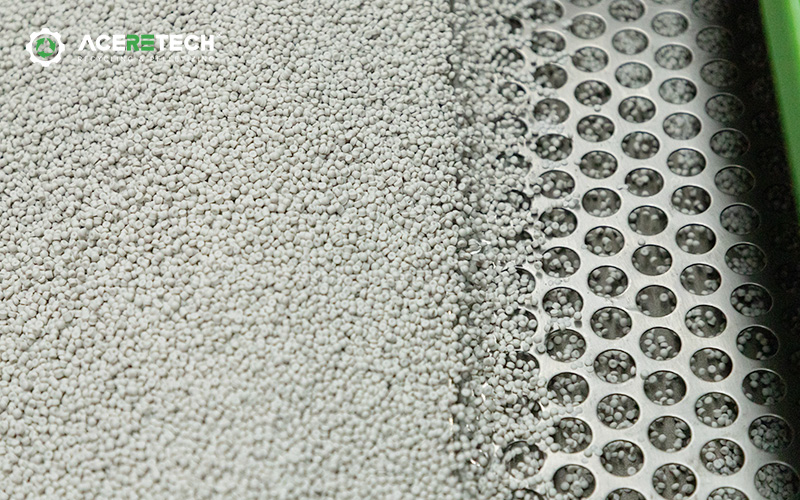
Pellets produced by the water-ring pelletizer feature:
Uniform pellet size
Smooth surface
High cutting efficiency
Stable, continuous operation
After pelletizing, the pellets pass through a vibrating dewatering screen before entering the storage silo.
6. Intelligent Automation and Safety Protection
The entire recycling line is managed by an advanced PLC intelligent control system.
Automatic protection features include:
Motor overload protection
Screw over-pressure protection
Intelligent process monitoring
Automatic alarm system
Stable production management
These features significantly enhance operational safety while minimizing downtime.
Related Articles
PE Film Shredding Solutions
PE Film Washing Solutions
PE Film In-Plant Recycling Solutions
VI. Advantages of the ACSS PE Film Pelletizing Line
Compared to traditional pelletizing systems, ACERETECH’s ACSS solution offers the following advantages:
Stable feeding of lightweight PE film
High-efficiency pre-compaction technology
Superior plasticizing performance
Dual-stage vacuum degassing
Two-stage filtration system
High-quality recycled pellets
Continuous operation
Reduced labor costs
Lower energy consumption
Intelligent automation
Long equipment service life
Easy maintenance
VII. Typical End Products
The recycled PE pellets produced by this system can be widely used to manufacture:
Plastic bags
Trash bags
Agricultural films
Stretch wrap films
Pipes
Plastic sheets
Blow-molded products
Injection-molded products
Construction materials
VIII. Why Choose ACERETECH?
ACERETECH is dedicated to providing comprehensive plastic film recycling solutions to customers worldwide.
From individual pelletizers to complete recycling plants, we help plastic recycling enterprises boost production efficiency, lower operating costs, and produce high-quality recycled pellets that meet the demands of rigorous applications.
Whether processing industrial waste PE film or washed post-consumer film, the ACSS single-screw, two-stage compaction and pelletizing system delivers a reliable, intelligent, and efficient recycling solution.
FAQ
Q1. What types of PE film can the ACSS pelletizing line recycle?
A: The ACSS single-screw, two-stage compaction and pelletizing line is specifically designed for recycling various PE film materials, including LDPE, LLDPE, and HDPE films, stretch films, agricultural films, packaging films, shopping bags, industrial film scrap, and washed post-consumer PE films. The system ensures stable feeding and high-quality pelletizing results for both industrial and post-consumer waste recycling applications.
Q2. Why is a two-stage pelletizing system better suited for PE film recycling?
A: The two-stage pelletizing system significantly enhances melt quality by incorporating a second stage for plasticization and filtration. Compared to single-stage extruders, it offers superior impurity removal, more stable melt pressure, better degassing performance, and higher-quality recycled pellets, making it particularly effective for processing contaminated or moisture-laden PE films.
Q3. How does the dual-vacuum degassing system improve pellet quality?
A: The dual-vacuum degassing system efficiently removes residual moisture, low-molecular-weight volatiles, and entrapped gases from the molten plastic. This helps minimize bubbles, black specks, and surface defects, resulting in denser, cleaner, and more uniform recycled pellets that meet the requirements of high-value-added applications.
Q4. What are the advantages of the SCF self-cleaning filtration system?
A: The SCF self-cleaning melt filter continuously removes impurities from the plastic melt without interrupting production. It minimizes the need for manual screen changes, reduces maintenance costs, stabilizes extrusion pressure, and significantly improves pellet cleanliness and overall production efficiency.
Q5. In which industries can the recycled PE pellets produced by this system be used?
A: These recycled PE pellets are widely used to manufacture packaging films, shopping bags, trash bags, agricultural films, pipes, sheets, blow-molded products, injection-molded parts, and various other polyethylene products. Their high quality also facilitates closed-loop recycling and sustainable manufacturing.