Efficient Front-End Processing of Waste PET Bottles
Waste PET bottles usually require several processing stages before they can be further recycled.
As a front-end treatment step, crushing and basic washing can be used to reduce the size of waste bottles and remove initial surface contamination before subsequent recycling processes.
For this application, ACERETECH provides a PET bottle crushing and basic washing solution with a capacity of up to 1,000 kg/h.
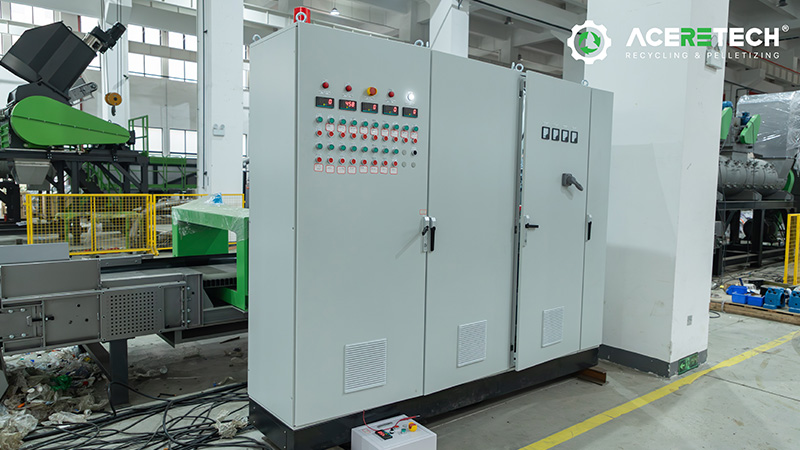
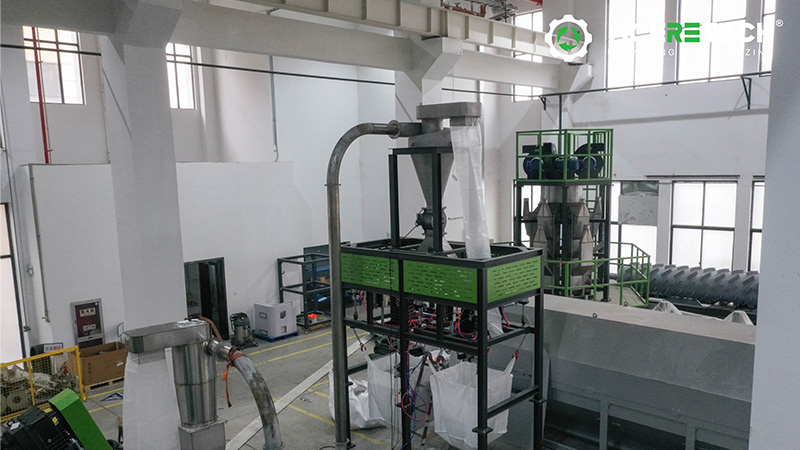
The system focuses on the initial processing of waste PET bottles, including material feeding, crushing, basic washing, separation, dehydration, and drying.
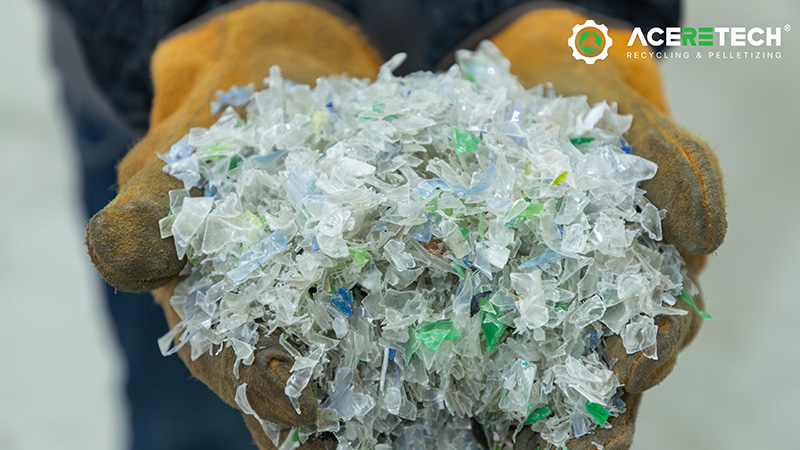
The resulting PET flakes can then be transferred to subsequent recycling processes according to the customer's requirements.
I. Application Background
The raw material for this application consists of waste PET bottles.
Before entering subsequent PET recycling processes, the bottles need to be converted into a more manageable form and undergo preliminary cleaning.
The main objectives of this front-end process are:
• Reduce the size of waste PET bottles
• Remove initial dirt and residues
• Separate some non-PET materials
• Reduce surface moisture
• Prepare the PET flakes for subsequent processing
Therefore, this system should be regarded as a front-end pre-treatment and basic washing section, rather than a complete PET bottle-to-bottle recycling system.
II. Main Processing Challenges
Waste PET bottles are lightweight and bulky.
They may also contain:
• Labels
• Bottle caps
• Dirt
• Beverage residues
• Dust
• Other foreign materials
Before further recycling, these materials need to be processed into a more uniform and manageable form.
The front-end system therefore focuses on three basic requirements:
Size Reduction + Preliminary Cleaning + Material Preparation
III. PET Bottle Crushing and Basic Washing Process Flow
The application can be summarized as:
Waste PET Bottles → Feeding → Preliminary Label Removal → Crushing → Basic Washing → Density Separation → Dehydration → Drying → Preliminary Clean PET Flakes → Subsequent PET Recycling Process
This process provides an initial treatment stage for waste PET bottles before further recycling.
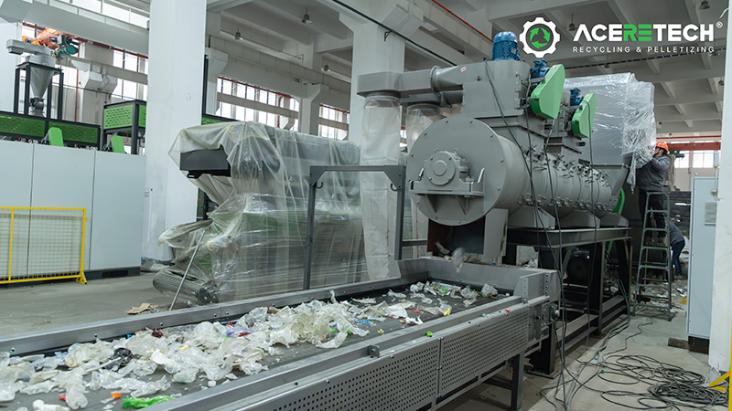
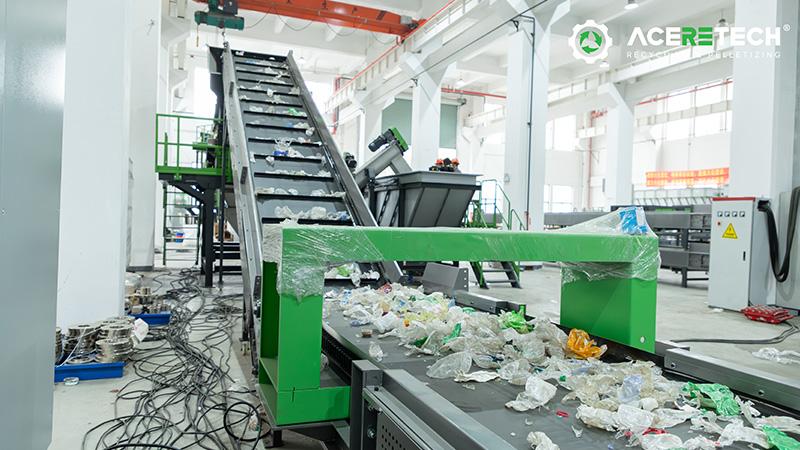
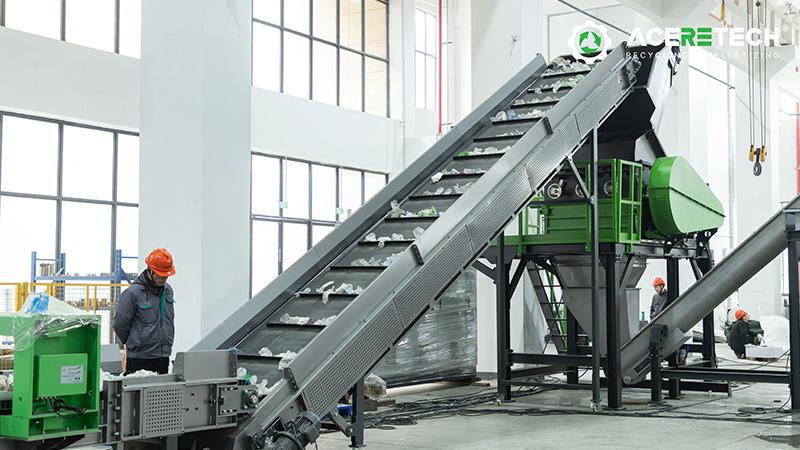
1. Feeding and Preliminary Label Removal
Waste PET bottles are first fed into the system.
Because empty PET bottles have a relatively low bulk density, stable feeding is important for maintaining continuous operation.
The front-end section also provides preliminary label removal before the bottles enter the crushing stage.
This helps reduce the amount of label material entering the crusher and subsequent washing process.
After feeding and preliminary preparation, the PET bottles enter the crushing system.
The crusher reduces the bottles into PET flakes that are easier to wash, separate, and transport.
For lightweight PET bottles, the system uses a forced-feeding structure to help maintain stable feeding into the crushing chamber.
The crushing stage therefore performs an important preparation function:
Waste PET Bottles → Smaller PET Flakes
The reduced particle size provides better conditions for subsequent washing and separation.
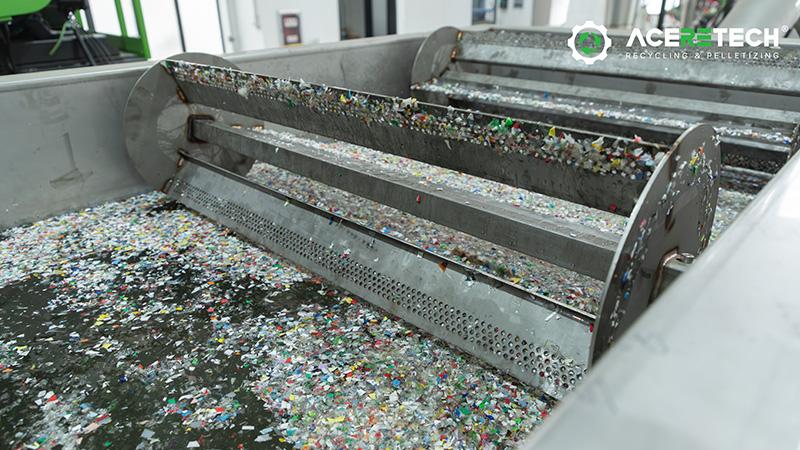
After crushing, the PET flakes enter the washing section.
The purpose of this stage is preliminary cleaning, rather than achieving the final cleanliness required for high-end PET recycling applications.
The washing process helps remove initial contamination such as:
• Dirt
• Surface residues
• Beverage residues
• Label fragments
• Other loose contaminants
The actual cleaning performance depends on the condition and contamination level of the incoming PET bottles.
4. PET and Lightweight Material Separation
The washing section also provides an initial separation between PET flakes and lighter non-PET materials.
Because PET has a higher density than common bottle-cap materials such as PP and PE, density-based separation can be used.
Typically:
PET flakes → Sink
PP/PE caps and lighter materials → Float
This helps reduce the amount of non-PET material remaining with the PET flakes.
5. Dehydration and Drying
After washing and separation, the PET flakes contain water.
The system therefore includes dehydration and drying stages.
The dehydration stage removes a significant amount of surface water, while the subsequent drying process further reduces residual moisture.
This prepares the PET flakes for:
• Temporary storage
• Transportation
• Further washing
• Further separation
• Subsequent pelletizing or other recycling processes
depending on the customer's complete recycling process.
Related Articles
PET Bottle Crushing Solutions
PET Bottle Flake Pelletizing Solutions
IV. Application Configuration
| Item |
Application |
|
Feedstock
|
Waste PET bottles |
| Application Type | Front-end pre-treatment |
| Main Process | Crushing + Basic Washing |
| Capacity | Up to 1,000 kg/h |
| Crushing | PET bottle crushing with forced feeding |
| Separation | Density-based separation |
| Dehydration | Included |
| Drying | Included |
| Output | Preliminary clean PET flakes |
V. Application Value
The purpose of this application is to provide a simple and effective front-end treatment process for waste PET bottles.
Instead of considering crushing and washing as the complete PET recycling process, this system can be integrated into a larger recycling project.
Its main functions are:
1. Size Reduction
Converts bulky waste PET bottles into manageable PET flakes.
2. Preliminary Cleaning
Removes loose dirt, residues, labels, and other initial contaminants.
3. Basic Material Separation
Separates PET flakes from lighter PP/PE components.
4. Moisture Reduction
Reduces water content after the washing process through dehydration and drying.
5. Preparation for Subsequent Processing
Produces preliminary clean PET flakes that can enter the customer's subsequent recycling process.
VI. Application Summary
This application demonstrates a PET bottle crushing and basic washing system used as a front-end pre-treatment process.
The main process is:
Waste PET Bottles
→ Feeding
→ Preliminary Label Removal
→ Crushing
→ Basic Washing
→ Density Separation
→ Dehydration
→ Drying
→ Preliminary Clean PET Flakes
The system has a processing capacity of up to 1,000 kg/h.
Rather than being a complete PET bottle-to-bottle recycling system, this application focuses on the initial crushing and cleaning of waste PET bottles, preparing the material for subsequent recycling processes.
Call to Action
PET Bottle Pre-Treatment for Your Recycling Project
If your project requires an initial processing stage for waste PET bottles, ACERETECH can provide crushing and basic washing solutions for front-end material preparation.
The application presented here combines:
Feeding → Crushing → Basic Washing → Separation → Dehydration → Drying
with a capacity of up to 1,000 kg/h.
The resulting PET flakes can then be transferred to the next stage of your recycling process.
Contact ACERETECH to discuss your PET bottle pre-treatment requirements.
FAQ
A: No. This application focuses on the front-end crushing and basic washing of waste PET bottles.
It can serve as a pre-treatment section within a larger PET recycling process.
A: The preliminary clean PET flakes can be transferred to subsequent recycling processes according to the customer's requirements.
For example, they may enter further PET washing, pelletizing, or other downstream processing.
A: The crushing stage reduces bulky PET bottles into flakes, making the material easier to wash, separate, transport, and process further.
A: The basic washing stage is mainly intended to remove loose surface contamination such as dirt, residues, and label fragments.
The actual cleaning effect depends on the incoming material.
A: Not necessarily.
The flakes produced by this front-end process may require additional washing, separation, drying, pelletizing, SSP, or other treatment depending on the final application.