Key takeaways
- Plastic pipe recycling converts waste HDPE, PVC, PP, PPR, ABS and other pipes into clean, uniform pellets for new pipes and plastic products.
- A typical line includes four stages: shredding → crushing → washing & drying → pelletizing.
- Integrated lines improve automation, throughput, pellet quality and overall profitability compared with standalone machines.
What is plastic pipe recycling?
Plastic pipe recycling is the process of converting waste plastic pipes—such as HDPE water and gas pipes, PVC drainage and conduit pipes, and PP/PPR industrial pipes—into clean, uniform recycled pellets. These pellets can then be used to manufacture new pipes, pipe fittings, profiles, injection‑molded parts and other plastic products.
Driven by rapid growth in construction, municipal infrastructure, agriculture, telecommunications and industrial manufacturing, plastic pipes have become one of the fastest‑growing categories of plastic products worldwide. At the same time, large quantities of waste are generated from production scrap, installation offcuts, substandard products and end‑of‑life pipes.
A comprehensive plastic pipe recycling solution enables manufacturers and recyclers to efficiently transform this waste into high‑quality secondary raw materials. By returning production scrap and post-consumer waste to the supply chain, pipe recycling plays a vital role in advancing the circular economy, while reducing disposal costs and creating new revenue streams.
Plastic Pipe Recycling Video
What plastic pipe materials can be recycled?
Different pipe materials require specific recycling processes. Understanding material properties helps optimize equipment selection and improve recycling efficiency.
Common plastic pipe materials
| Material |
Typical Applications |
Recycling Difficulty |
| HDPE Pipe | Water supply, gas pipelines | ★★☆☆☆ |
| LDPE Pipe | Irrigation systems | ★☆☆☆☆ |
| PP Pipe | Chemical transport | ★★☆☆☆ |
| PPR Pipe | Hot and cold water systems | ★★☆☆☆ |
| PVC Pipe | Drainage, electrical conduits | ★★★☆☆ |
| ABS Pipe |
Industrial piping |
★★★☆☆ |
In practice, most rigid thermoplastic pipes can be recycled as long as they are properly sorted and cleaned. Typical recyclable materials include HDPE water and gas pipes, PE irrigation pipes, PP and PPR industrial pipes, rigid PVC drainage and conduit pipes, ABS industrial pipes, as well as production scrap and end‑of‑life pipes from municipal and construction projects.
What are the main challenges in recycling plastic pipes?
Compared with films or rigid containers, recycling plastic pipes presents several specific challenges. These challenges stem from the physical dimensions of pipes, the strength of the materials, and the types of contaminants commonly found in pipe waste.
🔹 Large diameters and long lengths make feeding difficult.
🔹 Thick pipe walls require extremely high cutting torque.
🔹 High material strength accelerates tool wear.
🔹 Pipes often contain dirt, sand, stones, labels or metal fittings.
🔹 Pipes made of different materials must be sorted to ensure the quality of recycled granules.
To address these challenges, an integrated recycling production line—combining shredding, crushing, washing, drying and pelletizing—is recommended. Such a line not only handles bulky and tough materials more efficiently, but also ensures consistent output quality across different pipe types.
How does a complete plastic pipe recycling process work?
The standard plastic pipe recycling process consists of four main stages. Each stage plays a specific role in transforming waste pipes into uniform, high‑quality recycled pellets.
- Shredding long pipes into manageable chunks
- Crushing chunks into uniform flakes
- Washing and drying to remove contaminants
- Pelletizing clean flakes into recycled granules
Below, each stage is described in more detail, including recommended equipment, key features and typical output.
1. Plastic pipe shredding
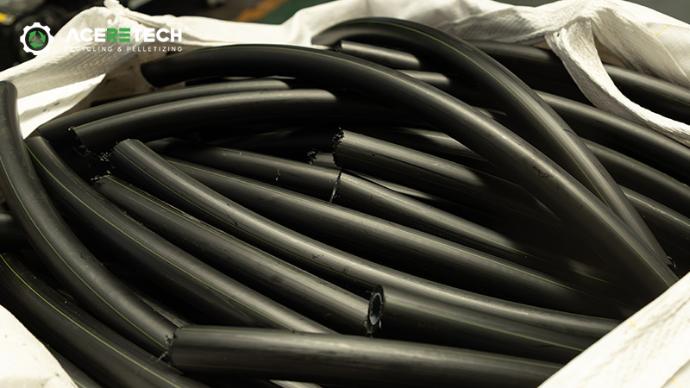
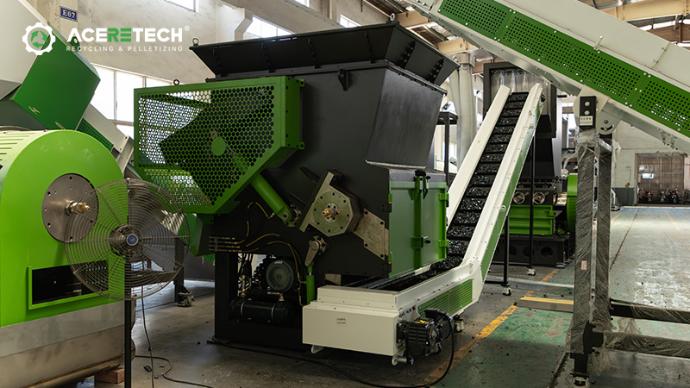
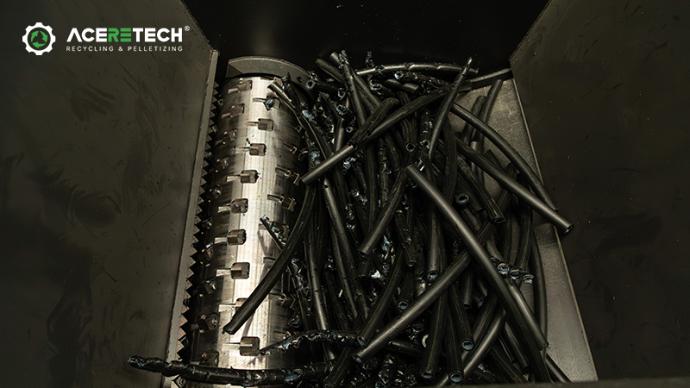
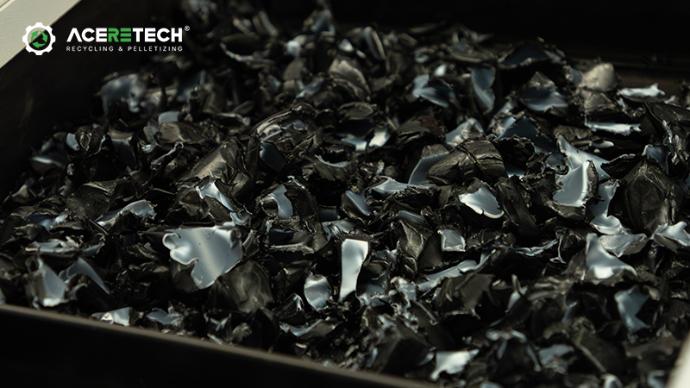
Large, long plastic pipes cannot be fed directly into granulators or extruders. A heavy‑duty shredder is first used to reduce long pipes into smaller, manageable chunks. This step stabilizes feeding, reduces the load on downstream equipment, and helps protect cutting tools from excessive wear.
For thick‑walled HDPE, PP and PVC pipes, a single‑shaft shredder with a hydraulic ram pusher is typically the most efficient choice. The hydraulic system ensures steady feeding even for irregularly shaped pipes, while the high‑torque gearbox handles thick walls without stalling.
Recommended equipment
- HS Series Single‑Shaft Shredder
Key features
- Hydraulic ram pusher system for stable feeding
- Large‑diameter rotor designed for bulky pipes
- High‑torque gearbox for thick‑walled materials
- Intelligent PLC control with automatic overload protection
- Replaceable rotor blades for easy maintenance
- Suitable for long and thick‑walled pipes
The typical output size is 40–80 mm chunks, depending on screen aperture. This size is ideal for efficient secondary crushing and subsequent washing. For more details on equipment selection and line configuration for different pipe materials and diameters, see our Plastic Pipe Shredding and Crushing Solutions article.
2. Plastic pipe crushing
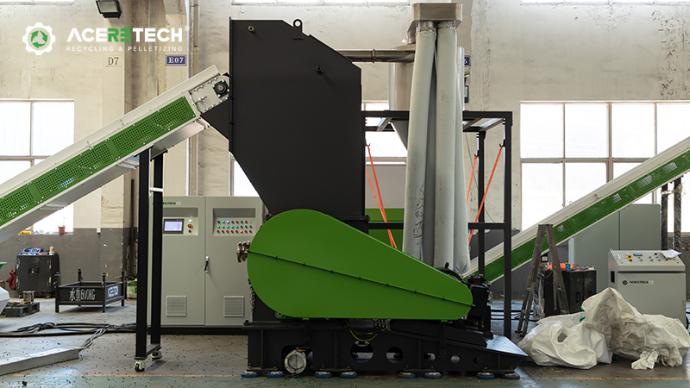
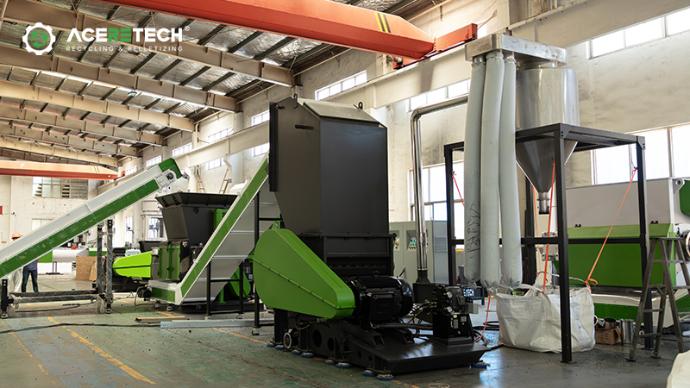
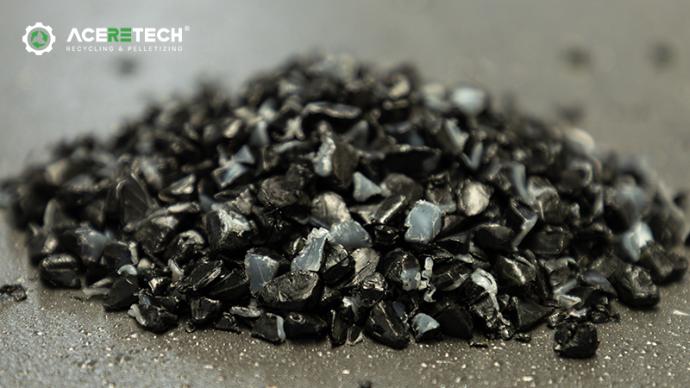
Shredded pipe chunks then enter a granulator for secondary size reduction. The goal of this stage is to produce uniform flakes with a controlled particle size, which improves washing efficiency and helps ensure stable pelletizing performance.
A heavy‑duty granulator with a high‑speed rotor and wear‑resistant blades is commonly used for this purpose. The robust bearing design and optimized cutting geometry allow continuous operation even when processing tough materials such as HDPE and PP pipes.
Recommended equipment
- GH Heavy-Duty Granulator
Advantages
- High‑speed rotor for stable cutting performance
- Heavy‑duty bearing design for continuous operation
- Wear‑resistant blades for long service life
- Efficient particle size control
The typical output flake size is around 10–16 mm. Uniform flakes improve washing efficiency and help ensure stable pelletizing. For a detailed overview of shredding and crushing configurations, you can refer to our Plastic Pipe Shredding and Crushing Solutions guide.
3. Plastic pipe washing and drying
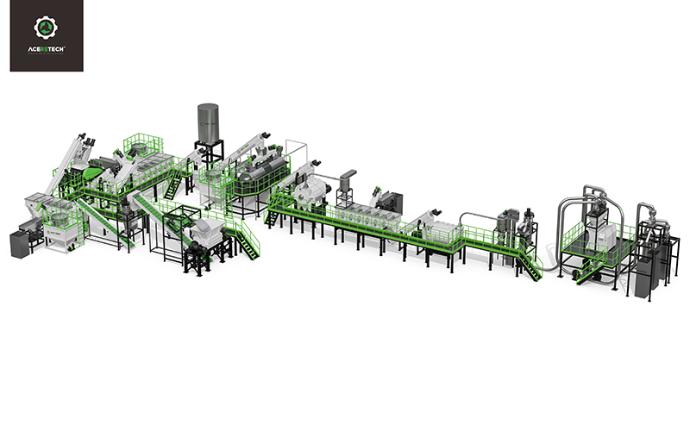
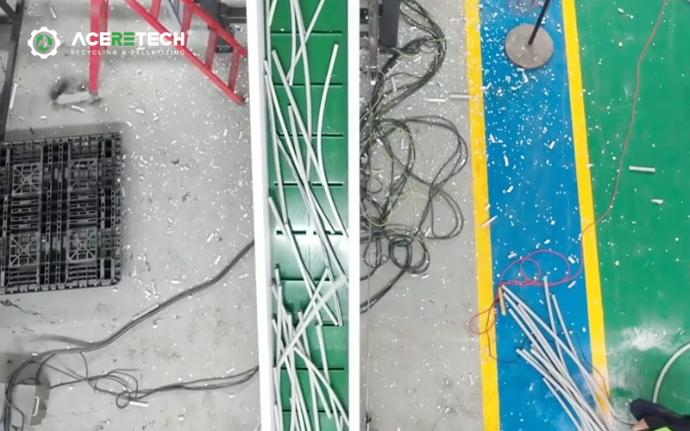
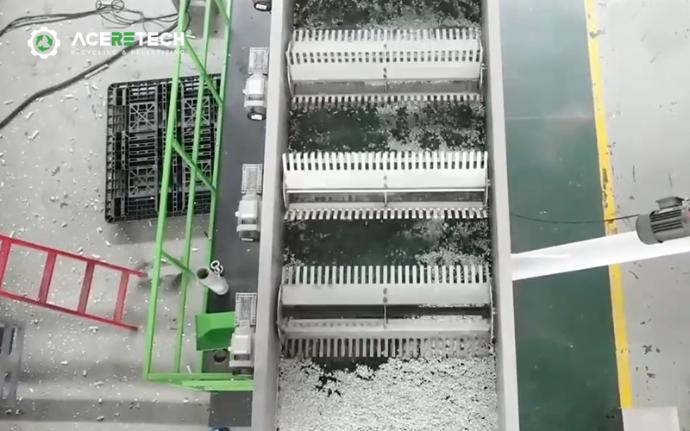
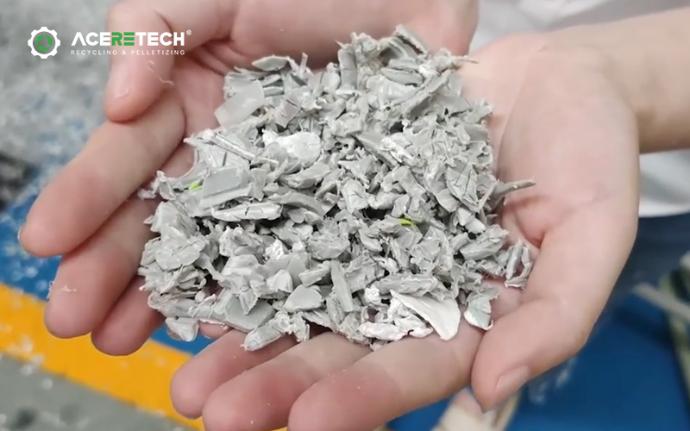
Clean material is crucial for producing high‑quality recycled pellets, especially for post‑consumer waste pipes that may contain dirt, labels and other contaminants. The washing and drying stage removes these impurities and prepares the flakes for extrusion and pelletizing.
A complete washing line typically includes a friction washer, float‑sink tank, high‑speed dewatering machine, hot air drying system and dust removal system. Together, these units remove dirt, soil, sand, stones, oil, grease, labels, adhesives, fine dust and organic residues from the plastic flakes.
Typical washing line configuration
- Friction washer
- Float‑sink tank
- High‑speed dewatering machine
- Hot air drying system
- Dust removal system
Contaminants effectively removed
- Dirt and soil
- Sand and stones
- Oil and grease
- Labels and adhesives
- Fine dust
- Organic residues
Clean flakes also help reduce melt contamination during the extrusion and pelletizing process, leading to more stable operation and higher‑quality recycled pellets. For more information on designing an efficient washing line for dirty post‑consumer pipes, see our Plastic Pipe Washing Solutions article.
4. Plastic pipe pelletizing
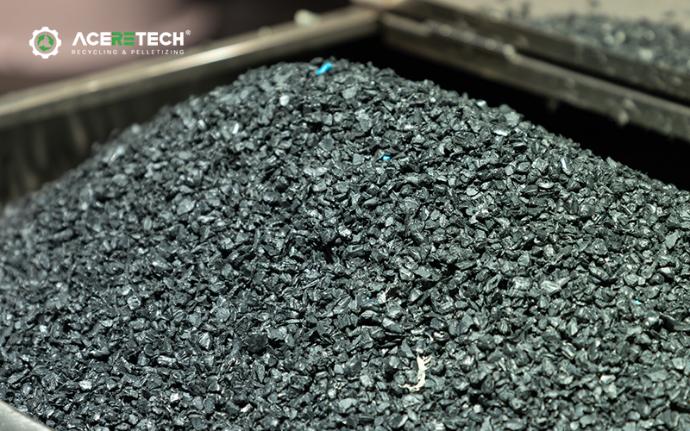
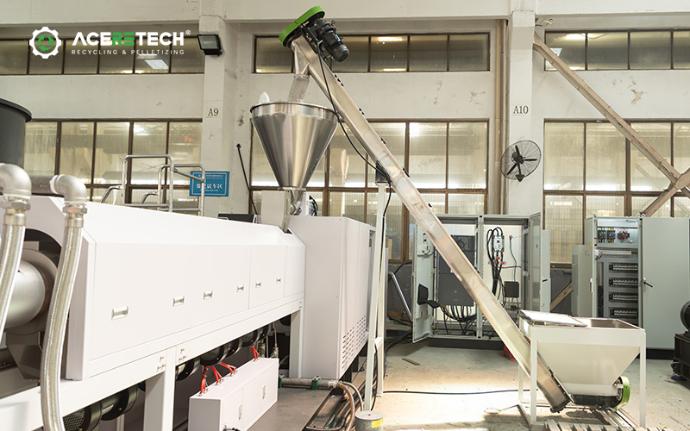
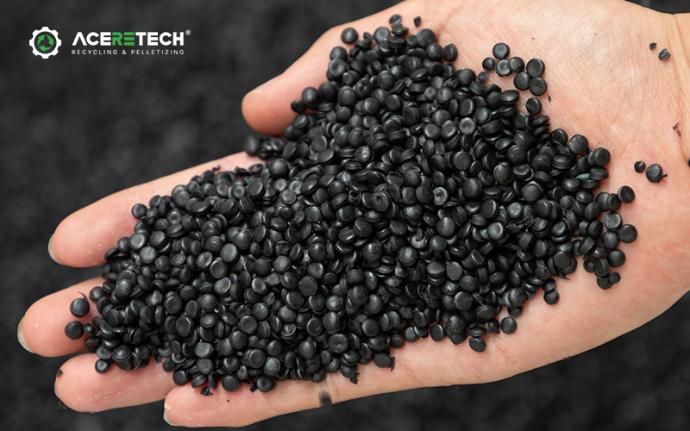
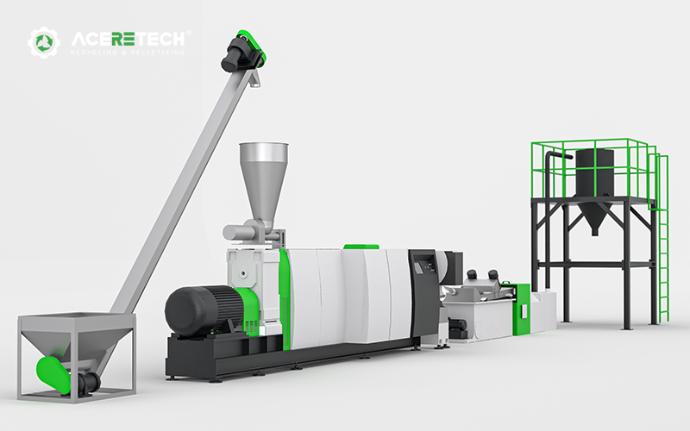
The washed and dried flakes are fed into a plastic recycling and pelletizing system to produce uniform recycled granules. This stage determines the final pellet quality, including size consistency, melt flow and impurity levels, which directly affect downstream processing and product performance.
A typical pelletizing configuration includes a force‑feeding system for stable throughput, a single‑screw or two‑stage extruder, a vacuum degassing system to remove volatiles, continuous melt filtration for cleaner melt, and a water‑ring or strand pelletizer followed by vibratory drying and automatic storage.
Typical pelletizing configuration
- Force‑feeding system for stable throughput
- Single‑screw or two‑stage extruder
- Vacuum degassing system to remove volatiles
- Continuous melt filtration for cleaner melt
- Water‑ring or strand pelletizing
- Vibratory drying
- Automatic storage silo
High‑quality recycled pellets can be used to manufacture plastic pipes, pipe fittings, extruded profiles, injection‑molded products, blow‑molded products, plastic sheets and other general industrial applications. For a deeper dive into extruder configurations, filtration options and pellet quality optimization, see our Plastic Pipe Pelletizing Solutions article.
Typical plastic pipe recycling process flow
A complete plastic pipe recycling line typically follows this flow:
Waste plastic pipes → Shredding → Crushing → Washing → Dewatering and drying → Pelletizing → Recycled plastic pellets
Each stage builds on the previous one: shredding prepares the material for efficient crushing, crushing produces uniform flakes for effective washing, and clean, dry flakes enable stable pelletizing with consistent output quality. A simple process diagram can be placed here to visualize the flow.
What are the benefits of an integrated recycling line?
Compared with standalone equipment, a complete, integrated plastic pipe recycling solution offers significant advantages in terms of automation, throughput and product quality. By combining all stages into a coordinated system, recyclers can achieve more stable operation and better overall economics.
Key benefits include:
✅ High level of automation; reduced labor requirements
✅ Continuous and stable production
✅ Strong processing capability for large-diameter pipes (high throughput)
✅ Efficient impurity removal
✅ Uniform crushed material size, ensuring pellet quality
✅ Low energy consumption
✅ Intelligent PLC control
✅ Easy maintenance
✅ Flexible configuration to suit different pipe types
✅ Improved recycling efficiency and profitability
These advantages make integrated lines particularly suitable for pipe manufacturers, large recyclers and municipal waste management projects that handle significant volumes of plastic pipe waste.
Typical applications
This recycling solution is suitable for a wide range of pipe materials and application scenarios. Common use cases include:
- HDPE water supply pipe recycling
- HDPE gas pipe recycling
- PE irrigation pipe recycling
- PVC pipe recycling (drainage, conduits)
- PP pipe recycling
- PPR pipe recycling
- ABS pipe recycling
- Pipe production scrap recycling
- Municipal pipe recycling
- Construction waste pipe recycling
Depending on the material mix and contamination level, the line can be configured for in‑house production scrap recycling or for post‑consumer waste pipe recycling, with different emphasis on washing, sorting and filtration.
Frequently Asked Questions (FAQ)
Q1. Can the same recycling line process both HDPE and PVC pipes?
It is generally not recommended to process HDPE and PVC pipes on the same recycling line without proper material sorting. These two plastics have different melting points and processing characteristics; mixed processing can degrade the quality of recycled pellets and lead to defects in downstream products.
For optimal results, different materials should be sorted and recycled separately, with equipment configurations optimized according to their respective properties.
Q2. How does a shredder improve the efficiency of plastic pipe recycling?
The function of a shredder is to break down long, bulky plastic pipes into smaller, uniform fragments before granulation. This process improves feed stability, reduces the load on the granulator, minimizes blade wear and enables continuous, automated operation.
For thick‑walled HDPE, PP and PVC pipes, shredding is the most efficient and cost‑effective initial processing step.
Q3. What factors affect the quality of recycled plastic pipe pellets?
The quality of the final pellets depends on several factors, including raw material cleanliness, consistency of pellet size, moisture content after washing and drying, melt filtration efficiency, vacuum degassing performance and extrusion temperature control.
Using a complete recycling line equipped with high‑efficiency washing, drying and filtration systems helps produce cleaner pellets with stable melt flow and fewer impurities.
Q4. Is washing necessary during the plastic pipe recycling process?
Not necessarily. Clean in‑house production scrap may only require dust removal. However, post‑consumer waste pipes typically require thorough washing and drying before granulation to remove dirt, labels and other contaminants.
Q5. Can recycled plastic pipe pellets be used to manufacture new pipes?
Yes. Depending on material quality and product specifications, high‑quality recycled pellets can be blended with virgin resin or used to manufacture non‑pressure pipes, conduit pipes, profiles, injection‑molded parts and other plastic products.
Further reading
- Plastic Pipe Shredding and Crushing Solutions
Equipment selection and line configuration for different pipe materials and diameters. - Plastic Pipe Washing Solutions
How to design an efficient washing line for dirty post‑consumer pipes. - Plastic Pipe Pelletizing Solutions
Extruder configurations, filtration options and pellet quality optimization.
Looking for a customized plastic pipe recycling line for your factory? Contact Aceretech technical team today for a tailored solution and quote.