I. Efficient Size Reduction of Large and High-Hardness Plastic
Headstock Materials
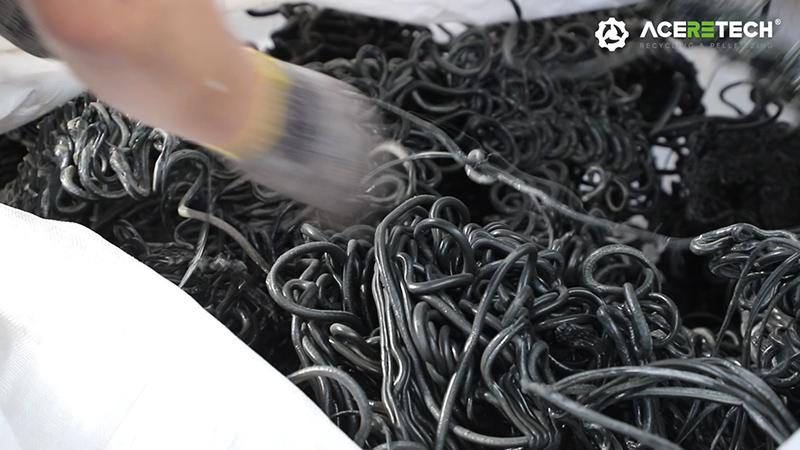
During plastic extrusion and injection molding production, a certain amount of solid plastic waste is generated during machine start-up, material changes, production adjustments, and process interruptions.
Typical examples include:
• Plastic headstock / purge material
• Start-up material
• Waste plastic rods
• Large injection molding rejects
• Large pieces of PP and PE
• Rigid plastic production scrap
These materials are often significantly different from conventional plastic scrap.
They can be large, thick, irregular, and relatively hard, making them difficult to process directly with conventional high-speed crushers.
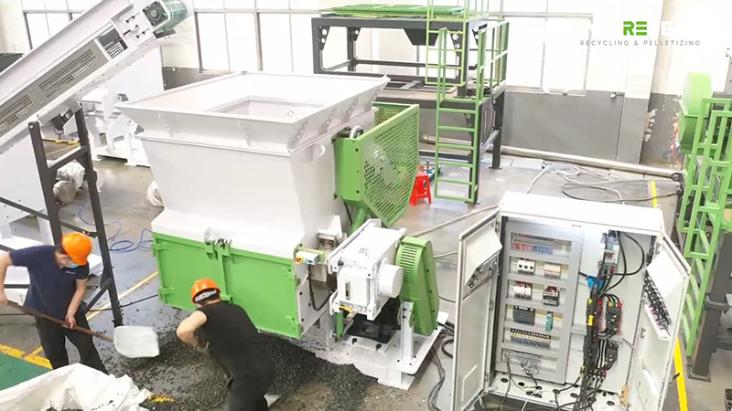
For this type of application, ACERETECH uses the MS Series Single-Shaft Shredder to provide controlled size reduction of large rigid plastic waste.
The main objective is to reduce bulky plastic material into a more manageable size for subsequent handling or recycling processes.
II. Application Background
Plastic headstock and purge materials are commonly generated during extrusion and injection molding operations.
When a production line starts, stops, changes materials, or undergoes process adjustments, the plastic remaining in the processing equipment may be discharged as large solid pieces.
Depending on the production process, these materials may include:
• PP headstock
• PE headstock
• PVC production scrap
• ABS production waste
• PC scrap
• Nylon head material
• Plastic rods
• Large molding rejects
The physical dimensions can vary considerably.
Some pieces may be relatively small, while others can be several hundred millimeters in size.
Because of their thickness and hardness, large pieces cannot always be fed directly into conventional crushers.
III. Why Large Plastic Headstock Materials Are Difficult to Process
The main challenge is the combination of large size, high hardness, and irregular shape.
1. Large Material Dimensions
Large headstock and purge pieces may be too large to enter the cutting chamber of a conventional crusher.
Pre-cutting them manually would increase labor requirements and reduce processing efficiency.
2. High Material Strength
Solidified plastic headstock can be considerably harder and more compact than ordinary plastic scrap.
When the material enters the cutting chamber, it can generate high mechanical resistance.
3. Irregular Shapes
Unlike uniform plastic parts, purge material and start-up waste can have irregular shapes and dimensions.This makes stable feeding more difficult.
4. Risk of Overload
If large pieces enter a conventional crusher too aggressively, the motor and cutting system may experience high instantaneous loads.
Therefore, the equipment needs sufficient torque and an effective overload protection system.
IV. Why the MS Single-Shaft Shredder Is Used
For large and high-hardness rigid plastic waste, the MS Series uses a low-speed, high-torque shredding principle.
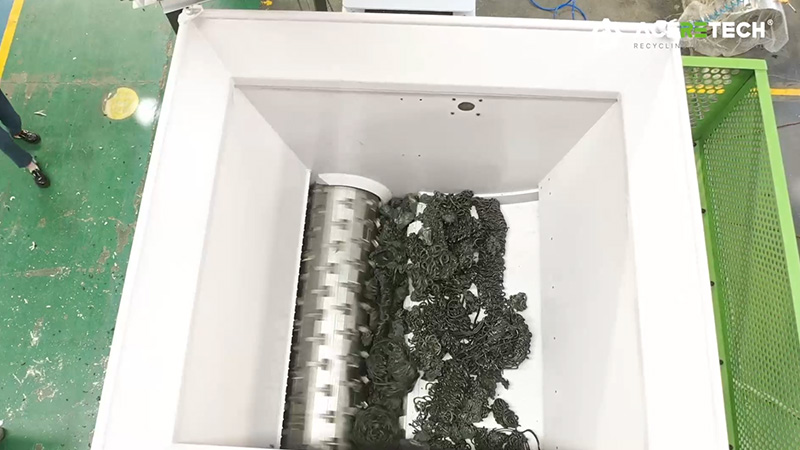
Instead of relying on high-speed impact, the rotor gradually grabs the material and cuts it against the fixed knives.
The basic working process is:
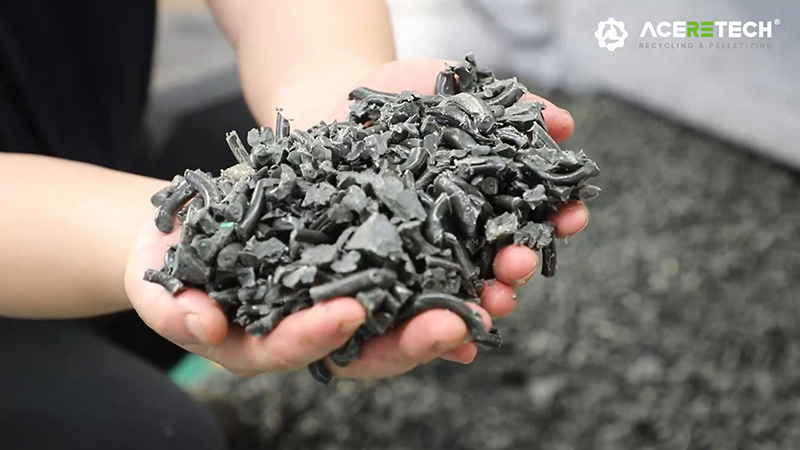
Large Plastic Waste → Hydraulic Feeding → Rotor Engagement → Cutting & Shredding → Reduced-Size Plastic Material
This approach provides the torque required to process large solid pieces while allowing the material to be progressively reduced in size.
1. Hydraulic Forced Feeding
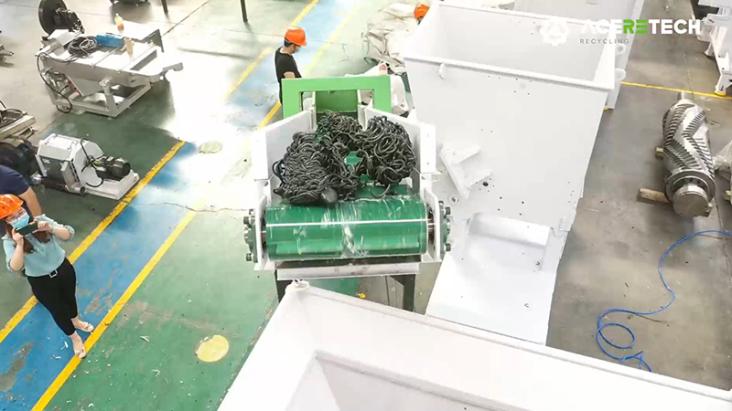
One of the key features of the MS Series is its horizontal hydraulic pusher.
Large pieces of plastic headstock cannot always fall naturally into the cutting zone.
The hydraulic pusher therefore actively moves the material toward the rotor.
This provides several benefits:
• More stable material engagement
• Better processing of large pieces
• Reduced feeding interruptions
• Less dependence on manual pushing
• Improved operator safety
The hydraulic system adjusts the pushing action according to the operating condition of the machine.
This allows the shredder to maintain stable cutting when processing materials with different dimensions and densities.
2. Low-Speed, High-Torque Shredding
The MS Series uses a low-speed, high-torque drive system.
This is particularly suitable for large and rigid plastic waste.
When a large piece enters the cutting chamber, the rotor gradually engages the material instead of attempting to break it through high-speed impact.
This provides the torque necessary to overcome the high resistance generated by thick plastic pieces.
The system is therefore suitable for applications where conventional crushers may experience:
• Motor overload
• Rotor blockage
• Excessive blade stress
• Frequent interruptions
3. Heavy-Duty Drive System
Large plastic headstock materials can generate significant mechanical resistance during shredding.
The MS Series is equipped with a heavy-duty drive system designed to provide high torque at low rotor speed.
The combination of:
Motor + Heavy-Duty Gearbox + Low-Speed Rotor
provides the mechanical force required for continuous processing.
This is particularly important when the incoming material consists of thick or highly compacted plastic pieces.
4. High-Strength Cutting Tools
The cutting system is another important component when processing hard rigid plastic waste.
The MS Series can be equipped with high-performance alloy steel cutters such as D2 or DC53, depending on the application.
The cutter design provides effective engagement with thick plastic material.
The four-corner indexable design also allows the cutter to be rotated when one cutting edge becomes worn.
This helps extend cutter service life and simplifies maintenance.
For applications involving high-hardness materials, appropriate cutter material and treatment should be selected according to the actual feedstock.
5. Intelligent PLC Protection System
Large and hard plastic pieces can occasionally generate sudden increases in rotor load.
The MS Series uses an intelligent PLC control system to monitor the operating condition of the machine.
When an overload condition is detected, the rotor can automatically reverse to help release the material.
After the abnormal load is cleared, the machine can return to forward operation.
This automatic forward/reverse function helps:
• Reduce blockage
• Protect the rotor
• Reduce motor overload
• Improve operational stability
• Reduce unnecessary downtime
The PLC system also provides operating status monitoring and machine protection functions.
6. Controllable Output Size
After shredding, the material passes through the screen at the bottom of the shredding chamber.
The screen opening determines the approximate size of the discharged material.
Different screen sizes can therefore be selected according to the requirements of the subsequent process.
For example, different downstream applications may require different material sizes for:
• Further crushing
• Washing
• Pelletizing
• Material conveying
• Storage
The final output size should therefore be selected according to the actual downstream requirements.
V. Materials Suitable for This Application
The MS Series can be considered for different types of rigid plastic production waste.
Typical materials include:
• PP headstock
• PE headstock
• PVC production waste
• ABS scrap
• PC scrap
• Nylon head material
• Large-diameter plastic pipes
• Plastic pallets
• Large rigid plastic parts
• Plastic rods
• Injection molding rejects
The suitability of a specific material should be evaluated according to its dimensions, hardness, shape, and processing condition.
The machine configuration can then be selected accordingly.
VI. Typical Application Process
For large plastic headstock and rigid production waste, the core process can be summarized as:
Large Rigid Plastic Waste → MS Single-Shaft Shredder → Controlled Size Reduction → Shredded Plastic Material
This is the main size-reduction stage covered by this application.
The shredded material can then be transferred to subsequent recycling processes according to the customer's requirements.
VII. What Happens After Shredding?
The MS Series performs the front-end size-reduction stage.
The subsequent process depends on the material and the customer's final recycling requirements.
For example, shredded rigid plastic may be transferred to:
• Further crushing
• Washing
• Drying
• Sorting
• Pelletizing
• Other downstream processing
The exact downstream configuration depends on factors such as:
• Polymer type
• Contamination level
• Required output size
• Final product requirements
Therefore, the MS shredding stage should be considered as the material preparation stage rather than a complete recycling process by itself.
VIII. Application Value
The main value of the MS Series in this application is its ability to process large, hard, and irregular plastic waste that is difficult to handle with conventional size-reduction equipment.
Before shredding, large headstock and purge materials can be difficult to:
• Feed
• Transport
• Store
• Process further
After size reduction, the material becomes more manageable and can be transferred to subsequent recycling equipment.
The application can therefore be summarized as:
Large Plastic Headstock → Hydraulic Forced Feeding → Low-Speed High-Torque Shredding → Controlled Size Reduction → Easier Downstream Handling
IX. Key Advantages of the MS Series
1. Hydraulic Forced Feeding
The horizontal hydraulic pusher actively moves large plastic pieces toward the rotor.
2. High Torque
The low-speed, high-torque drive provides the mechanical force required for thick and rigid plastic materials.
3. Heavy-Duty Cutting
High-performance alloy cutters are designed for demanding rigid plastic applications.
4. Automatic Overload Reversal
The PLC system can automatically reverse the rotor when excessive resistance is detected.
5. Adjustable Output Size
Different screen openings can be selected according to downstream processing requirements.
6. Suitable for Large Pieces
The large feeding chamber and hydraulic pushing system allow large plastic pieces to be processed without extensive manual pre-
X. Application Summary
This application demonstrates the use of the ACERETECH MS Series Single-Shaft Shredder for large and high-hardness rigid plastic waste.
The main challenge is the physical characteristics of the material.
Plastic headstock, purge material, waste rods, and large production scrap can be:
• Large
• Thick
• Hard
• Irregular
• Difficult to feed
The MS Series addresses these challenges through:
* Hydraulic Forced Feeding
* Low-Speed High-Torque Drive
* Heavy-Duty Cutting System
* Intelligent PLC Overload Protection
* Controllable Output Size
The result is controlled size reduction of large rigid plastic waste into a more manageable material for subsequent recycling processes.
The core application can be summarized as:
Large Rigid Plastic Waste → Hydraulic Feeding → MS Single-Shaft Shredding → Reduced-Size Plastic
The MS Series therefore provides a practical size-reduction solution for plastic headstock, purge material, waste rods, and other large rigid plastic production waste.
Looking for a Rigid Plastic Shredding Solution?
Large plastic headstock, purge material, waste rods, and rigid production scrap can be difficult to process because of their size, hardness, and irregular shape.
The ACERETECH MS Series Single-Shaft Shredder combines:
Hydraulic Forced Feeding → Low-Speed High-Torque Shredding → Automatic Overload Protection → Controlled Size Reduction
to provide a practical front-end size-reduction solution for demanding rigid plastic applications.
Contact ACERETECH to discuss your rigid plastic shredding application.
FAQ
Q1: What is plastic headstock or purge material?
A: Plastic headstock, also called purge material in some production processes, is the solidified plastic waste generated during extrusion or injection molding start-up, shutdown, material changes, or production adjustments.
It is usually much larger and more compact than ordinary plastic scrap.
Q2: Why is a single-shaft shredder suitable for plastic headstock?
A: Large headstock material can generate high instantaneous loads when processed.
The MS Series uses low-speed, high-torque shredding combined with hydraulic forced feeding, allowing large pieces to be progressively engaged and reduced in size.
Q3: Can large plastic pieces be fed directly into the MS shredder?
A: Depending on the machine model and material dimensions, large pieces can be fed directly without extensive pre-cutting.
The MS Series is designed with a large feeding chamber and hydraulic pusher for processing bulky rigid plastic waste.
Q4: What plastics can the MS Series shred?
A: The MS Series can be used for a wide range of rigid plastics, including PP, PE, PVC, ABS, PC, nylon production waste, large pipes, pallets, and other rigid plastic scrap.
The actual machine configuration depends on the material characteristics.
Q5: What happens after shredding?
A: The shredded material can be transferred to subsequent processing such as further crushing, washing, drying, sorting, or pelletizing, depending on the customer's recycling requirements.