Amid the global push for sustainability, transforming waste PET bottles into high-value, food-contact materials has become a crucial component of the circular economy. This process demands not only cutting-edge recycling technology but also a profound understanding of the end-use market. Recently, a food-grade rPET sheet extrusion line built by ACERETECH successfully commenced production in North America and passed rigorous performance validation. This article provides a comprehensive overview of the project’s launch, key data, challenges and solutions, and authentic customer feedback.
I. Project Background and Objectives: Meeting North America's Highest Standards
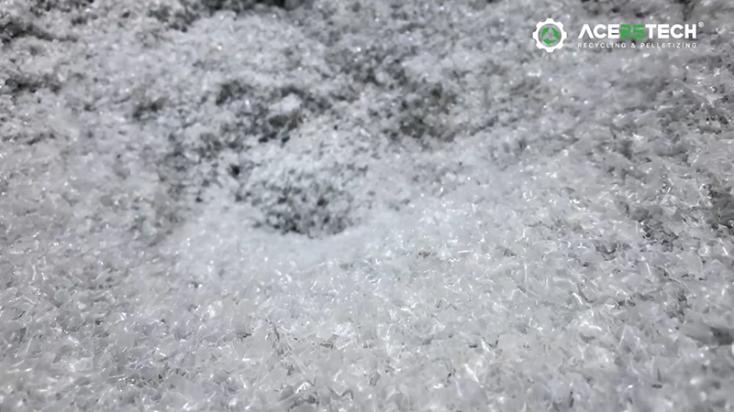
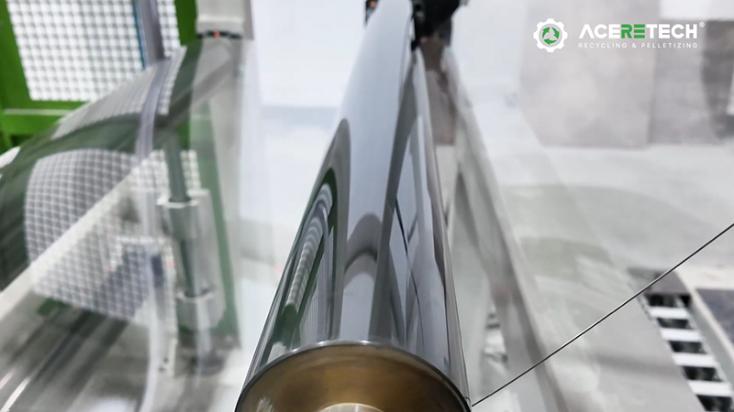
The North American market—particularly the food packaging sector—imposes extremely strict requirements on rPET (recycled PET) sheets. Beyond compliance with food-contact safety standards set by authorities like the FDA, the sheets must meet exacting criteria regarding physical properties, hygiene standards, and production stability. Our client, a leading packaging manufacturer, sought to establish a production line capable of consistently transforming post-consumer PET bottles into high-quality sheets suitable for direct use in food packaging (such as transparent fruit and vegetable containers and beverage cup lids).
Core Objectives:
Food Safety: Finished sheets must comply with FDA 21 CFR 177.1630 standards.
High Quality: Sheets must exhibit high transparency, excellent mechanical properties, and uniform thickness.
High Efficiency: Achieve continuous, stable, large-scale production.
Low Energy Consumption: Minimize production cost per ton while maintaining quality.
II. Equipment Specifications and Core Configuration: Tailored for "Food-Grade" Standards
To achieve these objectives, we developed a customized solution based on ACERETECH’s proven rPET food-grade sheet extrusion technology. The core configuration reflects an uncompromising commitment to food-grade production standards:
Front-end Processing: Includes high-efficiency sorting, hot washing, and friction washing systems to ensure that PET flakes entering the extruder contain less than 50 ppm of impurities and have a moisture content below 0.02%.
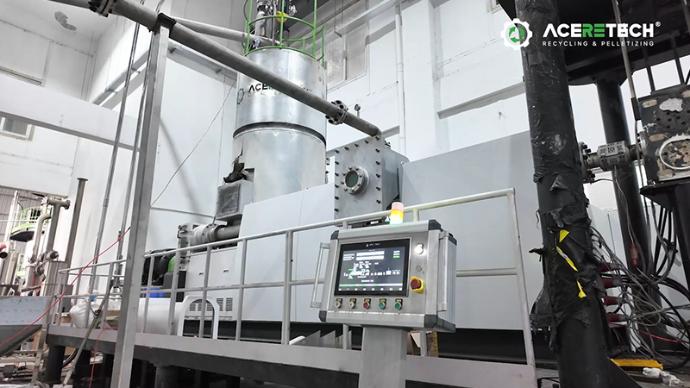
Core Extrusion Unit: Features a twin-screw vented extruder specifically designed for processing rPET. Its superior degassing performance effectively removes trace amounts of acetaldehyde generated by PET at high temperatures, ensuring the final product is odor-free and meets food-grade standards.
Melt Filtration System: Equipped with a dual-column continuous screen changer, offering filtration precision down to 40 microns. This not only guarantees sheet purity but also enables 24/7 uninterrupted production.
Dosing and Blending: A high-precision online dosing system allows for the accurate addition of IV enhancers (chain extenders), masterbatches, and other additives, ensuring consistent product performance across batches.
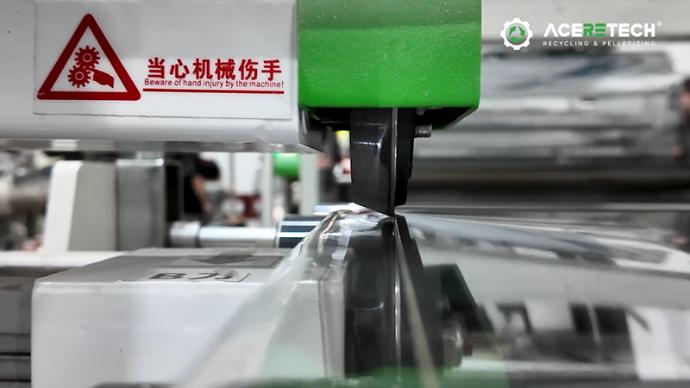
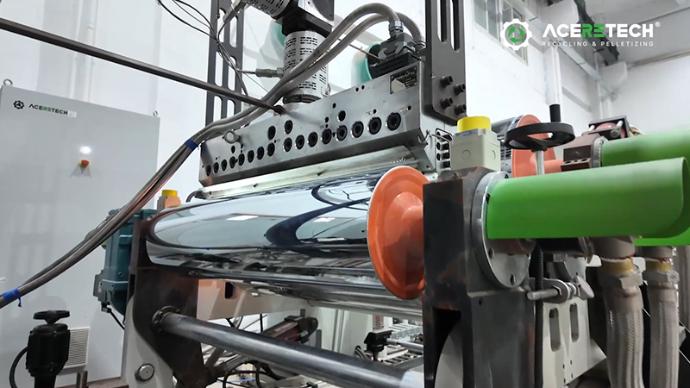
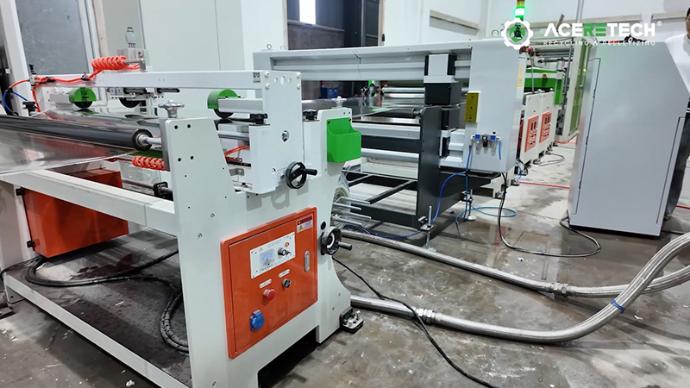
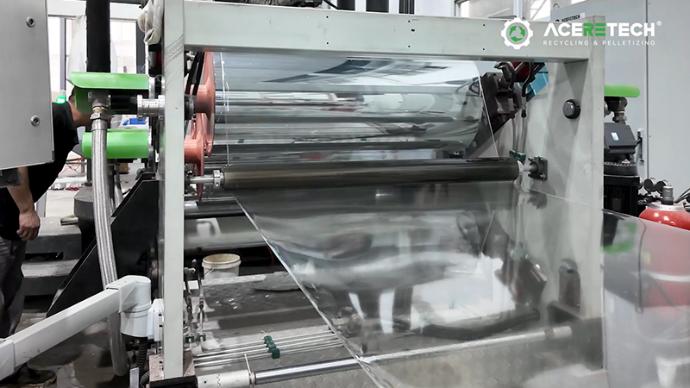
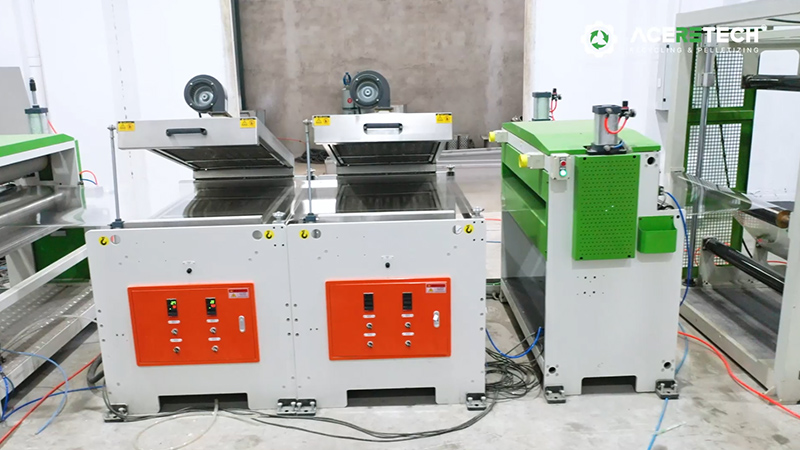
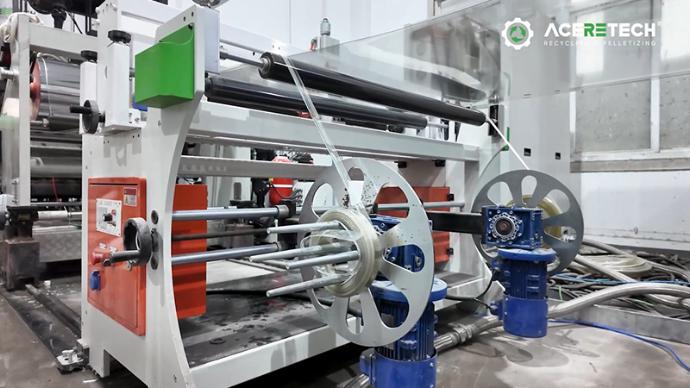
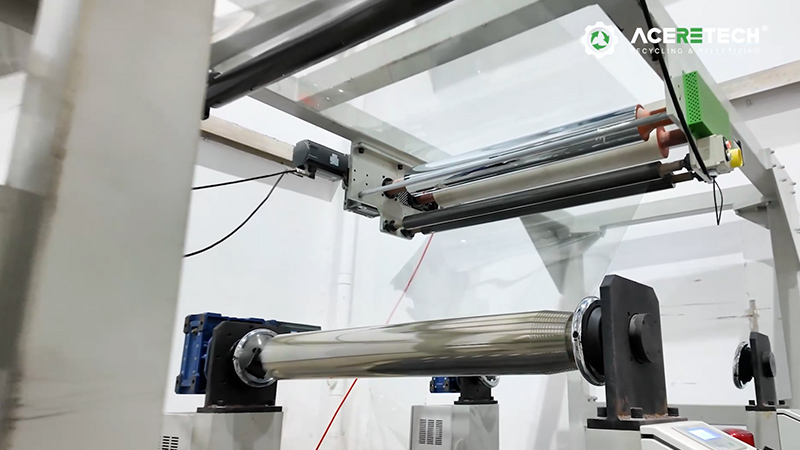
Sheet Forming and Post-processing: Utilizes a coat-hanger die combined with a three-roll calender stack to ensure uniform sheet thickness and a high-quality surface finish. Downstream equipment—including an online thickness gauge, haul-off unit, stress-relief device, and high-speed winder—is integrated to form a complete automated production line.
III. Operating Parameters and Results: Data Speaks for Itself
Following weeks of commissioning and optimization, the production line has entered a phase of stable operation. Below are the key operating parameters and final performance verification results:
| Item | Operating Parameters | Operational Results |
| Design Capacity |
800–1000 kg/h |
Reached design upper limit |
| Actual Stable Capacity | 950 kg/h | Exceeded expectations |
| Sheet Thickness Range | 0.2 mm – 1.5 mm | Meets multi-specification requirements |
| Thickness Tolerance | ±3% | Superior to industry standards (±5%) |
| Sheet Transparency | > 90% (Haze < 2%) | Achieved virgin-grade transparency |
| Acetaldehyde Content | < 1 ppm | Far below FDA food-grade requirements |
| Impact Strength | Comparable to virgin PET sheet | Meets end-application requirements |
| IV (Intrinsic Viscosity) | 0.78 ± 0.02 dl/g | Maintained stability via precise additive control |
The production line has not only achieved high output, but the resulting rPET sheet also rivals virgin PET in transparency, purity, and mechanical properties, fully meeting the rigorous standards of the North American food packaging market.
IV. Challenges and Solutions: Refining Technology Through Real-World Application
No successful project is without its challenges. During the commissioning and launch of this line, we encountered two typical challenges:
Challenge 1: IV Instability Due to Raw Material Fluctuations
Issue: The recycled PET bottles came from diverse sources, resulting in fluctuating initial Intrinsic Viscosity (IV) values that directly impacted the toughness of the final sheet.
Solution: We utilized an inline IV monitoring system on the extruder (an optional configuration) combined with high-precision metering pumps to dynamically adjust the dosage of chain extenders. Through closed-loop control, the final sheet's IV value remained stable within the target range regardless of fluctuations in the incoming material, ensuring highly consistent product performance.
Challenge 2: Gel and Black Spot Issues During Continuous Production
Issue: After prolonged operation, gel points formed by trace degradation products could appear in the melt, affecting the sheet's appearance.
Solution: We optimized the extruder screw configuration to enhance dispersion and degassing capabilities. Simultaneously, we upgraded the dual-column filter mesh from 60 microns to 40 microns and optimized the screen-changing frequency. This comprehensive approach completely resolved the gel issues, ensuring the absolute purity of the sheet.
V. Customer Feedback: A Partner That Exceeds Expectations
Following the successful delivery of the project, we received high praise from the customer:
"This production line not only met all our preset technical specifications, but its operational stability and level of automation exceeded our expectations. Their technical team, in particular, demonstrated exceptional professionalism during commissioning and troubleshooting. Our rPET sheets are now being used for food packaging by several major supermarket chains in North America, and market feedback has been excellent. ACERETECH is more than just an equipment supplier; they are a trusted, long-term partner."
Related Articles
PET Sheet Extrusion Solutions
Conclusion: Technical Prowess as the Cornerstone of the Circular Economy
The successful launch of this food-grade rPET sheet line in North America is not only a powerful testament to ACERETECH’s technical capabilities but also a prime example of our commitment to advancing the global circular economy for plastics. It clearly demonstrates that through advanced equipment design, precise process control, and rapid problem-solving capabilities, waste PET can be successfully transformed into high-value products that meet the most rigorous market standards. We look forward to joining hands with more global partners to usher in a cleaner, more sustainable future.