I. Introduction: Understanding the PET Sheet Extrusion Process
PET sheets are widely used in food packaging, thermoformed trays, blister packaging, medical packaging, and various industrial sectors. With the steadily growing demand for sustainable packaging, the production of PET and RPET sheets has become one of the fastest-growing segments of the plastics industry.
For manufacturers considering an investment in a PET sheet extrusion line, understanding the complete production process is crucial. From raw material preparation to final sheet winding, every stage impacts product quality, production efficiency, and operating costs.
This guide explains the working principles of a PET sheet extrusion line and highlights the key technologies required to produce high-quality PET sheets.
II. What Is a PET Sheet Extrusion Line?
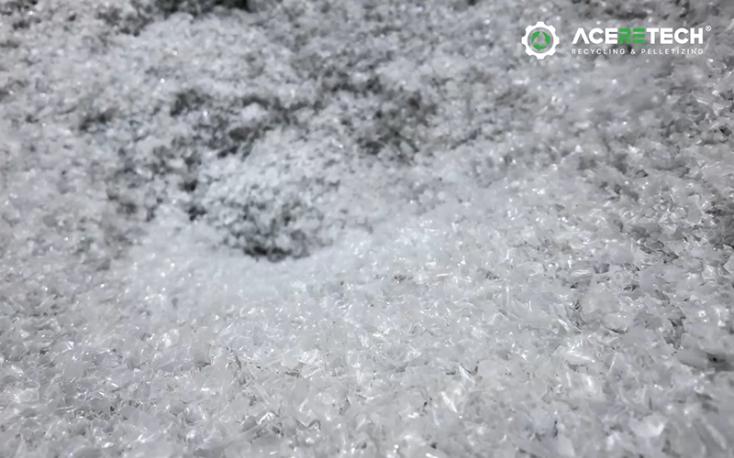
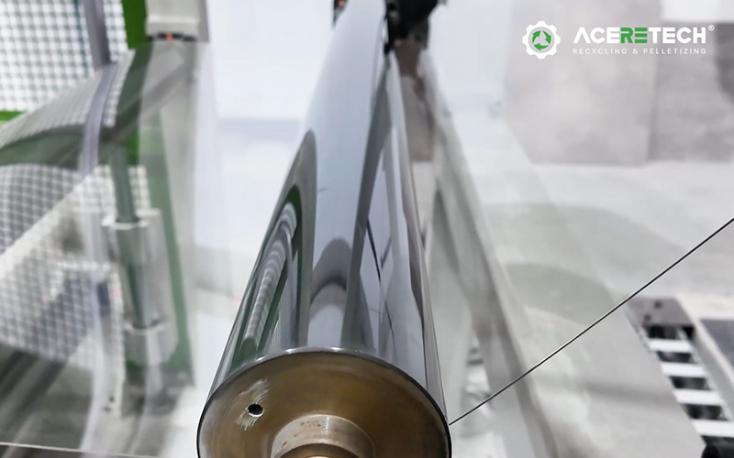
A PET sheet extrusion line is a production system that transforms PET resin, recycled PET (RPET) granules, or PET bottle flakes into continuous plastic sheets with precise thickness and excellent surface quality.
The finished sheets can be used to manufacture:
Food packaging trays
Fruit and vegetable containers
Disposable food containers
Blister packs
Medical packaging
Cosmetic packaging
Thermoformed products
Modern PET sheet extrusion systems can process both virgin PET and recycled PET (RPET), helping manufacturers reduce production costs while supporting sustainability goals.
III. Key Components of a PET Sheet Extrusion Line
A complete PET sheet extrusion line typically includes:
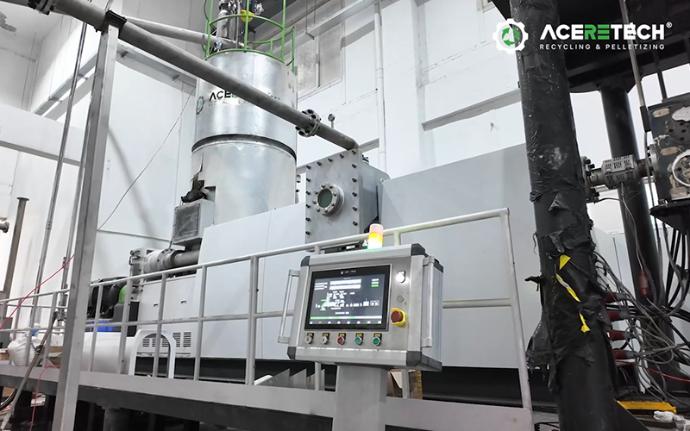
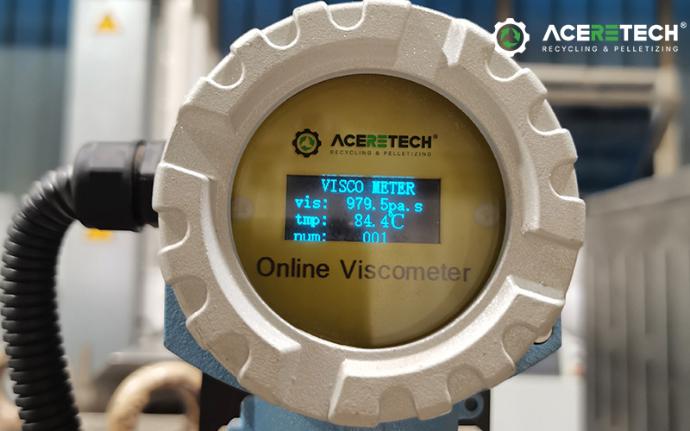
1. Raw Material Conveying System
Responsible for:
Material storage
Conveying
Automatic feeding
Suitable for:
Virgin PET resin
RPET pellets
PET bottle flakes
2. Dehumidifying and Drying System
PET is prone to absorbing moisture from the air.
Before extrusion, the material must be thoroughly dried to prevent:
Hydrolysis
Reduction in Intrinsic Viscosity (IV)
Surface defects
Loss of transparency
The drying system is one of the most critical components in PET processing.
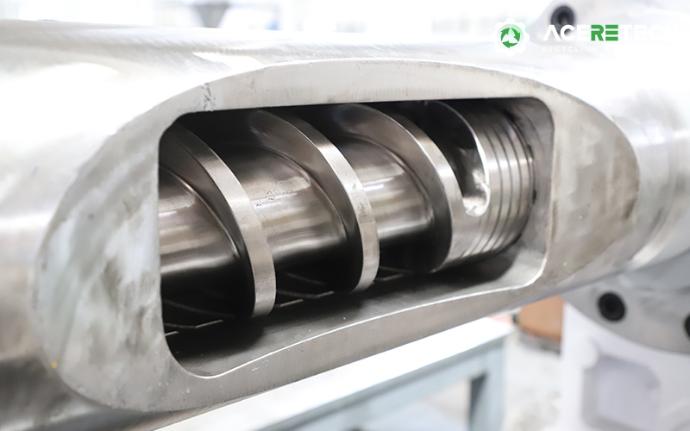
3. Extruder
The extruder is the core component of the production line.
Its functions include:
Melting the PET material
Homogenizing the melt
Generating extrusion pressure
Modern PET sheet extrusion lines typically utilize optimized screw designs to enhance melting efficiency and processing stability.
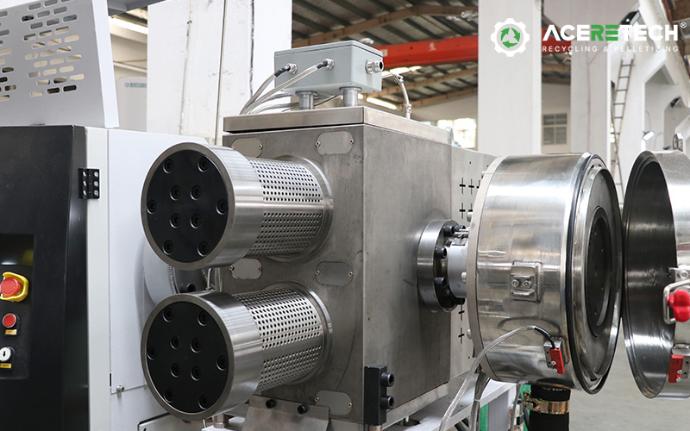
4. Melt Filtration System
The filtration system removes contaminants from the molten PET.
Common contaminants include:
Dust
Paper fibers
Aluminum particles
Label residues
Foreign plastics
Effective filtration improves sheet quality and protects downstream equipment.
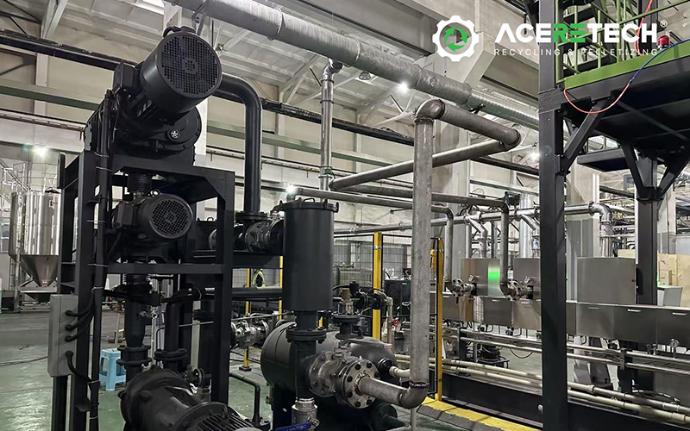
5. Vacuum Degassing System
Vacuum degassing removes:
Residual moisture
Volatile compounds
Entrapped gases
Benefits include:
Higher transparency
Greater sheet strength
Fewer defects
More stable extrusion
Vacuum degassing is particularly important when processing recycled PET materials.
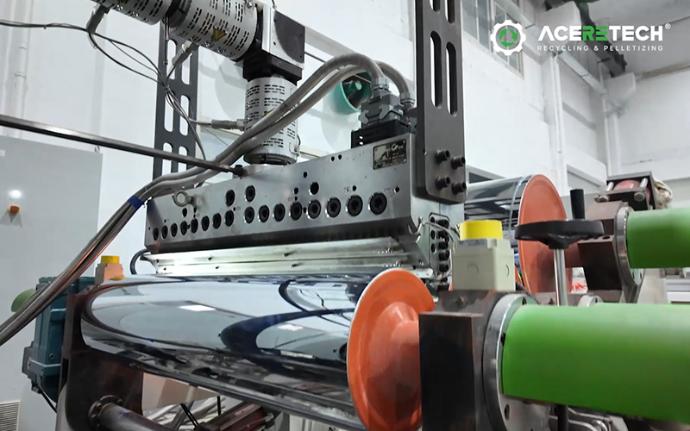
6. Extrusion Die
The extrusion die shapes the molten PET into a flat sheet.
The die directly influences:
Sheet width
Thickness uniformity
Surface quality
High-precision dies help ensure consistent product quality.
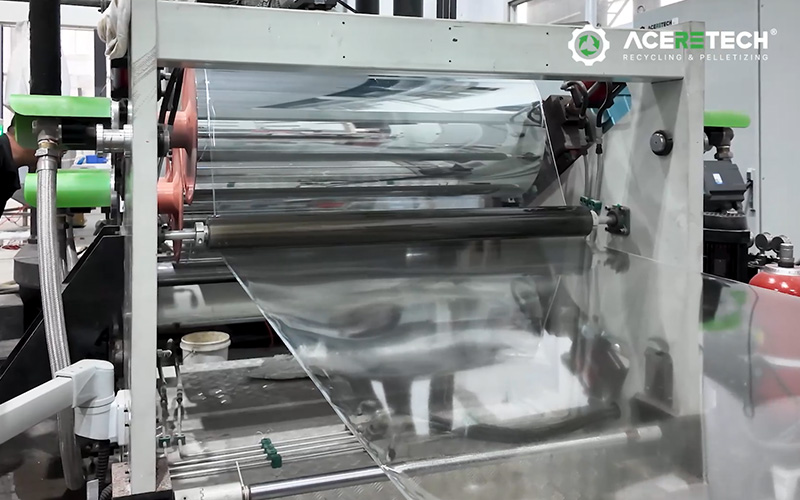
7. Three-Roll Calendering System
After exiting the die, the molten PET passes through a set of calendering rolls.
The calendering rolls perform the following functions:
Sheet forming
Surface finishing
Thickness calibration
Cooling control
Precise roll temperature control is crucial for achieving excellent transparency and flatness.
8. Cooling and Winding System
The finished sheet undergoes:
Further cooling
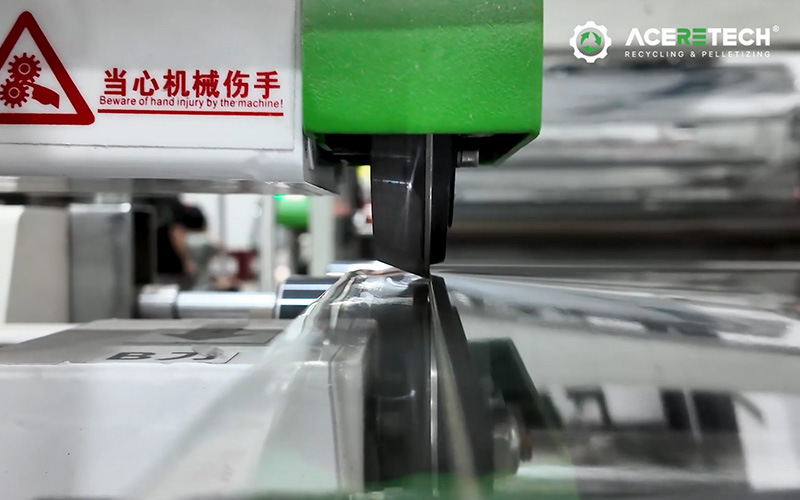
Edge trimming (if necessary)
Winding into rolls
Stable winding ensures efficient storage and transportation.
IV. Direct Extrusion of PET Flakes into Sheet
In recent years, one of the most significant technological advancements has been direct flake extrusion technology.
Instead of first processing PET flakes into pellets, manufacturers can process washed bottle flakes directly into sheets.
Advantages include:
Lower energy consumption
Fewer processing steps result in reduced electricity usage.
Lower operating costs
Eliminates the cost associated with the pelletizing stage.
Higher production efficiency
A shortened production process increases efficiency.
Enhanced sustainability
Supports closed-loop recycling systems.
This technology is becoming increasingly popular among PET recyclers and packaging manufacturers.
V. Applications of PET Sheet
PET sheet produced via the extrusion process is widely used in:
Food packaging
Fruit trays
Bakery containers
Salad boxes
Ready-meal packaging
Thermoforming industry
Disposable trays
Blister packaging
Industrial packaging
Medical packaging
Sterile packaging trays
Pharmaceutical packaging
Consumer goods packaging
Electronics packaging
Cosmetics packaging
Retail packaging
VI. Key Factors Affecting PET Sheet Quality
To ensure consistent production quality, manufacturers should focus on:
1. Moisture control
Proper drying prevents hydrolysis and defects.
2. Material quality
Clean PET flakes and high-quality granules help improve production stability.
3. Filtration efficiency
Higher filtration efficiency reduces defects caused by impurities.
4. Vacuum degassing performance
Effective degassing improves transparency and visual quality.
5. Process stability
Stable temperature, pressure, and cooling conditions help enhance product consistency.
VII. Why Choose ACERETECH’s PET Sheet Extrusion Solutions?
ACERETECH offers advanced PET sheet extrusion systems designed for both virgin and recycled PET applications. Key advantages:
✔ Direct processing of PET bottle flakes
✔ High-efficiency vacuum degassing technology
✔ Advanced melt filtration systems
✔ Precise thickness control
✔ Energy-efficient extrusion design
✔ Customized turnkey solutions
✔ Comprehensive expertise covering PET recycling and extrusion
With extensive experience in PET washing, pelletizing, and sheet extrusion technologies, ACERETECH helps customers build efficient, sustainable PET sheet production lines.
VIII. Conclusion
PET sheet extrusion lines transform PET resin, rPET granules, or recycled PET flakes into high-quality sheets through strictly controlled process steps, including drying, melting, filtering, degassing, forming, cooling, and winding.
Understanding the operating principles of each production stage helps manufacturers optimize efficiency, enhance product quality, and maximize the value of recycled PET materials.
As the demand for sustainable packaging continues to grow, advanced PET sheet extrusion technology will play an increasingly important role in the plastic circular economy.
Related Articles
PET Bottle Recycling and Washing Solutions
PET Sheet Pelletizing Solutions
FAQ
Q1. What raw materials can be used in a PET sheet extrusion line?
A: PET sheet extrusion lines can process virgin PET resin, RPET pellets, and recycled PET bottle flakes.
Q2. Why is drying required before PET extrusion?
A: PET is highly hygroscopic. Thorough drying prevents hydrolysis, material degradation, and quality defects.
Q3. What is the function of vacuum degassing in PET sheet extrusion?
A: Vacuum degassing removes moisture and volatile substances, thereby enhancing transparency and production stability.
Q4. How can manufacturers improve the transparency of PET sheets?
A: Thorough drying, efficient filtration, effective degassing, and stable temperature control all contribute to improved transparency.
Q5. Are RPET sheets suitable for food packaging?
A: Yes. When produced in accordance with appropriate recycling and manufacturing standards, RPET sheets can be used for food packaging applications.