I. Project Background
As the demand for recycled materials in food-contact packaging continues to grow, PET bottle recycling is becoming increasingly important in the development of a circular plastics economy.
However, converting washed post-consumer PET flakes into high-quality rPET pellets for demanding downstream applications requires more than conventional extrusion. PET is sensitive to moisture during processing, while residual contaminants, unstable melt conditions, and changes in intrinsic viscosity can all affect the quality and consistency of the final pellets.
For this project, ACERETECH supplied a high-capacity PET flake pelletizing and extrusion line designed to process washed PET flakes and produce high-quality rPET pellets.
The complete system has a production capacity of 3000–3500 kg/h and integrates crystallization, extrusion, vacuum degassing, melt filtration, melt pressure control, inline viscosity monitoring, underwater pelletizing, and centralized process control.
II. Project Overview
Capacity: 3000–3500 kg/h
Raw Material: Washed PET flakes
Finished Product: High-quality rPET pellets
Main Applications: PET sheet, thermoformed packaging, food containers, fiber, packaging products, and other downstream PET applications
III. Material Characteristics and Processing Challenges
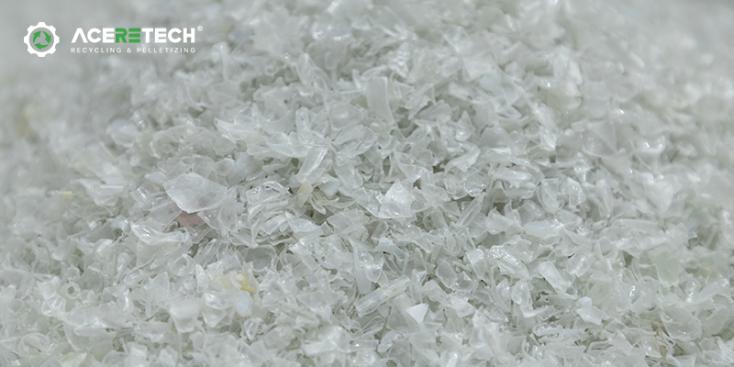
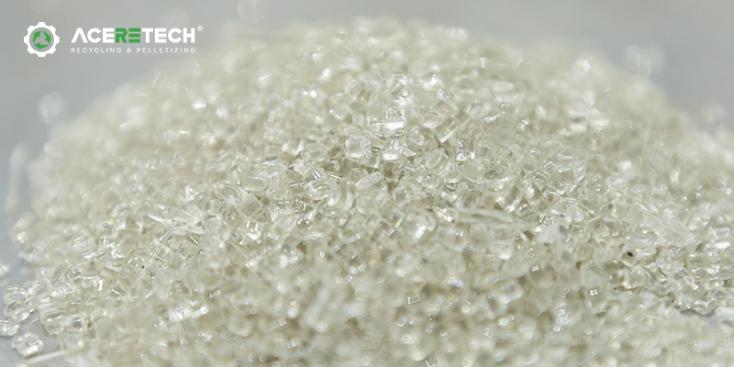
PET recycling presents several important processing challenges, especially when washed PET bottle flakes are used as the feed material for high-capacity pellet production.
1. Moisture Sensitivity
PET is sensitive to moisture during thermal processing.
If moisture is not properly controlled, hydrolysis may occur during extrusion, affecting the molecular structure and intrinsic viscosity of the material.
Stable moisture management is therefore an important part of the PET pelletizing process.
2. Intrinsic Viscosity Stability
Intrinsic Viscosity (IV) is an important parameter influencing the properties and downstream processability of PET.
During recycling and extrusion, excessive degradation or unstable processing conditions may result in changes to the material properties.
For this reason, stable extrusion conditions and real-time process monitoring are important for maintaining consistent pellet quality.
3. Residual Contaminants
Even after washing, PET flakes may contain residual contaminants or fine particles.
An effective melt filtration system is therefore required to improve melt cleanliness and support continuous, stable production.
4. High-Capacity Continuous Production
With a production capacity of 3000–3500 kg/h, the complete system must maintain stable material feeding, extrusion, melt pressure, filtration, pelletizing, and process control throughout continuous operation.
Each processing stage must work together to support consistent high-output production.
IV. ACERETECH High-Capacity PET Flake Pelletizing Solution
For this project, ACERETECH designed a complete PET flake pelletizing and extrusion solution based on the customer's production requirements.
The system integrates the following main processing stages:
Crystallization → ACT105/220 Conical Twin-Screw Extrusion → Vacuum Degassing → Automatic Back-Flushing Melt Filtration → Melt Pressure Control → Inline Melt Viscosity Measurement → Underwater Pelletizing → Centralized PLC Control
The complete system is designed to continuously process washed PET flakes and convert them into high-quality rPET pellets.
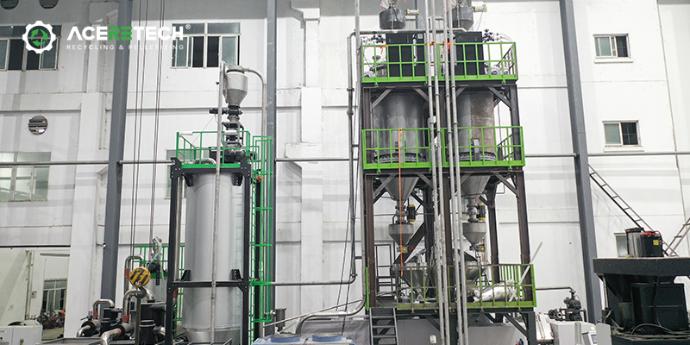
Step 1: PET Flake Crystallization
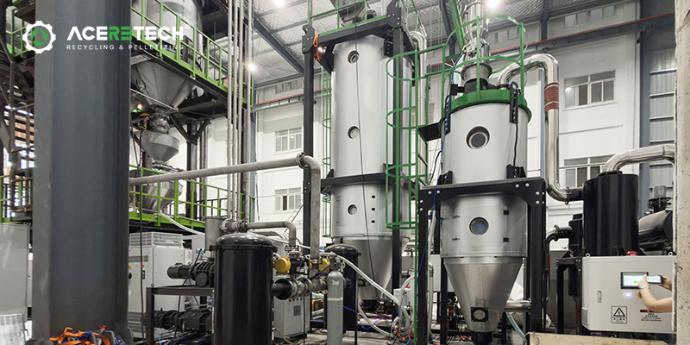
The process begins with the crystallization of the PET flakes before extrusion.
The crystallization system is designed to improve the flow characteristics of the material and support stable feeding into the downstream extrusion system.
Key functions include:
Helping prevent material bridging and adhesion
Improving feeding stability
Supporting moisture management
Improving processing efficiency
Proper material preparation before extrusion is important for maintaining stable operation throughout the pelletizing process.
Step 2: ACT105/220 Conical Twin-Screw Extrusion
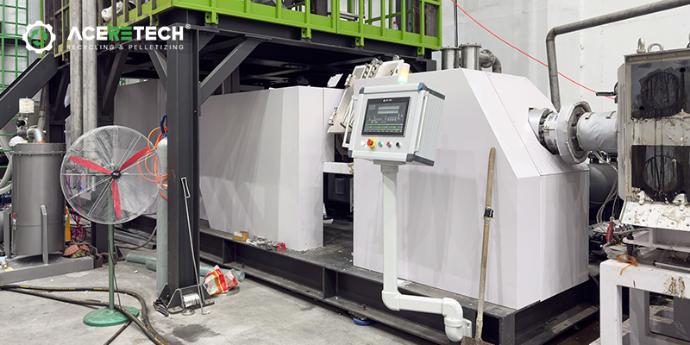
At the heart of this high-capacity PET pelletizing line is the ACT105/220 conical twin-screw extruder.
Main Specifications
Screw Diameter: 105/220 mm
Maximum Screw Speed: 75 rpm
Output: 3000–3500 kg/h
The extrusion system is designed to provide stable processing performance under continuous high-output operating conditions.
Advanced Screw Construction
The screws feature a bimetallic construction combining:
38CrMoAlA nitrided steel
Nickel-based wear-resistant alloy
This design provides:
Excellent wear resistance
Improved corrosion resistance
High-temperature stability
Extended service life
Infrared Heating System
The barrel is equipped with an infrared heating system.
Key advantages include:
Rapid heating
Efficient heat transfer
Reduced energy consumption
Maintenance-free operation
Combined with the air-cooling system, the extrusion unit is designed to maintain stable processing conditions during continuous production.
Step 3: Heavy-Duty Gearbox
The high-capacity extrusion system is equipped with a heavy-duty gearbox designed for demanding industrial applications.
The gearbox uses nickel-molybdenum alloy gears to provide stable power transmission during high-output operation.
Key advantages include:
High-torque transmission
Low operating noise
Reliable continuous operation
Extended service life
The robust gearbox supports stable operation of the extrusion system under continuous production conditions.
Step 4: Vacuum Degassing
The extrusion line is equipped with a vacuum degassing system for melt purification during PET processing.
The system includes:
Liquid ring vacuum pump
Roots vacuum booster pump
Multi-stage vacuum configuration
The vacuum system helps remove:
Moisture
Volatile component
Low-molecular-weight substances
By improving melt purification during extrusion, the vacuum degassing system supports stable processing and consistent pellet quality.
Step 5: Automatic Back-Flushing Screen Changer
After extrusion and melt preparation, the PET melt passes through an automatic back-flushing screen changer.
The system is designed to provide continuous melt filtration while minimizing interruptions caused by frequent manual screen replacement.
Key advantages include:
PLC-controlled automatic cleaning
Continuous production
Improved filtration efficiency
Reduced manual operation
Extended production uptime
This stage is particularly important when processing recycled PET flakes that may contain residual contaminants.
Step 6: Melt Pump for Stable Pressure Control
A melt pump is installed downstream of the filtration system.
The main functions of the melt pump include:
Stabilizing melt pressure
Reducing output fluctuations
Supporting consistent pellet production
Improving overall process stability
Stable melt pressure is particularly important for maintaining reliable operation of the downstream underwater pelletizing system.
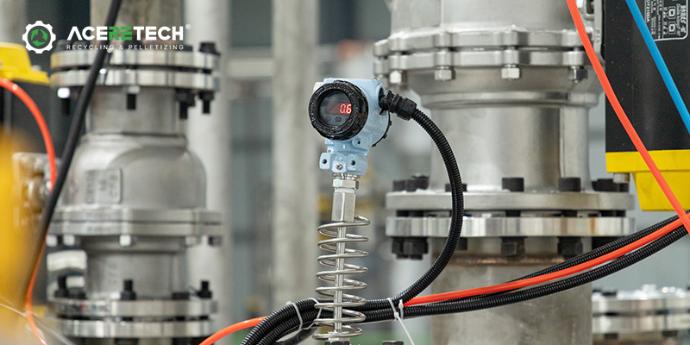
Step 7: Inline Melt Viscosity Measurement
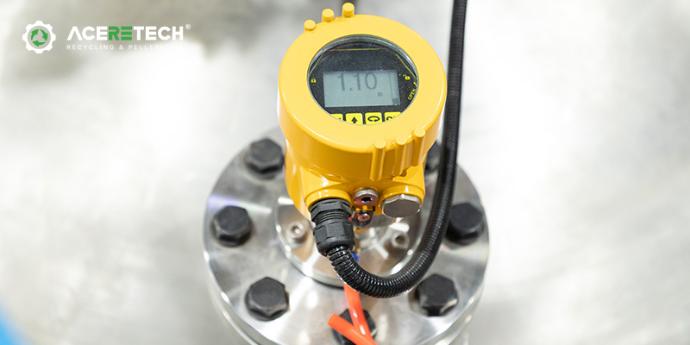
The system is equipped with an inline melt viscosity measurement system for real-time process monitoring.
The system allows operators to:
Monitor melt viscosity in real time
Observe processing stability
Detect material fluctuations
Adjust processing parameters when required
This monitoring system provides additional support for process control and helps maintain consistent production conditions.
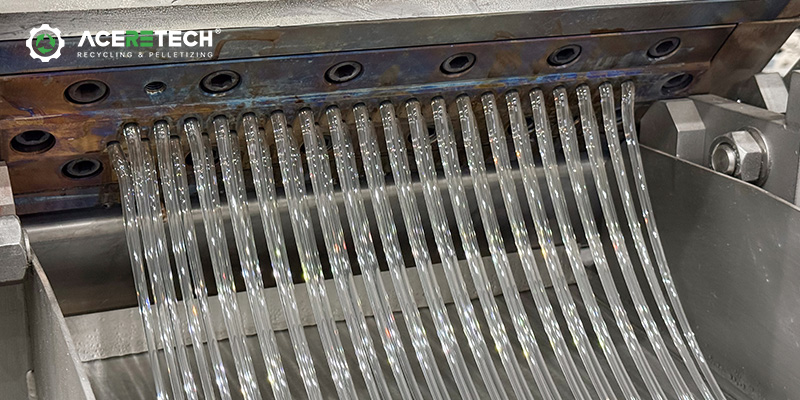
Step 8: Underwater Pelletizing
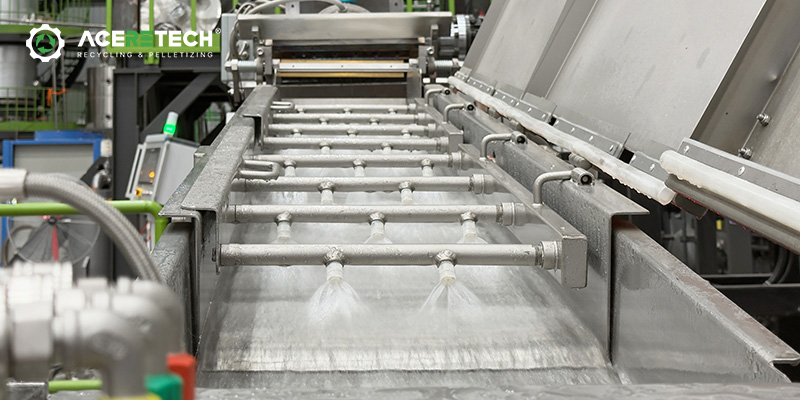
The final pelletizing stage uses an underwater pelletizing system.
The molten PET is processed into pellets under a continuous and automated pelletizing process.
Key advantages include:
Uniform pellet size
Smooth pellet surface
High production efficiency
Effective pellet cooling
Automated operation
The underwater pelletizing system is particularly suitable for continuous high-capacity PET pellet production.
Step 9: Intelligent Centralized Control System
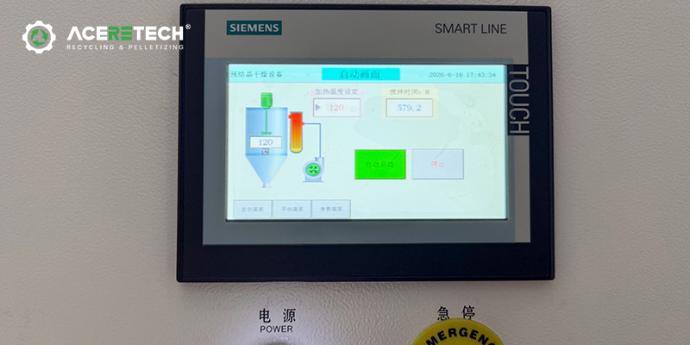
The complete production line is managed through an intelligent PLC control system.
The centralized control system provides:
Centralized operation
Real-time monitoring
Automatic process control
Production data management
User-friendly operation
By integrating the main processing stages into one centralized control architecture, operators can monitor and manage the complete pelletizing process more efficiently.
V. Key Features of This PET Pelletizing Project
This high-capacity PET flake pelletizing line integrates multiple processing technologies into one complete system.
Key features include:
Production capacity of 3000–3500 kg/h
Processing of washed PET flakes
PET flake crystallization before extrusion
ACT105/220 conical twin-screw extrusion
Infrared heating and air cooling
Heavy-duty gearbox for continuous operation
Vacuum degassing system
Automatic back-flushing melt filtration
Melt pressure stabilization
Inline melt viscosity monitoring
Underwater pelletizing
Intelligent centralized PLC control
By integrating these technologies into a complete production line, the system is designed to support continuous, stable, high-capacity rPET pellet production.
VI. Applications of the rPET Pellets
The rPET pellets produced by this system can be used in a variety of downstream PET processing applications, depending on the final material specifications and application requirements.
Typical applications include:
PET sheet production
Thermoformed packaging
Food containers
Beverage and packaging products
Polyester fiber
PET strapping
Other recycled PET applications
The final application depends on the properties of the recycled pellets and the requirements of the downstream manufacturing process.
Related Articles
PET bottle shredding solutions
PET bottle washing line solutions
PET sheet extrusion lines
Project Summary
This project demonstrates ACERETECH's capability to provide high-capacity PET recycling and pelletizing solutions for the processing of washed PET flakes.
With a production capacity of 3000–3500 kg/h, the complete line integrates material preparation, high-capacity extrusion, vacuum degassing, automatic melt filtration, pressure control, inline viscosity monitoring, underwater pelletizing, and intelligent centralized control.
The complete process can be summarized as:
PET Flake Crystallization → ACT105/220 Conical Twin-Screw Extrusion → Vacuum Degassing → Automatic Back-Flushing Screen Changer → Melt Pump → Inline Melt Viscosity Measurement → Underwater Pelletizing → Centralized PLC Control
By integrating these processing stages into one complete system, washed PET flakes can be continuously processed into high-quality rPET pellets for further manufacturing applications.
Looking for a High-Capacity PET Recycling and Pelletizing Solution?
ACERETECH provides integrated PET recycling and pelletizing solutions covering PET bottle recycling, washing, crystallization, extrusion, melt filtration, pelletizing, and downstream material handling.
Each project can be designed according to the characteristics of the input material, required production capacity, and downstream application requirements.
Contact ACERETECH to discuss your PET recycling project and find a suitable solution for your application.
FAQ
These terms of service ("Terms", "Agreement") are an agreement between the website ("Website operator", "us", "we" or "our") and you ("User", "you" or "your"). This Agreement sets forth the general terms and conditions of your use of this website and any of its products or services (collectively, "Website" or "Services").
Q1. What material does this PET pelletizing line process?
A: This project is designed to process washed PET flakes. The flakes can be obtained from recycled PET bottles and other suitable PET waste streams after the required sorting and washing processes.
These terms of service ("Terms", "Agreement") are an agreement between the website ("Website operator", "us", "we" or "our") and you ("User", "you" or "your"). This Agreement sets forth the general terms and conditions of your use of this website and any of its products or services (collectively, "Website" or "Services").
Q2. What is the production capacity of this line?
A: The production capacity of this PET flake pelletizing and extrusion line is 3000–3500 kg/h.
These terms of service ("Terms", "Agreement") are an agreement between the website ("Website operator", "us", "we" or "our") and you ("User", "you" or "your"). This Agreement sets forth the general terms and conditions of your use of this website and any of its products or services (collectively, "Website" or "Services").
Q3. Why is crystallization included before PET extrusion?
A: The crystallization stage helps improve the flow characteristics and feeding stability of the PET flakes before they enter the extrusion system. It also supports stable material preparation for the subsequent processing stages.
These terms of service ("Terms", "Agreement") are an agreement between the website ("Website operator", "us", "we" or "our") and you ("User", "you" or "your"). This Agreement sets forth the general terms and conditions of your use of this website and any of its products or services (collectively, "Website" or "Services").
Q4. What is the purpose of the vacuum degassing system?
A: The vacuum degassing system helps remove moisture, volatile components, and other low-molecular-weight substances from the PET melt during extrusion, supporting melt purification and stable processing.
These terms of service ("Terms", "Agreement") are an agreement between the website ("Website operator", "us", "we" or "our") and you ("User", "you" or "your"). This Agreement sets forth the general terms and conditions of your use of this website and any of its products or services (collectively, "Website" or "Services").
Q5. Why is an automatic back-flushing screen changer used?
A: The automatic back-flushing screen changer provides continuous melt filtration and reduces the need for frequent manual screen replacement. This helps maintain production continuity when processing recycled PET flakes that may contain residual contaminants.
These terms of service ("Terms", "Agreement") are an agreement between the website ("Website operator", "us", "we" or "our") and you ("User", "you" or "your"). This Agreement sets forth the general terms and conditions of your use of this website and any of its products or services (collectively, "Website" or "Services").
Q6. What is the role of inline melt viscosity measurement?
A: The inline melt viscosity measurement system allows operators to monitor melt viscosity in real time and observe changes in processing stability. This provides additional support for process monitoring and production control.
These terms of service ("Terms", "Agreement") are an agreement between the website ("Website operator", "us", "we" or "our") and you ("User", "you" or "your"). This Agreement sets forth the general terms and conditions of your use of this website and any of its products or services (collectively, "Website" or "Services").
Q7. Why is underwater pelletizing used in this project?
A: The underwater pelletizing system is designed for continuous, high-capacity pellet production. It provides efficient cooling and automated pellet formation, helping maintain stable operation and consistent pellet quality.