I. Project Background
PE film is widely used in packaging, logistics, agriculture, and industrial applications. As a result, large quantities of PE film waste are generated during both manufacturing and post-consumer use.
However, recycling PE film presents several processing challenges. Compared with rigid plastics, film materials have a low bulk density and are lightweight, flexible, and easily entangled. Depending on the source of the material, the film may also contain dirt, moisture, labels, adhesives, and other contaminants.
In this project, ACERETECH supplied a complete PE film recycling solution integrating material feeding, metal detection, shredding, washing, dewatering, pelletizing, melt filtration, and pellet handling.
The purpose of the system is to process waste PE film and convert it into recycled PE pellets for further manufacturing applications.
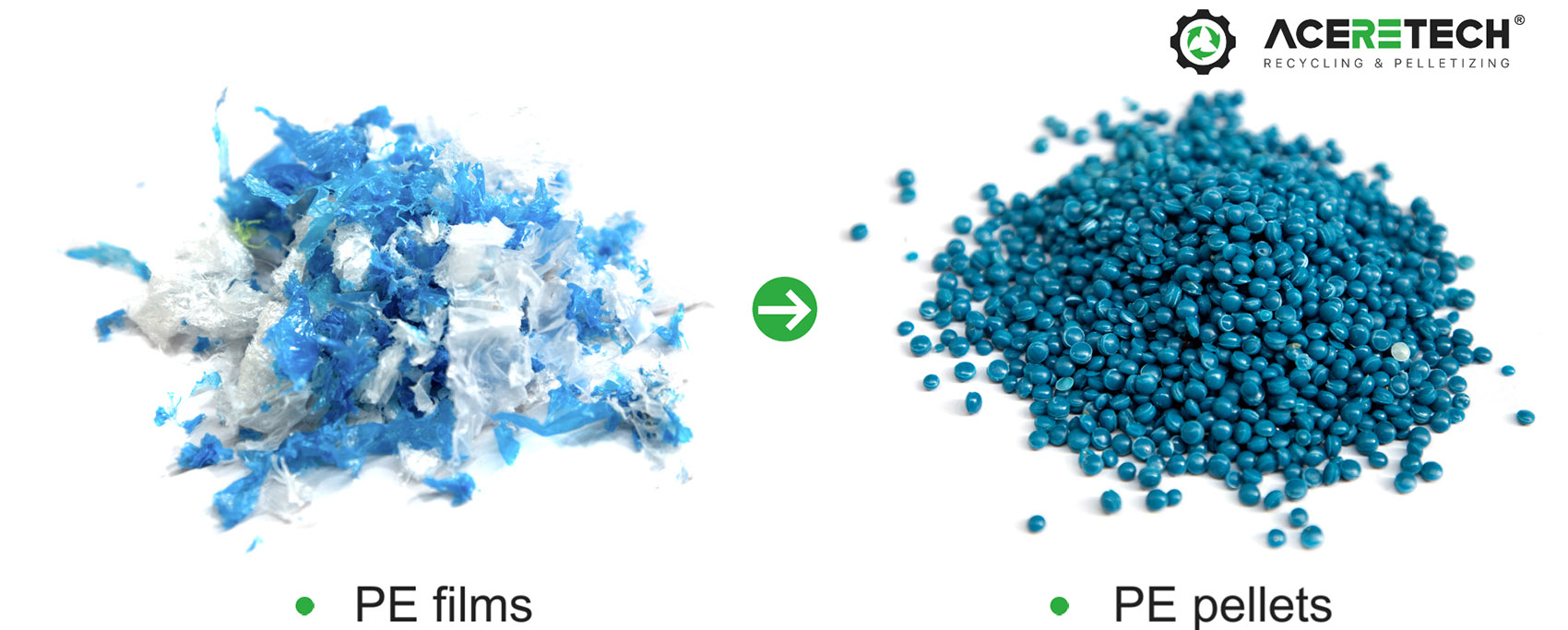
II. PE film Material Characteristics and Recycling Challenges
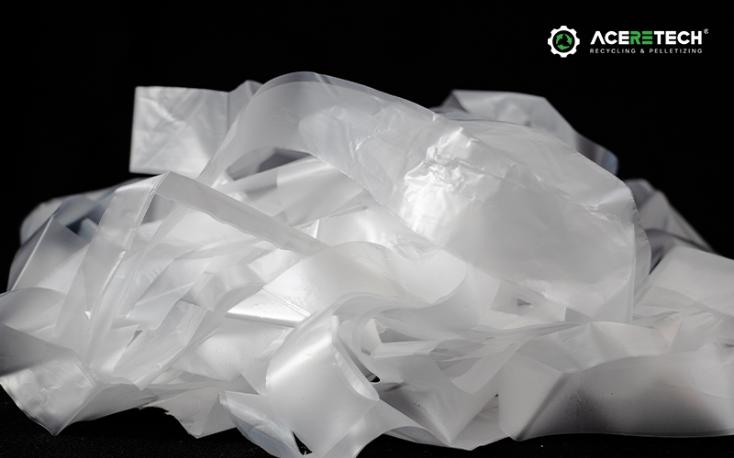
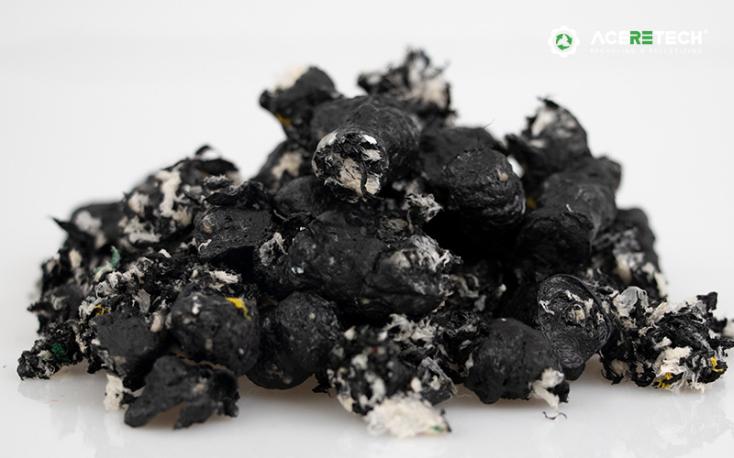
PE film waste can come from a variety of sources, including packaging film, industrial film, stretch film, agricultural film, and production scrap. During recycling, the material may present several challenges.
1. Low Bulk Density
PE film is lightweight and occupies a large volume relative to its weight. This can create difficulties in material transportation and stable feeding.
A properly designed feeding and size-reduction system is therefore important to ensure continuous material flow throughout the recycling process.
2. Film Entanglement
Because PE film is flexible and lightweight, it can easily wrap around rotating components during processing.
The equipment used in the recycling line must therefore be suitable for handling flexible film materials and maintaining stable operation.
3. Contamination
Depending on the source of the waste, PE film may contain contaminants such as dirt, dust, labels, adhesives, or other foreign materials.
An effective washing process is required to improve the cleanliness of the material before pelletizing.
4. Moisture After Washing
After the washing process, PE film retains moisture that must be reduced before entering the pelletizing stage.
The dewatering system is therefore an important part of the overall recycling process and helps prepare the washed film for stable downstream processing.
III. ACERETECH PE Film Recycling Solution
Based on the characteristics of the PE film material, ACERETECH designed a complete recycling process integrating washing and pelletizing.
The system combines multiple processing stages to handle the material continuously from feeding to final pellet collection.
The complete process includes:
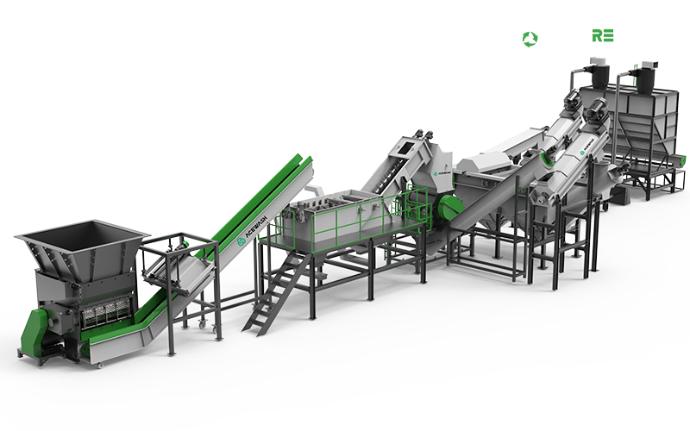
Belt Conveyor → Metal Detector → Single-Shaft Shredder → Friction Washer → Rinsing Tank → Dewatering Machine → Pelletizing Extruder → Melt Filtration System → Pellet Dewatering Machine → Pellet Silo
Each stage plays a specific role in preparing the PE film for the next process.
Step 1: Material Feeding and Metal Detection
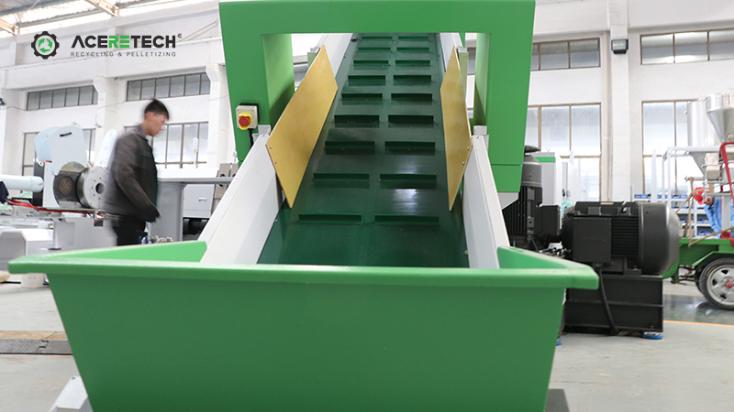
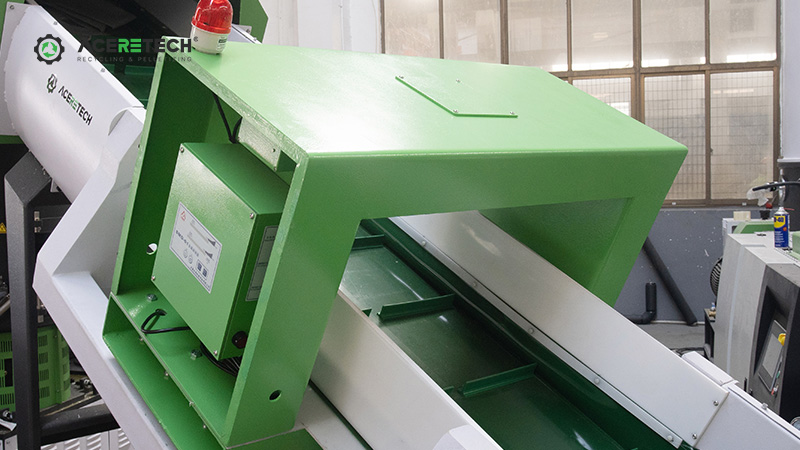
The PE film is first fed into the recycling system through a belt conveyor.
Before entering the size-reduction stage, the material passes through a metal detection system.
The metal detector is used to identify metallic contaminants and help protect downstream equipment from potential damage.
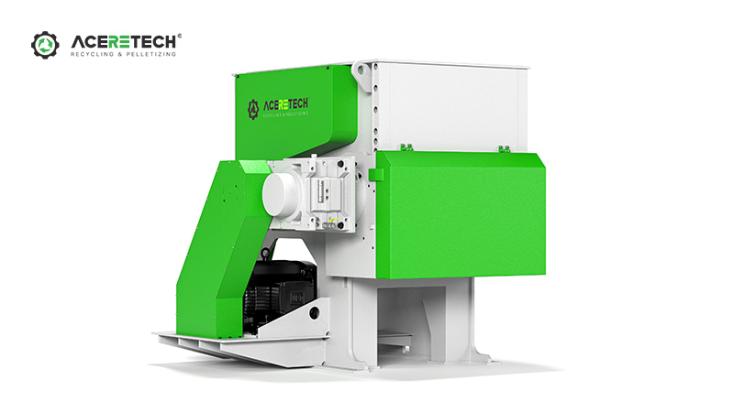
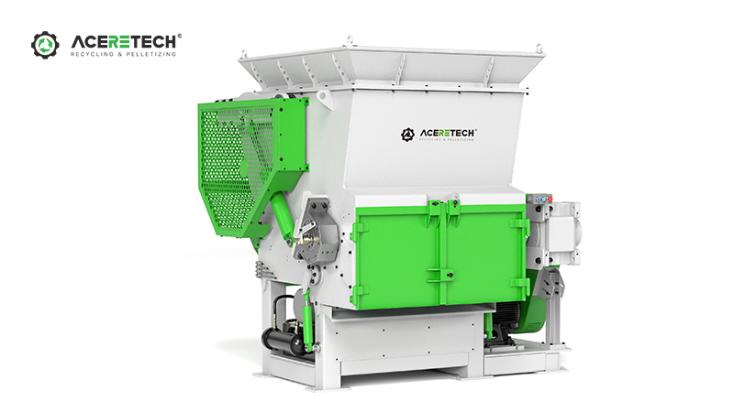
After metal detection, the material enters the single-shaft shredder for size reduction.
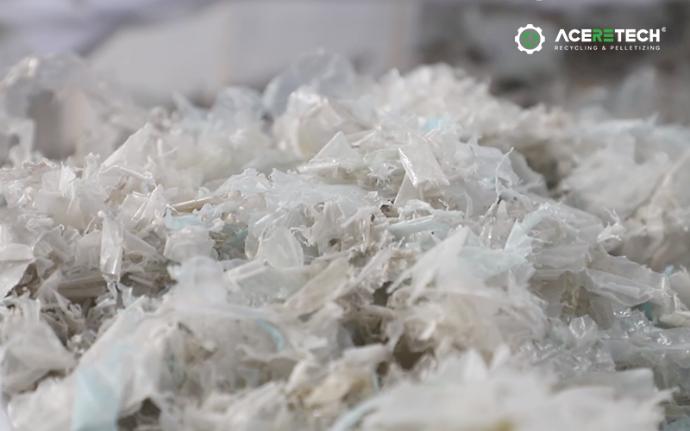
The shredding stage helps reduce the size of the PE film and improves material handling during the subsequent washing process.
The output material is prepared for downstream washing and processing.
Equipment: Single-Shaft Shredder
Output Size: 30–100 mm
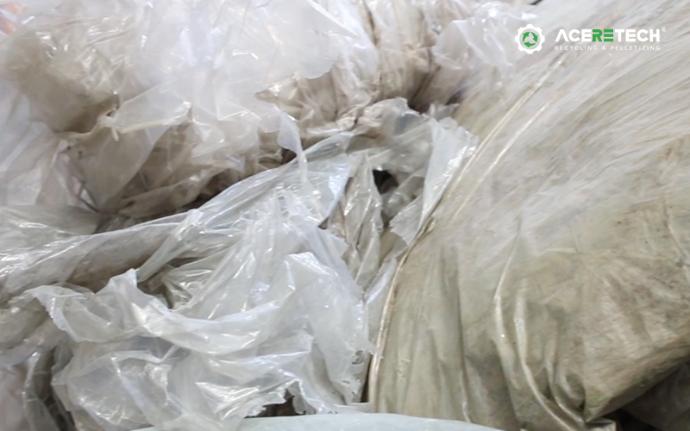
After shredding, the PE film enters the washing section.
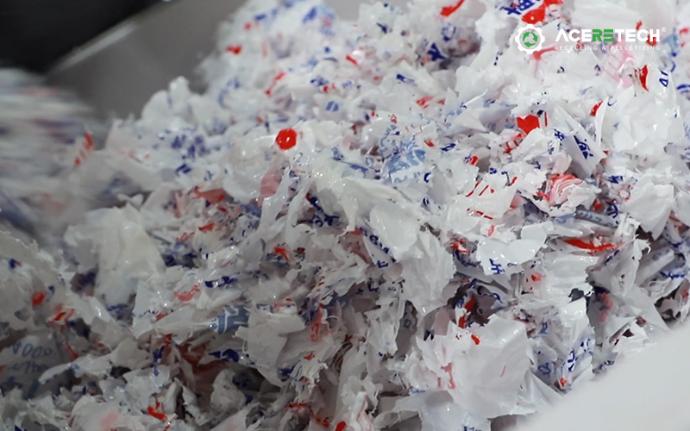
The friction washer is used to remove contaminants from the surface of the material through mechanical friction and water.
The material then enters the rinsing tank for further cleaning and separation.
The washing process helps reduce dirt, dust, and other contaminants carried by the PE film.
Related Articles
PE Film Washing Solution
Step 4: Dewatering
After washing and rinsing, the material enters the dewatering machine.
The dewatering stage removes a significant amount of water from the washed PE film and prepares the material for the pelletizing process.
Reducing the moisture content is important for maintaining stable processing during extrusion and pelletizing.
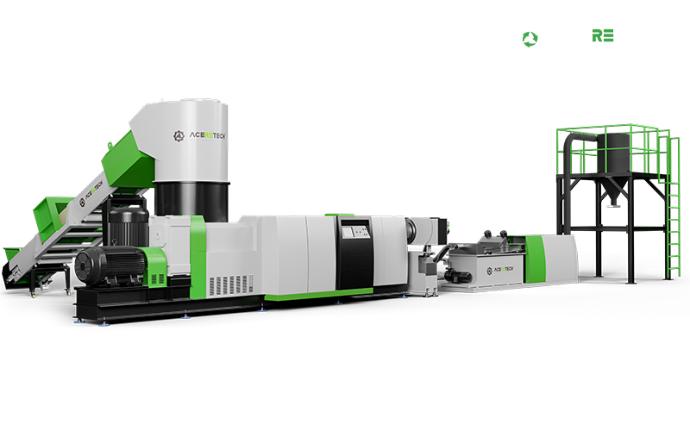
The processed PE film is then fed into the pelletizing extruder.
During extrusion, the material is melted and homogenized.
The molten plastic then passes through the melt filtration system to further remove impurities from the material.
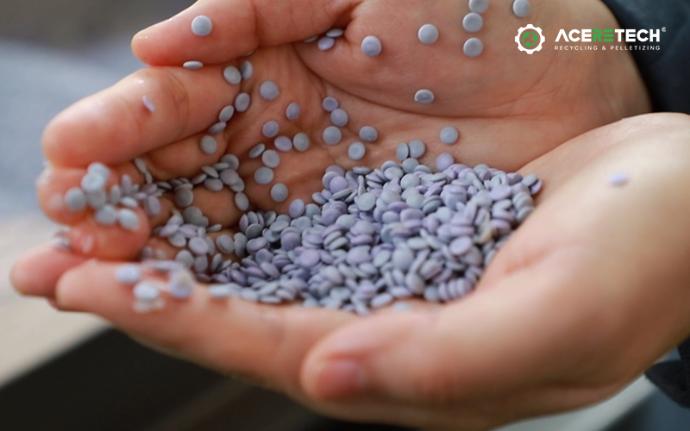
After filtration, the melt is processed into recycled PE pellets.
Related Articles
PE Film Pelletizing Solution
Step 6: Pellet Dewatering and Storage
After pelletizing, the pellets pass through the pellet dewatering system to remove residual water.
The finished pellets are then transferred to the pellet silo for collection and storage.
The final output is recycled PE material that can be used as a raw material for further plastic manufacturing applications, depending on the properties and quality requirements of the recycled pellets.
IV. Key Advantages of the Complete Recycling System
The complete PE film recycling solution integrates multiple processing stages into one continuous system.
Key advantages include:
• Continuous material handling from feeding to final pellet collection
• Metal detection to help protect downstream equipment
• Effective size reduction for flexible PE film
• Washing and rinsing for contaminant removal
• Dewatering before the pelletizing process
• Melt filtration during extrusion
• Integrated pellet handling and storage
• A complete recycling process from waste film to recycled pellets
By integrating these processes into a complete recycling system, waste PE film can be processed more efficiently and converted into reusable recycled material.
V. Applications of Recycled PE Pellets
Depending on the properties and quality of the recycled material, recycled PE pellets can be used in various plastic manufacturing applications.
Typical applications include:
• Garbage bags
• Shopping bags
• Packaging products
• Agricultural products
• Plastic sheets
• Extruded products
• Injection-molded products
• Blow-molded products
In some applications, recycled PE material may also be blended with virgin resin according to the requirements of the final product.
Conclusion
This PE film recycling project demonstrates a complete process for converting waste PE film into recycled pellets.
The system integrates:
Feeding → Metal Detection → Shredding → Washing → Rinsing → Dewatering → Pelletizing → Melt Filtration → Pellet Dewatering → Storage
By combining these processing stages into one complete recycling solution, the PE film can be continuously processed from waste material into reusable recycled pellets.
At ACERETECH, each recycling project is designed according to the actual characteristics of the input material and the customer's processing requirements. From size reduction and washing to pelletizing and final material handling, the complete system can be configured to provide an integrated recycling solution for different types of plastic waste.
FAQ
Q1. What type of material can this recycling system process?
A: This recycling system is designed for PE film materials. Depending on the specific project requirements, the input material may include packaging film, industrial film, stretch film, agricultural film, or other PE film waste.
Q2. What is the process for recycling PE film into pellets?
A: In this project, the PE film recycling process includes material feeding, metal detection, shredding, washing, rinsing, dewatering, pelletizing, melt filtration, pellet dewatering, and pellet storage.
Q3. Why is metal detection included in the recycling line?
A: Metal detection helps identify metallic contaminants before the material enters downstream processing equipment. This helps reduce the risk of damage to equipment such as shredders and pelletizing systems.
Q4. Why is washing necessary for PE film recycling?
A: Depending on the source of the material, PE film may contain dirt, dust, labels, adhesives, or other contaminants. The washing process helps improve the cleanliness of the material before pelletizing.
Q5. What is the purpose of melt filtration?
A: Melt filtration is used during the extrusion process to further remove impurities from the molten material and improve the consistency of the recycled pellets.
Q6. What can the recycled PE pellets be used for?
A: Depending on the properties and quality requirements, recycled PE pellets can be used in the production of packaging products, bags, agricultural products, plastic sheets, and various extruded, injection-molded, or blow-molded products.
Looking for a PE Film Recycling Solution?
If you are planning a PE film recycling project, ACERETECH can provide integrated recycling solutions covering material size reduction, washing, dewatering, pelletizing, filtration, and pellet handling.
The system configuration can be designed according to the characteristics of the input material and the specific
requirements of the recycling project.
Contact ACERETECH to discuss your PE film recycling requirements and find a suitable recycling solution.