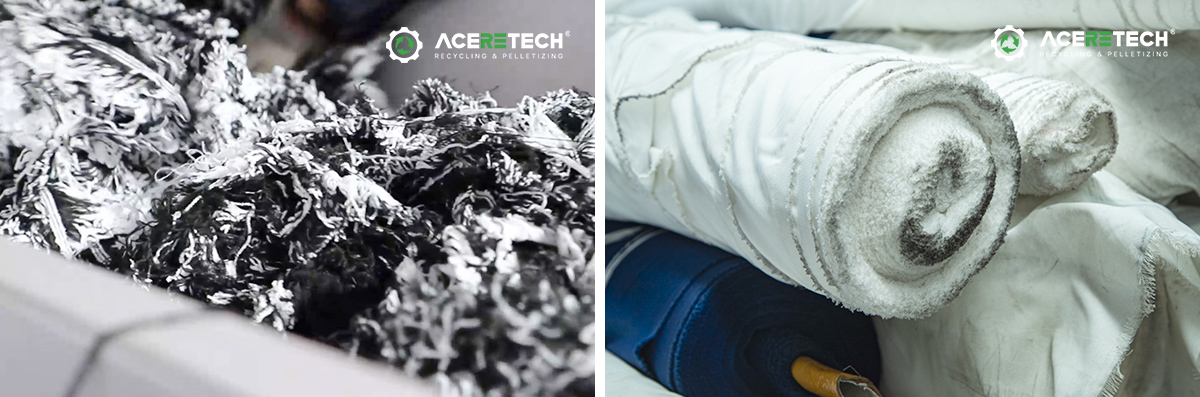
With growing environmental awareness and the advancement of the circular economy, the use of synthetic fiber materials such as PET (polyester) and PA (nylon) is becoming increasingly widespread, and the recycling and reuse of these waste materials has become a focus of industry attention. However, the recycling and pelletizing of PET/PA fabric, fibers, and filaments is not an easy task, and traditional processes often face numerous challenges. Against this backdrop, ACERETECH's DTS series plastic shredders and their innovative friction agglomeration technology provide an ideal solution for efficient and cost-effective PET/PA fabric/fiber/filament recycling and pelletization.
PET/PA织物/纤维/长丝回收中的常见问题

Enterprises often face the following challenges when recycling PET/PA fabrics, fibers, and filaments:
1. Complex material forms and difficult pre-treatment:** Materials such as fabrics, fiber bundles, and filaments typically possess large volumes, loose structures, or high toughness. Direct granulation easily leads to tangling and clogging, disrupting the continuous and stable operation of the equipment.
2. High melt viscosity and high processing energy consumption:** Both PET and PA exhibit high melt viscosity. Traditional granulation processes usually require high melting temperatures, which not only results in massive energy consumption but may also cause material degradation at high heat, compromising the quality of the recycled pellets.
3. Poor dispersion and difficulty ensuring pellet uniformity:** Fibers or filaments that have not been sufficiently shredded are difficult to disperse evenly during the melting process. This often leads to defects in the final pellets—such as inconsistent sizes or "fish-eyes"—which impair subsequent processing performance.
4. Cost pressures and the need for improved economic efficiency:** Traditional recycling processes involve lengthy workflows, high energy consumption, and significant equipment maintenance costs. These factors keep the production costs of recycled pellets high, thereby weakening their market competitiveness.
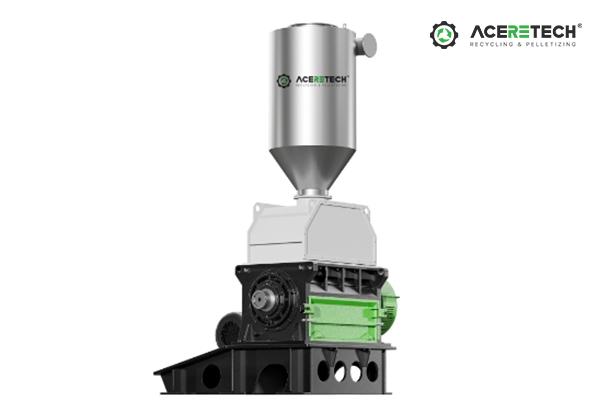
ACERETECH DTS Series Shredder: A Front-End Guarantee for Efficient Shredding
ACERETECH DTS系列塑料破碎机专为解决PET/PA织物/纤维/长丝回收前端破碎难题而研发。该设备专为处理柔性材料而设计。
企业在回收PET/PA织物、纤维和长丝时,经常面临以下挑战:
* 材料形态复杂,预处理难度大:织物、纤维束和长丝通常体积较大、质地松散或柔韧性较高。直接造粒容易造成缠结和堵塞,影响设备的连续稳定运行。熔体粘度高,加工能耗高:PET和PA的熔体粘度均较高。传统的造粒工艺通常需要较高的熔体温度,这不仅会导致显著的能源消耗,还会导致材料在高温下降解,影响回收颗粒的质量。
* 分散性差,难以保证颗粒均匀性:纤维或长丝切碎不充分,难以在熔融过程中均匀分散,导致颗粒尺寸不均,甚至出现鱼眼等缺陷,影响后续加工性能。
* 成本压力大,需要提高经济效益:传统的回收工艺耗时长、能耗高,且需要大量的设备维护,导致回收颗粒的生产成本高,削弱了其市场竞争力。
传送带
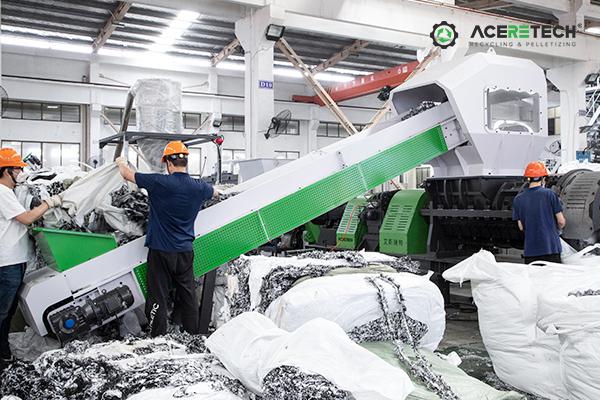
传送带宽度约800毫米:宽阔的传送带可轻松容纳并稳定输送大块织物、纤维束或长丝,确保物料均匀连续地输送至撕碎室,有效防止物料堆积或负载不均。
传送带电机功率3.0千瓦:强劲稳定的动力确保传送带在各种负载条件下都能可靠运行,为撕碎机提供持续的物料供应。
输送带基材PVC:PVC(聚氯乙烯)输送带具有优异的耐磨性、柔韧性、耐腐蚀性,适应各种再生料的特性,确保输送高效耐用,减少维护频率。
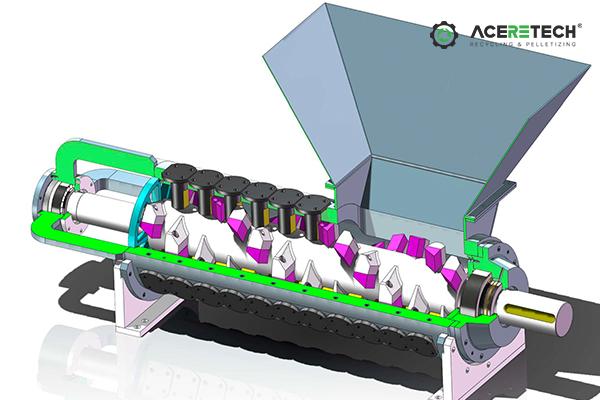
DTS系列破碎机
DTS 系列撕碎机利用锋利的旋转刀片和固定的定刀片之间的强力剪切作用,将大块的 PET/PA 织物、纤维和长丝初步撕碎成更小的碎片,为后续的造粒工艺奠定良好的基础,有效解决了物料形态复杂、预处理困难的问题。
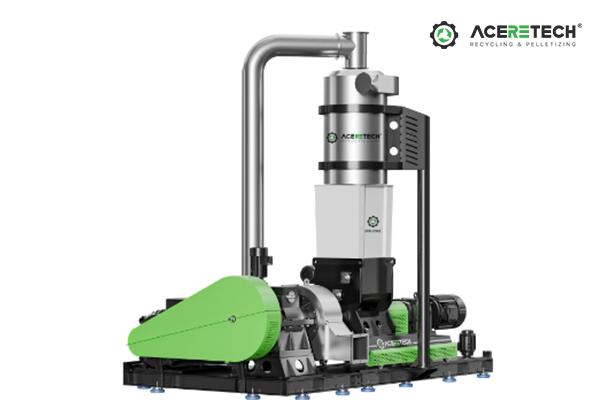
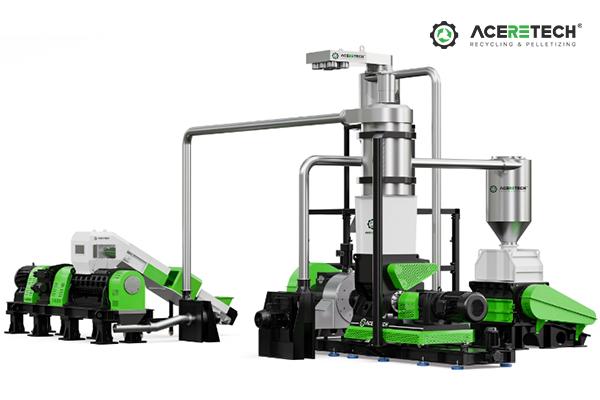
摩擦式团聚机
摩擦团聚技术:节能高效造粒的核心
在撕碎后,ACERETECH 创新性地采用了摩擦团聚技术,这是该设备低成本、高质量造粒的核心。其独特的工作原理:
无需外部加热,机械加热软化:摩擦团聚技术的关键在于无需额外加热。设备内的转子高速旋转,与正在加工的PET/PA切片产生强烈的机械摩擦。这种摩擦在材料内部产生大量热量,使其温度升高并软化至低于其实际熔点。
瞬间粘合和挤出:材料软化后,转子强大的剪切力和压力使软化表面接触,瞬间粘合和熔合。同时,熔融的物料被持续推向模头开口,并通过定制形状的模头挤出,形成连续的线材。
破碎
破碎成常规颗粒:挤出的料条随后进入破碎机进行破碎,并精确切割成客户所需尺寸的颗粒。
摩擦团聚技术的优势
与传统制粒工艺相比,ACERETECH 的摩擦团聚技术具有以下显著优势:
显著降低能耗:仅依靠机械摩擦产热,无需额外加热,显著降低电力消耗,直接降低生产成本。
降低材料降解:在低于材料实际熔点的温度下进行软化,有效避免高温导致的氧化和降解,确保再生颗粒的高性能和纯度。
简化工艺流程:高效整合切碎、软化、挤出和破碎工艺,缩短生产流程,提高效率。
优异的颗粒质量:由于材料在软化状态下完全熔融,最终颗粒致密均匀,无明显未熔纤维,适用于纺丝、注塑等各种后续加工要求。
Conclusion
The recycling and pelletizing of PET/PA fabrics, fibers, and filaments is a crucial step in achieving a circular economy. The ACERETECH DTS series plastic shredder, combined with its unique friction agglomeration technology, successfully addresses many of the pain points of traditional recycling methods through efficient front-end crushing and an innovative, energy-saving granulation process. This provides an efficient, low-cost, and high-quality green path for the resourceful utilization of PET/PA waste. This not only helps companies reduce production costs and enhance market competitiveness, but also contributes significantly to the sustainable development of the textile and plastics industries. Choosing ACERETECH solutions means choosing a smarter, more environmentally friendly, and more cost-effective recycling future.