rPET Sheet Extrusion Solution: A Path to High-Value Recycling from Waste PET Bottles to Food-Grade Packaging Sheets

2026/06/09

Introduction

Driven by the rapid advancement of the global circular economy and sustainable packaging concepts, recycled PET (rPET) is emerging as a vital raw material in the food packaging industry.

From beverage and mineral water bottles to various food packaging trays, an increasing number of brands are adopting high-percentage—or even 100%—recycled PET materials to meet environmental regulations and ESG targets. Consequently, the efficient conversion of recycled PET bottle flakes into high-value-added, food-grade rPET sheets has become a key focus for the plastics recycling industry. Industry data indicates continued growth in the global rPET market, with food packaging, thermoformed packaging, and transparent packaging serving as primary application areas.

As a manufacturer of plastics recycling and extrusion equipment, ACERETECH has launched a food-grade rPET sheet extrusion line. This solution enables one-stop production—transforming PET bottle flakes directly into food-grade packaging sheets—thereby creating greater recycling value for customers.

Learn more


I. What is rPET Sheet?

rPET (Recycled Polyethylene Terephthalate) is a recycled polyester material produced by reprocessing used PET bottles, PET sheets, and PET waste.
Through advanced processes involving washing, impurity removal, devolatilization, and melt filtration, rPET can be directly manufactured into highly transparent, high-strength packaging sheets that comply with food-contact safety standards.

Typical applications include:

Fruit containers
Salad bowls
Egg trays
Cup lids
Blister trays
Food packaging boxes
Medical packaging
Electronics packaging

Compared to traditional virgin PET, rPET significantly reduces carbon emissions and raw material costs while meeting the demand for sustainable packaging.

II. Key Challenges in rPET Sheet Production

Although PET possesses excellent transparency and mechanical properties, recycled PET presents numerous technical challenges during the extrusion process.

1. Difficulty in Moisture Control

PET is a hygroscopic material. If the raw material's moisture content is too high, hydrolysis occurs during high-temperature melting, leading to:

A drop in IV (Intrinsic Viscosity)
Molecular chain scission
Sheet yellowing
Reduced strength
Deteriorated thermoforming performance

Therefore, achieving efficient dehumidification and devolatilization is a core technical challenge in rPET sheet production.

2. Impurities and Black Specks

Post-consumer PET flakes typically contain:

Residual PVC
Label adhesive
Oil/grease
Metallic impurities
Fine dust

During the extrusion process, these contaminants tend to cause:

Black specks
Gel particles (fish eyes)
Bubbles
Streaks

This compromises the quality of the food-grade packaging sheet.

3. IV Stability Control

Food-grade rPET sheet requires:

Good mechanical properties
Excellent transparency
Stable thermoforming performance

Significant fluctuations in melt viscosity can lead to:

Uneven thickness
Reduced transparency
Instability during thermoforming

Therefore, an online viscosity monitoring system is required to control production conditions in real-time.

4. High Demands on Melt Filtration

Micro-contaminants in recycled PET must be removed using a high-precision filtration system.

Failure to do so can result in:

Die clogging
Surface defects
Increased product scrap rates

Consequently, continuous screen-changing systems (which allow for screen replacement without stopping production) have become a key feature of high-end rPET sheet production lines.

III. ACERETECH Food-Grade rPET Sheet Extrusion Process

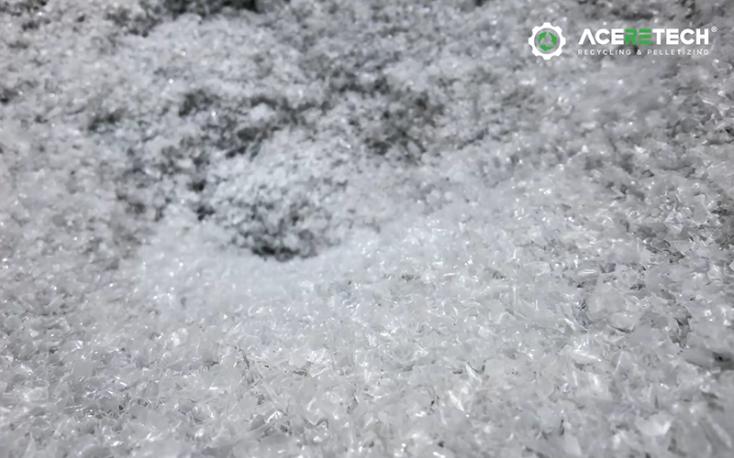
The food-grade rPET sheet extrusion system developed by ACERETECH enables the direct production of food-grade packaging sheets from high-quality PET bottle flakes, realizing a true "Bottle-to-Sheet" solution.

Process Flow

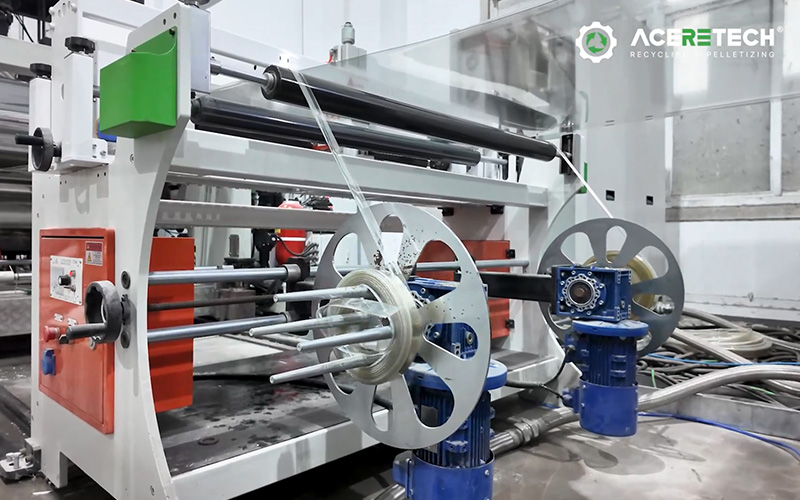
PET Bottle Flakes ➜ Vacuum Feeding System ➜ Reaction Chamber ➜ ACS Single-Screw Extruder ➜ Dual-Vacuum Degassing System ➜ Melt Filter ➜ Melt Pump ➜ Online Viscosity Monitoring System ➜ T-Die ➜ Three-Roll Calender ➜ Edge Trimming System ➜ Silicone Coating System ➜ Haul-off Unit ➜ Automatic Winding System

Step 1: Reaction Crystallization and Pre-treatment

Upon entering the reaction chamber, the PET bottle flakes generate heat through high-speed rotation within a vacuum environment. This process serves to:

Rapidly evaporate residual moisture
Remove low-molecular-weight volatiles
Preheat the material
Enhance plasticization efficiency

It simultaneously creates the necessary conditions for stable downstream extrusion.

Step 2: Single-Screw Melting and Plasticization

Pre-treated PET flakes enter a specialized PET single-screw extruder. ACERETECH has optimized the design based on PET's specific characteristics, focusing on:

Screw configuration
Compression ratio
Melting zone length

This achieves:

Gentle plasticization
Stable conveying
Reduced thermal degradation

Ensuring high melt quality.

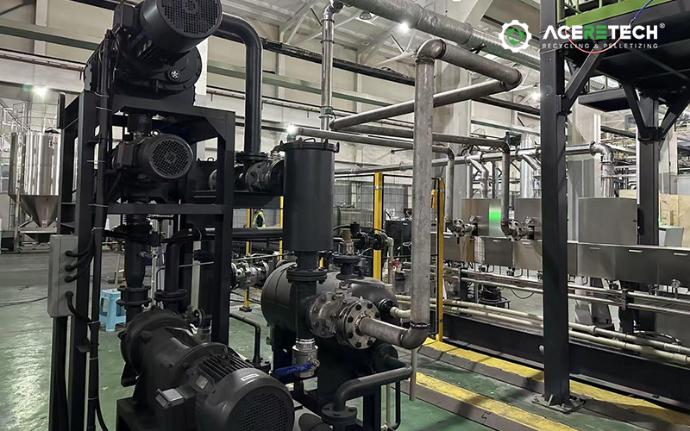
Step 3: Dual-Vacuum Devolatilization and Purification

During extrusion, the melt enters a dual-vacuum devolatilization zone. A combination of liquid ring pumps and Roots vacuum systems effectively removes:

Moisture
VOCs
Acetaldehyde
Low-molecular-weight impurities

This further enhances food-grade safety and sheet transparency.

Step 4: Melt Filtration and Metering

After passing through an automatic screen changer, the melt enters a melt pump. Key functions include:

Removing micro-impurities
Maintaining stable pressure
Improving thickness uniformity
Enhancing sheet surface quality

The continuous screen-changing design enables uninterrupted production.

Step 5: Online IV Monitoring

An online melt viscosity monitoring system tracks the melt's state in real-time, offering advantages such as:

Real-time monitoring of IV value fluctuations
Timely adjustment of process parameters
Ensuring product consistency
Reducing scrap rates

This is particularly critical for food-grade rPET production.

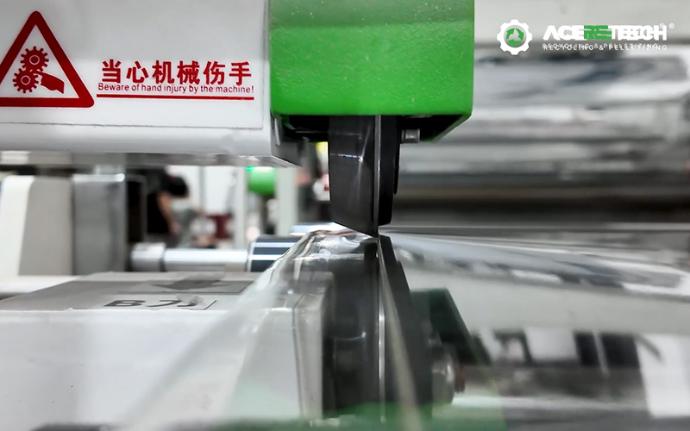
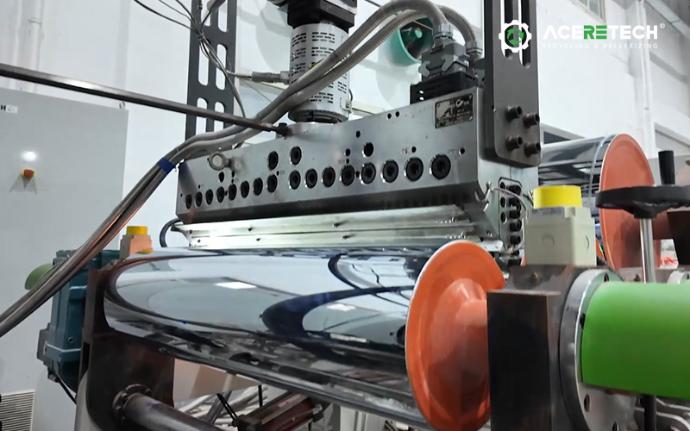
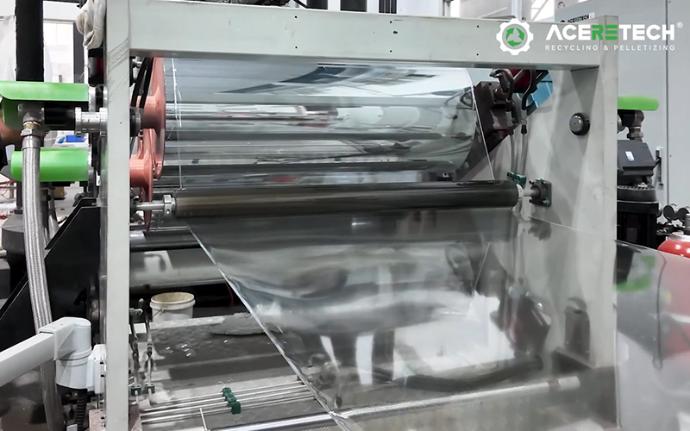
Step 6: Sheet Forming and Calendering

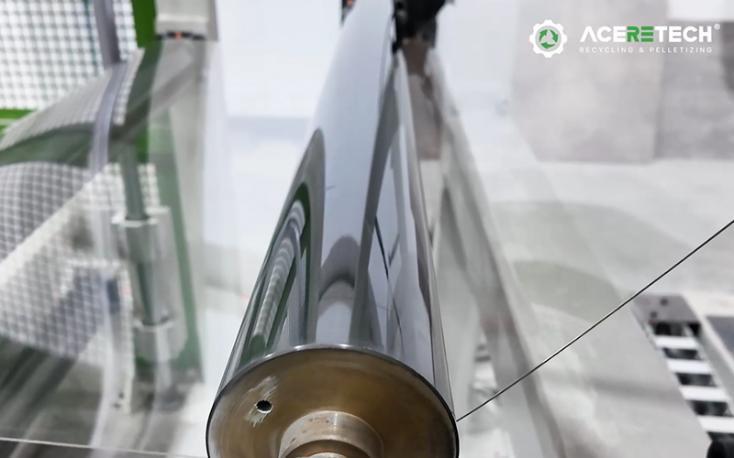
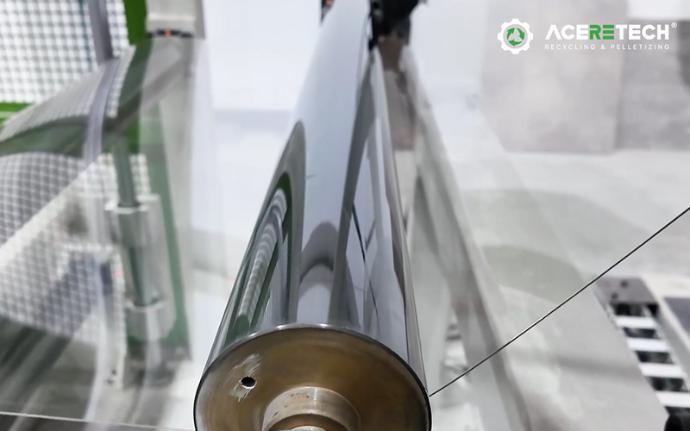
The melt is evenly distributed via a T-die and enters a three-roll calender. The three-roll system ensures:

Rapid cooling
High transparency
A smooth surface
Precise thickness control

Ultimately producing high-quality rPET sheet.

IV. Core Advantages of the rPET Sheet Production Line

1. Supports Direct Production from 100% PET Flakes

Eliminates the need for an intermediate pelletizing step, enabling direct "Bottle Flakes to Sheet" production.

Shorter process flow
Reduced energy consumption
Lower equipment investment
Higher production efficiency
Food-grade production capability

Achieved through:

Purification in the reaction chamber
Dual-vacuum devolatilization
Precision filtration
Online viscosity control

Helping customers produce rPET sheets that meet food packaging requirements.

2. High Transparency and Stable Quality

The produced sheets feature:

High transparency
Low black speck count
Excellent mechanical properties
Good thermoforming performance

Suitable for the high-end food packaging market.

V. Key Application Areas for rPET Sheet

The produced food-grade rPET sheet is widely used in:

Fruit packaging containers
Egg cartons
Salad containers
Takeout packaging
Beverage cup lids
Medical blister packaging
Electronic component trays
Stationery packaging

As global brands continue to increase the proportion of PCR (Post-Consumer Recycled) materials used, the market for rPET sheet is expected to maintain rapid growth.

Conclusion

From waste PET bottles to high-value food packaging sheet, rPET sheet extrusion technology is becoming a vital component of the plastics circular economy.

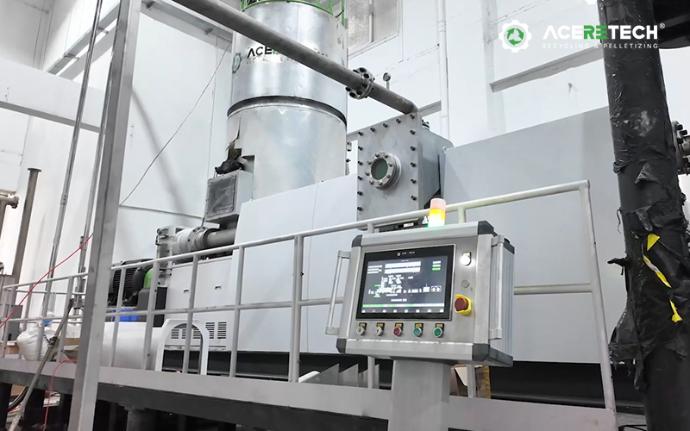
ACERETECH’s food-grade rPET sheet extrusion line integrates reactive crystallization, vacuum devolatilization, melt filtration, online viscosity control, and high-precision calendering technologies. It enables the direct production of high-quality food-grade rPET sheet from 100% PET bottle flakes, offering competitive, high-value-added solutions for packaging manufacturers and plastics recyclers.

If you are looking for PET bottle-to-sheet technology, a food-grade rPET sheet extrusion line, or a complete bottle-to-packaging solution, please contact ACERETECH for professional technical support.

FAQ

应用