I. The Necessity of BOPP Film Recycling
BOPP (Biaxially Oriented Polypropylene) film is widely used in sectors such as food packaging, personal care product packaging, labeling, adhesive tapes, and other flexible packaging applications. As the scale of BOPP film production and processing expands, the demand for recycling production offcuts, waste film, and other BOPP film scrap continues to rise.
For low-bulk-density film materials, achieving stable feeding, effective compaction, thorough plasticization, and efficient filtration is crucial to the success of the recycling and pelletizing process.
To address this specific application, ACERETECH customized the ACS120 single-screw plastic compacting pelletizer based on the customer's material characteristics. In this trial run, BOPP film was processed into recycled plastic pellets through a sequence of steps: cutting and compaction, single-screw extrusion, double-stage vacuum degassing, melt filtration, and water-ring pelletizing.
II. Key Challenges in BOPP Film Recycling and Pelletizing
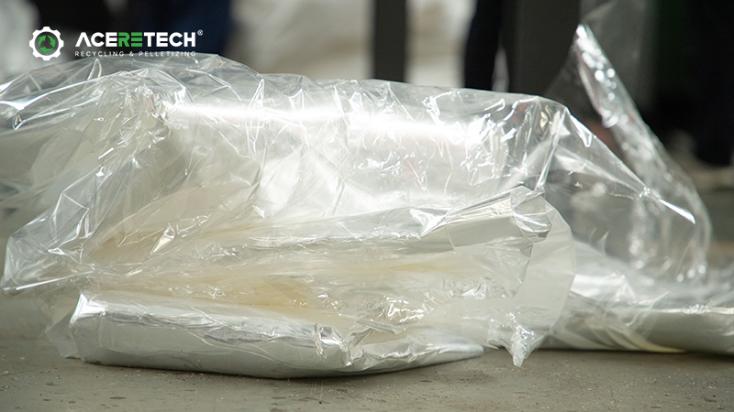
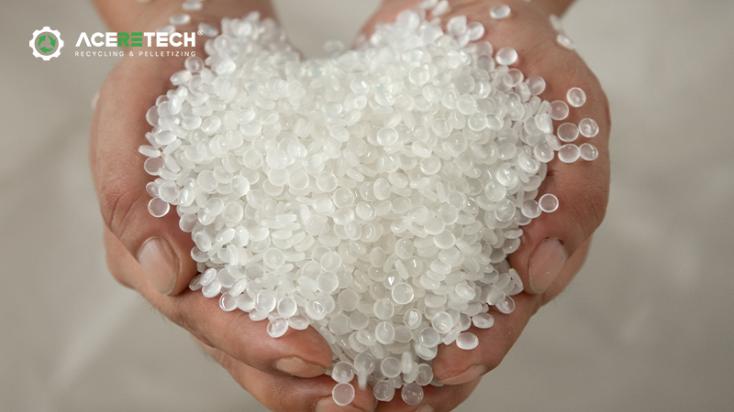
BOPP film is characterized by its light weight, low bulk density, and high flexibility. Unlike rigid or block-shaped plastics, film scrap fed directly into an extrusion system often suffers from unstable conveying and reduced feeding efficiency.
Consequently, BOPP film recycling typically requires material pre-treatment prior to extrusion. Cutting and compaction are used to increase the material's bulk density, while frictional heat pre-warms the material, making it better suited for subsequent continuous extrusion.
Furthermore, recycled film may contain moisture, volatile substances, or other contaminants. Failure to effectively manage these components can compromise melt stability and the quality of the final recycled pellets. Therefore, a comprehensive BOPP film recycling and pelletizing system typically requires integrated consideration of the following:
Continuous and stable film feeding
Pre-treatment of low-bulk-density materials
Melt plasticization and uniform conveying
Removal of moisture and volatiles
Melt filtration (removal of impurities)
Pelletizing and dewatering of recycled pellets
III. ACS120 BOPP Film Recycling and Pelletizing System
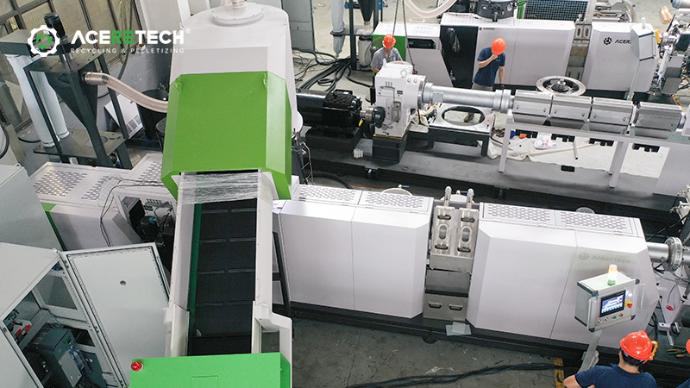
The customized solution for this client utilizes the ACS120 single-screw compacting pelletizer, configured specifically for the material characteristics of BOPP film.
The system process flow is as follows:
Belt conveying → Metal detection → Cutting and compacting → Single-screw extrusion → Dual-stage vacuum degassing → Hydraulic screen changing/filtration → Non-stop piston-type filtration → Water-ring pelletizing → Vibrating screen → Centrifugal dewatering → Pneumatic conveying to finished product silo
Through the continuous coordination of multiple process stages, the system achieves the continuous processing of BOPP film from waste material into recycled plastic pellets.
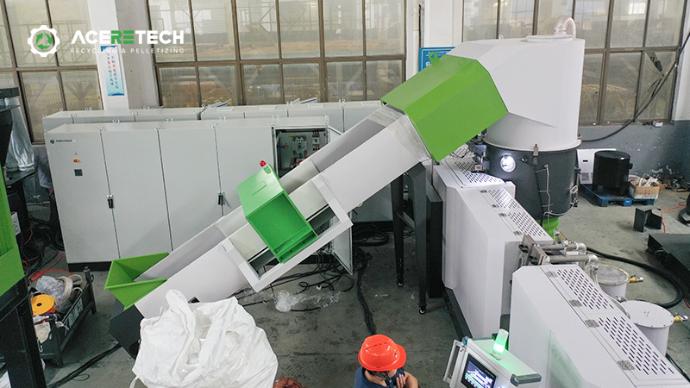
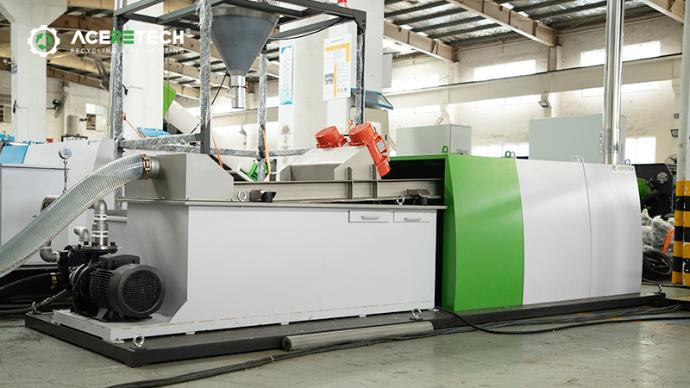
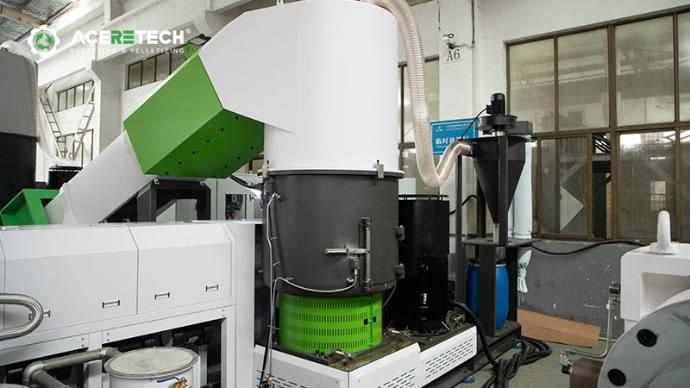
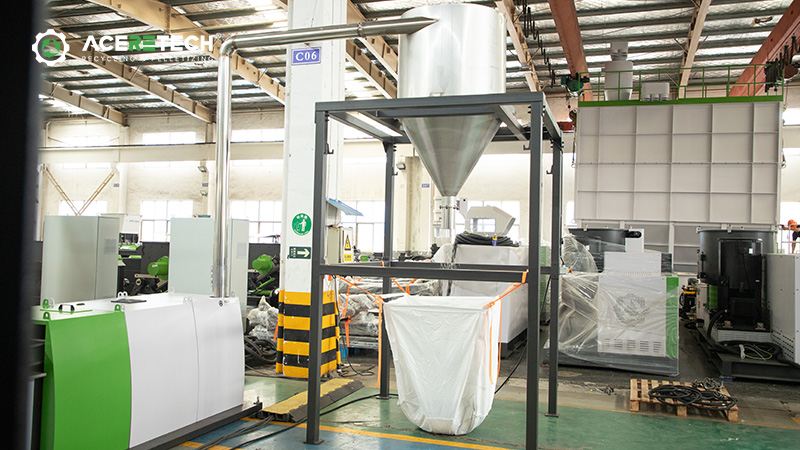
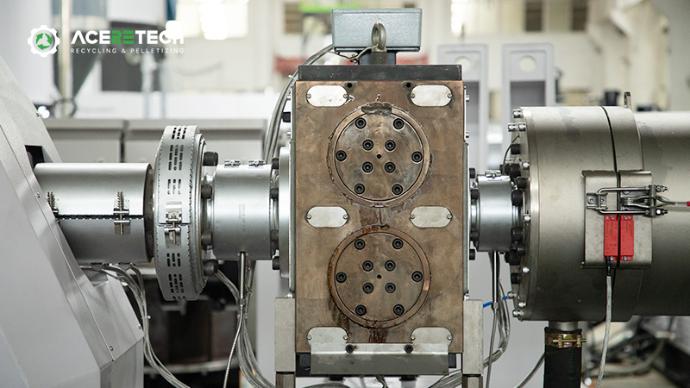
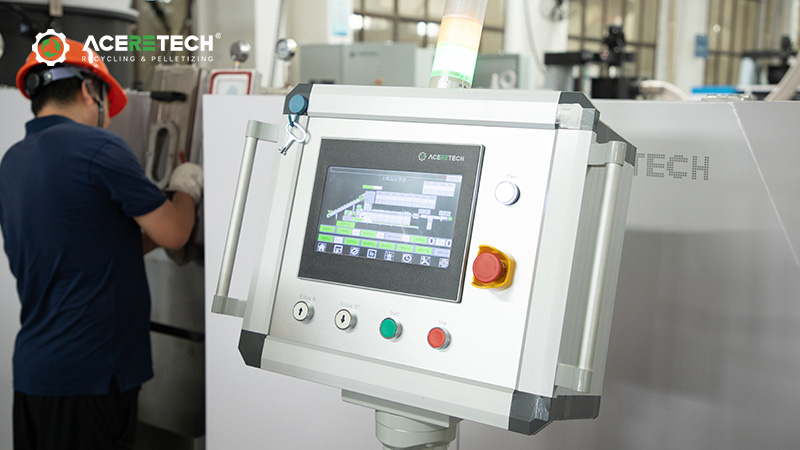
1. Continuous feeding with metal detection
The front end of the system employs a 600 mm wide belt conveyor for material transport, equipped with a metal detection unit.
Metal detection helps identify foreign metal objects entering the production line, reducing the risk of metal entering the downstream cutting and extrusion systems, thereby enhancing equipment safety and operational stability.
For a continuously operating BOPP film recycling line, stable automatic feeding is also a crucial factor in ensuring the continuous operation of the subsequent compacting and extrusion processes.
2. Cutting and compacting to improve film feeding stability
BOPP film is characterized by low bulk density; therefore, it requires volume reduction and pre-treatment via a compacting system before entering the extruder.
The ACS120 is equipped with a cutting-compacting chamber. Rotating blades continuously cut the BOPP film into smaller flakes, while the high-speed rotation generates frictional heat.
This process achieves the following:
Film shredding
Material volume reduction
Pre-heating
Compacting
Increased bulk density
Improved stability of downstream extrusion feeding
The compacting chamber is equipped with a variable frequency drive (VFD), a movable sliding gate, and dust/moisture removal systems, allowing operating parameters to be adjusted according to the specific state of the material. For BOPP film, proper preheating and compaction help enhance the continuous feeding capability of the material as it enters the single-screw extruder.
3. 120 mm Single-Screw Extrusion System
After being cut and compacted, the BOPP film enters the single-screw extruder for further plasticization.
The ACS120 system configuration features:
Screw diameter: 120 mm
Screw L/D ratio: 42:1
Heating method: Ceramic heaters
Cooling method: Cooling fans
The high L/D ratio provides ample space for material conveying, melting, and plasticization, enabling the BOPP film to form a relatively stable melt during the extrusion process.
Ceramic heaters supply the heat required for extrusion, while cooling fans assist in regulating temperatures across various zones, ensuring the process remains within optimal operating parameters.
4. Dual-Stage Vacuum Degassing for Enhanced Melt Stability
During the granulation of BOPP film, moisture and volatile components in the melt can compromise extrusion stability and the quality of the recycled pellets.
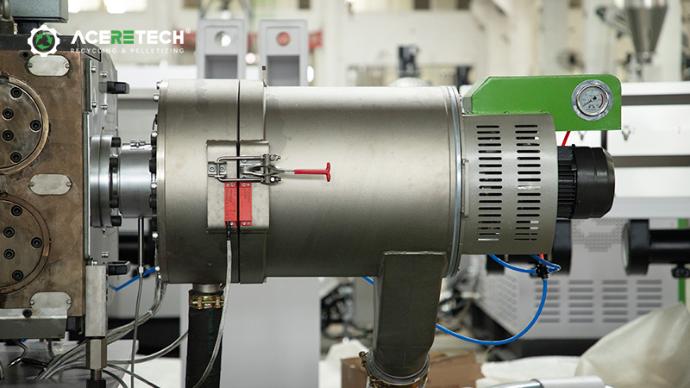
The ACS120 is equipped with a dual-stage vacuum degassing system designed to remove moisture, volatile substances, and certain low-molecular-weight compounds from the melt.
Multi-stage vacuum degassing minimizes residual volatiles in the melt and reduces processing issues—such as bubble formation or pellet instability caused by gas or moisture—thereby ensuring a more stable melt for subsequent filtration and pelletizing.
5. Large-Area Melt Filtration
In practical production, recycled BOPP film may contain paper scraps, impurities, or other contaminants; consequently, melt filtration is a critical step in the recycling process.
This system is equipped with a P2000 dual-piston, large-area hydraulic screen changer:
Filtration area: 2000 cm²
Filtration capacity: ≤4000 kg/h
The large-area filtration system provides an extensive filtration zone, helping to minimize pressure fluctuations during the filtration process.
For plastic recycling lines requiring long-term continuous operation, a stable melt filtration system plays a vital role in maintaining production efficiency and the quality of the recycled pellets.
6. Water-Ring Pelletizing and Pellet Dewatering
The melt, having undergone extrusion and filtration, enters the water-ring pelletizing system.
The water-ring pelletizing method is characterized by a high degree of automation and ease of operation, enabling the continuous cutting of the melt into recycled plastic pellets.
The cut pellets enter a vibrating screen for preliminary dewatering and classification, while any abnormally agglomerated particles are removed.
Subsequently, the pellets pass through a centrifugal dryer to further reduce surface moisture before being conveyed via an air-conveying system to the finished product silo.
The entire post-processing sequence comprises:
Water-ring pelletizing → Vibrating screen → Centrifugal dewatering → Air-conveying and storage
This process facilitates the production of BOPP recycled plastic pellets with relatively uniform dimensions and smooth surfaces.
7. Intelligent Control and Stable Operation
The ACS120 utilizes an intelligent control system to centrally manage and monitor key operational parameters of the production line.
Equipped with European-brand electrical components and gearboxes, and featuring variable frequency control, the system enables coordinated management of various process stages.
Automated control allows operators to conveniently monitor equipment status and critical process parameters, thereby enhancing the operational ease and production stability of the entire BOPP film recycling and pelletizing line.
Related Articles
Plastic Film Shredding Solutions
Plastic Film Washing Solutions
IV. For which BOPP film recycling applications is the ACS120 suitable?
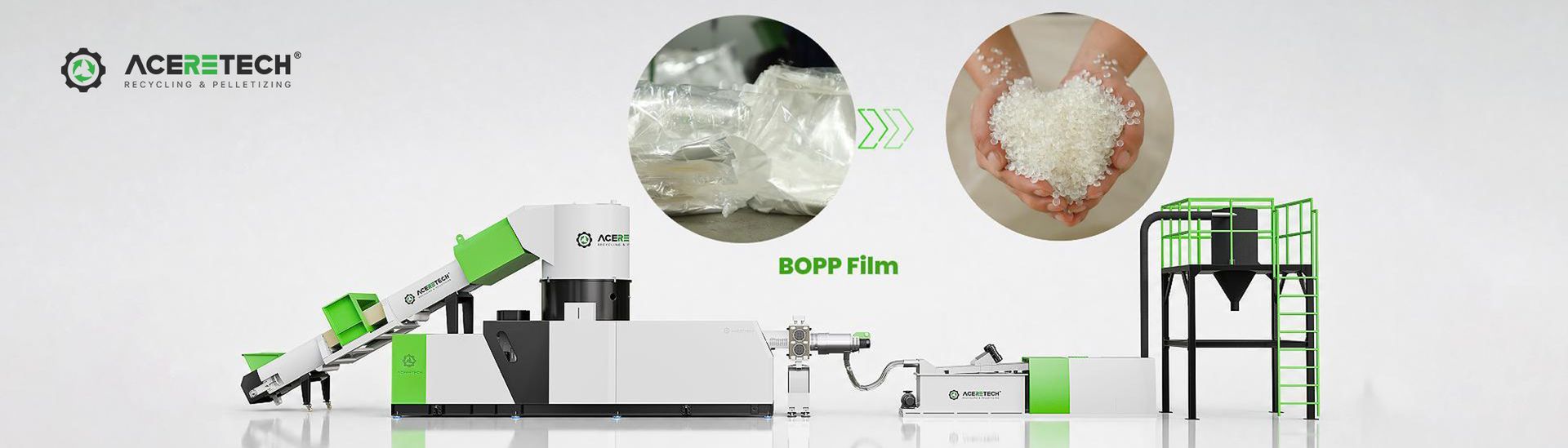
The ACS120 single-screw compacting and pelletizing system is primarily designed for the recycling and granulation of plastic films.
Typical applications for BOPP film include:
BOPP film production edge trims
BOPP film processing scrap
Clean BOPP film waste
Packaging-grade BOPP film waste
Other PP films suitable for compaction and extrusion
Actual equipment configuration and throughput depend on factors such as film thickness, contamination level, moisture content, bulk density, feeding method, and target pellet specifications.
V. BOPP Film Recycling: From Waste Film to Recycled Pellets
BOPP film recycling and pelletizing is not merely a simple "melt-and-cut" process. For low-bulk-density films, upstream compaction, melt degassing, and filtration stages directly impact the operational stability of the entire production line.
The ACS120 provides a continuous recycling and pelletizing solution for BOPP film by combining cutting-compaction, single-screw extrusion, dual-stage vacuum degassing, large-area melt filtration, continuous filtration, and water-ring pelletizing.
This trial run validated the ACS120's processing configuration for BOPP film, offering a reference in equipment and process technology for customers looking to undertake BOPP film recycling, produce recycled BOPP pellets, and valorize plastic film waste.
ACERETECH can design plastic recycling and pelletizing systems tailored to specific material types, processing capacities, and recycled pellet requirements, providing customized recycling solutions for various films and plastic waste.
FAQ
A: BOPP film recycling typically involves feeding, cutting-compaction, extrusion, vacuum degassing, melt filtration, pelletizing, and pellet drying. For low-density BOPP film, the cutting-compactor is particularly important, as it reduces material volume and improves feeding stability prior to extrusion.
A: BOPP film has a relatively low bulk density; feeding it directly into the extruder can result in unstable feeding. The shredder-compactor cuts the film into small pieces and utilizes frictional heat to preheat and densify the material, thereby increasing the bulk density and ensuring a continuous, stable feed to the extruder.
A: The two-stage vacuum degassing system is designed to remove moisture, volatiles, and low-molecular-weight compounds from the polymer melt. This helps minimize gas-related processing issues and enhances melt stability during the BOPP film pelletizing process.
A: Melt filtration removes solid impurities from the polymer melt prior to pelletizing. Effective filtration helps reduce impurities in the recycled pellets and improves the stability of the extrusion and pelletizing processes. The appropriate filtration system should be selected based on the feedstock's contamination level and processing capacity.
A: The ACS120 configuration described here utilizes a water-ring pelletizing system, followed by a vibrating screen and a centrifugal dewatering system. This setup enables continuous pelletizing, screening, and drying, after which the recycled BOPP pellets are conveyed to the finished product silo.