I. Efficient Plastic Shredding to Meet Diverse Recycling Needs
In the plastic recycling process, materials such as plastic film, purge lumps (machine head waste), injection-molded blocks, and other large-sized plastic waste are typically characterized by large volumes, irregular shapes, and high toughness. Selecting the right plastic shredder effectively reduces material size, providing stable feed conditions for subsequent processes such as granulation, washing, sorting, or pelletizing.
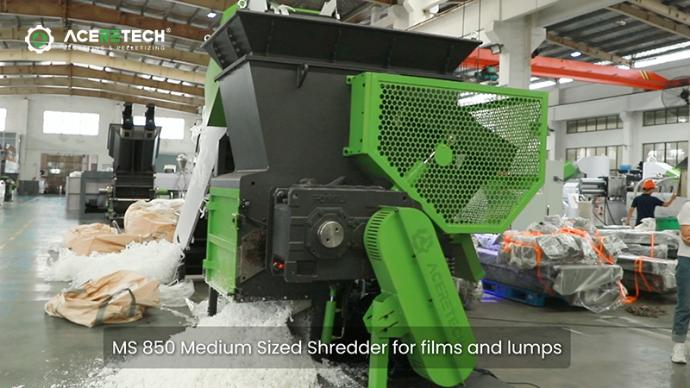
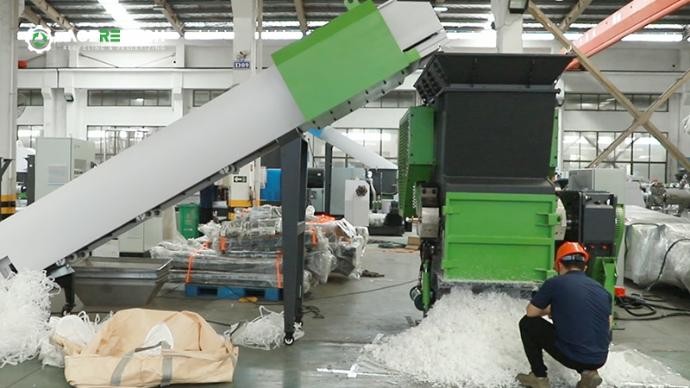
The ACERETECH MS850 single-shaft plastic shredder is designed for shredding high-strength plastic waste. During recent trials, the MS850 processed plastic film, purge lumps (solid blocks), and other plastic waste, demonstrating stable feeding capabilities and high shredding efficiency.
The machine features an 850 mm diameter rotor, a hydraulic ram feeding system, and a rotor surface treated with laser cladding for wear resistance, meeting the plastic recycling industry's rigorous demands for equipment durability, wear resistance, and continuous operation.
II. MS850 Plastic Shredder: Key Specifications
| Item |
Specification |
| Model | MS850 |
| Equipment Type | Single-shaft plastic shredder |
| Rotor Diameter | 460 mm |
| Rotor Surface Treatment | Laser cladding |
| Feeding Method | Hydraulic ram |
| Screen Size | 40–100 mm |
| Feed Opening Dimensions | 840 x 1570 mm |
| Shredding Chamber Dimensions | 800 x 730 mm |
| Suitable Materials | Plastic film, purge lumps, plastic blocks, PP, PE, HDPE, PVC, etc. |
| Electrical System |
Renowned brand electrical components |
III. What Plastic Waste Can the MS850 Process?
The MS850 features a robust single-shaft shredding design capable of processing a wide range of common plastic waste, including:
Plastic film
PE film
PP film
HDPE plastic
PP plastic
PVC plastic
Injection molding purgings (lumps/heads)
Plastic blocks/lumps
Production offcuts/scraps
Large-sized plastic waste
Other industrial plastic waste
Plastic film and purgings (lumps) were the primary materials processed during the MS850's trial run.
For recycling enterprises, the ability of a single machine to handle multiple types of plastic waste eliminates the need for separate pre-processing equipment for different materials, thereby enhancing operational flexibility.
IV. Advantages of the MS850 Shredder
1. Efficient processing of plastic film waste
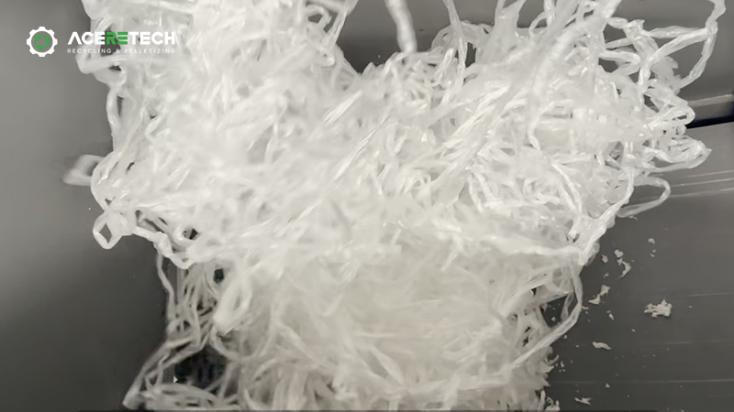
Plastic film is lightweight, flexible, and tough, yet prone to tangling, making it one of the more challenging materials in the plastic recycling process.
Inconsistent feeding can cause film to accumulate or wrap around internal components, disrupting continuous production.
The MS850 utilizes a hydraulic ram system to continuously push material toward the shredding zone, ensuring a stable feed of plastic film into the shredding chamber.
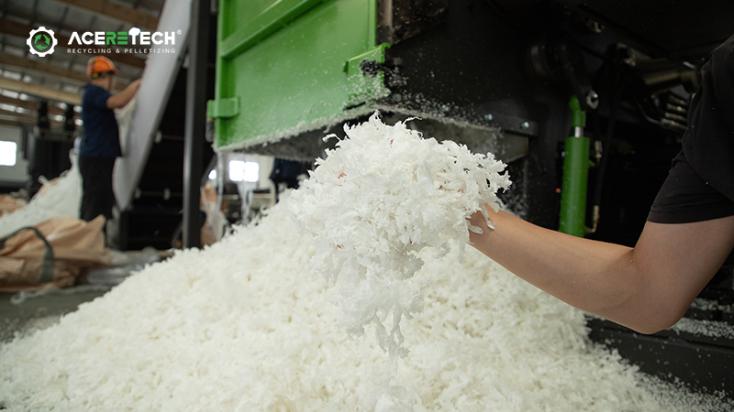
During shredding, the interaction between rotating and stationary blades continuously shears and tears the film, reducing large sheets into plastic fragments better suited for downstream processing.
For production lines involving subsequent washing or pelletizing, this pre-shredding step improves feed conditions for downstream equipment.
2. Efficient processing of purgings and plastic blocks
Injection molding processes generate significant amounts of purgings, sprue/runner waste, and defective plastic products. These materials are typically large and solid; feeding them directly into downstream equipment can place excessive strain on crushing and pelletizing systems.
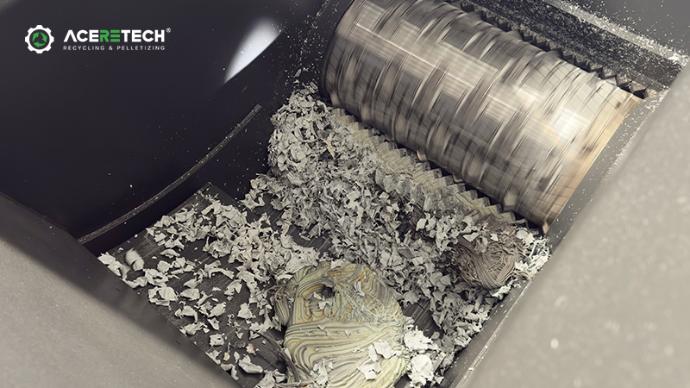
Equipped with a large-diameter rotor, the MS850 is capable of continuously shredding large plastic blocks.
Shredding significantly reduces the size of purgings and blocks, allowing them to proceed to further stages—such as shredding → crushing → washing → dewatering → pelletizing—or, depending on material properties, directly to subsequent crushing, conveying, or pelletizing processes. Therefore, the MS850 is suitable not only for plastic recycling enterprises but also for in-house scrap recycling at injection molding plants.
3. Large-diameter (460 mm) rotor for heavy-duty plastic shredding
The MS850 features a 460 mm diameter rotor, providing a large effective shredding zone.
This large-diameter rotor ensures stable shredding performance when handling bulky scrap, such as purgings and large plastic blocks.
During operation, once material enters the shredding chamber, the rotating cutters continuously draw it into the cutting zone, where it is sheared against the stationary cutters.
The material undergoes repeated shredding and is discharged only when it meets the required screen size.
This process allows large plastic scrap to be gradually reduced to fragments suitable for downstream operations.
4. Laser-clad rotor for enhanced wear resistance
The surface of the MS850 rotor is reinforced using a laser cladding process to improve wear resistance.
In plastic shredders, the rotor is in constant contact with plastic scrap and impurities, subjecting both the cutters and the rotor surface to continuous mechanical wear. Consequently, the rotor's wear resistance directly impacts maintenance frequency and long-term operational stability.
Laser cladding creates a wear-resistant layer on the rotor surface, enhancing durability in critical working areas.
Under optimal material and operating conditions, the MS850 rotor has a service life of approximately 10 years.
Actual service life depends on factors such as material type, impurity content, operating hours, maintenance, and the working environment.
5. Hydraulic ram system for stable, continuous feeding
Stable feeding is a crucial factor affecting shredding efficiency, particularly when handling plastic film, purgings, and large plastic blocks.
The MS850 is equipped with a hydraulic ram system that pushes material into the shredding chamber.
Unlike gravity-based feeding, hydraulic ram feeding allows for continuous material advancement based on the shredder's operating status, thereby improving feeding stability.
Key advantages include:
Facilitates the entry of large plastic lumps into the shredding zone;
Improves the continuity of plastic film feeding;
Reduces the need for manual feeding assistance;
Helps enhance overall equipment operational efficiency;
Suitable for continuous plastic recycling production.
6. Adjustable screen to meet various output size requirements
Different plastic recycling projects have varying requirements for shredded material size; screen apertures range from 40mm to 100mm.
The MS850 is equipped with an adjustable screen, allowing configuration based on the output size requirements of downstream processes.
7. Reliable electrical system
The equipment utilizes electrical components from renowned brands, ensuring stable control and long-term reliable operation.
V. ACERETECH Plastic Shredding Solutions
As a professional manufacturer of plastic recycling equipment, ACERETECH is dedicated to providing customers with equipment for shredding, crushing, washing, and pelletizing, as well as complete plastic recycling solutions.
Depending on the raw material, the MS850 single-shaft plastic shredder can be applied to industrial plastic recycling, plastic film recycling, injection molding purge/lump recycling, and plastic pelletizing production lines.
By optimally matching shredding, crushing, washing, and pelletizing equipment, ACERETECH can design complete line solutions tailored to the customer's raw material characteristics, target output, and final product requirements.
FAQ
Q1. What materials can the MS850 plastic shredder process?
A: The MS850 single-shaft plastic shredder can process plastic film, injection molding lumps, plastic blocks, PP, PE, HDPE, PVC, and other industrial plastic waste.
Q2. What are the advantages of using laser cladding technology on the rotor?
A: Laser cladding treatment enhances the wear resistance of the rotor surface. Under optimal operating conditions, the rotor's service life can reach approximately 10 years. Actual service life depends on material characteristics, impurity content, operating hours, and maintenance practices.
Q3. Is the MS850 equipped with a hydraulic ram?
A: Yes. The MS850 is equipped with a hydraulic ram system that continuously pushes plastic waste into the shredding chamber, thereby improving feeding stability and shredding efficiency.
Q4. Can the output size of the MS850 be adjusted?
A: The MS850 features a replaceable/configurable screen system, allowing the output size to be adjusted according to specific downstream processing requirements. The final particle size also depends on material properties and operating conditions.
Q5. Can the MS850 be used upstream of a plastic granulator?
A: Yes. The MS850 can serve as pre-processing equipment prior to plastic shredding and granulation. It reduces the size of large plastic waste, providing more suitable feedstock for downstream extrusion and granulation equipment.