I. Project Background
PP woven bags are widely used for packaging fertilizers, animal feed, rice, flour, sugar, chemicals, cement, minerals, and other industrial or agricultural products.
After use, these bags can become a valuable source of recyclable polypropylene. However, compared with clean in-plant PP scrap, used woven bags often contain dust, sand, product residues, moisture, printing inks, coatings, and other contaminants.
Their material structure can also vary. In addition to the PP woven fabric itself, some bags may include laminated layers, printed surfaces, BOPP coatings, or other components.
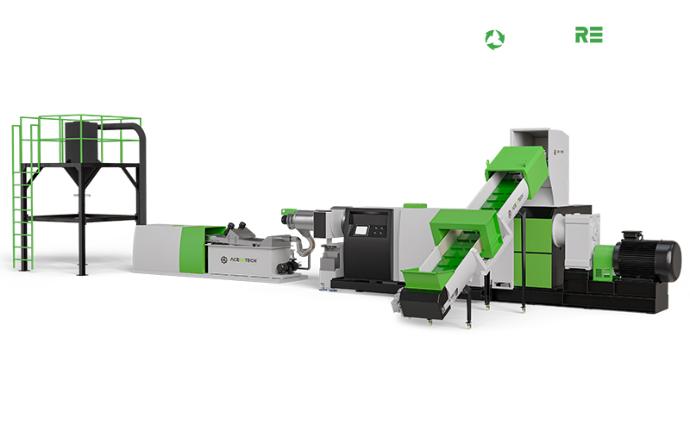
For this PP woven bag recycling application, ACERETECH provides a complete process integrating size reduction, washing, drying, compacting, extrusion, melt filtration, and pelletizing.
The purpose of the system is to convert waste PP woven bags into recycled PP granules for further plastic processing applications.
Related PP Woven Bag Recycling Videos
II. Material Characteristics and Recycling Challenges
PP woven bags are lightweight and flexible, but their material form and contamination level can create several challenges during recycling.
1. Contamination
Depending on their original application, used PP woven bags may contain:
* Sand and soil
* Dust
* Fertilizer residues
* Feed residues
* Cement dust
* Organic contaminants
* Labels and other foreign materials
Effective washing is therefore important before the material enters the pelletizing process.
2. Lightweight and Flexible Material
Compared with rigid plastic scrap, PP woven bags have a lower bulk density.
The lightweight material can create challenges such as:
* Unstable feeding
* Material bridging
* Difficult material handling
* Reduced processing efficiency
Proper size reduction and compaction are therefore important for maintaining stable material flow.
3. Moisture After Washing
After washing, the PP material contains moisture that must be reduced before extrusion and pelletizing.
The complete recycling process therefore includes mechanical dewatering and drying stages to prepare the washed material for downstream processing.
4. Mixed Material Structures
Some PP woven bags may include additional layers or components, such as:
* BOPP coatings
* PE laminated layers
* Printing inks
* Sewing threads
The actual material composition must be considered when designing the recycling process and determining the final application of the recycled material.
5. Residual Impurities
Even after washing, fine contaminants may remain in the material.
For this reason, melt filtration is included during the extrusion stage to further improve melt cleanliness before pellet formation.
III. ACERETECH Complete PP Woven Bag Recycling Solution
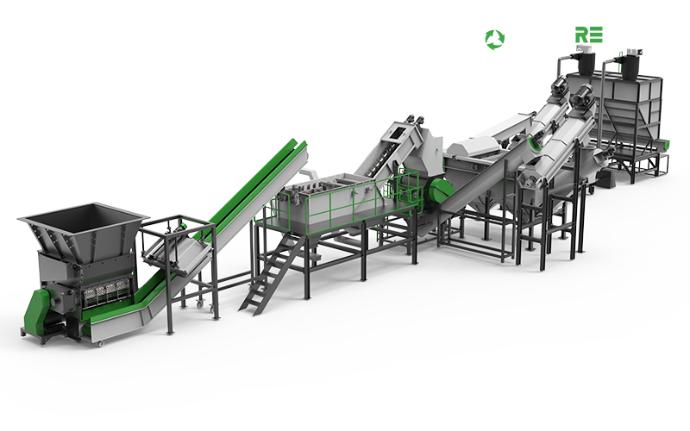
For this application, the complete recycling process integrates material size reduction, washing, drying, compacting, extrusion, melt filtration, and pelletizing.
The typical process flow is:
PP Woven Bags → Shredding and Crushing → Friction Washing → Float-Sink Separation → Optional Hot Washing → Dewatering → Pipe Drying → Hot-Air Drying → Compaction → Extrusion → Vacuum Degassing → SCF Self-Cleaning Melt Filtration → Water-Ring Pelletizing → Pellet Dewatering → Vibrating Screen → Silo Storage
The system is designed to continuously process PP woven bag waste and convert the material into recycled PP granules.
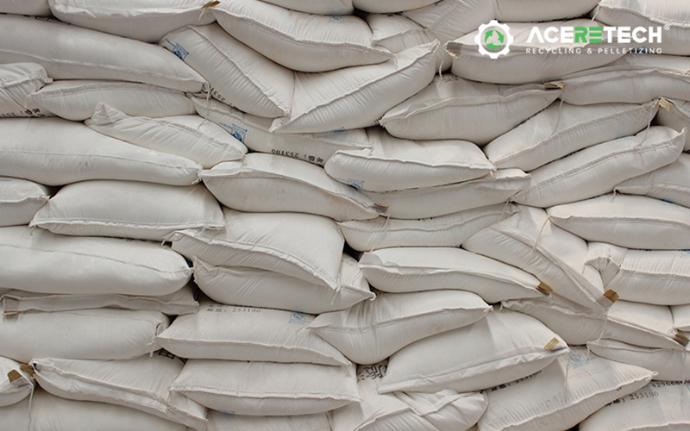
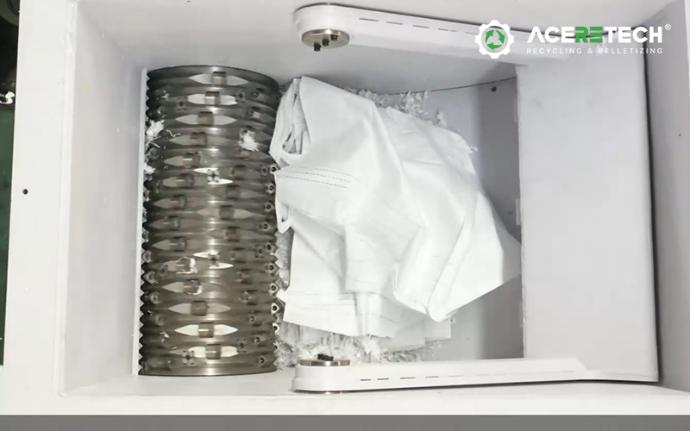
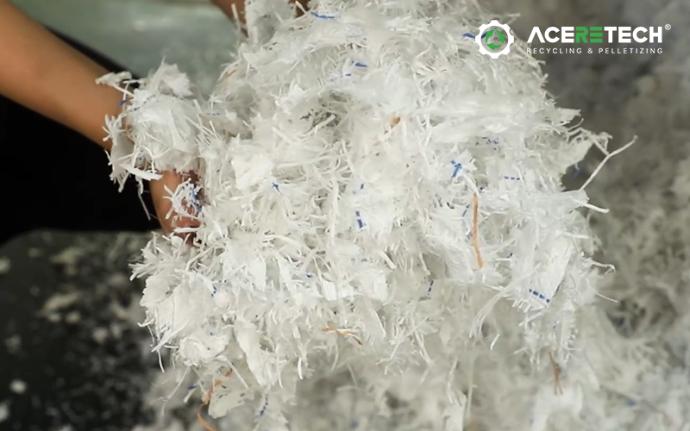
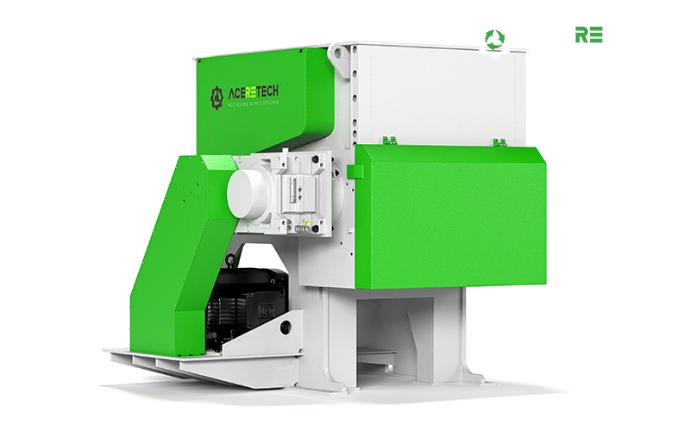
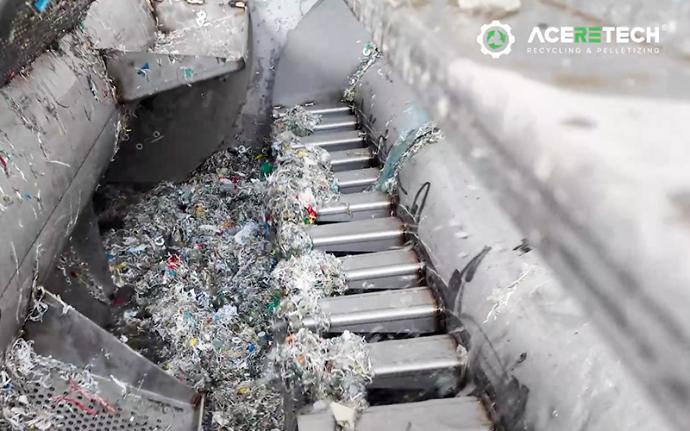
The recycling process begins with size reduction.
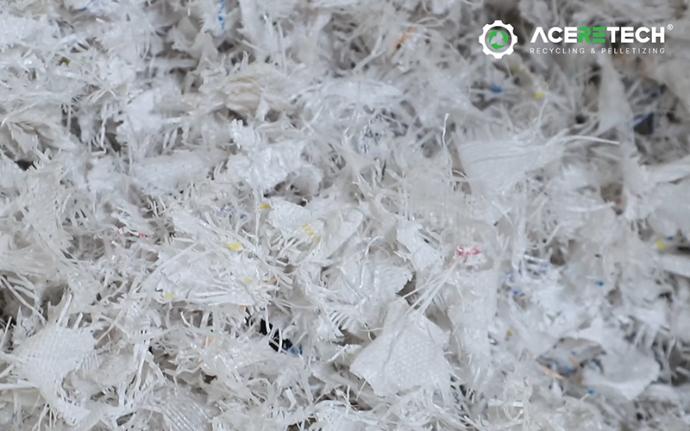
PP woven bags are processed into smaller pieces to improve material handling and prepare the material for the subsequent washing process.
Depending on the characteristics of the material, the size-reduction stage may involve:
* Single-shaft shredding
* Crushing
The main purposes of this stage are to:
* Reduce material size
* Improve washing efficiency
* Support stable downstream material handling
* Prepare the material for continuous processing
Related Articles
PP Woven Bag Shredding Solutions
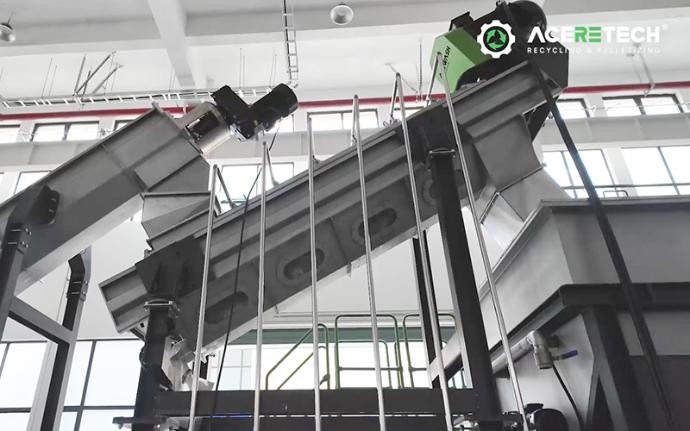
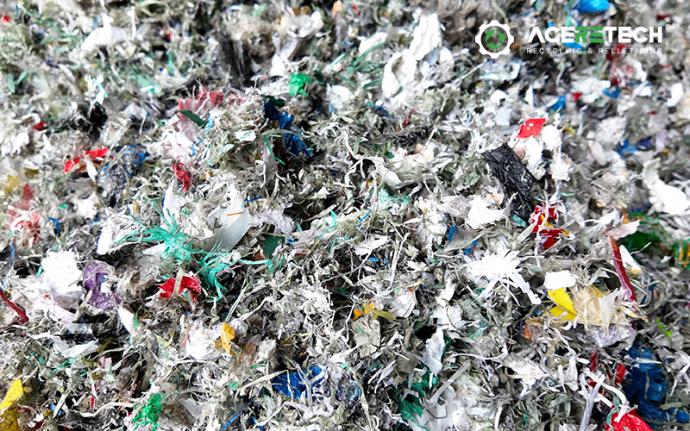
After size reduction, the PP material enters the washing section.
The friction washer is used to remove surface contaminants through mechanical friction and water.
Typical contaminants include:
* Dust
* Sand
* Loose surface residues
The washed material then enters the separation stage.
The float-sink tank is used to separate heavy impurities from the PP material.
For applications involving higher levels of contamination, an optional hot washing process can also be included according to the characteristics of the input material.
Related Articles
PP Woven Bag Washing Solutions
Step 3: Dewatering and Drying
After washing, the material passes through the dewatering and drying section.
The complete drying process includes:
Centrifugal Dewatering → Pipe Drying → Hot-Air Drying
These stages work together to reduce the moisture content of the washed PP material before pelletizing.
Effective moisture reduction is important for maintaining stable extrusion and pelletizing performance.
After drying, the PP material enters the compacting and extrusion system.
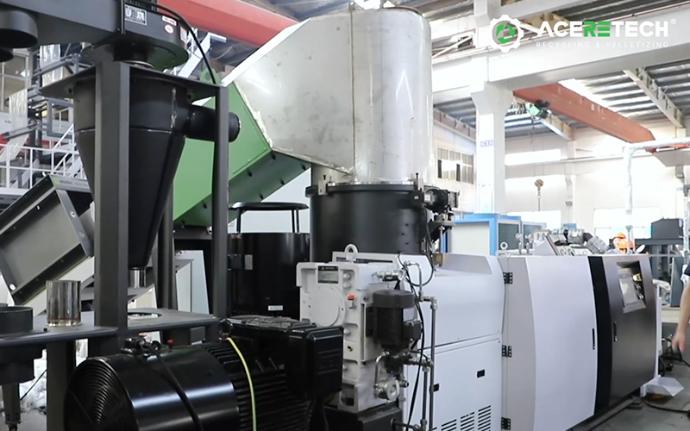
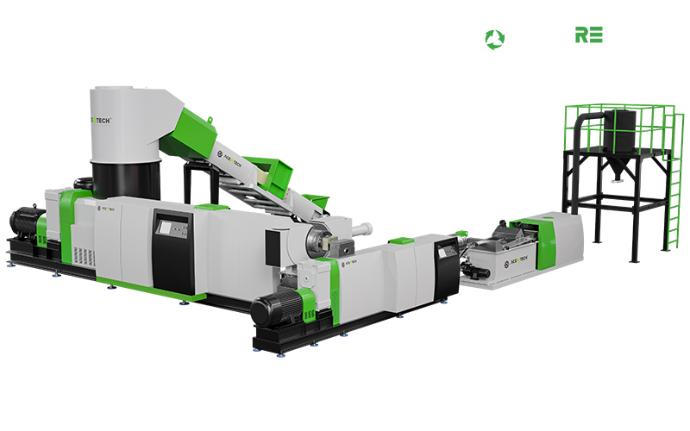
The compactor increases the bulk density of the lightweight material and prepares it for continuous feeding into the single-screw extruder.
The extrusion stage melts and homogenizes the recycled PP material for further purification and pelletizing.
The system configuration includes:
* Belt conveyor
* Metal detector
* Compactor
* Single-screw extruder
The compaction stage plays an important role in improving the feeding stability of lightweight PP woven bag material.
Related Articles
PP Woven Bag Pelletizing Solutions
Step 5: Vacuum Degassing and Melt Filtration
During extrusion, the material passes through a vacuum degassing system.
The vacuum system helps remove moisture and volatile components from the molten material.
After degassing, the PP melt enters the SCF self-cleaning melt filter.
The filtration stage is designed to further remove residual contaminants from the melt while supporting continuous production.
Key functions include:
* Improving melt cleanliness
* Reducing the influence of residual contaminants
* Supporting continuous operation
* Reducing manual intervention for screen changing
Step 6: Water-Ring Pelletizing
After melt filtration, the purified PP melt enters the water-ring pelletizing system.
The molten material is cut into pellets and cooled during the pelletizing process.
The system then includes:
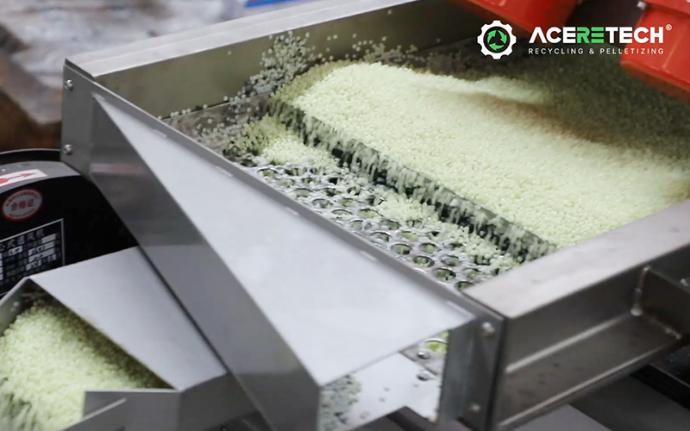
* Pellet dewatering
* Vibrating screening
* Silo storage
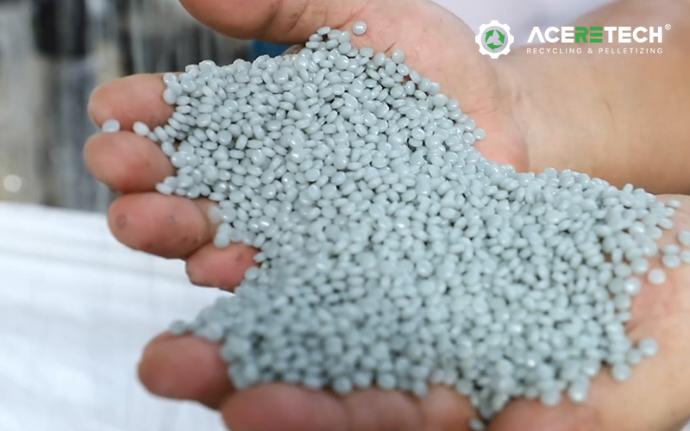
The finished recycled PP granules are collected and prepared for downstream manufacturing applications.
IV. Complete PP Woven Bag Recycling Process
The complete process can be summarized as:
PP Woven Bags → Shredding and Crushing → Friction Washing
→ Float-Sink Separation → Optional Hot Washing → Centrifugal Dewatering → Pipe Drying → Hot-Air Drying → Compaction → Single-Screw Extrusion → Vacuum Degassing → SCF Self-Cleaning Melt Filtration → Water-Ring Pelletizing → Pellet Dewatering → Vibrating Screen → Silo Storage
This integrated process allows PP woven bag waste to be processed from contaminated material into recycled PP granules.
V. Key Features of the Recycling Solution
The complete system integrates multiple processing stages into one continuous recycling process.
Key features include:
* Size reduction for PP woven bag material
* Friction washing for contaminant removal
* Float-sink separation for heavy impurities
* Optional hot washing for more demanding material conditions
* Multi-stage dewatering and drying
* Compaction for improved feeding stability
* Single-screw extrusion
* Vacuum degassing
* SCF self-cleaning melt filtration
* Water-ring pelletizing
* Automated pellet handling and storage
The final system configuration can be adjusted according to the characteristics of the PP woven bags and the required quality of the recycled material.
VI. Applications of Recycled PP Granules
Depending on the quality and properties of the recycled material, the finished PP granules can be used in a range of downstream applications.
Typical applications include:
* PP woven bags
* Injection-molded products
* Plastic pallets
* Plastic crates
* Pipes
* Sheets and plates
* Household products
* Industrial packaging
The final application depends on factors such as material purity, melt flow characteristics, mechanical properties, and downstream processing requirements.
In addition to post-consumer PP woven bag recycling, PP woven bag manufacturers also generate production scrap during normal manufacturing.
Typical in-plant scrap may include:
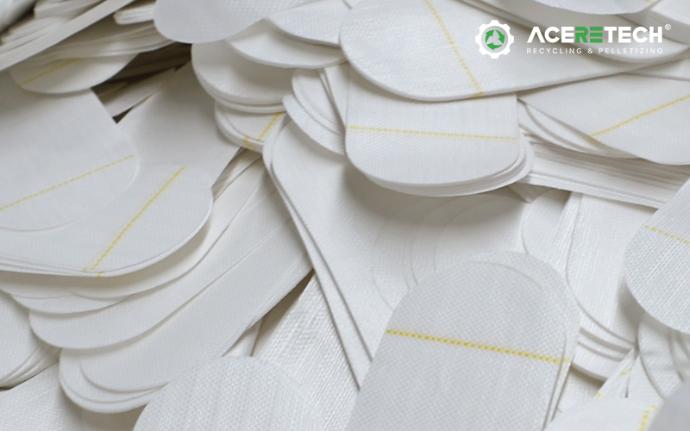
* Woven fabric edge trims
* PP flat yarn or tape waste
* Start-up scrap
* Non-conforming woven bags
* Printing rejects
* Roll-change waste
* Laminated woven bag offcuts
Compared with post-consumer waste, in-plant material is generally cleaner and has a more stable composition.
Depending on the actual material condition, clean production scrap can be processed directly through an in-plant recycling and pelletizing system without requiring the same washing process used for contaminated post-consumer materials.
The process can integrate:
Shredding → Compaction → Extrusion → Melt Filtration → Pelletizing
This allows manufacturers to recycle production waste and reuse the material within their manufacturing process where suitable.
Related Articles
In-plant recycling solution for PP woven bags
IX. Project Summary
This PP woven bag recycling application demonstrates a complete process for converting used or production-generated PP woven bag waste into recycled PP granules.
The complete system integrates:
Size Reduction → Washing → Separation → Dewatering → Drying → Compaction → Extrusion → Vacuum Degassing → Melt Filtration → Pelletizing → Pellet Handling
By combining these processing stages into one integrated recycling system, PP woven bag waste can be processed according to its material condition and contamination level before being converted into reusable recycled material.
The solution can be configured according to the specific characteristics of the input material and the requirements of the final recycled PP application.
Looking for a PP Woven Bag Recycling Solution?
ACERETECH provides integrated recycling solutions for PP woven bag waste, including size reduction, washing, drying, pelletizing, melt filtration, and in-plant recycling.
The final system configuration can be designed according to the material source, contamination level, processing capacity, and downstream application requirements.
Contact ACERETECH to discuss your PP woven bag recycling project and find a suitable recycling solution.
FAQ
Q1. What types of PP woven bags can be processed?
A: The recycling process can be applied to different types of PP woven bag waste, including fertilizer bags, feed bags, rice bags, flour bags, sugar bags, chemical packaging bags, printed woven bags, BOPP-laminated woven bags, and other suitable PP woven materials.
The actual process configuration depends on the material composition and contamination level.
Q2. Is washing required before pelletizing PP woven bags?
A: For post-consumer or contaminated PP woven bags, washing is generally required to remove contaminants such as sand, dust, product residues, and other foreign materials.
Clean in-plant production scrap may be suitable for direct recycling and pelletizing without a complete washing process, depending on the actual material condition.
Q3. Why is drying important after washing?
A: After washing, PP woven bag material contains moisture that must be reduced before extrusion.
The dewatering and drying stages help prepare the material for stable downstream processing and pelletizing.
Q4. Why is a compactor used before extrusion?
A: PP woven bag material is lightweight and has a relatively low bulk density.
The compactor increases the bulk density of the material and helps provide more stable and continuous feeding into the extrusion system.
Q5. What is the purpose of the SCF self-cleaning melt filter?
A: The SCF self-cleaning melt filter is used to remove residual contaminants from the molten PP material during extrusion.
It supports continuous filtration and reduces the need for frequent manual screen replacement.
Q5.What can recycled PP granules be used for?
A: Depending on their properties and quality, recycled PP granules can be used in products such as woven bags, injection-molded products, plastic pallets, crates, pipes, sheets, industrial packaging, and other PP products.