"How can a single production line master the complexity of high-contamination waste? In this featured case study, explore how Aceretech’s integrated washing and ACS-H pelletizing technology helped an East African recycler transform mixed hard and soft plastics into premium PCR resin while maximizing operational stability."
Project Snapshot
Location: East Africa
Feedstock: Highly mixed stream of Hard Plastics (HDPE/PP), Soft Plastics (LDPE/HDPE Film), and Non-woven fabrics.
Core Solution: Integrated High-Efficiency Washing Line + ACS-H Series Pelletizing System.
Strategic Value: Maximizing purity from diverse waste streams through a custom-engineered, unified production line.
Navigating the Complexity of the African Recycling Market
In the East African market, recyclers face feedstock challenges far different from those in stable industrial environments. Post-consumer waste here often arrives with high levels of sand, organic debris, and stubborn adhesives. Furthermore, the feedstock is highly inconsistent, requiring a system that can adapt to different polymers without expensive downtime.
The client’s goal was clear: "I need a high-purity output from a single, resilient production line." To meet this, Aceretech engineered a two-stage integrated solution centered on Operational Resilience.
System I: Custom-Engineered High-Efficiency Washing
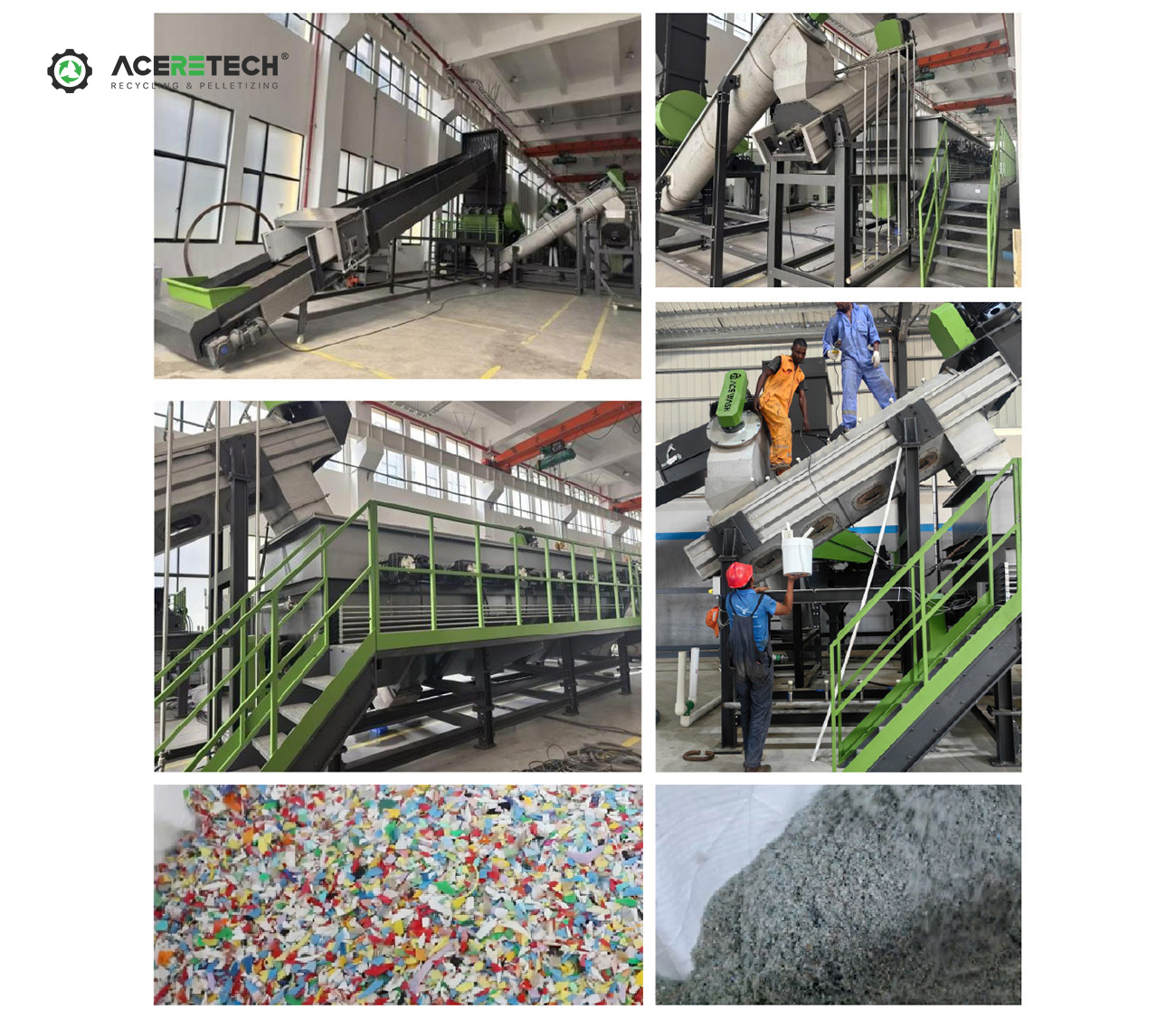
The cleaning stage is the foundation of flake quality. For this project, Aceretech configured a heavy-duty washing line to act as a rigorous purification center, removing 99% of contaminants before extrusion.
🛡️ Reinforced Pre-Purification: We integrated a heavy-duty Trommel and a high-speed Label Remover. In the African context, this is vital for removing the high volume of sand and soil typical of local waste, significantly extending the lifespan of the crusher blades.
🔄 Multi-Material Flexibility: The line utilizes specialized friction washing and floating separation systems. This allows the customer to switch between Hard Plastics and Soft Plastics (Films) by adjusting residence time and chemical dosing.
💎 Stability Edge: By stripping away labels and grit early, we ensure that the subsequent pelletizing stage runs with zero interruptions.
System II: Intelligent ACSS-H Series Pelletizing & Compacting
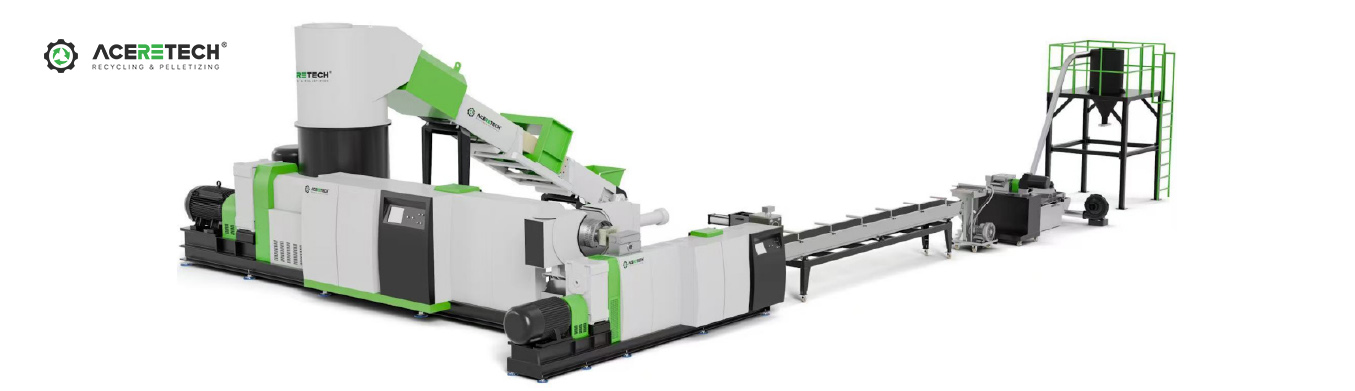
Once the flakes are purified, the ACSS-H Series Pelletizing System takes over. This isn't just a standard extruder; it is a smart system designed to handle the vastly different bulk densities of mixed plastics.
🌀 Integrated Cutter Compactor: The ACSS-H technology features a high-torque compactor. For Soft Plastics (Film/Non-woven), it pre-compacts and warms the material; for Hard Plastics, it ensures a consistent feeding rate into the screw.
💨 Advanced Degassing & Filtration: Given the complexity of mixed materials, we equipped the ACSS-H with double-vacuum degassing and large-area filtration to remove residual volatiles, ensuring the final pellets are high-density and bubble-free.
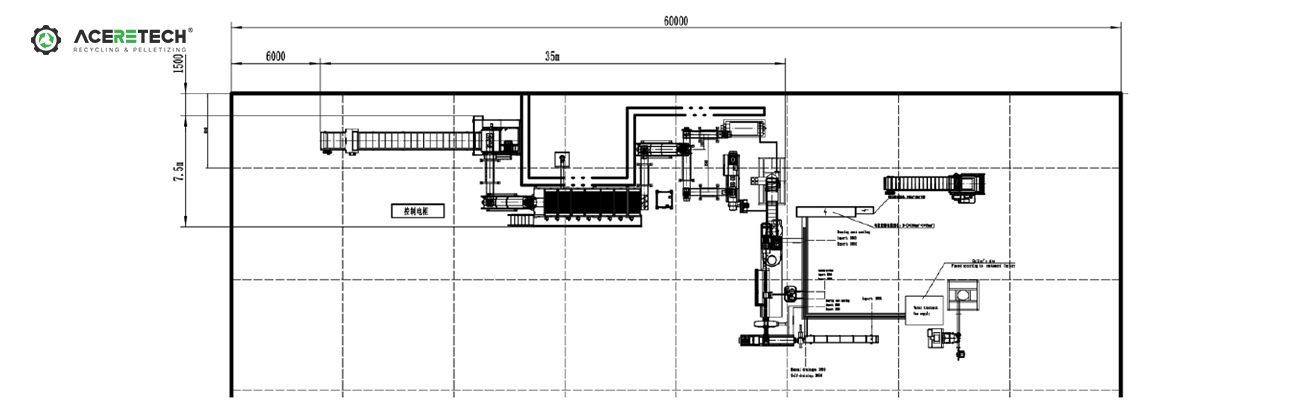
📈 Optimized ROI: One single production line manages the entire process, drastically reducing the customer's total equipment investment and facility footprint.
Voice of the Customer
The success of this integrated approach is best summarized by the client's feedback:
“ACERETECH's solution successfully helped us solve the challenge of recycling mixed raw materials. One production line can handle hard plastics, films, and non-woven fabrics, reducing equipment investment and operating costs. Both production efficiency and recycled pellet quality met expectations, and we are already planning the next phase of capacity expansion.”
Ready to Stabilize Your Production?
Stop struggling with inconsistent feedstock. Every recycling project has unique challenges. Let Aceretech’s engineers design a modular system tailored to your specific material contamination levels and purity goals.
👉 [Request Your Custom System Layout & Technical Proposal] Receive a detailed engineering configuration and capacity analysis based on your local feedstock requirements.