I. Overview: Size Reduction of Large Plastic Waste
In the field of industrial recycling, large plastic waste often presents a challenge—particularly when items are oversized, hollow, or difficult to feed into downstream processing equipment. Such materials include plastic pallets, large blow-molded products, plastic containers, and other bulky plastic components generated during manufacturing, logistics, or material handling.
Before further recycling, these materials typically require preliminary size reduction (shredding) to facilitate handling and subsequent processing stages.
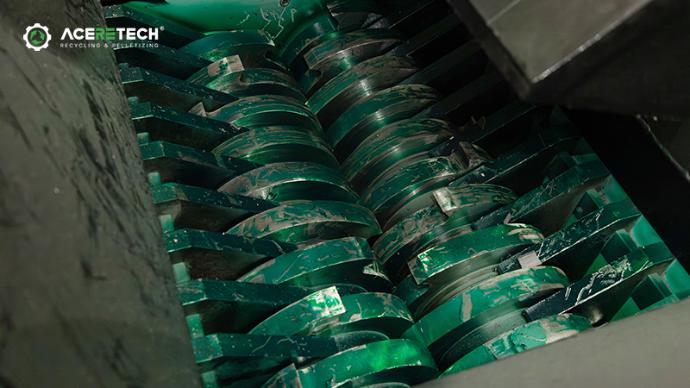
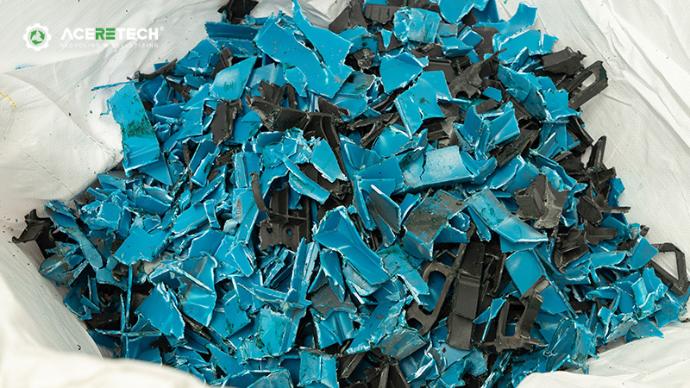
The ACERETECH DS series double-shaft shredder is specifically designed for the size reduction of various types of plastic waste, including large and hollow plastic items. Utilizing a dual-shaft shredding mechanism, the equipment breaks down large plastic objects into smaller fragments, preparing them for subsequent processes—such as secondary shredding, washing, or pelletizing—depending on the material characteristics and the configuration of the recycling line.
In a recent test involving the shredding of PE (polyethylene) pallets, the DS series unit achieved a throughput of approximately 300–500 kg/h under specific, customized test conditions. This figure serves as a reference for evaluating the equipment's performance in similar applications. Actual throughput may vary based on factors such as material dimensions, wall thickness, feeding conditions, equipment configuration, and the desired output particle size.
II. PE Pallet Shredding Test: Equipment Configuration and Performance
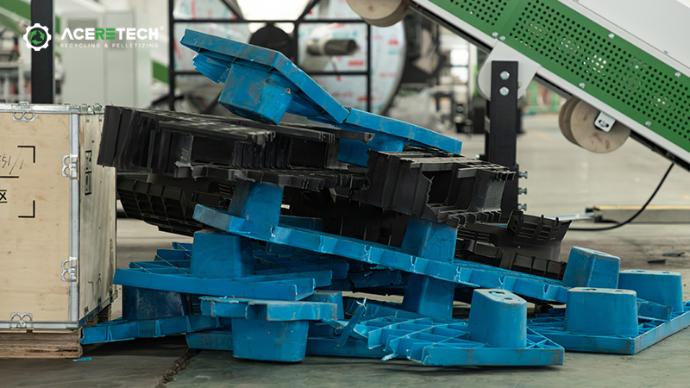
Plastic pallets are widely used in warehousing, logistics, and industrial material handling. When pallets become damaged or are no longer suitable for use, those made of PE—provided they meet recycling criteria—can enter the plastic recycling process.
Given their substantial volume, pre-shredding these pallets is an effective way to reduce their size prior to further processing.
Equipment Configuration
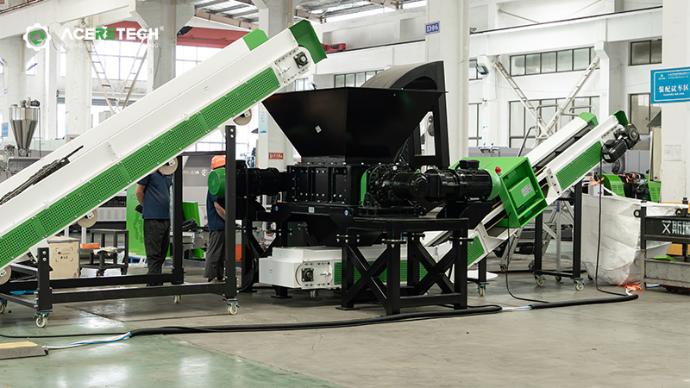
The DS series dual-shaft shredder used in this test is equipped with the following components:
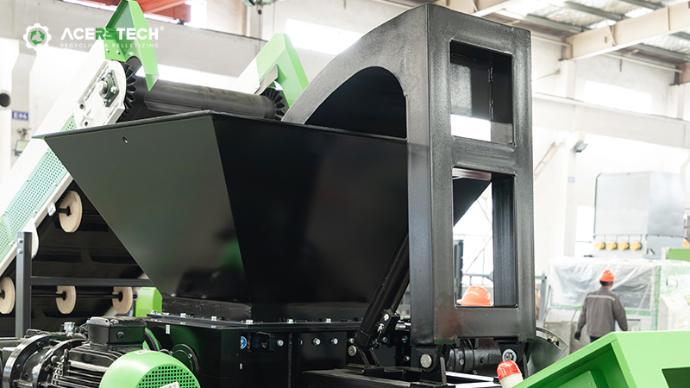
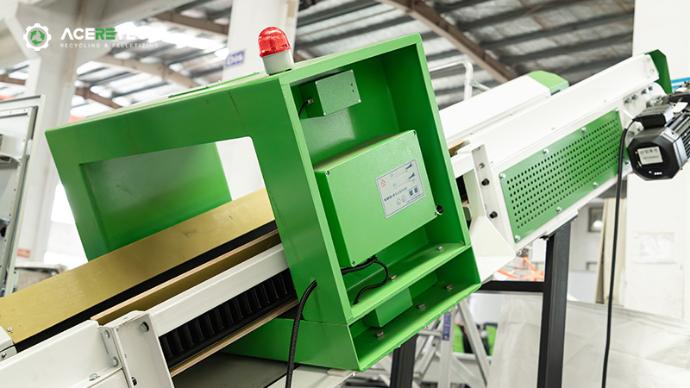
An 800 mm wide belt conveyor with an integrated metal detector: This unit transports PE pallets to the shredding chamber while scanning for metal contaminants. (Note: The detection unit itself does not automatically eject metal; the specific response depends on the configured control system.)
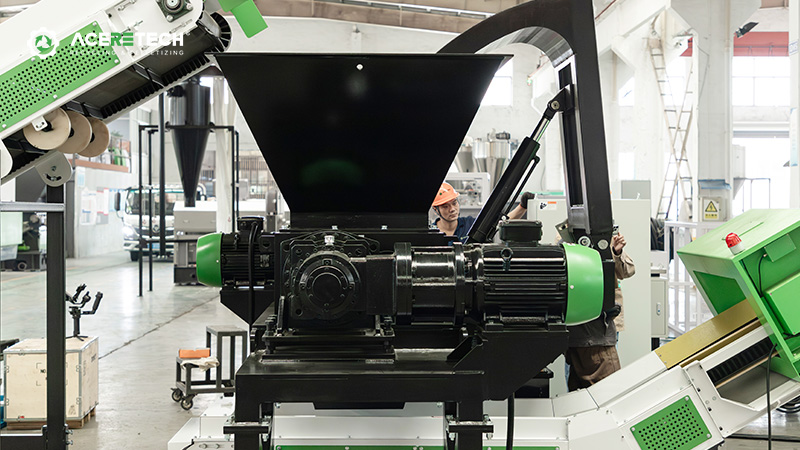
A hydraulic feeding device: This assists in pushing large items into the shredding chamber, allowing for a more controlled processing operation.
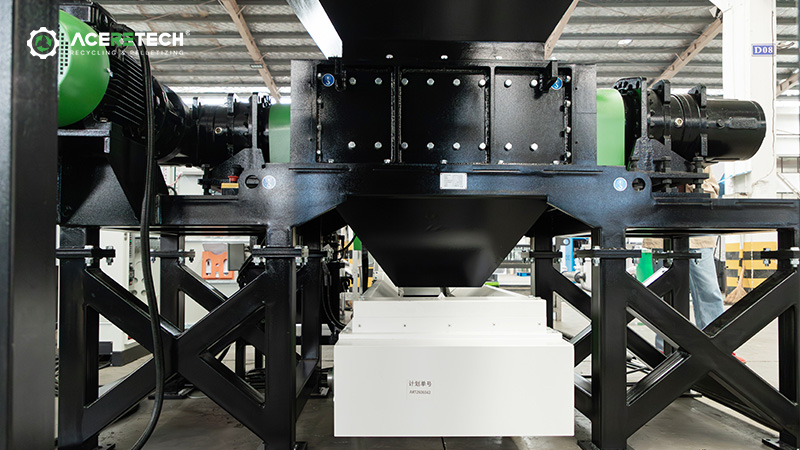
A dual-shaft shredding system: This utilizes two rotating shafts to break down plastic materials into smaller fragments. High-quality electrical components: These support the operation and control of the equipment.
An intelligent control system: Depending on the chosen configuration, this system manages equipment operation and monitors the processing workflow.
Test Results
Based on the client’s specific requirements and the defined test conditions, the DS series dual-shaft shredder achieved a throughput of approximately 300–500 kg/h when processing PE (polyethylene) pallets.
Actual throughput may vary based on factors such as pallet dimensions, wall thickness, material condition, feeding consistency, and the desired output particle size. Therefore, these test results are for reference only and should not be considered a guaranteed capacity for all application scenarios.
For recycling facilities evaluating industrial plastic shredders—whether for PE pallets or similar large-scale plastic waste—it is recommended to conduct material testing and select the appropriate equipment based on specific operational requirements.
III. Why Choose a Dual-Shaft Shredder for Large or Hollow Plastic Waste?
When selecting the right plastic shredding equipment, it is essential to consider factors such as material size, structure, mechanical properties, feeding characteristics, and downstream processing requirements. Large or hollow plastic products often occupy a significant amount of space, making them difficult to handle efficiently prior to size reduction (shredding).
For suitable materials, dual-shaft shredders offer several distinct advantages.
3.1 Processing Large Plastic Items
Large plastic components are often difficult to handle or feed into downstream recycling equipment if they are not shredded first.
Depending on the equipment configuration and material characteristics, the DS series can be used to process plastic pallets, large plastic components, and other oversized plastic waste. Reducing the size of these materials facilitates easier handling, storage, and subsequent processing.
3.2 Shredding Hollow Plastic Items
Hollow plastic items—such as various types of containers, crates, and molded parts—typically have large external dimensions but are relatively lightweight.
A properly configured dual-shaft shredder can break these items down into smaller fragments, preparing them for subsequent mechanical recycling. The specific suitability for a given application should be evaluated based on the product's dimensions, wall thickness, plastic material, and structural characteristics.
3.3 Preparing Plastic Waste for Downstream Recycling
In a plastic recycling production line, shredding is generally used as a preliminary size-reduction step. Depending on the material type and recycling objectives, the shredded plastic can then be fed into granulators, washing systems, or complete plastic recycling and pelletizing lines.
The required output size and the selection of downstream equipment should be determined based on the intended recycling process and the specifications required for the final recycled material.
Consequently, a comprehensive recycling solution typically integrates the shredding process with other processing stages, rather than relying solely on the shredder itself.
3.4 Material Inspection and Process Control
When processing industrial plastic waste, contamination by metallic impurities is a critical factor that must be addressed.
In this test configuration, an 800 mm-wide conveyor belt equipped with a metal detector is used to identify metallic impurities as the material is transported. It is important to distinguish between "metal detection" and "automatic metal separation or rejection." Whether the equipment stops, triggers an alarm, or initiates other response measures depends on the specific control configuration and operational protocols in place.
The control system also facilitates equipment operation and the monitoring of the overall process. To ensure the reliable operation of the equipment, it is essential to establish and implement appropriate operating procedures and conduct thorough material inspections.
Related Articles
Plastic Flakes Pelletizing Solutions
Plastic
Flakes
Washing Solutions
IV. Applications of the DS Series Dual-Shaft Shredder
Beyond the PE (polyethylene) pallet application featured in this test, the DS series shredder is suitable for size reduction of a wide range of large plastic waste. Its specific applicability depends on the results of material evaluation and the chosen equipment configuration.
Typical application areas include:
Large plastic waste: Large plastic items that require preliminary size reduction before further processing.
Hollow plastic products: Various hollow-molded plastic items that meet the equipment’s size and structural requirements.
Plastic pallets and crates: PE or other plastic pallets and crates that are damaged, discarded, or no longer suitable for reuse.
Large industrial plastic components: Oversized plastic parts and waste generated during manufacturing processes.
Industrial plastic offcuts: Large plastic scraps and production waste that require shredding before entering subsequent recycling stages.
Material suitability is determined by factors such as polymer composition, dimensions, wall thickness, toughness, feeding characteristics, and the required output size. Actual processing capacity should be verified through material testing and assessments tailored to specific application scenarios.
V. Conclusion
The ACERETECH DS series dual-shaft shredder provides an effective volume-reduction solution for processing various large and hollow plastic waste, including specific plastic pallets, crates, and large industrial plastic components.
In shredding tests involving PE (polyethylene) pallets, the equipment achieved a throughput of approximately 300–500 kg/h under the specified test conditions. The system—comprising a dual-shaft shredding unit, a hydraulic feeding device, a conveyor belt equipped with metal detection, and a control system—collectively enables the efficient processing of various types of bulky plastic waste.
Actual processing performance depends on material characteristics, equipment configuration, operating conditions, and downstream process requirements. We recommend conducting material testing to verify suitability and determine expected processing outcomes.
Please contact ACERETECH to discuss your requirements for bulky plastic waste recycling; we can provide a customized shredding solution tailored to your specific needs.
FAQ
Q1: What types of materials can the DS series dual-shaft shredder process?
A: The DS series is suitable for a wide range of plastic waste, particularly bulky and hollow plastic items. It can process materials such as plastic pallets, crates, large molded components, and industrial plastic scrap. Final suitability depends on the specific properties and dimensions of the material, as well as the equipment configuration.
Q2: What is the processing capacity of the DS series for PE pallets?
A: In specific shredding tests involving PE pallets, the processing capacity is approximately 300–500 kg/h. Actual throughput may vary based on pallet dimensions, wall thickness, material condition, feeding method, equipment configuration, and the required output particle size.
Q3: Can the metal detection system automatically remove metal contaminants?
A: No. The metal detection system is designed only to identify metal contaminants on the conveyor belt; it cannot automatically remove them. The system’s response upon detecting metal—such as stopping the conveyor belt, triggering an alarm, or taking other actions—depends on the configured control settings.
Q4: What happens to the plastic waste after it is shredded?
A: Depending on its condition and recycling objectives, the shredded plastic can undergo further processing, such as additional size reduction (granulation), washing, or pelletizing. The choice of downstream processes should be based on the required specifications for the final product and the overall production capacity.
Q5: How do I choose the right dual-shaft shredder for bulky plastic waste?
A: Consider factors such as the type of plastic, maximum material dimensions, wall thickness, material condition, target throughput, desired output size, and any downstream processing requirements. Providing representative samples, photographs, or videos helps in determining the appropriate equipment configuration.