From Waste PET Bottles to Recycled PET Flakes, Pellets, and Sheets
Used PET bottles are one of the most widely recycled plastic packaging materials.
Water bottles, soft drink bottles, juice bottles, cooking oil bottles, and other PET containers can be recovered and converted into valuable recycled PET materials.
Depending on the quality of the incoming bottles and the customer's final application, recycled PET can be processed into:
• High-purity PET flakes
• Standard rPET pellets
• Food-grade rPET pellets
• PET sheets
• Thermoforming sheets
• Polyester fiber
• PET strapping
• Other recycled PET products
ACERETECH provides integrated PET bottle recycling solutions covering size reduction, washing, drying, pelletizing, and downstream PET processing.
The final process configuration can be selected according to the material condition, required product quality, and end-use application.
I. What PET Bottles Can Be Recycled?
The PET bottle recycling system can process a wide range of post-consumer PET containers, including:
• Mineral water bottles
• Soft drink bottles
• Juice bottles
• Cooking oil bottles
• Household PET containers
• Cosmetic PET bottles
• Clear PET bottles
• Blue PET bottles
• Green PET bottles
• Mixed-color PET bottles
The quality of the incoming material is an important factor in determining the final recycled PET quality.
Bottle color, PVC content, labels, adhesives, organic contamination, moisture, and other impurities should therefore be considered when designing the recycling process.
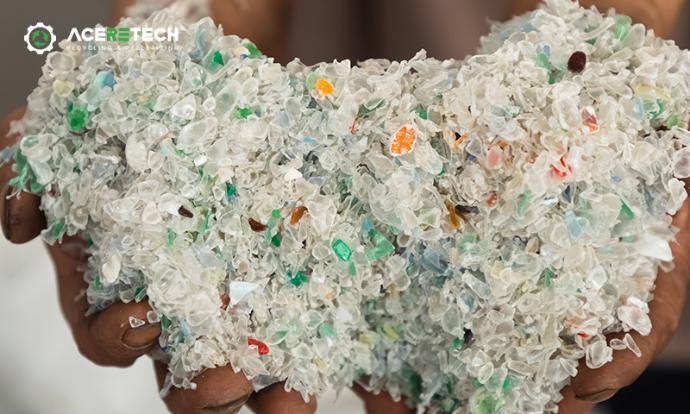
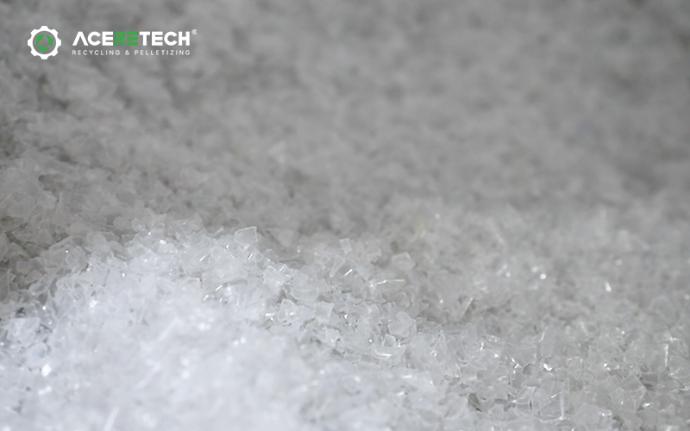
With appropriate sorting, washing, separation, and drying, waste PET bottles can be converted into high-purity PET flakes suitable for subsequent applications.
II. Complete PET Bottle Recycling Process
A complete PET bottle recycling system can be divided into several major processing stages:
PET Bottles → Size Reduction → Washing & Separation → Dewatering & Drying → PET Flakes
From this point, the clean PET flakes can follow different downstream routes depending on the customer's requirements:
Route A: PET Flakes → Direct Sale / Fiber / Strapping / Other Applications
Route B: PET Flakes → Pelletizing → rPET Pellets
Route C: PET Flakes → Food-Grade Pelletizing → Food-Contact Applications
Route D: PET Flakes / Pellets → PET Sheet Extrusion → Thermoforming Sheets
This modular approach allows the PET recycling system to be configured according to the customer's final product rather than requiring every downstream process to be installed in one line.
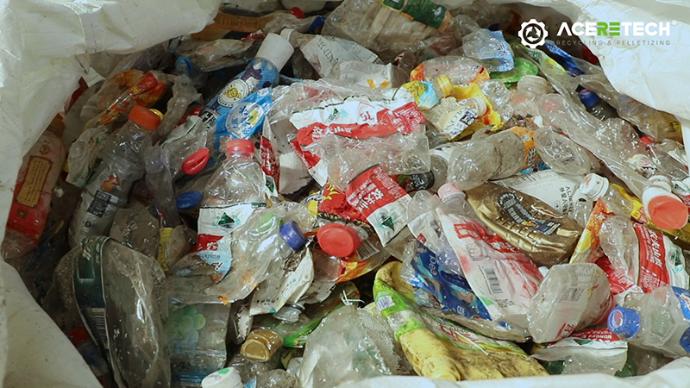
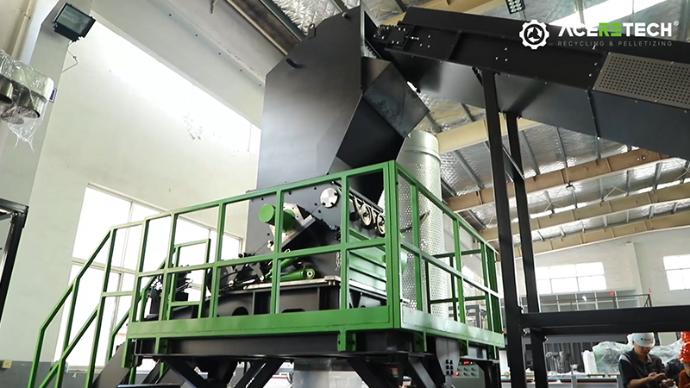
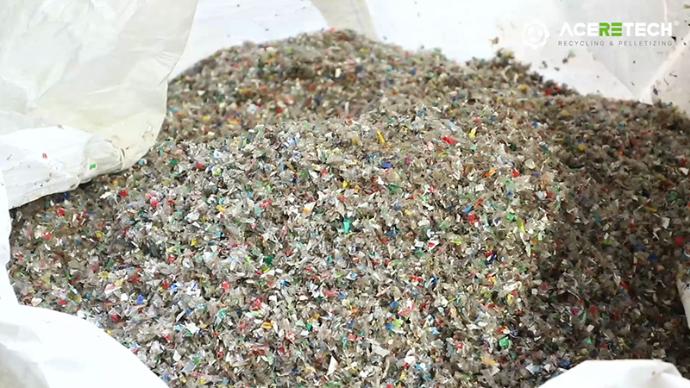
The recycling process begins with the size reduction of collected PET bottles.
The bottles are fed into a suitable crusher or size-reduction system and processed into PET flakes.
The purpose of this stage is to:
• Reduce the size of the bottles
• Increase the surface area available for washing
• Facilitate material handling
• Prepare the material for downstream washing and separation
• Support continuous material processing
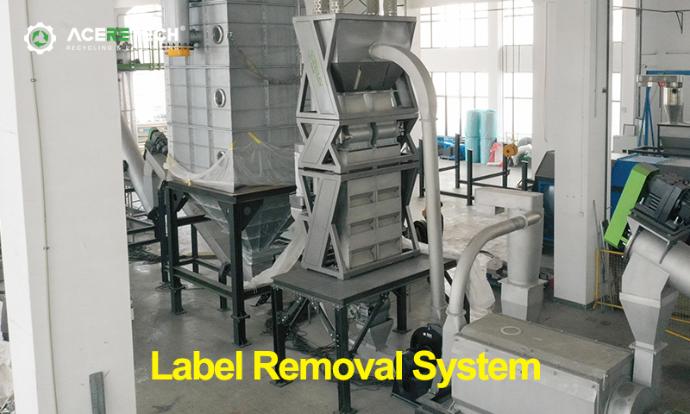
At this stage, the primary objective is size reduction, rather than complete removal of labels, caps, or other contaminants.
The subsequent washing and separation stages are responsible for removing most of these impurities.
Related Articles
➡ PET Bottle Crushing Solutions
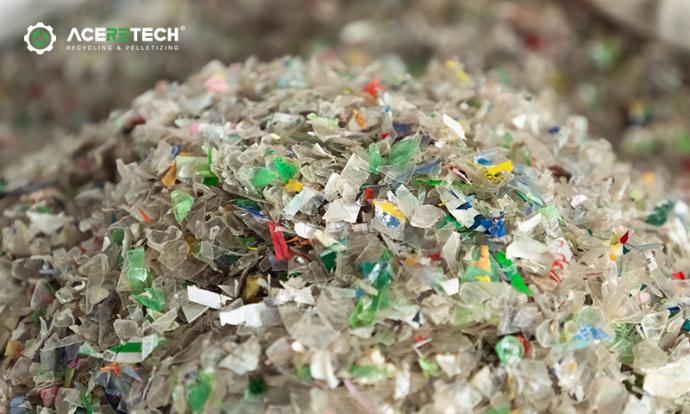
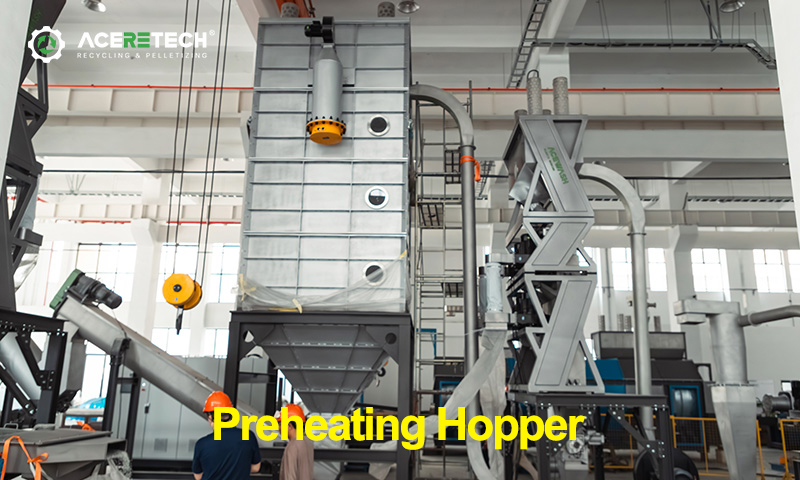
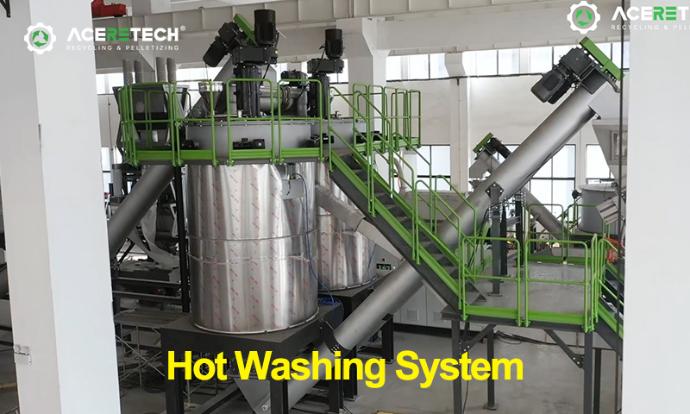

After size reduction, the PET flakes enter the washing system.
Washing is one of the most important stages in determining the cleanliness and quality of recycled PET flakes.
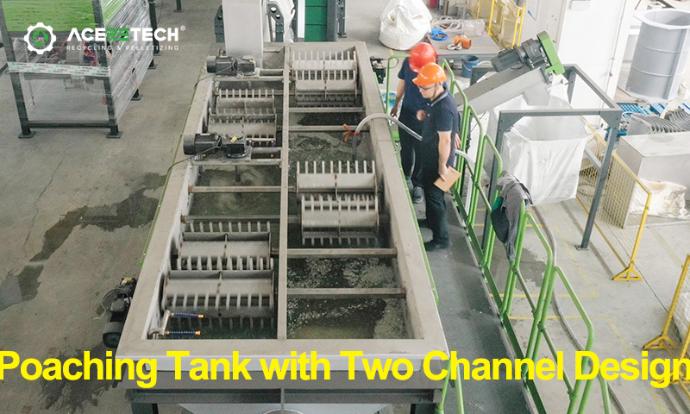
Depending on the input material and required product quality, the washing system can include:
Pre-Washing → Hot Washing → Friction Washing → Float-Sink Separation → Rinsing → Dewatering → Drying
Different stages perform different functions.
Pre-Washing
Pre-washing removes loose dirt, dust, sand, and other surface contaminants from the PET flakes.
This reduces the contamination load entering the subsequent washing stages.
Hot Washing
Hot washing is used when a higher level of cleaning is required.
It helps remove contaminants such as:
• Adhesive residues
• Oil and grease
• Organic residues
• Dirt attached to the PET surface
The hot-washing configuration can be adjusted according to the characteristics of the incoming PET bottles and the required flake quality.
Friction Washing
The friction washer provides intensive mechanical cleaning through high-speed material-water friction.
It helps remove remaining surface contaminants and improve the cleanliness of the PET flakes.
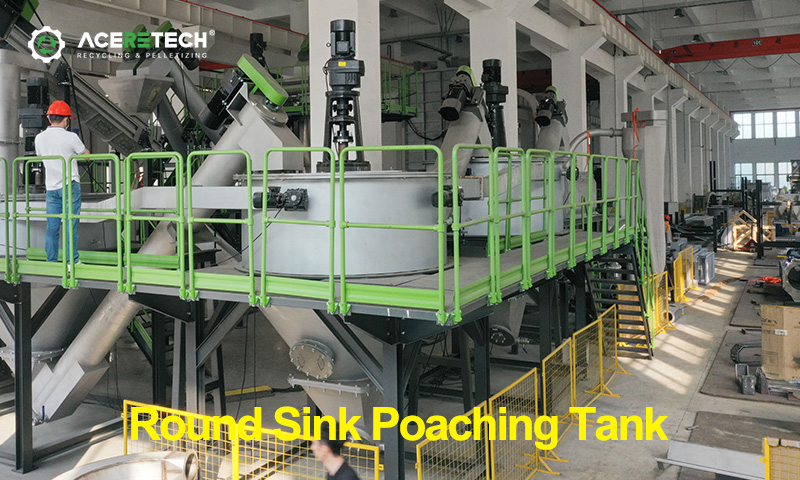
Float-Sink Separation
Float-sink separation is used to separate PET from lighter materials.
Typical lightweight materials include:
• PP bottle caps
• PE bottle caps
• Floating plastic components
PET has a higher density than water and sinks, while many PP and PE components float.
This density difference provides an effective method for separating PET flakes from common bottle-cap materials.
Rinsing
The PET flakes are rinsed with clean water to remove residual detergents and remaining contaminants.
The rinsing stage is particularly important when producing high-purity PET flakes for demanding downstream applications.
Related Articles
➡ PET Bottle Flake Washing Solutions
➡ Food-Grade PET "Bottle-to-Bottle" Washing Solutions
Step 3: Dewatering and Drying
After washing and separation, the PET flakes contain residual moisture.
The material therefore passes through dewatering and drying equipment before entering the next processing stage.
The drying process helps achieve:
• Lower moisture content
• Improved material handling
• More stable extrusion
• Better pelletizing performance
• Improved storage stability
Proper moisture control becomes particularly important when PET flakes are subsequently melted and extruded.
III. PET Flakes: Three Main Downstream Options
After washing and drying, the PET flakes do not necessarily have to be pelletized.
Depending on the customer's requirements, the clean PET flakes can be:
Option 1 — Used or Sold as PET Flakes
High-purity PET flakes can be directly supplied to downstream manufacturers for applications such as:
• Polyester fiber
• PET strapping
• Sheet production
• Other PET processing applications
This route avoids the additional energy consumption associated with pelletizing when pellets are not required.
Option 2 — Standard PET Flake Pelletizing
PET flakes can be further processed into rPET pellets when the customer requires:
• Easier transportation
• Higher bulk density
• More convenient feeding
• Standardized pellet form
• Improved commercial handling
The pelletizing system typically includes:
PET Flakes → Extrusion → Vacuum Degassing → Melt Filtration → Pelletizing
The exact configuration depends on the material quality and final application.
Option 3 — Food-Grade PET Pelletizing
For bottle-to-bottle and other food-contact applications, a more advanced recycling and decontamination process is required.
The system can incorporate technologies such as:
• Vacuum devolatilization
• Controlled processing temperature
• High-efficiency melt filtration
• Acetaldehyde control
• Online IV monitoring
• IV stabilization
The complete food-grade recycling process must be designed and validated according to the applicable food-contact regulatory requirements.
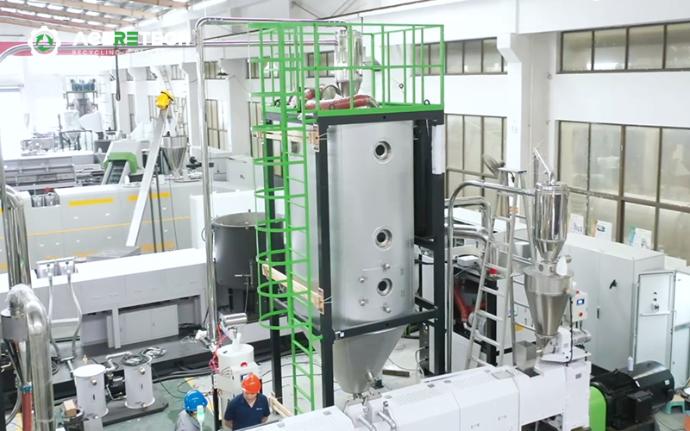
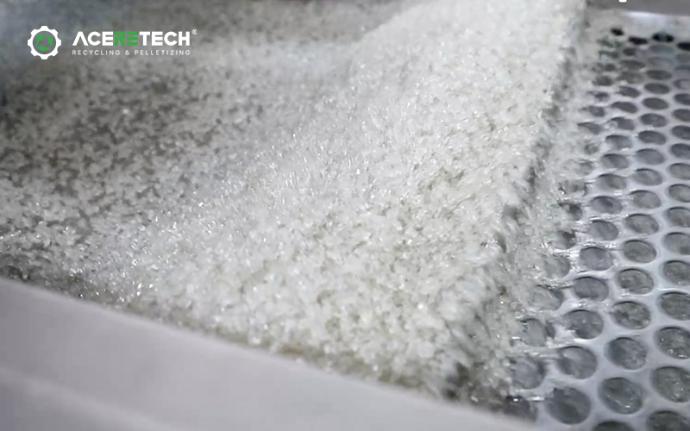
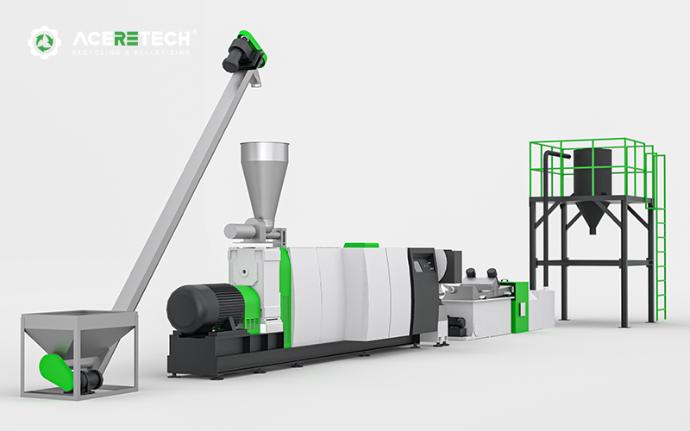
When PET flakes need to be converted into pellets, the material is fed into the PET pelletizing system.
The extrusion process melts and homogenizes the PET flakes before melt filtration and pelletizing.
A typical process is:
PET Flakes → Extrusion → Vacuum Degassing → Melt Filtration → Pelletizing → Cooling / Dewatering → PET Pellets
Key objectives include:
• Stable plasticization
• Effective degassing
• Continuous melt filtration
• Controlled IV degradation
• Stable pellet formation
The resulting rPET pellets can be used in applications such as fiber production, strapping, sheet extrusion, and other PET processing applications, depending on the pellet properties.
Related Articles
➡ PET flake pelletizing solutions
V. Food-Grade PET Recycling
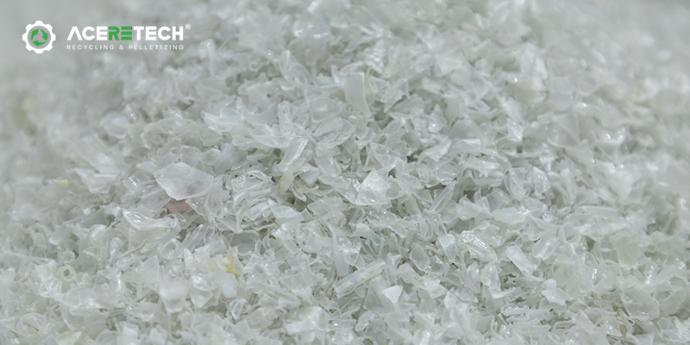
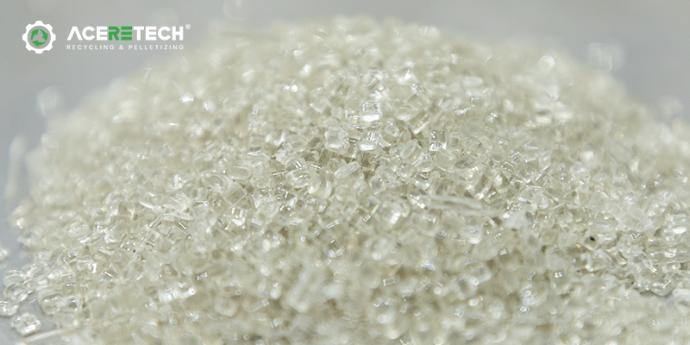
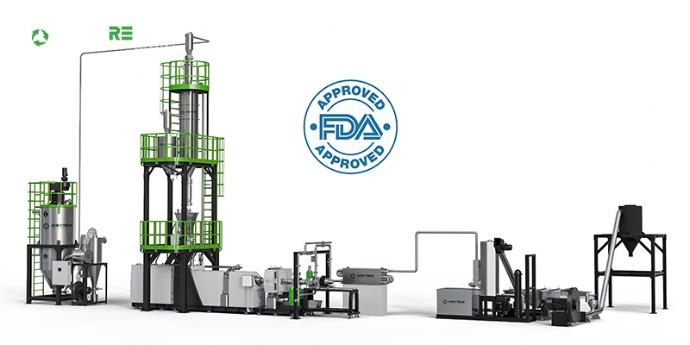
Food-grade PET recycling places significantly higher requirements on the purification and decontamination process.
For bottle-to-bottle recycling and food-contact applications, the system must control not only visible impurities but also potential chemical contaminants.
Depending on the complete process design, advanced technologies may include:
• High-efficiency washing
• High-purity flake separation
• Vacuum devolatilization
• High-efficiency melt filtration
• Controlled thermal processing
• Acetaldehyde control
• Intrinsic Viscosity monitoring
• Additional decontamination processes
The objective is to produce recycled PET that meets the applicable requirements for the intended food-contact application.
It is important to distinguish between equipment capability and final regulatory compliance. Food-contact suitability depends on the complete recycling process, input material, decontamination performance, validation, and applicable regulations.
Related Articles
➡ Food-grade PET pelletizing solutions
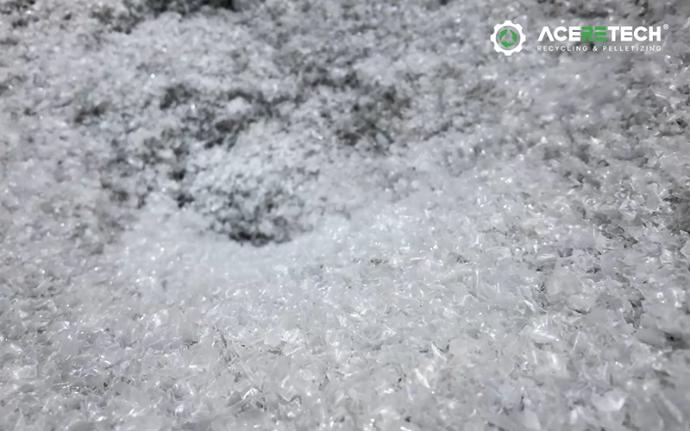
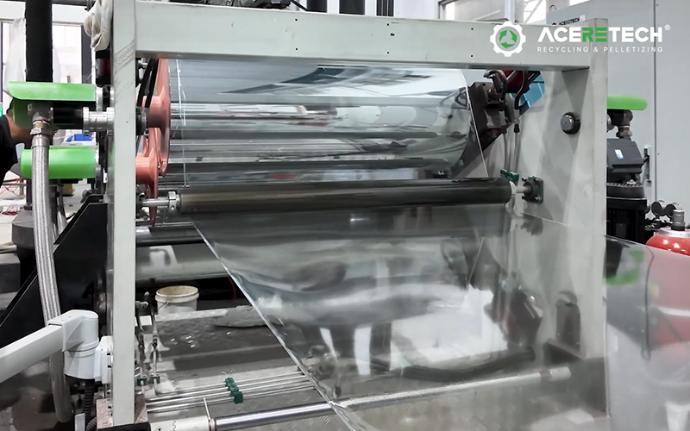
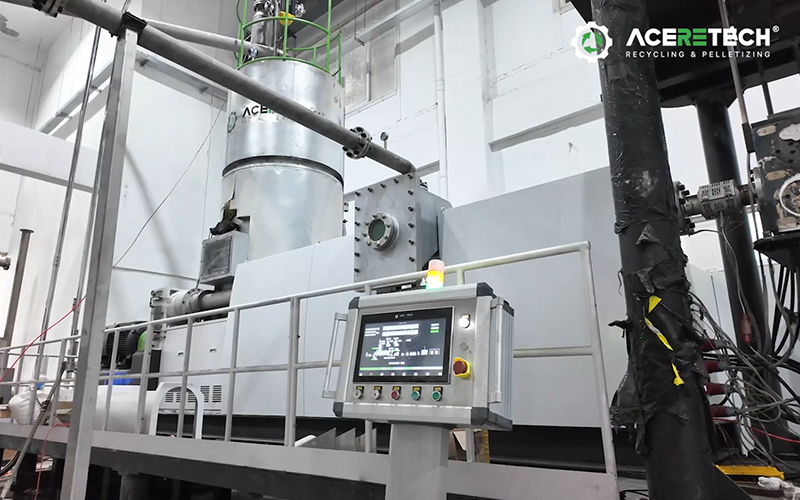
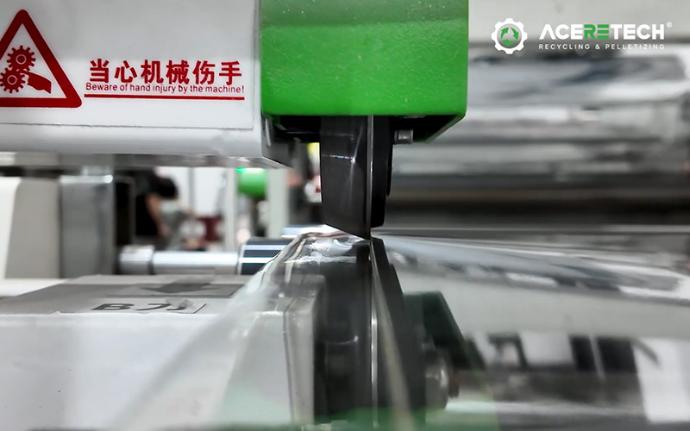
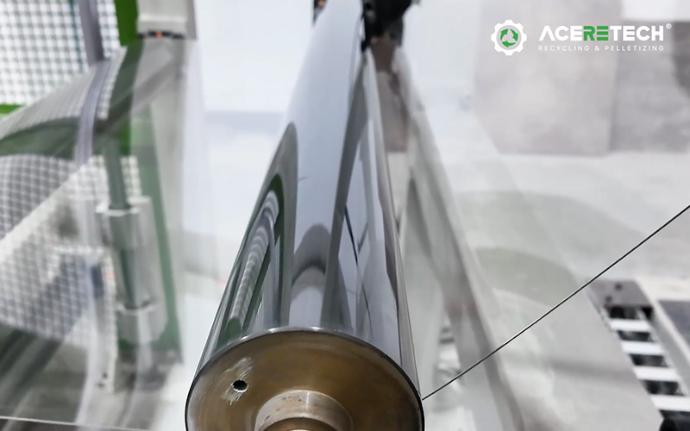
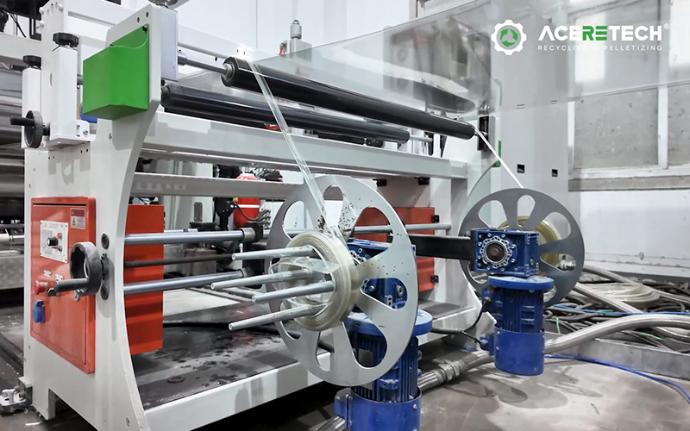
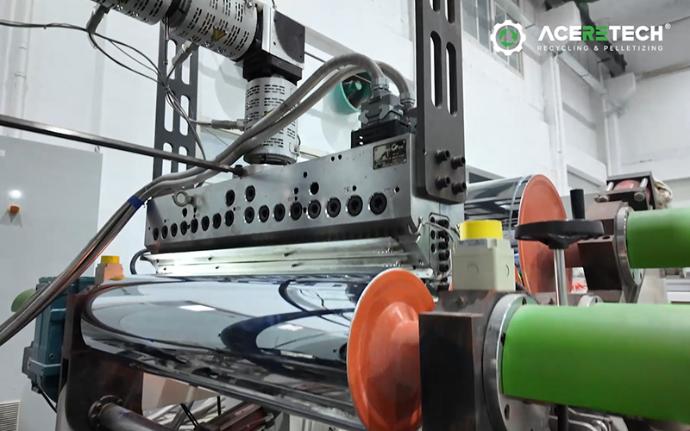
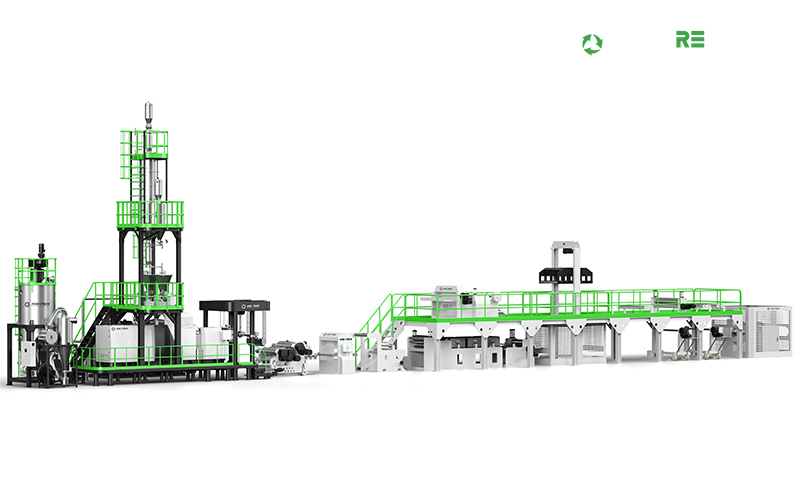
Clean PET flakes or rPET pellets can also be used as feedstock for PET sheet extrusion.
A typical PET sheet extrusion process includes:
Crystallization & Drying → Extrusion → Vacuum Degassing → Melt Filtration → Melt Pump → T-Die → Three-Roll Calender → Cooling → Haul-Off → Winding
The resulting PET sheets can be used for applications such as:
• Food trays
• Fruit containers
• Blister packaging
• Thermoforming sheets
• Disposable packaging
• Industrial packaging
Depending on the raw material quality and extrusion configuration, the resulting sheets can offer good transparency, strength, thickness consistency, and thermoforming performance.
For food-contact applications, the complete material and processing system must meet the applicable regulatory requirements.
Related Articles
➡ PET sheet extrusion solutions
VII. From PET Bottles to Different rPET Products
One of the key advantages of a modular PET recycling system is that the same recycled PET feedstock can enter different downstream processes according to the customer's business model.
The overall application routes can be illustrated as follows:
Route A — PET Flakes
Waste PET Bottles → Crushing → Washing → Separation → Drying → High-Purity PET Flakes
Suitable for:
• Fiber
• Strapping
• Sheet production
• Other PET processing
Route B — Standard rPET Pellets
Waste PET Bottles → Crushing → Washing → Drying → PET Flakes → Pelletizing → rPET Pellets
Suitable for applications requiring pellet-form recycled PET.
Route C — Food-Grade rPET
Waste PET Bottles → High-Purity Washing → Advanced Decontamination → Food-Grade Pelletizing → rPET Pellets
Suitable for qualified food-contact recycling applications.
Route D — PET Sheets
Waste PET Bottles → Washing → Drying → PET Flakes / Pellets → Sheet Extrusion → PET Sheets
Suitable for:
• Thermoforming
• Food trays
• Packaging
• Industrial sheets
VIII. Key Factors Affecting Recycled PET Quality
The final quality of recycled PET depends on the entire recycling process rather than one individual machine.
Important factors include:
Raw Material Sorting
Effective sorting helps reduce contamination from PVC, non-PET plastics, colored bottles, metals, and other foreign materials.
Label and Cap Removal
Labels, caps, and other non-PET components should be effectively removed during the recycling process.
Washing Performance
The washing system must be selected according to the type and level of contamination in the incoming PET bottles.
PVC Control
PVC contamination is particularly important in PET recycling because even small amounts can negatively affect downstream processing.
Moisture Control
PET is hygroscopic. Proper dewatering and drying are therefore essential before extrusion.
Melt Filtration
Melt filtration helps remove remaining solid contaminants before the recycled PET melt enters the pelletizing or sheet extrusion process.
IV Control
PET's Intrinsic Viscosity is an important quality indicator.
Thermal and hydrolytic degradation during processing can reduce IV, so the extrusion and drying process should be properly controlled.
IX. Why an Integrated PET Recycling Solution?
A PET bottle recycling system is not simply a combination of individual machines.
The performance of the complete line depends on the coordination between:
Sorting → Crushing → Washing → Separation → Drying → Extrusion → Filtration → Pelletizing / Sheet Extrusion
An integrated system can provide several advantages.
Consistent Material Quality
Coordinated washing, separation, drying, and extrusion processes help maintain more stable recycled PET quality.
Stable Production
Automated conveying and control systems reduce manual intervention and help maintain continuous material flow.
Flexible Product Options
Depending on the customer's requirements, the recycled PET can be produced as:
• PET flakes
• Standard rPET pellets
• Food-grade rPET pellets
• PET sheets
Scalable System Design
The recycling system can be configured according to the customer's required capacity and final product rather than applying one fixed configuration to every project.
X. PET Bottle Recycling Process Summary
The complete PET bottle recycling process can be summarized as:
Waste PET Bottles → Sorting → Crushing / Size Reduction → Pre-Washing → Hot Washing → Friction Washing → Float-Sink Separation → Rinsing → Dewatering → Drying → High-Purity PET Flakes
From here:
Flake Route
PET Flakes → Direct Application / Sale
Standard Pelletizing Route
PET Flakes → Extrusion → Degassing → Melt Filtration → Pelletizing → rPET Pellets
Food-Grade Route
PET Flakes → Advanced Decontamination → Food-Grade Pelletizing → Food-Grade rPET
Sheet Route
PET Flakes / Pellets → PET Sheet Extrusion → PET Sheets
This modular structure allows the PET recycling solution to be adapted to different raw materials, production capacities, and end-product requirements.
XI. Project / Application Summary
This PET bottle recycling application demonstrates how waste PET bottles can be converted into higher-value recycled PET products through a combination of mechanical size reduction, washing, separation, drying, extrusion, filtration, pelletizing, and sheet extrusion technologies.
The core process is:
Waste PET Bottles → High-Purity PET Flakes → rPET Pellets / PET Sheets / Other Recycled PET Products
The appropriate downstream route depends on the customer's target product.
For customers selling recycled PET flakes, the washing and drying line may be sufficient.
For customers requiring pelletized material, a PET flake pelletizing system can be added.
For bottle-to-bottle or food-contact applications, additional purification and decontamination technologies are required.
For customers targeting thermoforming and packaging applications, PET sheet extrusion can be integrated after the recycling process.
ACERETECH can configure the recycling system according to the customer's raw material, required capacity, recycled product, and quality requirements.
Looking for a PET Bottle Recycling Solution?
ACERETECH provides integrated PET recycling solutions covering:
PET Bottle Crushing → Washing & Separation → Drying → PET Flake Pelletizing → Food-Grade PET Recycling → PET Sheet Extrusion
The final system configuration can be selected according to:
• PET bottle source
• Material contamination
• Bottle color
• Required processing capacity
• PET flake quality
• Final recycled product
• Food-contact requirements
• Downstream application
Whether your target is high-purity PET flakes, rPET pellets, food-grade rPET, or PET sheets, ACERETECH can develop a recycling solution based on your specific material and production requirements.
Contact ACERETECH to discuss your PET bottle recycling project.
FAQ
Q1. What products can be made from recycled PET bottles?
A: Depending on the recycling process and material quality, waste PET bottles can be converted into PET flakes, rPET pellets, food-grade rPET pellets, PET sheets, thermoforming sheets, polyester fiber, PET strapping, and other recycled PET products.
Q2. Do PET bottles always need to be pelletized after washing?
A: No. Clean PET flakes can be sold or used directly for certain downstream applications. Pelletizing is mainly required when the customer needs the material in pellet form or requires the handling and processing advantages associated with pellets.
Q3. What is the difference between standard PET recycling and food-grade PET recycling?
A: Standard PET recycling focuses on removing physical contamination and producing recycled PET suitable for industrial applications such as fiber, strapping, and sheets.
Food-grade recycling requires more stringent purification and decontamination measures because the recycled material is intended for food-contact applications.
The final food-contact suitability depends on the complete recycling process and applicable regulatory requirements.
Q4. Why is hot washing used in PET bottle recycling?
A: Hot washing helps remove difficult contaminants such as adhesive residues, oil, grease, and organic residues from PET flakes.
Whether hot washing is required depends on the contamination level of the incoming PET bottles and the required flake quality.
Q5. Why is PVC removal important in PET recycling?
A: PVC contamination can negatively affect PET processing because PVC behaves differently during thermal processing and can cause degradation or quality problems.
Effective sorting and separation are therefore important for producing high-purity recycled PET.
Q6. What affects the quality of recycled PET flakes?
A: Important factors include:
• Quality of incoming PET bottles
• Sorting efficiency
• PVC and non-PET contamination
• Label and adhesive removal
• Washing performance
• Separation efficiency
• Moisture content
• Drying performance
Q7. Can recycled PET bottles be used to produce new beverage bottles?
A: Yes, recycled PET can be used in bottle-to-bottle recycling when the complete recycling and decontamination process is appropriately designed, validated, and compliant with the applicable food-contact requirements.
Q8. Can PET flakes be directly used for PET sheet extrusion?
A: Yes, depending on the sheet extrusion system and the quality of the PET flakes.
The flakes normally require appropriate crystallization and drying before extrusion, particularly because PET is sensitive to moisture during melt processing.