I. Equipment Overview
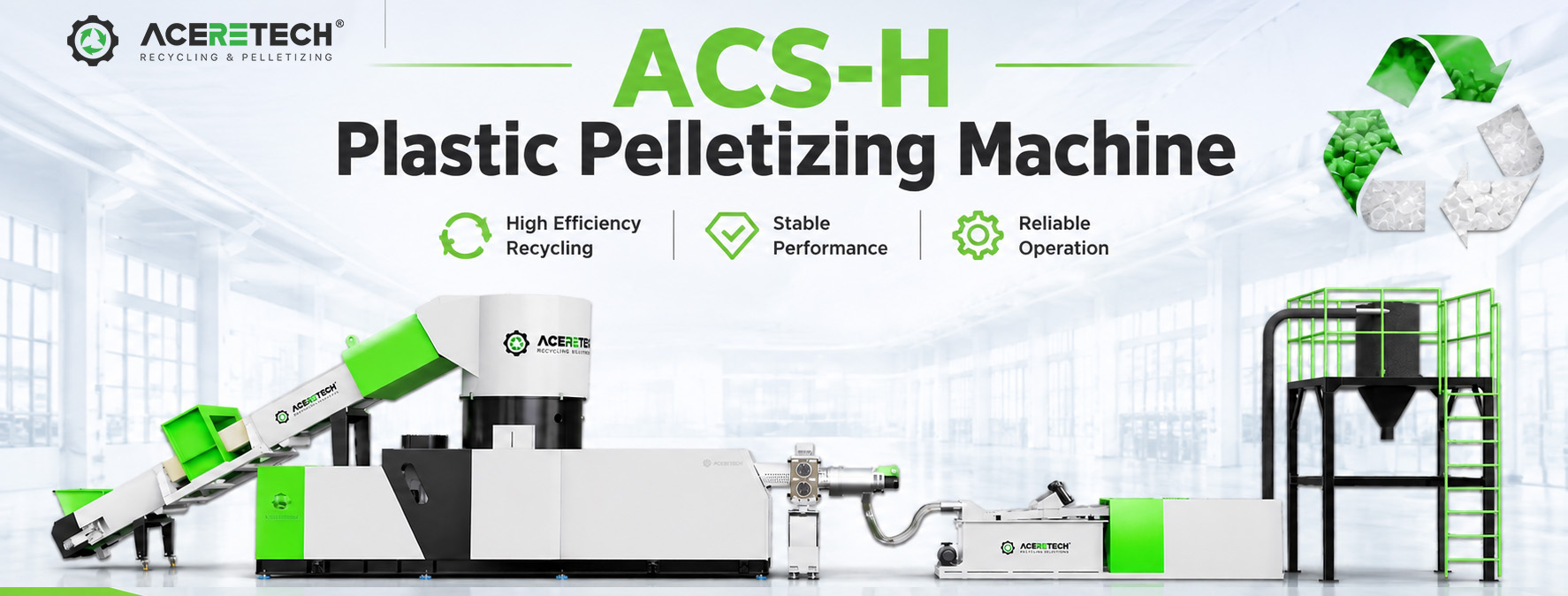
The ACS-H plastic recycling machine is an integrated single-stage plastic recycling and pelletizing system designed to convert various flexible plastic waste into reusable reprocessed pellets. As a fully functional plastic pelletizing unit and complete plastic recycling line, the ACS-H integrates cutting, compaction, extrusion, vacuum degassing, melt filtration and pelletizing into one continuous production process.
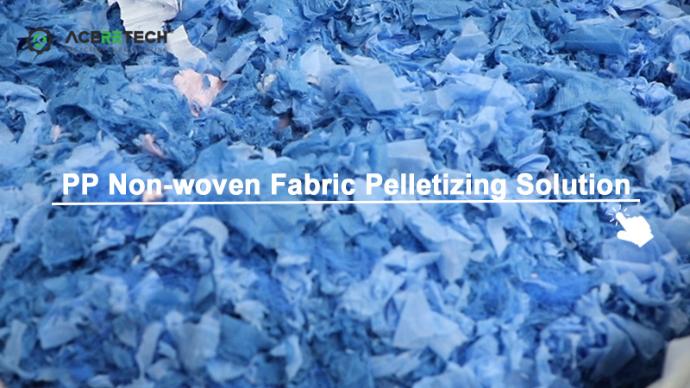
Developed by ACERETECH, the ACS-H cutting-compacting-pelletizing system is mainly used to recycle low-bulk-density plastic materials, including PE films, PP woven bags, flat yarns, non-woven fabrics and other flexible plastic scraps. Subject to material properties and equipment configuration, the system can also be applied to the recycling of certain fibrous materials and other plastics.
By integrating material pre-treatment and extrusion in one system, the ACS-H effectively simplifies the recycling workflow, improves feeding stability and eliminates the need for a standalone pre-compacting unit. The produced reprocessed pellets can be reused in downstream plastic manufacturing processes according to their material characteristics and quality requirements.
II. Working Principle of ACS-H Recycling Equipment
The ACS-H operates with a continuous single-stage recycling process.
First, plastic waste is fed into the cutting compactor, where high-speed rotating blades shred the material. Frictional heat generated during shredding helps preheat, partially dry and compact the material, raising its bulk density.
The compacted material is then continuously conveyed to the single-screw extruder. Under controlled heating and screw rotation, the plastic undergoes melting, plasticization and homogenization.
During extrusion, the vacuum degassing system removes moisture and volatile substances from the melt. The molten plastic then passes through the filtration system to separate solid impurities before entering the pelletizing unit.
Depending on the selected pelletizing configuration, the melt can be processed into uniform pellets via water-ring pelletizing, strand pelletizing or underwater pelletizing. Finally, the pellets are cooled, dewatered and conveyed to a silo for collection and packaging. This integrated process makes the ACS-H a practical solution for recycling a wide range of flexible plastic scraps.
III. Main Components of ACS-H Plastic Recycling Line
The ACS-H system consists of multiple cooperating processing units:
- Automatic feeding system
- Cutting compactor
- Single-screw extruder
- Vacuum degassing system
- Melt filtration system
- Pelletizing system
- Vibrating sieve and drying equipment
- Finished pellet conveying and silo storage system
- Intelligent PLC control system
All components work together to ensure continuous material processing and stable pelletizing.
IV. Technical Specifications of ACS-H Series Plastic Recycling Equipment
The ACS-H series offers multiple models to meet diverse production requirements. The main technical specifications are summarized below:
| Model |
Compaction Chamber Volume |
Screw Diameter | Screw L/D Ratio | Output |
| ACS-H80 |
300 L |
80 mm | 42:1 | 160–220 kg/h |
| ACS-H100 | 500 L | 100 mm | 42:1 | 300–380 kg/h |
| ACS-H120 | 800 L | 120 mm | 42:1 | 450–550 kg/h |
| ACS-H140 | 1,000 L | 140 mm | 42:1 | 600–700 kg/h |
| ACS-H160 | 1,200 L | 160 mm | 42:1 | 800–1,000 kg/h |
| ACS-H180 | 1,600 L | 180 mm | 42:1 | 1,000–1,200 kg/h |
V. Technical Features & Configurations of ACS-H Plastic Pelletizer
The performance of plastic recycling equipment depends on the coordination among feeding, cutting-compacting, extrusion, filtration and pelletizing systems. Featuring an integrated layout, the ACS-H adapts to different plastic waste properties and production demands.
5.1 Automatic Feeding System
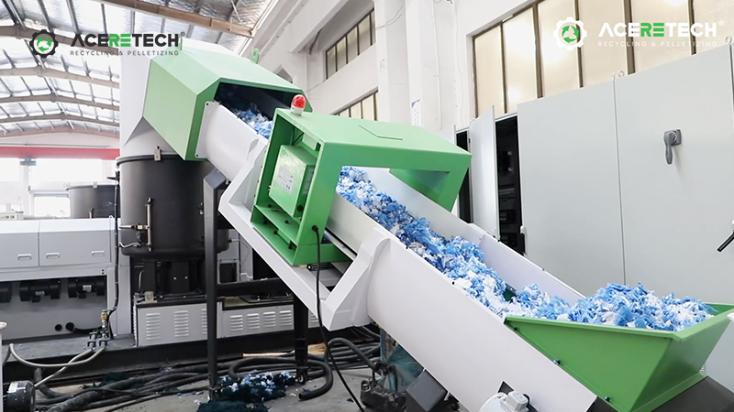
The automatic feeding system delivers plastic scraps to the cutting compaction chamber via a belt conveyor.
It is suitable for conveying many types of flexible plastic materials, including PE films, PP woven bags, flat yarns, non-woven fabrics and other lightweight plastic waste.
The feeding rate can be automatically adjusted according to the material level inside the compaction chamber to maintain consistent material supply and reduce operational fluctuations.
For rolled film recycling, an optional film unwinding feeding device is available to support continuous feeding.
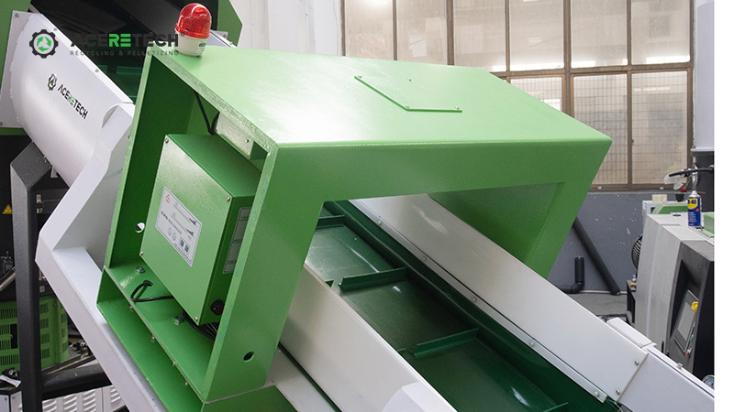
A metal detector can be fitted on the conveyor. When metallic contaminants are detected, the system triggers an alarm and stops operation to protect downstream equipment. This unit only identifies metal impurities and does not have automatic rejection function.
5.2 Cutting & Compacting System
The cutting compaction chamber is one of the core components of the ACS-H plastic recycling pelletizer.
It combines cutting, mixing, preheating and compaction functions. High-speed rotary blades cooperate with stationary blades to shred plastic waste.
During operation, frictional heat from the rotating blades preheats and partially dries the material. Meanwhile, the material is reduced in volume and increased in bulk density after compaction, facilitating feeding into the extruder.
This process delivers outstanding advantages for lightweight, bulky materials such as plastic films, woven bags and flat yarns.
The cutting compactor can also be equipped with a servo-controlled sliding gate. By adjusting material residence time inside the chamber, the system optimizes preheating, compaction and discharge.
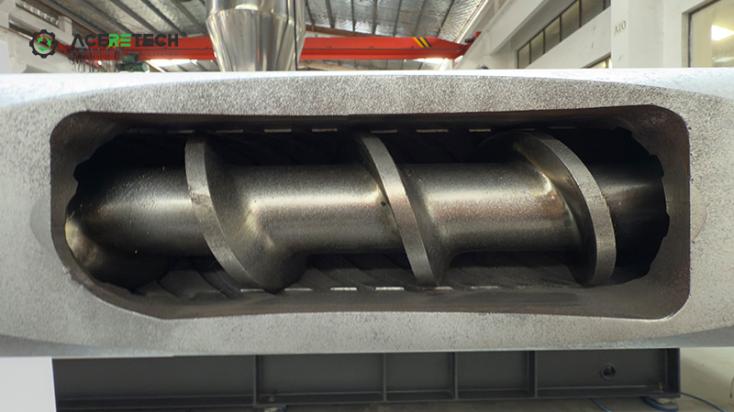
5.3 Single-Screw Extrusion System
Compacted material enters the single-screw extruder for melting and plasticization.
Under controlled temperature and process conditions, the screw conveys, compresses, melts and homogenizes the material.
The ACS-H adopts an optimized wear-resistant screw and barrel design to guarantee stable extrusion during continuous recycling runs.
Screw material options include 38CrMoAlA (SACM-645); bimetallic alloy is also available for specific applications.
Screw L/D ratio can be selected as 36:1 or 42:1; customized configurations are available based on material characteristics and processing requirements.
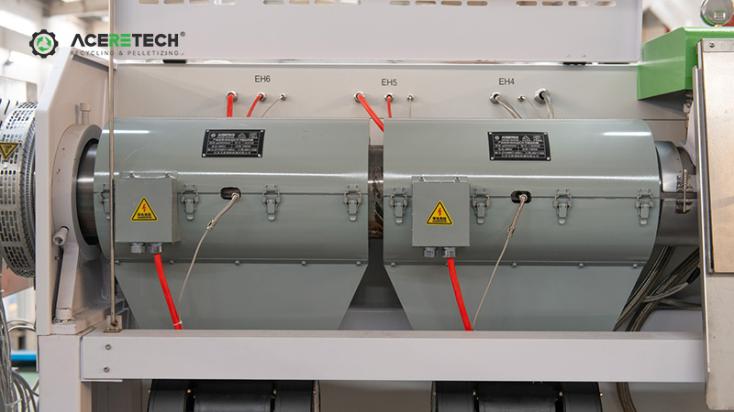
Barrel heating can adopt ceramic heaters or far-infrared heating, matched with an air cooling system for auxiliary temperature regulation.
5.4 Vacuum Degassing System
Moisture and volatile substances in plastic waste undermine melt stability and affect the appearance quality of reprocessed pellets.
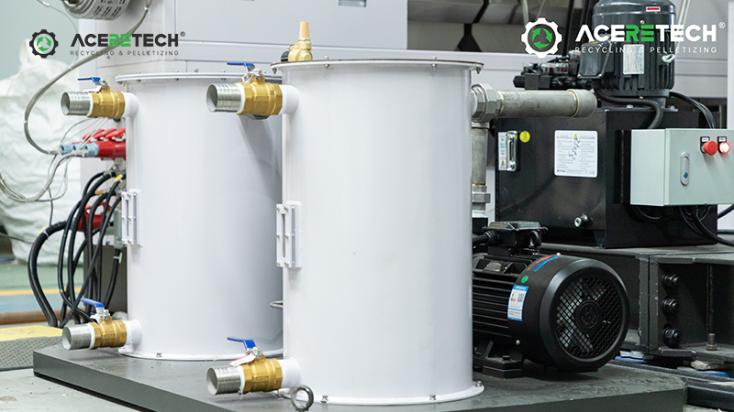
The ACS-H pelletizer is standardly equipped with a dual-stage vacuum degassing system.
During extrusion, the vacuum system removes residual moisture, volatiles and low-molecular-weight compounds from molten plastic.
This process is especially effective for printed films and certain plastic waste containing residual volatile components.
Efficient degassing reduces bubbles, voids and other processing defects caused by residual moisture and volatiles, ensuring more consistent pellet quality.
It supports processing of selected printed plastic scraps and flexible plastic waste. Actual degassing performance depends on feed condition, moisture content and processing setup. This system cannot replace necessary washing or pre-drying procedures.
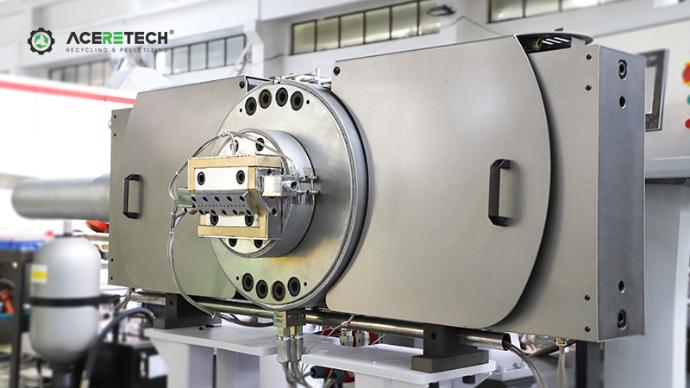
5.5 Melt Filtration System
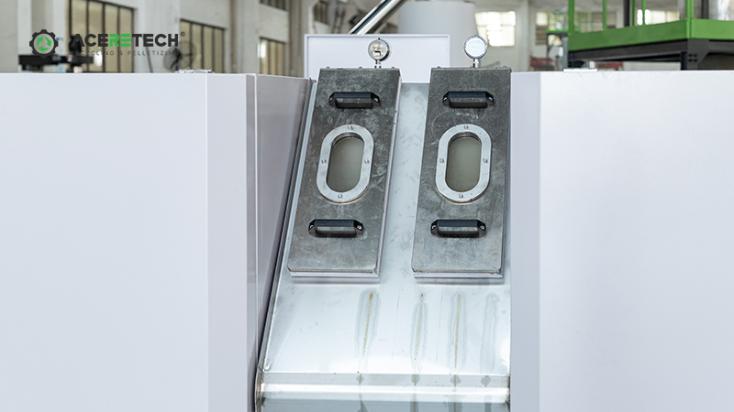
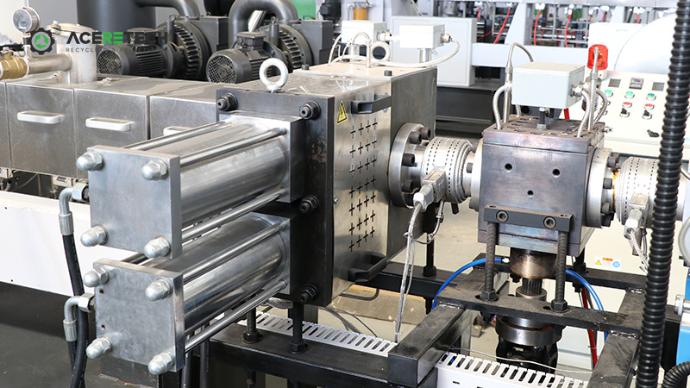
Melt filtration is a critical step in plastic recycling pelletizing, as residual contaminants in molten material impair pellet quality and downstream processing.
The ACS-H series provides multiple filtration configurations according to material cleanliness and filtration requirements.
Available options:
- Non-stop Piston Filter
Piston screen changers enable continuous or quasi-continuous filtration (depending on selected configuration). Two-position and four-position versions are available.
Advantages:
Large filtration area
Low screen change frequency
Convenient screen replacement
Minimized production downtime
- Continuous Plate Filter
The plate-type filtration system uses two filter plates. While one screen is being replaced, the other continues filtration.
This design helps maintain stable production during filter maintenance.
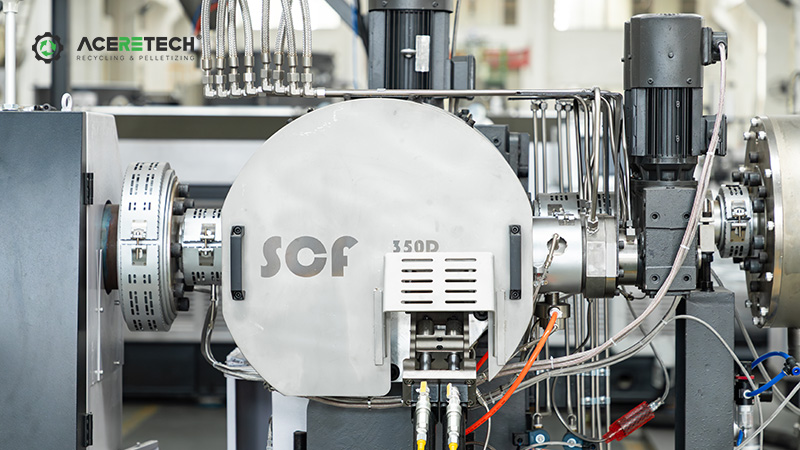
- Self-Cleaning Filter
For applications with heavily contaminated melt, the SCF self-cleaning filtration system is an option. Under suitable operating conditions per ACERETECH filtration specifications, it can handle impurity levels up to 5%, including paper, wood, aluminum, unmolten plastic and rubber.
Customers shall select the proper filtration solution based on the type, size and concentration of contaminants in raw materials.
5.6 Pelletizing System
The ACS-H plastic recycling line supports multiple pelletizing methods to accommodate different polymer properties, melt flow behaviors and production needs.
Three main configurations are offered:
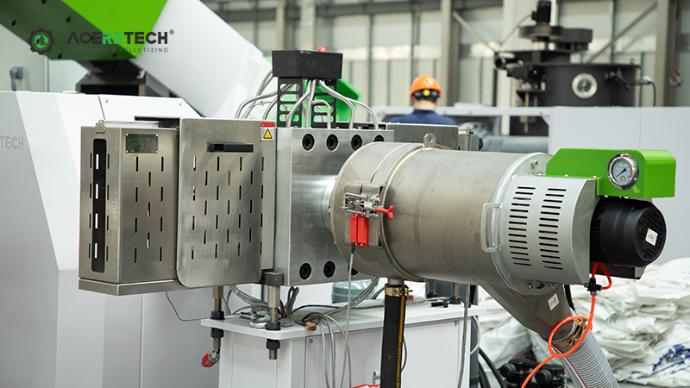
- Water-Ring Pelletizing
The water-ring pelletizing system cuts molten plastic directly at the die face. Pellets are cooled by circulating water and then sent to the downstream dewatering unit.
It features automatic adjustment of cutter pressure and cutter speed (based on melt pressure) to maintain stable pelletizing conditions.
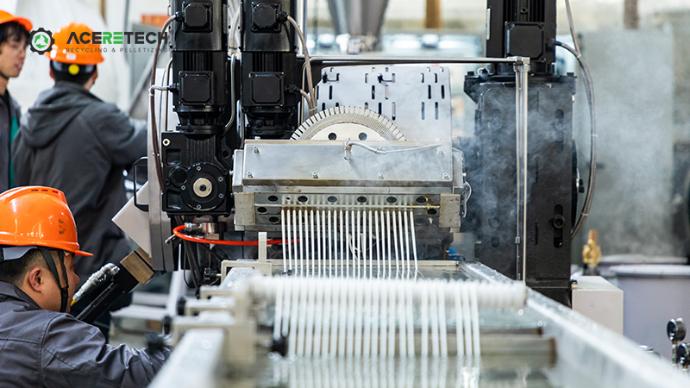
- Underwater Strand Pelletizing
In the underwater strand pelletizing process, molten plastic is extruded through die holes to form continuous strands. The strands are cooled in a water bath before entering the pelletizer.
This relatively simple process can be selected for suitable materials.
- Underwater Pelletizing
The underwater pelletizing system cuts molten plastic directly at the die face under water.
Highly automated, it is suitable for materials with high melt flow properties and specific production requirements.
The complete package may include a pelletizer, conveying pipeline, vibrating sieve, centrifugal dehydrator and silo. The final pelletizing setup shall be determined by polymer type, melt flow behavior, output and required pellet characteristics.
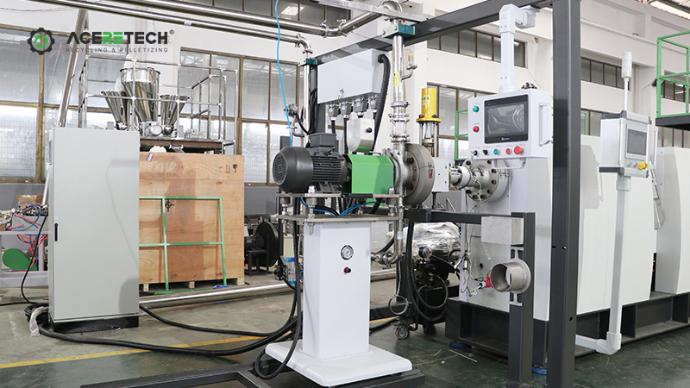
5.7 Vibrating Dewatering & Drying System
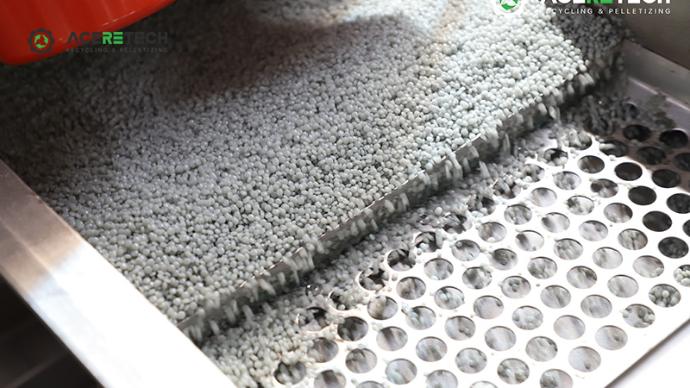
After pelletizing, recycled pellets need cooling and dewatering before collection.
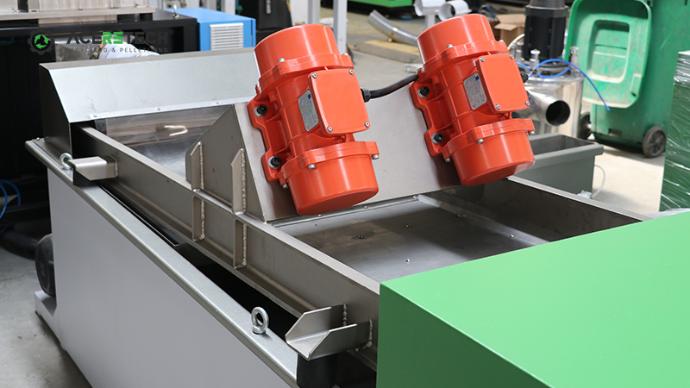
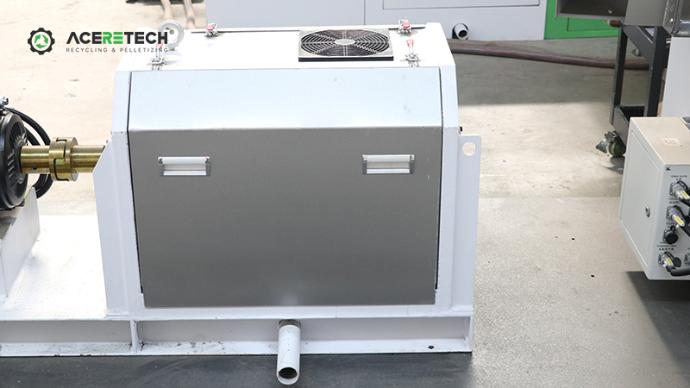
The ACS-H system can be equipped with a vibrating sieve and horizontal centrifugal dryer.
The vibrating sieve separates water from pellets, while the centrifugal dryer further removes residual surface moisture.
This combined process yields cleaner and drier recycled pellets for subsequent collection, packaging or reuse.
5.8 Product Conveying and Silo
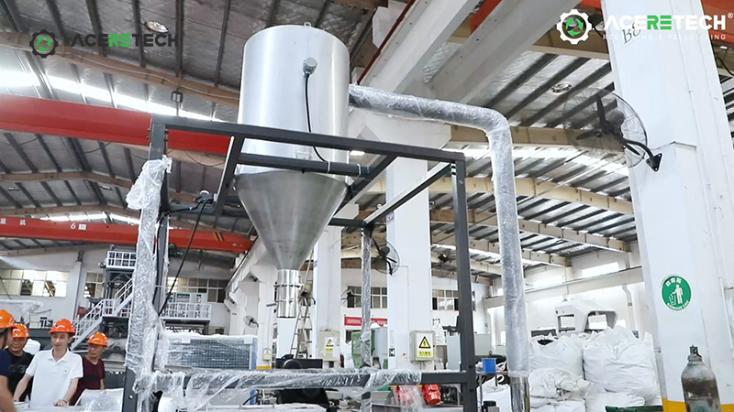
After cooling and drying, qualified recycled pellets are conveyed to the product silo.
The silo serves for temporary storage prior to packaging or further processing. Subject to project requirements, online capacity monitoring and gravimetric weighing equipment can be integrated to support production management and packaging.
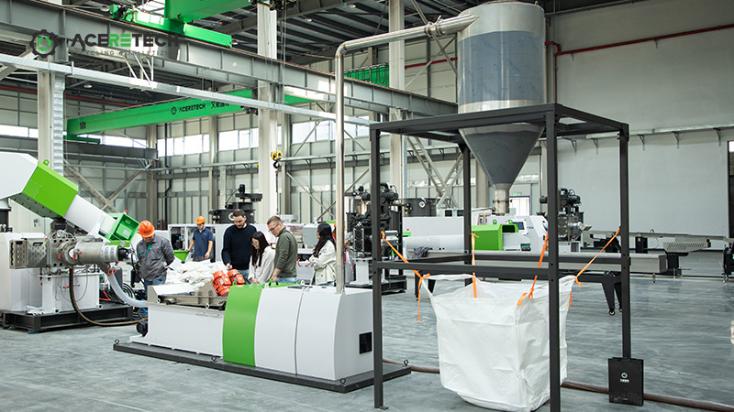
5.9 Intelligent PLC Control System
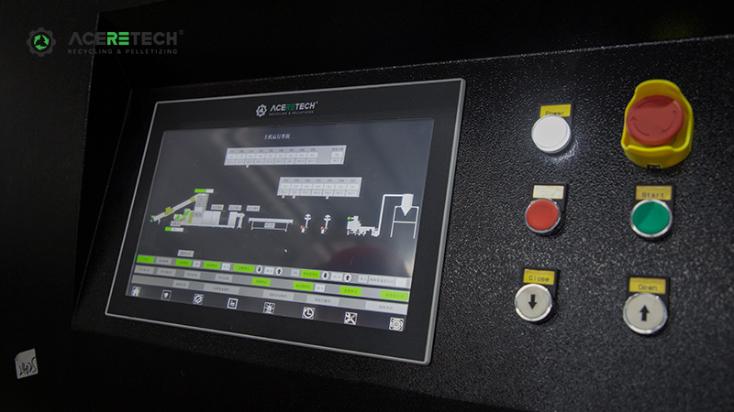
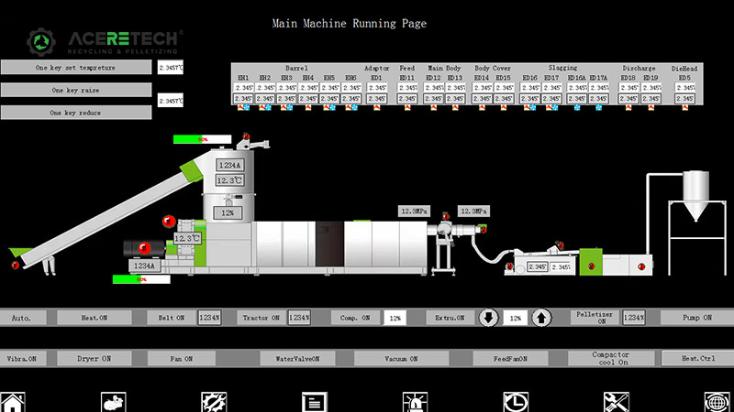
The ACS-H plastic recycling machine is equipped with an intelligent PLC control system for coordinated operation and process monitoring.
It centrally manages all main processing units, covering feeding, compaction, extrusion, temperature regulation and pelletizing.
Intelligent start-stop functions allow all modules to run in a pre-set sequence.
In addition, remote monitoring and data transmission are optional for easier equipment management and technical support.
This integrated control simplifies operation and guarantees stable production.
VI. ACS-H Plastic Recycling Machine: Applicable Materials & Recycling Applications
One major advantage of the ACS-H recycling line is its high adaptability to various plastic wastes.
Although designed primarily for flexible plastic waste, it can be flexibly configured according to polymer properties, contamination level, material size and production requirements.
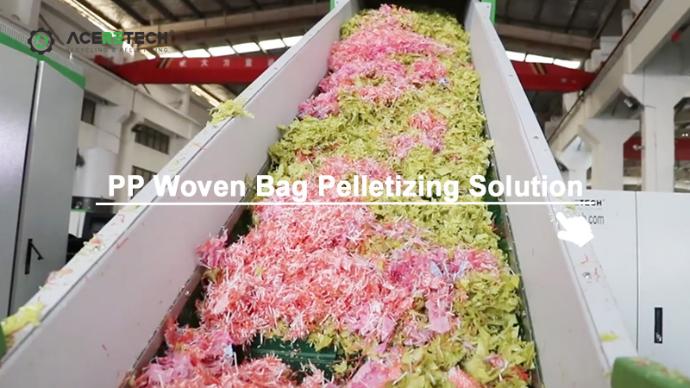
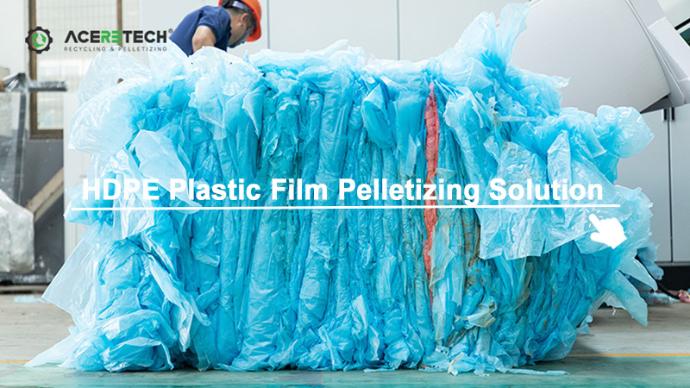
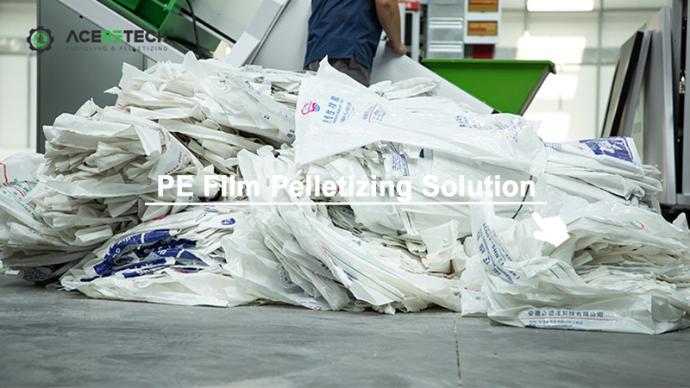
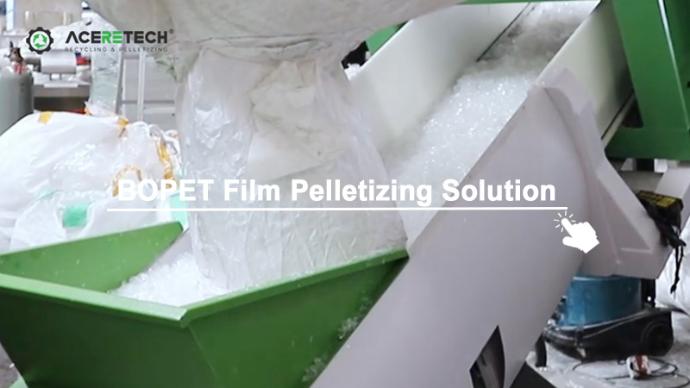
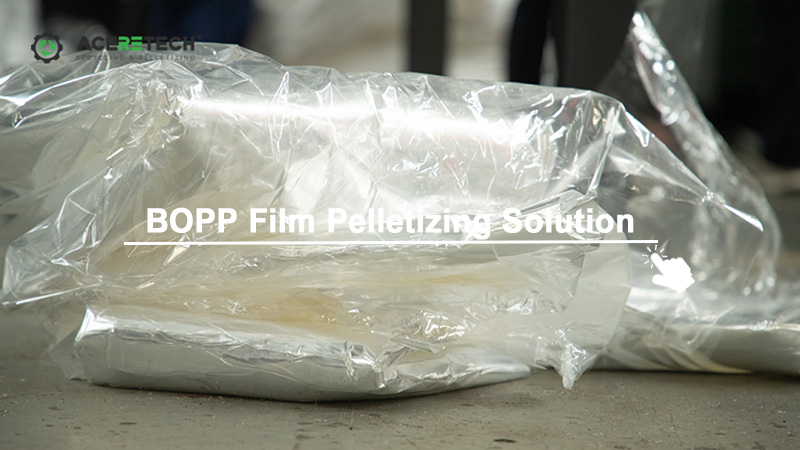
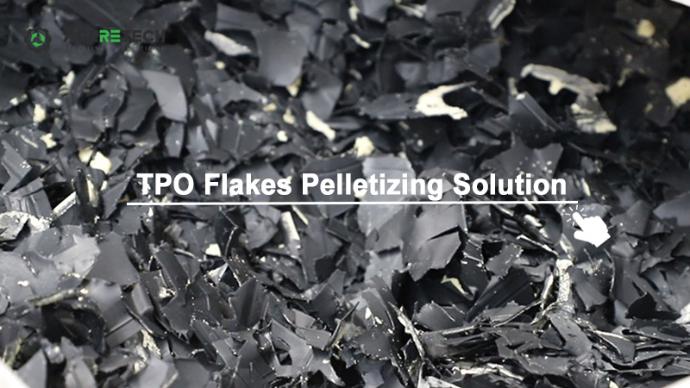
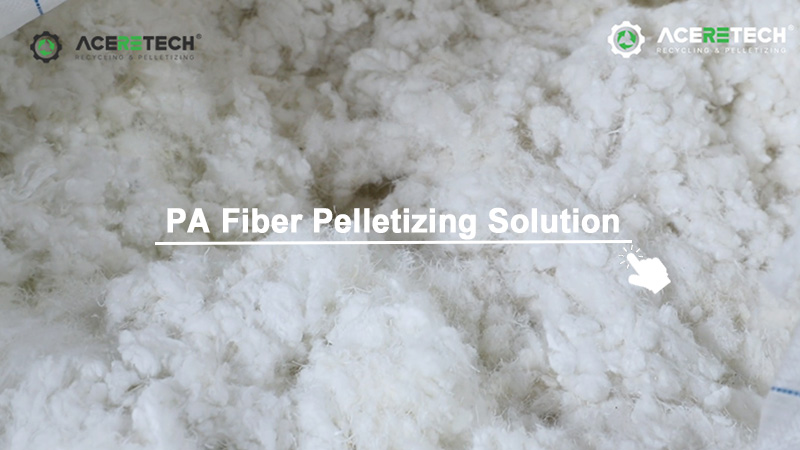
ACERETECH has carried out recycling tests for specific materials and developed application solutions covering the following materials.
Relevant Recycling Articles
VII. ACS-H Plastic Recycling Equipment Test Videos
Actual production tests provide valuable references to demonstrate how the recycling unit performs on different plastic materials.
ACERETECH has conducted recycling tests on multiple materials using the ACS-H system, including plastic films, woven bags, non-woven fabrics and various fibrous materials. The videos below show selected recycling & pelletizing cases:
Each video offers intuitive reference to understand the full workflow of material feeding, processing and pelletizing.
Actual production performance may vary depending on material composition, moisture content, impurity level, equipment configuration and operating conditions.
Customers evaluating the ACS-H series are recommended to conduct material tests to confirm the optimal equipment setup and estimate production performance.
VIII. Why Choose ACERETECH ACS-H Plastic Recycling Equipment?
Selecting the right plastic recycling machine involves more than comparing parameters. It requires comprehensive consideration of overall system configuration, material adaptability, production stability and technical support.
The ACS-H series features multiple practical strengths:
- Integrated Single-Stage Design
Cutting, compaction, plasticization and pelletizing are combined in one production system, simplifying recycling processes with no extra pre-compacting unit required.
- Wide Material Adaptability
Developed mainly for PE & PP films, woven bags, flat yarns, non-woven fabrics and other flexible plastic scraps. Specific fibrous or other plastic materials can be assessed for customized configurations.
- Flexible Filtration Options
Different filtration systems are available based on material cleanliness and target pellet quality.
- Multiple Pelletizing Choices
Water-ring pelletizing, underwater strand pelletizing and underwater pelletizing are optional to match diverse material properties and production demands.
- Adjustable Production Capacity
Multiple models are available in the ACS-H series; customers can select the proper output grade according to processing needs.
- Technical Support & Project Services
ACERETECH provides project design, plant layout planning, installation guidance, commissioning and technical support to assist customers throughout their plastic recycling projects.
Contact ACERETECH for your plastic recycling solution
The key to selecting a suitable recycling machine is fully understanding the properties of feedstock and matching the correct processing configuration.
Feel free to contact ACERETECH to discuss your recycling project and get a tailor-made solution.
FAQ
Q1. What types of plastic materials can the ACS-H recycling equipment handle?
A: The ACS-H is designed mainly for flexible plastic scraps, including PE and PP films, PP woven bags, flat yarns, non-woven fabrics and other eligible plastic waste. Besides, materials such as TPO flakes, BOPET films, PA6 fibers, PA fibers and PA66 nylon fibers can be evaluated for feasibility. The final equipment configuration depends on polymer characteristics, moisture content, contamination level and specific processing requirements.
Q2. What is the output capacity of the ACS-H pelletizer?
A: The ACS-H series includes multiple models. Under standard configuration, the reference production capacity ranges from 160 to 1,200 kg/h. Actual output is determined by selected model, material type, bulk density, screw setup and processing conditions. ACERETECH can recommend the proper model according to your material properties and production targets.
Q3. What is the difference between the ACS-H single-stage recycling line and conventional two-stage plastic recycling equipment?
A: The ACS-H integrates shredding, compaction, extrusion and pelletizing into one core processing system. Its cutting-compacting unit pre-treats lightweight plastic waste before extrusion and improves feeding stability. Traditional two-stage recycling lines adopt double extrusion, usually for applications requiring further compounding, mixing or degassing. The selection depends on material characteristics and end-product requirements.
Q4. Can the ACS-H process printed plastic films and wet materials?
A: Yes. With proper configuration, the ACS-H can recycle printed plastic films. Frictional heat generated by the cutting-compacting unit helps partially dry the material; meanwhile, the standard dual-stage vacuum degassing system removes residual moisture and volatiles during extrusion. Nevertheless, heavily contaminated or high-moisture feedstock may need washing or pre-drying before pelletizing.
Q5. How to select the right ACS-H model for my recycling project?
A: Model selection shall consider plastic type, required output, material condition, bulk density, contamination level and target pellet quality. Customers are advised to provide material samples, photos or videos, target output and relevant processing information. ACERETECH will assess your application and recommend the most suitable equipment configuration.